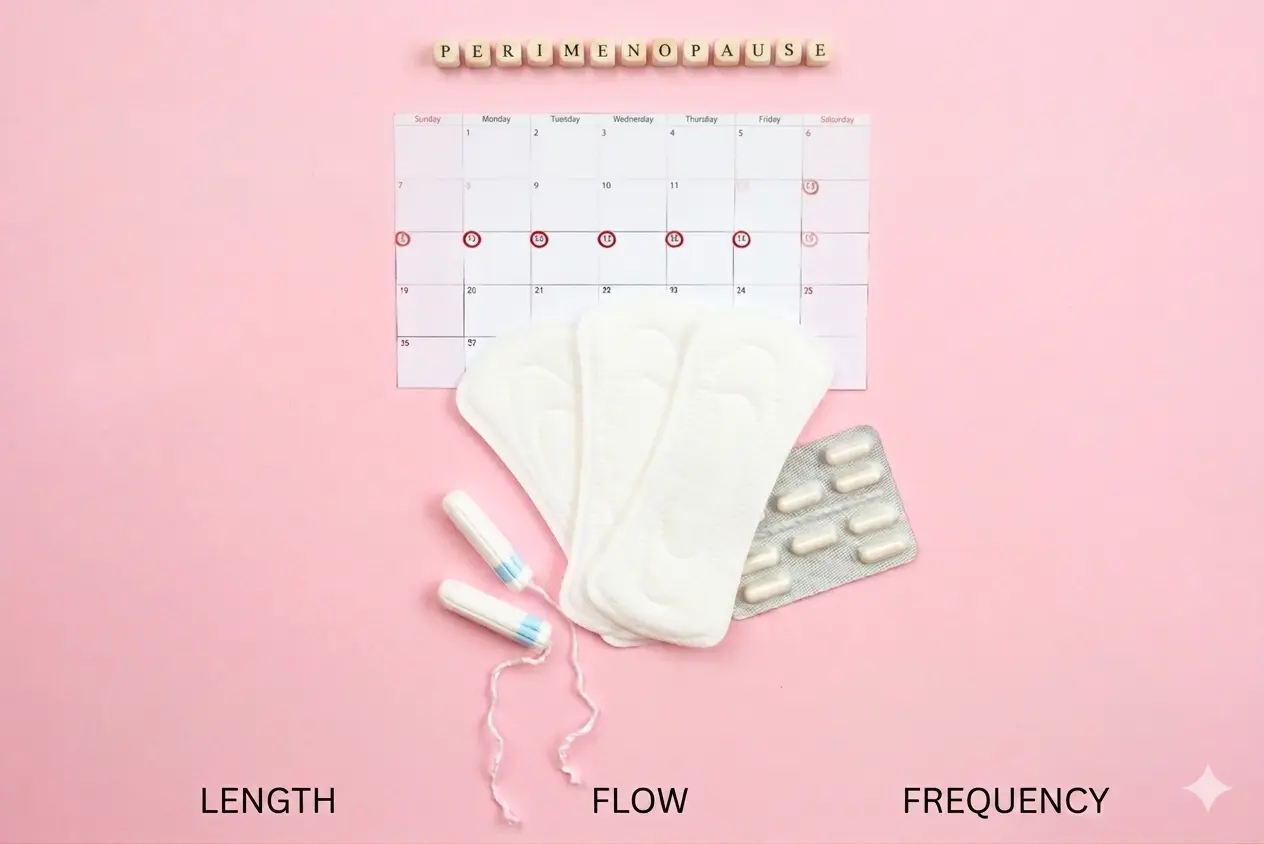


For many women, the transition into perimenopause begins quietly. A cycle that arrives a little late. Sleep that feels lighter than it once did. A sudden warmth rising through the chest at night. A sense that emotional resilience is thinner than before.
These changes often feel subtle and easy to dismiss. Stress, workload, life stage. But slowly, questions emerge. Is this hormonal? Is this perimenopause? And if it is, when should treatment be considered?
Among all questions surrounding midlife hormonal health, one stands out both clinically and personally:
When is the right time to start Menopausal Hormone Therapy?
The answer lies not in a fixed age, but in a concept supported by decades of research: the Window of Opportunity.
Hormone Replacement Therapy or HRT is the term most women are familiar with. It refers to the use of estrogen, with or without progesterone, to relieve symptoms associated with perimenopause and menopause.
In recent years, menopause societies and medical literature increasingly use the term Menopausal Hormone Therapy or MHT.
This distinction matters.
Hormones are not being replaced to youthful levels. Instead, MHT supports the body during a phase when hormone production is naturally declining. The goal is symptom relief, physiological balance, and long term health support.
Both terms are acceptable. In this article, they are used interchangeably, while recognising that MHT is the more clinically precise term.
The Window of Opportunity refers to the period when starting Menopausal Hormone Therapy offers the greatest benefit with the lowest risk.
Large studies, including reanalysis of the Women’s Health Initiative data and observational research from Europe and Australia, consistently show that women who start MHT:
• Before the age of 60
• Or within 10 years of their final menstrual period
experience better outcomes across multiple health domains.
These benefits include:
• Effective relief of menopausal symptoms
• Improved bone density and skeletal protection
• Support for cardiovascular health
• Better overall quality of life
• Lower long term health risks when therapy is appropriately prescribed
This timing is not arbitrary. It reflects how the body responds to estrogen during different stages of aging.
During perimenopause and early menopause, estrogen receptors throughout the body remain responsive. Blood vessels retain elasticity. Bone turnover is still modifiable. Brain tissue continues to benefit from estrogen’s neuroprotective effects.
Introducing hormone therapy during this phase can:
• Stabilise hormonal fluctuations
• Reduce inflammation associated with estrogen decline
• Support vascular and skeletal health
• Improve sleep quality and mood regulation
As time passes after menopause, estrogen receptors become less sensitive. Vascular stiffness increases. Bone loss accelerates. While hormone therapy can still relieve symptoms later, the benefit to risk ratio is strongest when therapy is initiated earlier.
Perimenopause rarely announces itself clearly. Instead, women notice patterns.
Common early signs include:
• Irregular menstrual cycles
• Sleep disturbances or early morning waking
• Night sweats or heat surges
• Anxiety or emotional volatility
• Brain fog or difficulty concentrating
• Vaginal dryness or urinary discomfort
• Reduced tolerance to stress
• Changes in libido or skin hydration
These symptoms often appear years before periods stop entirely. Clinically, this is when discussion around Menopausal Hormone Therapy timing becomes most relevant.
Despite robust evidence, most women start hormone therapy late or not at all. The reasons are understandable.
Initial interpretations of WHI data caused widespread fear. Subsequent analyses clarified that risks were overstated for younger women starting therapy early.
Hormone therapy is often framed as unnecessary or indulgent, rather than as evidence based medical care.
Many women assume menopause begins only after periods stop, delaying evaluation during perimenopause.
MHT is not appropriate for everyone, but for healthy women without contraindications, early initiation is considered safe under medical supervision.
Yes.
Menopausal Hormone Therapy is not typically recommended before clear signs of perimenopause. Hormone levels fluctuate naturally in the early forties, and unnecessary supplementation may not provide benefit.
A clinician evaluates:
• Menstrual cycle patterns
• Severity and impact of symptoms
• Personal and family medical history
• Cardiovascular and metabolic risk factors
• Individual preferences and health goals
The aim is individualised timing, not premature intervention.
Early initiation is associated with improved endothelial function, healthier lipid profiles, and reduced coronary risk.
Estrogen plays a central role in maintaining bone density. Early therapy slows bone loss and reduces fracture risk.
Emerging evidence suggests early estrogen exposure may support memory and executive function, though this remains an evolving area of research.
Hot flashes, sleep disruption, mood swings, vaginal symptoms, and joint pain respond more effectively when therapy begins early.
Women often report improved emotional resilience, confidence, and overall wellbeing.
No.
Women starting MHT after age 60 or more than 10 years post menopause can still benefit, particularly for symptom relief.
According to global Menopause Societies including NAMS, low dose vaginal estrogen for genitourinary syndrome of menopause is safe and effective even many years after menopause, including beyond 10 years.
Systemic MHT may also be continued beyond 5 years when clearly indicated, provided it is done under careful medical supervision, as supported by NAMS guidelines.
| Aspect | Systemic MHT | Vaginal Estrogen |
|---|---|---|
| Primary use | Hot flashes, sleep, bone, mood | Vaginal dryness, urinary symptoms |
| Timing sensitivity | Highest benefit within 10 years | Effective at any age |
| Systemic absorption | Yes | Minimal |
| Long term use | Possible with supervision | Considered safe long term |
There is no universal start date. The ideal time to explore Menopausal Hormone Therapy is when symptoms begin affecting comfort, health, or quality of life.
The window of opportunity is not a deadline. It is a biologically aligned phase during which therapy works most harmoniously with the body.
The best time to start Menopausal Hormone Therapy is usually during perimenopause or within 10 years of the final menstrual period, particularly before the age of 60. Research shows that initiating MHT during this window offers the most favourable benefit to risk profile. During this phase, estrogen receptors remain responsive, and hormone therapy can effectively relieve symptoms such as hot flashes, sleep disturbances, mood changes, and vaginal discomfort, while also supporting bone and cardiovascular health in appropriate candidates.
Yes, hormone therapy can be started after menopause, especially for symptom management. Women who initiate MHT later may still experience meaningful relief from vasomotor symptoms, sleep disruption, and genitourinary symptoms. However, starting MHT more than 10 years after menopause or after the age of 60 requires a careful, individualised assessment of cardiovascular, metabolic, and thrombotic risk. In these cases, therapy should always be guided by a menopause trained clinician.
Yes. According to major menopause societies including the North American Menopause Society, low dose vaginal estrogen is considered safe and effective even many years after menopause, including beyond 10 years. Vaginal estrogen has minimal systemic absorption and is commonly used to treat genitourinary syndrome of menopause, which includes vaginal dryness, burning, recurrent urinary infections, and discomfort with intercourse. It can be continued long term under medical guidance.
There is no single time limit that applies to all women. According to NAMS, systemic Menopausal Hormone Therapy is often prescribed for up to 5 years, but it may be continued beyond this duration if the benefits continue to outweigh the risks. Ongoing use should involve regular clinical review, reassessment of symptoms, and evaluation of health risks. Decisions about duration should always be individualised rather than based on arbitrary cutoffs.
Blood tests are not always required before starting MHT, particularly in perimenopause where hormone levels fluctuate significantly and may not reflect symptoms. Most clinicians base the decision to initiate therapy on a combination of age, menstrual history, symptom pattern, and overall health profile. Blood tests may be useful in specific situations, such as unclear diagnosis, premature menopause, or when evaluating other metabolic or thyroid conditions.




 ×
×