

But for many women, the symptoms can feel relentless, confusing, and deeply disruptive.
You may notice:
Hot flashes that interrupt sleep
Mood changes that feel unfamiliar
Joint pain and body stiffness
Vaginal dryness or urinary discomfort
Anxiety, brain fog, or sudden fatigue
When lifestyle changes and supplements are no longer enough, doctors may recommend menopause medicine to restore balance and protect long-term health.
This guide explains what doctors actually prescribe for menopause, why each option exists, who it helps most, and how to choose treatment without fear or overwhelm.
This is not about forcing your body into silence.
It is about supporting it with clarity and respect.
Menopause medicine refers to medical treatments prescribed by doctors to manage symptoms caused by declining estrogen and progesterone.
These treatments may be:
Hormonal
Non-hormonal
Symptom-specific
Preventive for bone, heart, or mental health
Not every woman needs medication.
But many women benefit from targeted medical support, especially when symptoms begin to affect sleep, work, relationships, or emotional wellbeing.
(HealthCentral).
Hormone Replacement Therapy is the most researched menopause medicine worldwide.
It works by replenishing estrogen, with or without progesterone depending on whether a woman has a uterus.
Hot flashes and night sweats
Sleep disruption
Vaginal dryness and urinary symptoms
Mood changes linked to hormone loss
Bone density protection in early menopause
Leading bodies such as the North American Menopause Society and the Indian Menopause Society agree that HRT is safest and most effective when started within ten years of menopause onset, for women without contraindications.
At Miror, hormone therapy is never one-size-fits-all.
The Miror HRT Centre of Excellence is India’s first structured, science-led platform dedicated to personalised hormone care for women.
Each HRT plan is designed after detailed hormonal testing, symptom mapping, and medical history review, ensuring safety, precision, and ongoing monitoring.
This approach replaces fear with informed, supported decision-making.
For women whose primary symptoms include vaginal dryness, painful intercourse, recurrent urinary infections, or urinary urgency, doctors often prescribe local estrogen therapy.
This may come as:
Vaginal creams
Vaginal tablets
Vaginal rings
Because it acts locally, systemic absorption is minimal.
It is considered one of the safest menopause medicines, even for women who cannot take full systemic HRT.
(Your Pelvic Floor).
Not every woman can or wants to take hormones.
Doctors may prescribe non-hormonal menopause medicine when symptoms persist.
Common options include:
Low-dose antidepressants for hot flashes and anxiety
Gabapentin for night sweats and sleep disturbance
Clonidine for vasomotor symptoms
These medicines do not replace hormones.
Instead, they help calm an overactive nervous system, which often becomes hypersensitive during menopause.
(PubMed Central).
Estrogen decline accelerates bone loss, increasing fracture risk.
Doctors may prescribe bone-focused menopause medicine such as:
Calcium and vitamin D therapy
Bisphosphonates
Selective estrogen receptor modulators
The goal is prevention, not reaction.
Bone protection works best when started early and combined with nutrition and strength training.
(PubMed Central).
Menopause can unmask or worsen metabolic concerns such as:
Thyroid dysfunction
Insulin resistance
Cholesterol imbalance
Doctors may prescribe medication to stabilise these systems when blood markers shift.
Treating metabolic changes often improves:
Persistent fatigue
Weight redistribution
Brain fog
Cardiovascular risk
(BTF).
Sleep disruption is one of the most common menopause complaints.
Depending on the cause, doctors may prescribe:
Short-term sleep aids
Melatonin or circadian rhythm support
Anxiety-modulating medication
Sleep is not optional care.
It is foundational medicine for hormonal and emotional health.
(ScienceDirect).
Hormonal shifts affect neurotransmitters such as serotonin and dopamine.
For women experiencing:
Anxiety
Low mood
Emotional volatility
Doctors may recommend targeted medication alongside therapy and lifestyle support.
This is not weakness.
It is neurochemical reality.
(Harvard Medicine).
Prescription medicine and nutritional support are not opposites.
They are complementary, especially when chosen thoughtfully.
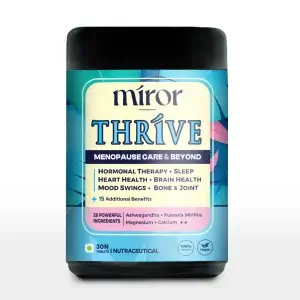
Post-Menopause Vitality for Women 45+
Miror Thrive is crafted for life after menopause, supporting daily balance without synthetic hormones.
Key areas supported:
Hormonal clarity
Bone and joint health
Heart health
Emotional calm
Daily energy
What’s inside:
12 functional actives including Shatavari, Sage, Calcium, Magnesium, L-Theanine, and CoQ10.
How to take:
Take 1 tablet daily, preferably after dinner. Consistency supports best results.
Built for postmenopausal women, Thrive supports steady energy, calm, and hormonal balance as part of a long-term care plan.
Super Supplement for Women 65+
As needs evolve, Miror MILY offers gentle yet meaningful daily support.
Key areas supported:
Joint pain and mobility
Muscle health
Energy levels
Cognitive clarity
Overall vitality
What’s inside:
15 essential nutrients including Soy Isoflavones, Magnesium, Vitamin D, Vitamin B12, Ginseng, and more.
How to take:
Take 1 tablet daily after dinner. Stay consistent for visible support.
Mild yet effective, MILY supports ageing women with ingredients that are clean, safe, and clinically thoughtful.
Doctors do not prescribe menopause medicine based on age alone.
They consider:
Symptom pattern
Severity and duration
Medical history
Family risk factors
Lifestyle and stress load
Personal comfort with treatment options
The best menopause medicine is individualised, reviewed regularly, and adjusted as your body changes.
| Aspect | Medical Menopause Medicine | Natural & Nutritional Support |
|---|---|---|
| Speed of symptom relief | Faster | Gradual |
| Hormone restoration | Yes | Indirect |
| Bone protection | Strong | Supportive |
| Customisation | High with expert care | High with guidance |
| Best results | Often combined | Often combined |
Menopause medicine is not about “giving up naturally.”
It is about using the tools available to protect your health, dignity, and quality of life.
Some women need hormones.
Some need non-hormonal support.
Some thrive with supplements and lifestyle alone.
What matters is that the choice is informed, personalised, and supported.
At Miror, we believe women deserve clarity, safety, and continuity of care at every stage of midlife and beyond.
Menopause medicine refers to medical treatments prescribed to manage symptoms caused by declining estrogen and progesterone. Doctors recommend menopause medicine when symptoms like hot flashes, sleep disruption, mood changes, bone loss, or vaginal dryness begin to affect daily life, work, or long-term health. Not every woman needs medication, but many benefit from targeted medical support during perimenopause and menopause.
Hormone replacement therapy is considered the most effective menopause medicine for managing hot flashes, night sweats, sleep issues, vaginal dryness, and bone loss. Leading medical bodies agree that HRT is safest when started within ten years of menopause onset for women without contraindications. Treatment must always be personalised and medically supervised.
Yes. Non-hormonal menopause medicine options include low-dose antidepressants, gabapentin, and other prescriptions that help regulate the nervous system. These are often used when hormone therapy is not suitable or preferred. While they do not replace estrogen, they can significantly reduce hot flashes, anxiety, and sleep disturbances.
Menopause medicine and supplements can often be used together under medical guidance. Prescription treatments address hormone or symptom imbalance, while supplements support nutrition, bone health, energy, and recovery. Combining both approaches often provides better long-term results than using either alone, especially when plans are personalised.
Doctors choose menopause medicine based on symptom severity, medical history, age, family risk factors, lifestyle, and personal comfort with treatment. The best menopause medicine is not universal. It is individualised, reviewed regularly, and adjusted as a woman’s body and needs change over time.



 ×
×