
There is a moment in every woman’s hormonal life when the body begins to whisper differently.
Sleep shifts. Heat rises without warning. Energy becomes less predictable. Emotions feel closer to the surface.
This is not weakness. This is biology.
And for millions of women globally, hormone replacement therapy has emerged as one of the most effective, evidence based ways to restore stability, protect long term health, and improve quality of life during menopause.
Yet hormone replacement therapy is also surrounded by confusion, fear, and outdated information.
This guide explains, with scientific clarity and compassion, what hormone replacement therapy is, how it works, its proven benefits, its real risks, and how to decide if it is right for you.
Hormone replacement therapy, often called HRT, is a medical treatment that replaces declining estrogen and progesterone levels during menopause.
These hormones regulate far more than reproductive cycles.
They influence:
• Brain function
• Bone strength
• Heart health
• Sleep quality
• Mood stability
• Metabolism
• Skin and connective tissue
When ovarian hormone production declines, these systems feel the impact.
Hormone replacement therapy restores hormonal balance, reducing symptoms and protecting long term health.
According to The North American Menopause Society and The Lancet Commission on Women and Cardiovascular Disease, hormone replacement therapy remains the most effective treatment for menopausal symptoms and prevention of bone loss.
(Cleveland Clinic).
Menopause is defined as 12 consecutive months without a menstrual period.
During perimenopause and menopause, ovarian function declines, leading to reduced hormone production.
| Hormone | Change | Impact on Body |
|---|---|---|
| Estrogen | Significant decline | Hot flashes, bone loss, brain fog |
| Progesterone | Declines earlier | Sleep disturbance, anxiety |
| Testosterone | Gradual reduction | Reduced energy, libido |
| FSH | Increases | Marker of ovarian aging |
These hormonal changes create systemic effects, not isolated symptoms.
Hormone replacement therapy addresses the root cause.
(PubMed Central).
Scientific evidence from global studies consistently confirms the benefits of hormone replacement therapy when used appropriately.
Hot flashes affect up to 80 percent of menopausal women, according to The Journal of Clinical Endocrinology and Metabolism.
Hormone replacement therapy reduces hot flashes by up to 75 percent.
This restores sleep, energy, and daily functioning.
(ScienceDirect).
Estrogen is essential for maintaining bone density.
After menopause, women lose bone mass rapidly, increasing fracture risk.
Hormone replacement therapy slows bone loss and reduces fracture risk by up to 40 percent, according to the Royal Osteoporosis Society.
This protective effect is especially important in the first 10 years after menopause.
Estrogen influences neurotransmitters such as serotonin and dopamine.
Hormone replacement therapy may improve:
• Memory
• Concentration
• Emotional stability
• Cognitive clarity
Research published in the National Library of Medicine confirms estrogen’s role in protecting brain function during aging.
Estrogen supports vascular elasticity and cholesterol balance.
When hormone replacement therapy is started within 10 years of menopause, studies show reduced cardiovascular risk.
This is known as the timing hypothesis, supported by The American Heart Association.
Progesterone promotes relaxation and supports deep sleep.
Hormone replacement therapy helps restore natural sleep cycles, reducing insomnia and night waking.
Better sleep improves overall hormonal regulation.
(JMM).
Estrogen supports vaginal tissue elasticity and urinary tract health.
Hormone replacement therapy improves:
• Vaginal comfort
• Sexual health
• Urinary stability
This significantly improves quality of life.
(PubMed Central).
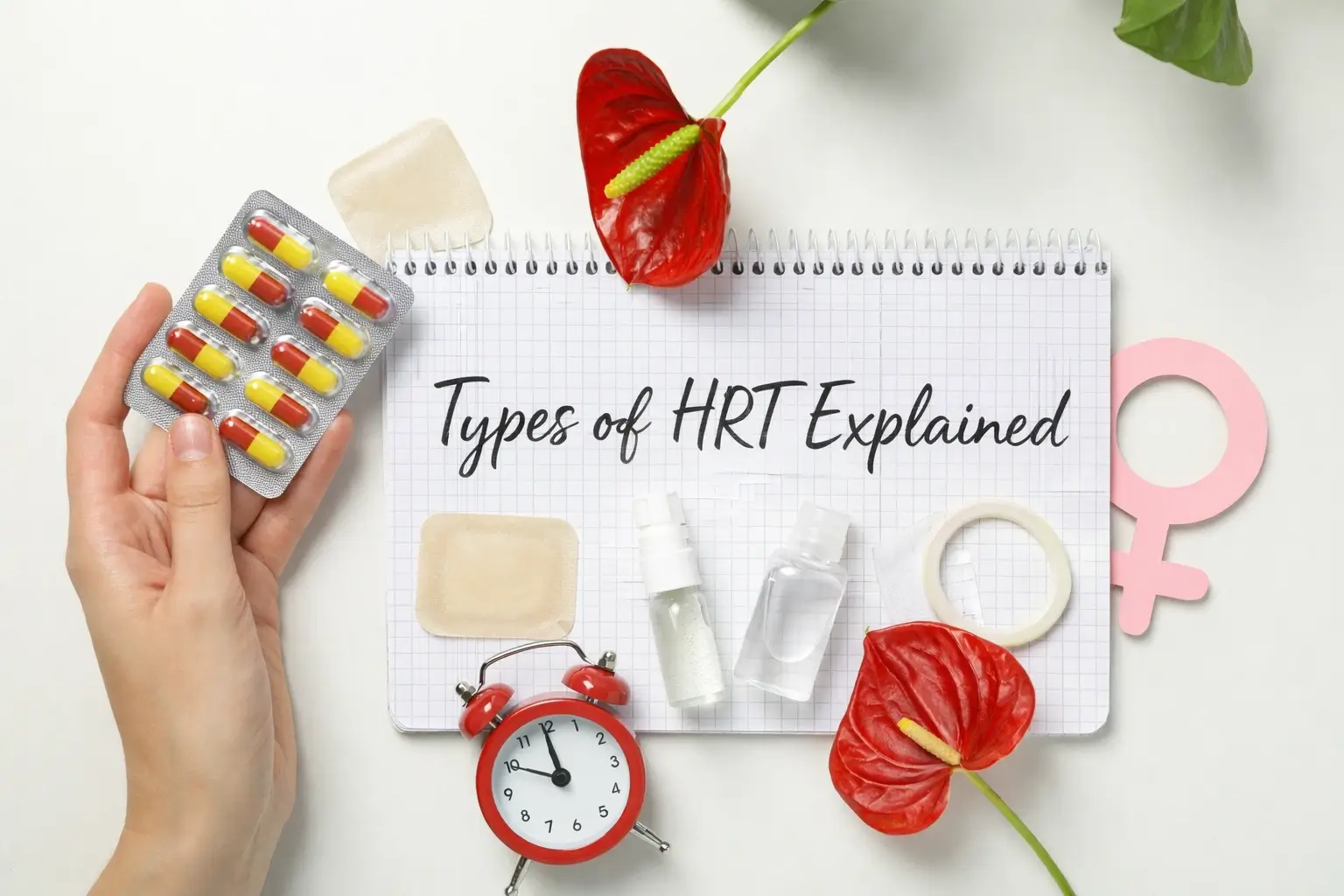
Hormone replacement therapy is personalised based on individual physiology.
| Type | Description | Who It Is For |
|---|---|---|
| Estrogen only | Estrogen replacement | Women without uterus |
| Combined estrogen and progesterone | Balanced hormone therapy | Women with uterus |
| Transdermal HRT | Patch or gel delivery | Lower clot risk |
| Oral HRT | Tablet form | Common and effective |
| Vaginal estrogen | Local therapy | Vaginal symptoms |
Transdermal hormone replacement therapy is often preferred for safety and metabolic stability.
(NHS).
Modern hormone replacement therapy is far safer than older formulations.
However, risks vary depending on timing, type, and individual health profile.
| Risk | Reality Based on Current Evidence |
|---|---|
| Breast cancer | Slight increase with long term combined HRT |
| Blood clots | Higher with oral HRT, lower with transdermal |
| Stroke | Minimal risk when started before age 60 |
| Cardiovascular risk | Reduced when started early |
The British Medical Journal and The Lancet confirm that for healthy women under 60 or within 10 years of menopause, benefits outweigh risks.
Medical supervision ensures safety.
(Cloudnine Care).
Despite decades of global evidence, hormone replacement therapy has remained underutilised and misunderstood in India.
Miror is pioneering India’s first dedicated HRT Centre of Excellence, designed to provide structured, science led hormone care tailored to Indian women.
This centre integrates advanced hormone testing, specialist consultations, personalised hormone replacement therapy protocols, and long term monitoring.
Care is delivered by multidisciplinary experts including endocrinologists, gynaecologists, and metabolic specialists.
The goal is not simply symptom relief.
It is long term protection of bone health, brain function, cardiovascular stability, and overall vitality.
Miror is redefining hormone replacement therapy as proactive preventive care, not reactive treatment.
Hormone replacement therapy is most effective and safest for women who:
• Are under age 60
• Are within 10 years of menopause
• Have moderate to severe symptoms
• Have no major contraindications
Personalised assessment is essential.
Hormone replacement therapy is not one size fits all.
(Mayo Clinic).
Hormone replacement therapy may not be recommended for women with:
• Active breast cancer
• Uncontrolled cardiovascular disease
• History of blood clots
• Severe liver disease
Medical evaluation determines safety.
Early initiation provides maximum benefit.
| Timing | Benefit Level |
|---|---|
| Within 5 years of menopause | Maximum benefit |
| Within 10 years | Strong benefit |
| After 10 years | Reduced benefit |
Early hormone replacement therapy protects long term health.
(NHS).
Hormone replacement therapy works best when combined with lifestyle support.
Scientific evidence supports:
• Strength training
• Adequate protein intake
• Sleep optimisation
• Stress management
• Nutritional support
Hormone therapy restores the foundation.
Lifestyle strengthens it.
At Miror, hormone replacement therapy is viewed not as a last resort, but as preventive care.
Hormones influence every organ system.
Supporting hormonal health protects the future, not just the present.
The Miror HRT Centre of Excellence provides evidence based, ethical, and personalised hormone care.
Because women deserve clarity, not confusion.
And science, not silence.
It is about restoring balance.
Hormone replacement therapy helps the body function as it was biologically designed to.
When guided by science and personalised medical care, hormone replacement therapy remains one of the most powerful tools in women’s health.
Not to erase aging.
But to support strength, clarity, and vitality through it.
Hormone replacement therapy is a medical treatment that restores declining estrogen and progesterone levels during menopause. It works by replacing hormones the ovaries no longer produce, helping stabilise body systems that regulate temperature, sleep, mood, bone density, and brain function. Hormone replacement therapy addresses the root hormonal cause of menopause symptoms rather than only managing surface symptoms.
Hormone replacement therapy is considered safe for most healthy women under age 60 or within 10 years of menopause, according to global medical authorities such as The North American Menopause Society. Modern hormone replacement therapy, especially transdermal forms, has a strong safety profile when prescribed and monitored by qualified medical specialists.
Hormone replacement therapy provides powerful benefits including relief from hot flashes, improved sleep quality, protection against bone loss, improved cognitive clarity, better emotional stability, and support for heart and metabolic health. Research shows hormone replacement therapy can reduce fracture risk, improve quality of life, and support long term healthy aging.
The risks of hormone replacement therapy depend on timing, formulation, and individual health history. Some women may have a slightly increased risk of blood clots or breast cancer with long term combined therapy. However, scientific evidence confirms that for healthy women starting hormone replacement therapy at the right time, the benefits often outweigh the risks under proper medical supervision.
Hormone replacement therapy may be recommended for women experiencing moderate to severe menopause symptoms such as hot flashes, sleep disturbance, brain fog, mood changes, and bone loss risk. Women under age 60 or within 10 years of menopause are typically the best candidates. A personalised medical assessment helps determine if hormone replacement therapy is appropriate and safe.



 ×
×