
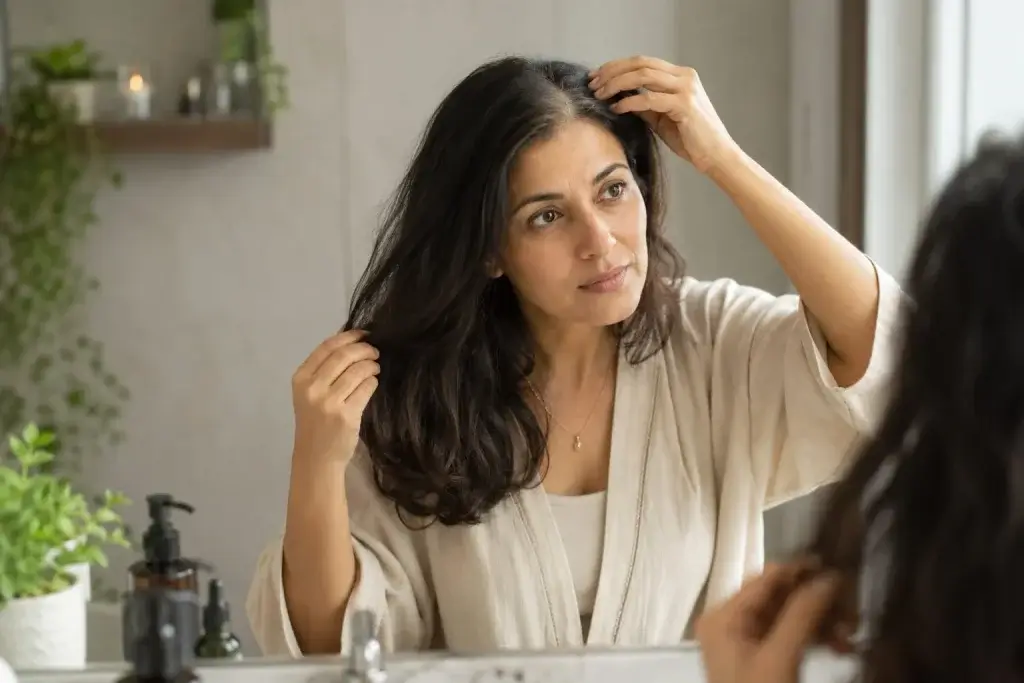
Hair changes are often one of the first physical signs women notice during perimenopause and menopause. Hair may appear thinner, shed more easily, lose volume, or feel noticeably different in texture. Because hair is so closely linked to confidence and identity, these changes can feel particularly distressing and are often a source of concern in clinical practice.
Hair loss menopause is one of the most common concerns women raise during midlife, yet it is frequently misunderstood. While hormonal changes play an important role, nutrition, stress, inflammation, sleep quality, and overall health often influence both the severity and progression of hair thinning. Understanding these interconnected factors allows for a more effective and sustainable approach to supporting healthy hair during menopause.
What Is Menopause Hair Loss?
Menopause hair loss refers to the gradual thinning of hair that can occur during perimenopause and menopause due to hormonal changes, ageing, nutritional status, stress, and other lifestyle factors. Women may notice increased shedding, reduced volume, a widening part line, or slower hair regrowth over time.
Women may notice:
– Increased daily hair shedding
– Reduced overall hair density
– A widening part line
– Loss of volume and fullness
– Slower hair regrowth
– Changes in hair texture and quality
Unlike sudden hair loss, menopause hair thinning often develops gradually over months or years, making it easy to overlook until significant changes have occurred.
Why Does Hair Loss Happen During Menopause?
- The Hormonal Shift
One of the primary drivers of menopause hair loss is the decline in estrogen levels.
Estrogen plays a supportive role in maintaining the hair growth cycle by helping keep hair in the active growth phase (anagen) for longer periods. As estrogen declines during menopause, hair follicles spend less time actively growing and more time resting and shedding.
2. Relative Androgen Influence
Although androgen levels also decline with age, the reduction in estrogen is often more significant. This creates a relative increase in androgen influence, which may contribute to hair follicle miniaturization in genetically susceptible women.
Miniaturized follicles produce progressively finer, shorter hairs, resulting in visible thinning and reduced volume.
3. Changes in the Hair Growth Cycle
Healthy hair growth depends on a balanced cycle of growth, transition, rest, and shedding. Hormonal changes can disrupt this process by:
– Shortening the growth phase
– Increasing shedding
– Slowing regrowth
– Reducing hair shaft diameter
4. Ageing Versus Hormones
It is important to recognize that menopause hair thinning is not caused by hormones alone. Natural ageing, nutritional status, chronic stress, inflammation, metabolic health, and genetics all contribute.
In practice, menopause hair loss is usually multifactorial rather than the result of a single deficiency or hormonal change.
The Hair Nutrition Hierarchy: What I Focus On First
When supporting women with hair thinning during menopause, I focus on nutritional foundations before considering supplements. Hair is metabolically active tissue, and healthy growth requires adequate nutrient availability.
- Ferritin and Iron Status
Ferritin is the body’s storage form of iron and one of the first markers I assess when supporting women experiencing hair thinning.
Hair follicles are highly active tissues that require adequate iron to function optimally. Low ferritin levels have been associated with increased hair shedding and reduced hair growth, even when iron deficiency anaemia is not present.
One of the challenges in clinical practice is that women may be reassured that their iron levels fall within the laboratory reference range, yet still have suboptimal iron stores from a hair health perspective. This is why assessing ferritin, alongside a broader clinical picture, can provide valuable insight when investigating menopause-related hair loss.
- Protein Intake
Hair is primarily composed of a structural protein called keratin.
Many midlife women unintentionally under-consume protein due to busy lifestyles, restrictive diets, or changing eating patterns. When protein intake is inadequate, the body prioritizes essential physiological functions over hair growth.
Supporting healthy hair requires sufficient protein distributed consistently throughout the day.
- Zinc
Zinc plays an important role in cell division, tissue repair, and hair follicle function.
Suboptimal zinc intake may contribute to hair shedding and impaired hair growth. Rather than immediately turning to supplements, I encourage women to prioritize zinc-rich foods such as seafood, meat, legumes, seeds, and nuts.
- Biotin
Biotin is often marketed as the solution for hair loss, yet true biotin deficiency is relatively uncommon.
While biotin supplementation may be beneficial in cases of deficiency, many women are unlikely to experience significant improvements from biotin alone. Hair health depends on a much broader nutritional picture than any single nutrient.
- Vitamin D
Vitamin D receptors are present within hair follicles and appear to play a role in normal follicle cycling.
Low vitamin D status is common globally and may be associated with certain forms of hair loss. Ensuring adequate vitamin D through sensible sun exposure, diet, and appropriate supplementation when necessary can support overall health and potentially contribute to healthy hair growth.
Why Hair Health Reflects Whole-Body Health
Hair growth is not essential for survival, which means the body will prioritize other physiological processes when resources are limited. As a result, nutritional deficiencies, chronic stress, illness, inflammation, poor sleep, and metabolic imbalances can often become visible through changes in hair quality, growth, and shedding patterns.
Chronic Stress
Chronic stress can trigger increased shedding through changes in cortisol and other stress-related pathways. Stress-driven hair loss may become noticeable several months after a significant physical or emotional stressor.
Sleep Quality
Sleep supports hormonal regulation, tissue repair, immune function, and metabolic health. Poor sleep can contribute to hormonal disruption and impair the body’s ability to support healthy hair growth.
Inflammation
Persistent low-grade inflammation may negatively affect hair follicles and overall scalp health. Nutrition, movement, stress management, and gut health all influence inflammatory balance.
Gut Health
Healthy digestion and nutrient absorption are essential for delivering the building blocks required for hair growth. Digestive issues may contribute to nutritional deficiencies that indirectly affect hair health.
Blood Sugar Balance
Frequent blood sugar fluctuations can influence hormonal health, inflammation, and energy regulation. Stable blood sugar supports overall metabolic wellbeing and may indirectly benefit hair health.
Nutrition and Lifestyle Strategies That Support Hair Health
Women often search for the best hair supplement, but I frequently find that addressing foundational nutritional gaps and lifestyle factors produces the most meaningful long-term improvements.
Supporting healthy hair during menopause starts with adequate protein intake. Hair is primarily made of keratin, a structural protein that depends on a steady supply of amino acids for growth and repair. Including quality protein sources such as eggs, fish, poultry, yoghurt, tofu, legumes, and dairy products at each meal can help provide the nutrients needed for healthy hair growth.
Iron is another key consideration. Foods such as lean red meat, seafood, lentils, beans, and leafy greens help support healthy iron stores, which are essential for hair follicle function. Pairing plant-based iron sources with vitamin C-rich foods can further improve absorption.
Healthy fats from foods such as olive oil, avocados, nuts, seeds, and oily fish support hormone production and overall wellbeing. At the same time, eating a wide variety of vegetables, fruits, legumes, herbs, and spices helps provide antioxidants and nutrients that support healthy ageing and hair health.
Lifestyle factors matter too. Regular resistance training supports metabolic health and healthy ageing, while quality sleep helps regulate hormones and supports the body’s repair processes. Managing stress through practices such as mindfulness, yoga, walking, or simply making time for recovery can also help reduce stress-related hair shedding.
Ultimately, healthy hair is not built by a single supplement. It is usually the result of consistent nutrition, restorative sleep, effective stress management, and overall good health.
What I Commonly See in Practice
When women come to me concerned about menopause hair loss, the cause is rarely hormones alone.
One of the most common patterns I see is low ferritin that has gone unnoticed for years. I also frequently see women who have spent decades dieting, skipping meals, or under-eating protein without realizing the impact this can have on long-term hair health.
Stress is another major contributor. Many women are navigating demanding careers, caregiving responsibilities, sleep disruption, and significant life transitions during midlife. It’s not uncommon for increased shedding to appear several months after a particularly stressful period.
I also see many women investing heavily in hair supplements while overlooking the foundations. While targeted supplementation can sometimes be helpful, meaningful improvements usually come from addressing nutrition, sleep, stress, and overall health first.
Hair Loss Menopause: Taking a Whole-Body Approach
Healthy hair during menopause is rarely about finding the perfect supplement or quick fix. More often, it is the result of supporting the body as a whole through balanced nutrition, healthy iron stores, restorative sleep, stress management, and sustainable lifestyle habits.
When we view hair health through this wider lens, thinning hair becomes more than a cosmetic concern. It becomes an opportunity to better understand and support overall wellbeing during the menopausal transition and beyond.
FAQs
No. While hair thinning is common during menopause, not every woman experiences noticeable hair loss. Genetics, nutrition, stress levels, overall health, and lifestyle factors all influence individual outcomes.
A diet that emphasises adequate protein, iron-rich foods, healthy fats, diverse plant foods, and overall nutritional adequacy is most supportive for hair health. There is no single "hair loss diet," but nutrient-dense eating patterns provide the foundation for healthy hair growth.
Yes. Low ferritin levels may contribute to increased hair shedding and reduced hair growth. Assessing iron stores is often an important part of investigating menopause-related hair loss.
Hair supplements may be helpful when a specific deficiency exists, but they are rarely a complete solution. Addressing nutrition, sleep, stress, and overall health typically produces more meaningful long-term results.
In many cases, improvements are possible when underlying contributing factors are identified and addressed. The degree of regrowth varies depending on genetics, follicle health, hormonal influences, nutritional status, and overall wellbeing.