

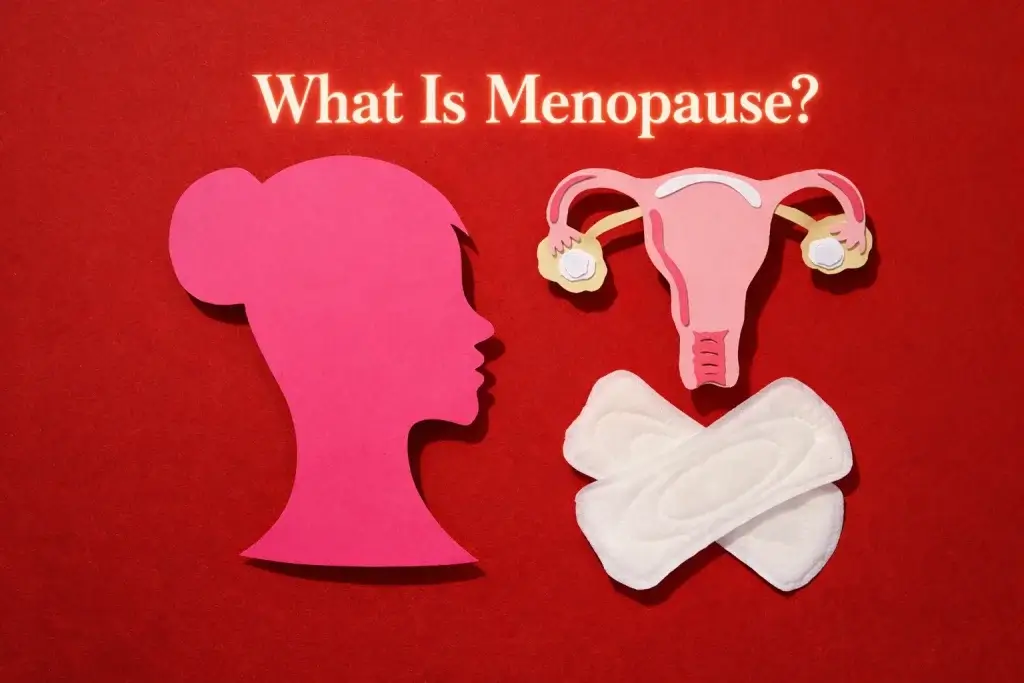
There comes a time in every woman’s life when the rhythm of her body changes quietly.
Cycles that once arrived with precision begin to shift. Sleep feels different. Heat rises unexpectedly. Energy fluctuates in ways that feel unfamiliar.
For many women, these changes arrive without explanation. The experience can feel confusing, even isolating.
But this transition has a name.
Menopause.
Understanding menopause meaning is not only about defining a biological milestone. It is about recognising a profound stage of hormonal transformation that influences nearly every system in a woman’s body.
When women understand menopause clearly, they stop fearing it. They begin preparing for it.
This guide explains the science, symptoms, timing, and realities of menopause with clarity, compassion, and evidence.
Menopause is defined as the permanent end of menstrual cycles due to the natural decline of ovarian hormone production.
Medically, it is diagnosed when a woman has gone 12 consecutive months without a menstrual period.
At this stage, the ovaries significantly reduce production of estrogen and progesterone, the hormones responsible for regulating reproductive cycles.
These hormonal shifts affect far more than menstruation. They influence brain chemistry, bone strength, cardiovascular health, metabolism, skin elasticity, and emotional stability.
In simple terms, this marks the biological transition from reproductive years to a new stage of hormonal equilibrium.
According to the World Health Organization, menopause is a universal physiological event experienced by every woman who lives long enough.
One of the most common questions women ask is when it begins.
Menopause itself is a single point in time, but the hormonal transition surrounding it unfolds gradually over several years.
| Stage | Average Age | What Happens |
|---|---|---|
| Early perimenopause | 40 to 45 | Hormones begin fluctuating |
| Late perimenopause | 45 to 50 | Periods become irregular |
| Menopause | Around 51 | Periods stop completely |
| Postmenopause | After menopause | Hormones stabilise at lower levels |
Research shows that the average menopause age globally is approximately 51 years, though the timing varies across individuals and populations.
For some women, it may occur earlier due to genetics, medical treatments, or surgical removal of ovaries.
(Duke Health).
Menopause is not a single event. It is a continuum that unfolds in three biological stages.
Understanding these stages helps women interpret their symptoms and hormonal changes more clearly.
Perimenopause is the transitional phase leading up to menopause.
It often begins several years before periods stop completely.
During this stage, estrogen levels fluctuate unpredictably while progesterone declines earlier and more consistently.
Women may experience:
• Irregular periods
• Mood changes
• Sleep disturbance
• Hot flashes
• Brain fog
• Breast tenderness
Perimenopause can last anywhere from four to ten years.
Menopause itself is confirmed when a woman has not had a menstrual period for 12 consecutive months.
At this point, the ovaries have largely stopped releasing eggs and hormone production declines significantly.
Although symptoms may still occur, hormone fluctuations typically begin stabilising.
Postmenopause begins after menopause and continues for the rest of a woman’s life.
Hormone levels remain lower but more stable.
During this phase, long term health considerations become important, including bone density, heart health, and metabolic balance.
(Mayo Clinic).
Because hormones influence nearly every system in the body, menopause symptoms can feel surprisingly diverse.
Scientific studies from The North American Menopause Society show that approximately 75 percent of women experience noticeable symptoms during menopause transition.
| Symptom | Biological Cause |
|---|---|
| Hot flashes | Estrogen fluctuations affecting brain temperature regulation |
| Night sweats | Hormonal impact on thermoregulation |
| Sleep disturbance | Progesterone decline |
| Mood changes | Neurotransmitter shifts |
| Brain fog | Estrogen influence on cognition |
| Vaginal dryness | Reduced estrogen in vaginal tissue |
| Weight redistribution | Changes in metabolism and fat storage |
Not every woman experiences all symptoms, and the intensity varies widely.
(AAPEC).
Estrogen is often thought of as a reproductive hormone, but its influence extends far beyond fertility.
Estrogen receptors exist in the brain, heart, bones, skin, blood vessels, and immune system.
When estrogen levels decline, multiple systems respond.
| Hormone | What Happens | Impact |
|---|---|---|
| Estrogen | Declines significantly | Hot flashes, bone loss, brain changes |
| Progesterone | Declines earlier | Sleep disturbance and anxiety |
| Testosterone | Gradual decline | Reduced muscle strength and libido |
| FSH | Increases | Marker of ovarian aging |
This systemic influence explains why menopause symptoms affect both physical and emotional wellbeing.
(Healthline).
Menopause does not simply end menstrual cycles. It reshapes long term health risks and priorities.
Research from The American Heart Association and The Endocrine Society shows that declining estrogen can influence several key health areas.
| System | Effect of Hormonal Change |
|---|---|
| Bones | Increased osteoporosis risk |
| Heart | Higher cardiovascular risk |
| Brain | Changes in cognitive processing |
| Metabolism | Slower energy regulation |
| Skin | Reduced collagen and elasticity |
Understanding menopause meaning therefore requires recognising it as a whole body hormonal transition, not simply a reproductive event.
(CMS).
Yes. Some women experience it earlier than average.
Early menopause occurs before age 45, while premature occurs before age 40.
Possible causes include:
• Genetic factors
• Autoimmune disorders
• Chemotherapy or radiation therapy
• Surgical removal of ovaries
• Certain metabolic conditions
Medical evaluation is recommended if periods stop unusually early.
(Cleveland Clinic).
In most cases, menopause diagnosis is based on menstrual history and symptoms.
Doctors may also consider hormone testing if necessary.
| Indicator | What It Means |
|---|---|
| 12 months without periods | Clinical menopause diagnosis |
| Elevated FSH levels | Ovarian aging |
| Declining estrogen levels | Reduced ovarian function |
However, hormone tests are not always required because levels fluctuate during perimenopause.
(PubMed Central).
This is a biological transition that can be navigated more comfortably with proper support.
Scientific evidence highlights several lifestyle strategies that improve hormonal adaptation.
Evidence based support includes:
• Strength training to protect muscle and bone
• Balanced nutrition rich in calcium and protein
• Quality sleep and circadian rhythm stability
• Stress regulation to manage cortisol
• Medical guidance when symptoms become disruptive
In some cases, doctors may recommend hormone replacement therapy, which remains the most effective treatment for severe menopausal symptoms.
For generations, menopause has been treated as a phase women simply endure.
At Miror, we believe it deserves far greater attention.
It is not the end of vitality. It is a biological transition that requires informed care, personalised guidance, and science backed support.
Through structured medical expertise, community education, and specialised hormonal care, women can navigate menopause with clarity rather than confusion.
Because understanding menopause meaning is not just about defining a stage of life.
It is about empowering women to move through it with knowledge, strength, and dignity.
Menopause marks the closing of one chapter in a woman’s hormonal journey.
But it also opens another.
With the right knowledge and support, this stage can become a period of stability, confidence, and renewed health awareness.
Understanding menopause is not about fearing aging.
It is about recognising the wisdom of the body and learning how to support it as it evolves.
When women understand what menopause truly means, they stop feeling lost in the transition.
They begin to lead it.
Menopause meaning refers to the permanent end of menstrual cycles caused by the natural decline of ovarian hormone production. It is medically diagnosed when a woman has gone 12 consecutive months without a period. During menopause, estrogen and progesterone levels drop significantly, leading to symptoms such as hot flashes, sleep changes, and hormonal shifts throughout the body.
The average menopause age globally is around 51 years, according to the World Health Organization. However, most women begin experiencing hormonal changes several years earlier during perimenopause, usually between ages 40 and 45. Genetics, lifestyle, and medical conditions can influence when menopause begins.
The earliest signs of menopause often appear during perimenopause and may include irregular periods, hot flashes, night sweats, sleep disturbances, mood changes, and brain fog. These symptoms occur because estrogen and progesterone levels begin fluctuating as ovarian hormone production gradually declines.
Menopause itself is a single point in time confirmed after 12 months without menstruation. However, the hormonal transition surrounding menopause can last several years. Perimenopause may last four to ten years before menopause occurs, while postmenopause continues for the rest of a woman’s life.
Yes. Menopause symptoms affect the entire body because estrogen receptors exist in many organs, including the brain, heart, bones, skin, and blood vessels. As hormone levels decline, women may experience changes in metabolism, bone density, cardiovascular health, sleep patterns, mood regulation, and cognitive function.



 ×
×