

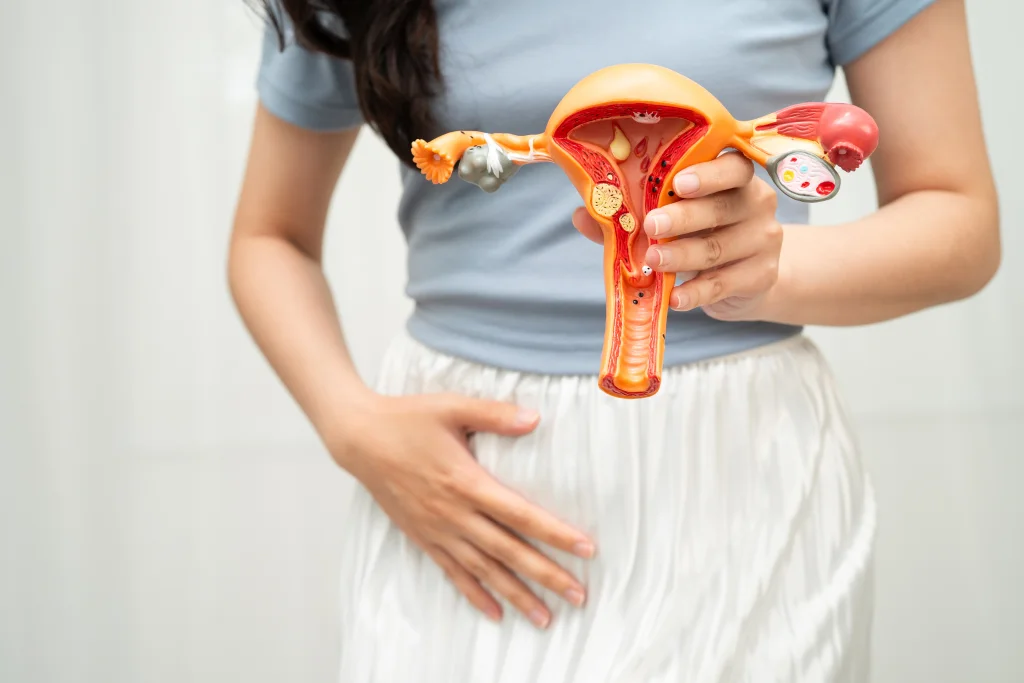
If you’ve ever found yourself wondering whether your symptoms are due to endometriosis or the early stages of menopause, you’re not alone. Many women in their late 30s and 40s experience overlapping signs that make diagnosis confusing—and sometimes delayed.
Both conditions are hormone-driven, both can affect your menstrual cycle, and both can significantly impact quality of life. But while endometriosis symptoms often stem from tissue growth outside the uterus, perimenopause symptoms are driven by fluctuating hormone levels as your body transitions toward menopause.
This guide breaks it down clearly—with a diagnostic checklist you can take to your doctor—so you can advocate for your health with confidence.
What Are Endometriosis Symptoms?
Endometriosis occurs when tissue similar to the uterine lining grows outside the uterus—on ovaries, fallopian tubes, or pelvic lining. This tissue responds to hormonal changes, leading to inflammation and pain.
Common Endometriosis Symptoms
- Severe pelvic pain, especially during periods
- Pain during or after sex
- Heavy or prolonged menstrual bleeding
- Chronic lower back pain
- Painful bowel movements or urination (especially during periods)
- Infertility or difficulty conceiving
- Fatigue and bloating (“endo belly”)
Unlike typical period pain, endometriosis symptoms often worsen over time and may not respond to standard pain relief.
What Are Perimenopause Symptoms?
Perimenopause is the transition phase before menopause, typically starting in the late 30s or 40s. Hormones—especially estrogen and progesterone—begin to fluctuate unpredictably.
Common Perimenopause Symptoms
- Irregular periods (shorter, longer, or skipped cycles)
- Hot flashes and night sweats
- Mood swings, anxiety, or irritability
- Sleep disturbances
- Vaginal dryness
- Brain fog or memory lapses
- Decreased libido
Unlike endometriosis, perimenopause symptoms are systemic—they affect the whole body, not just the pelvic region.
Endometriosis Symptoms vs Perimenopause Symptoms — Key Differences
Understanding the distinction is crucial for getting the right diagnosis and treatment.
Pain Pattern
- Endometriosis symptoms: Sharp, severe, localized pelvic pain
- Perimenopause symptoms: General discomfort, but not intense pelvic pain
Menstrual Changes
- Endometriosis: Heavy, painful, consistent cycles
- Perimenopause: Irregular, unpredictable cycles
Hormonal Symptoms
- Endometriosis: Estrogen dominance may play a role
- Perimenopause: Fluctuating estrogen and progesterone
Systemic Symptoms
- Endometriosis: Mostly pelvic-focused
- Perimenopause: Affects mood, sleep, metabolism, skin
Why These Conditions Are Often Confused
There’s a significant overlap between endometriosis symptoms and perimenopause symptoms, especially in women aged 35–45.
Shared Symptoms Include
- Heavy or irregular bleeding
- Fatigue
- Mood swings
- Bloating
- Hormonal imbalance
Additionally, women with pre-existing endometriosis may notice their symptoms change—or even worsen—during perimenopause due to hormonal fluctuations.
Diagnostic Checklist to Use With Your Doctor
Use this checklist to prepare for your consultation. It can help your doctor differentiate between endometriosis symptoms and perimenopause.
Symptom Tracking
- When did your symptoms start?
- Are they cyclical or random?
- Do they worsen during your period?
Pain Assessment
- Rate your pain on a scale of 1–10
- Is it localized (pelvic) or widespread?
- Does pain occur during sex or bowel movements?
Menstrual History
- Are your periods regular or unpredictable?
- Has bleeding become heavier or lighter?
- Any spotting between cycles?
Hormonal Symptoms
- Are you experiencing hot flashes or night sweats?
- Any sleep disturbances or anxiety?
- Changes in libido or vaginal dryness?
Medical Tests to Discuss
- Hormone panel (FSH, estrogen, progesterone)
- Pelvic ultrasound or MRI
- Laparoscopy (for confirming endometriosis)
- Thyroid function tests
👉 External resource: ACOG guidelines on endometriosis
Can You Have Both Endometriosis and Perimenopause?
Yes—and this is where things get even more complex.
Women approaching menopause may still experience endometriosis symptoms, especially if estrogen levels fluctuate unpredictably. In some cases, symptoms may temporarily worsen before declining after menopause.
This dual overlap often leads to misdiagnosis or delayed treatment, which is why personalized evaluation is critical.
Treatment Approaches Differ
For Endometriosis Symptoms
- Pain management (NSAIDs)
- Hormonal therapy (birth control, progestins)
- Surgery (laparoscopic removal)
For Perimenopause Symptoms
- Hormone Replacement Therapy (HRT)
- Lifestyle changes (diet, stress, sleep)
- Supplements for hormone balance
Choosing the wrong treatment due to misdiagnosis can worsen symptoms—another reason why clarity matters.
When to See a Doctor
Seek medical guidance if:
- Pain interferes with daily life
- Periods become unusually heavy or irregular
- You experience persistent fatigue or mood changes
- Symptoms worsen over time
Early diagnosis can significantly improve outcomes—especially for endometriosis.
Final Thought
Your symptoms are valid—even if they’re confusing. Whether it’s endometriosis symptoms or perimenopause, the goal isn’t just diagnosis—it’s relief, clarity, and better quality of life.
If something feels off, trust that instinct and seek answers. And when you do, go prepared—with the right questions, the right checklist, and the confidence to advocate for your health.
FAQs
The key difference lies in the pattern and type of symptoms. Endometriosis symptoms are usually centered around severe pelvic pain and painful periods, while perimenopause symptoms affect the whole body, including mood, sleep, and temperature regulation. Tracking your symptoms over time and discussing them with a doctor is essential for an accurate diagnosis.
Yes, in some women, fluctuating hormone levels during perimenopause can temporarily worsen endometriosis symptoms. Estrogen fluctuations may stimulate endometrial-like tissue, increasing inflammation and pain. However, symptoms may eventually decline after menopause when estrogen levels drop consistently.
Not necessarily. While irregular periods are a hallmark of perimenopause, they can also occur in conditions like endometriosis, PCOS, or thyroid disorders. That’s why it’s important not to self-diagnose and instead consult a healthcare provider for proper evaluation.
The gold standard for diagnosing endometriosis is laparoscopy, a minimally invasive surgical procedure. Imaging tests like ultrasounds or MRIs may suggest the condition but cannot confirm it definitively. Hormonal tests are also useful to rule out other causes of symptoms.
Yes, lifestyle changes such as a balanced diet, regular exercise, stress management, and quality sleep can support hormonal balance and reduce inflammation. While they may not cure either condition, they can significantly improve symptom management and overall well-being.