
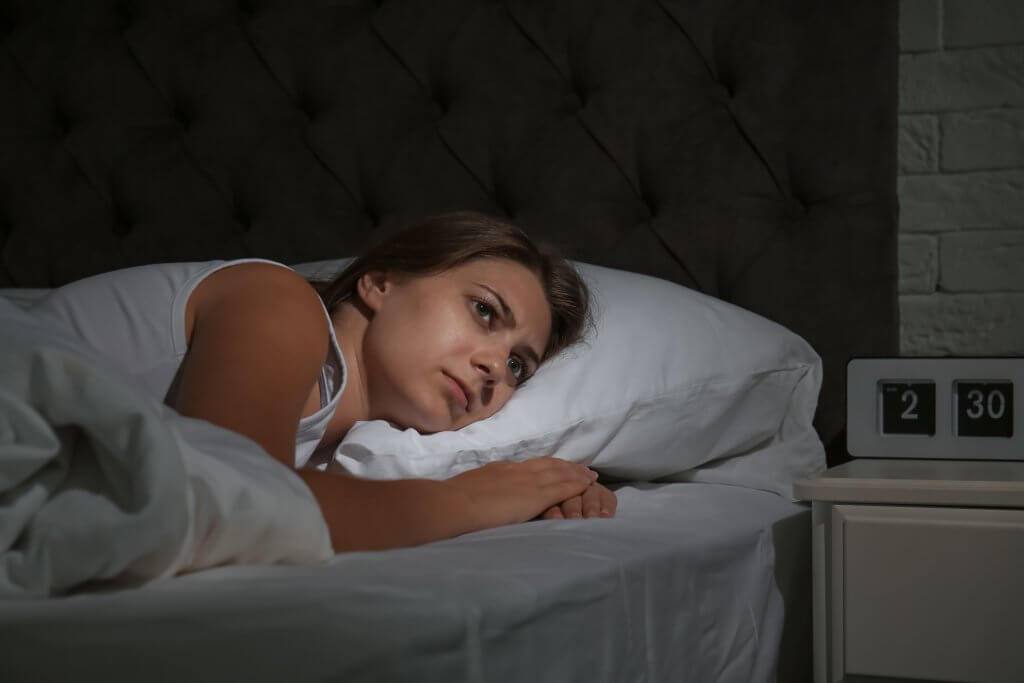
You wake up at 3 a.m. soaked, heart racing, mind already spinning with tomorrow’s worries. You try to get back to sleep. You cannot…
Menopause Sleep Problems Are Not Just Tiredness
Most conversations about menopause focus on hot flashes, irregular periods, or weight changes. But ask any woman in the thick of it what is actually affecting her quality of life, and the answer is usually the same.
Sleep. Or the complete lack of it.
What nobody tells you is that menopause sleep problems are not just a side effect of menopause. For many women, poor sleep is the engine driving everything else, including anxiety, low mood, brain fog, and an emotional heaviness that is hard to explain to anyone who is not living it.
This is not about needing more discipline at bedtime. This is about hormones, and specifically about what happens to your brain and your nervous system when estrogen and progesterone begin to decline.
Let us get into it properly.
What Is Actually Happening in Your Body During Menopause Sleep Problems?
Your sleep is regulated by a delicate hormonal system, and menopause disrupts almost every part of it.
Estrogen Decline and the Thermostat Problem
Estrogen plays a significant role in regulating your body temperature. As levels drop during perimenopause and menopause, the hypothalamus, the part of your brain that acts as your internal thermostat, becomes hypersensitive to even tiny changes in core body temperature.
The result? Hot flashes and night sweats that jolt you out of deep sleep, sometimes multiple times a night. You are not just warm. You are being pulled out of the most restorative stages of sleep repeatedly, night after night.
Research published in the Menopause Journal (2024) confirms that menopause sleep problems linked to vasomotor symptoms like hot flashes and night sweats are among the most common and disruptive experiences during the menopausal transition.
Progesterone and the Loss of Your Natural Sleep Hormone
Here is something that often surprises women. Progesterone is not just a reproductive hormone. It has a powerful sedating effect on the brain.
Progesterone acts on GABA receptors, the same receptors that sleep medications and anti-anxiety drugs target. It has calming, sleep-promoting effects that most women have benefited from throughout their adult lives without even knowing it.
When progesterone drops in menopause, that natural sedation goes away. Falling asleep becomes harder. Staying asleep becomes nearly impossible. And the anxiety that often shows up alongside menopause sleep problems? That is partly because GABA activity drops along with progesterone.
Melatonin Drops Too
Melatonin is the hormone that signals to your body that it is time to sleep. Production of melatonin declines with age and is partly influenced by estrogen and progesterone. So during menopause, women often find their natural sleep signal is weaker than it used to be. Your body simply does not get the same clear ‘time to sleep now’ message it once did.
The Menopause Sleep-Mental Health Loop
This is the part that makes menopause sleep problems feel so much heavier than just being tired.
Poor sleep and mental health do not just coexist during menopause. They actively make each other worse.
Sleep Deprivation Amplifies Emotional Responses
When you are sleep-deprived, the amygdala, the part of your brain responsible for emotional reactions, becomes overactive. At the same time, your prefrontal cortex, the part that helps you regulate those reactions, goes quiet.
The result is that small frustrations feel enormous. Social situations feel draining. Anxiety spikes at things that would normally be manageable. You feel less like yourself, less patient, less resilient.
For women with menopause sleep problems, this is not a personality change. It is a predictable neurological response to disrupted sleep.
Anxiety Makes Sleep Worse, and Poor Sleep Makes Anxiety Worse
Here is the loop that is genuinely cruel. Falling estrogen and progesterone create anxiety directly through their effects on serotonin and GABA. That anxiety then makes it harder to fall asleep and stay asleep. The poor sleep raises cortisol, the stress hormone. High cortisol raises anxiety further. And the cycle continues.
A systematic review published in PMC (2023) confirmed that depression and anxiety are significantly more common during menopause, and that sleep disturbances are among the strongest mediating factors.
The Emotional Weight Nobody Names
The truth is that many women experiencing menopause sleep problems also carry a layer of grief and identity shift that makes the mental health piece heavier. Midlife in India often brings together career pressure, caregiving for aging parents, children leaving home, and a culture that has very little language for what women go through during menopause.
The emotional heaviness is not only hormonal. It is also social. And when you strip away sleep, the emotional reserves that help women navigate all of that simply run dry.
Why Menopause Sleep Problems Hit Differently for Women in India
The biology is universal. But the lived experience is not.
Sleep Is Not Treated as a Health Priority
In many Indian households, poor sleep is still framed as a matter of willpower or stress management. Menopause is rarely discussed openly, and connecting menopause sleep problems to hormonal changes is not yet a common part of public health conversations. Women often try to push through, managing on five or six hours while running households and careers, without anyone naming what is actually happening to them.
Hot Weather Makes Night Sweats Worse
India’s climate adds a practical layer. Night sweats in a warm, humid bedroom are significantly harder to manage than in cooler climates. Many women do not have access to air conditioning, and even those who do find that managing room temperature only partially helps, because the heat is coming from within, not just from outside.
The Stigma Around Seeking Help for Mental Health
Anxiety and low mood linked to menopause sleep problems are often minimized or misunderstood. Women are told they are simply getting older, or that feeling this way is normal and expected. Seeking mental health support carries stigma in many communities. And because menopause is not widely discussed, many women do not connect their mood changes to their sleep changes, and neither do their doctors.
Answer these questions to check whether your sleep may be affecting your mental health: |
1. Do you wake up more than twice a night most nights? |
2. Do you feel anxious or low in mood more often since your sleep worsened? |
3. Do you feel emotionally exhausted by mid-morning even after a full night in bed? |
4. Do you notice your patience or resilience is significantly lower than it used to be? |
5. Have night sweats or hot flashes woken you in the last month? |
If you said yes to 3 or more: your sleep and mental health are likely in a feedback loop. This is a conversation worth having with your doctor, and specifically about whether hormonal changes are driving it. |
Menopause Sleep Problems vs. General Insomnia: Knowing the Difference
Not all sleep problems during menopause are purely hormonal, but many are. Here is a quick reference:
Menopause-Related Sleep Problem | General Insomnia (Non-Hormonal) |
Waking in the night with heat or sweating | Difficulty falling asleep with no physical trigger |
Sleep worsens around your cycle or during perimenopause | Sleep problems have been present for years, unrelated to hormones |
Anxiety feels worse specifically in the evening and early morning | Anxiety is present throughout the day regardless of sleep |
Fatigue does not improve even on nights with fewer hot flashes | Fatigue improves significantly after a better night |
Mood changes track closely with sleep quality night to night | Mood is consistently low regardless of sleep duration |
What You Can Do About Menopause Sleep Problems
The good news is that menopause sleep problems are not something you simply have to endure. There are effective options, and you deserve to know what they are.
1. Talk to Your Doctor About HRT
Hormone replacement therapy is one of the most effective options for menopause sleep problems that are driven by hot flashes and night sweats. Multiple studies have shown that HRT, particularly formulations that include progesterone, can improve sleep quality significantly. The British Menopause Society notes that the addition of progesterone to HRT is especially beneficial for sleep because of its direct GABA-activating effects.
If you have been told HRT is too risky for you, ask your doctor to walk through the specific evidence as it applies to your health profile. Guidelines have changed significantly, and many women who were told to avoid HRT years ago may now be candidates.
2. Cool Your Sleep Environment as Much as Possible
Lightweight cotton bedding, keeping a cold water bottle nearby, using a fan, and sleeping in a lower-temperature room all help reduce the impact of night sweats. Layering bedding so you can adjust quickly during the night matters more than most women realize. Small changes to the sleeping environment do not fix the hormonal cause, but they reduce how severely each hot flash disrupts sleep.
3. Wind Down the Nervous System Before Bed
With progesterone low and cortisol high, your nervous system is more activated than it used to be. Evening routines that actively calm it down matter more now than they did ten years ago. This means dimming lights an hour before bed, avoiding screens (blue light suppresses the already-weak melatonin signal), keeping a consistent sleep time, and considering magnesium glycinate, which has calming effects and is generally well-tolerated.
4. Address the Anxiety Directly, Not Just the Sleep
Because the anxiety and sleep problems are in a feedback loop, treating only one side is often not enough. Cognitive behavioral therapy for insomnia (CBT-I) has strong evidence and is now available through online platforms. Even a few sessions can meaningfully interrupt the cycle of anxious wakefulness that menopause sleep problems create. Talk to your doctor about whether this approach is right for you alongside other treatment.
5. Get Your Hormones Tested Properly
If your doctor has not tested your estrogen, progesterone, FSH (follicle-stimulating hormone), and thyroid function, ask for it. Sleep problems, anxiety, and mood changes can also be driven by thyroid issues that commonly develop around the same time as perimenopause and are sometimes missed. Understanding exactly what your hormone levels are doing gives you and your doctor a much clearer starting point.
6. Do Not Dismiss the Mental Health Piece
If you are experiencing anxiety or low mood alongside menopause sleep problems, both deserve to be addressed. Antidepressants are not the recommended first-line treatment for mood changes caused by menopause (per guidelines from the Menopause Charity UK and others), but they do have a role in some cases. What matters is that you are not told to just manage on your own. The mood symptoms are real, they have a biological basis, and treatment is available.
FAQs
Because menopause sleep problems are not just about quantity of sleep. They disrupt the deep, restorative stages of sleep repeatedly, which means even if you spend eight hours in bed, you are not getting the same quality of rest. Add the hormonal effect on brain chemistry, specifically lower GABA and serotonin activity, and the fatigue carries an emotional and neurological weight that ordinary tiredness does not.
For many women, yes. Hormone replacement therapy (HRT), particularly formulations that include progesterone, has been shown to improve sleep quality, especially when hot flashes and night sweats are disrupting rest. Progesterone has calming effects on the brain that can support better sleep. Whether HRT is appropriate depends on an individual’s health profile and should be discussed with a qualified healthcare professional.
Very common, and completely understandable. When sleep is disrupted over an extended period, emotional regulation, patience, resilience, and cognitive sharpness all genuinely deteriorate. This is not a personality flaw or emotional weakness. It is the predictable result of chronic sleep deprivation layered with hormonal changes affecting brain chemistry. With the right support and treatment, most women report feeling significantly more like themselves again.
This varies widely. Some women experience significant improvement within a year of becoming fully postmenopausal, as hormones stabilize at their new lower baseline. Others find sleep problems persist for several years. Research from MDPI (2024) found that women who had been menopausal for five or more years reported better sleep quality on average than those in the first five years of menopause. Early intervention matters because it can prevent the anxiety-sleep loop from becoming deeply entrenched.
For many women, yes. Hormone replacement therapy (HRT), particularly formulations that include progesterone, has been shown to improve sleep quality, especially when hot flashes and night sweats are disrupting rest. Progesterone has calming effects on the brain that can support better sleep. Whether HRT is appropriate depends on an individual’s health profile and should be discussed with a qualified healthcare professional.
Yes. Hot flashes and night sweats are one cause of menopause-related sleep problems, but they are not the only cause. Declining progesterone can disrupt sleep directly, even in the absence of vasomotor symptoms. Many women experience difficulty falling asleep, frequent nighttime awakenings, or early morning waking due to hormonal changes alone.