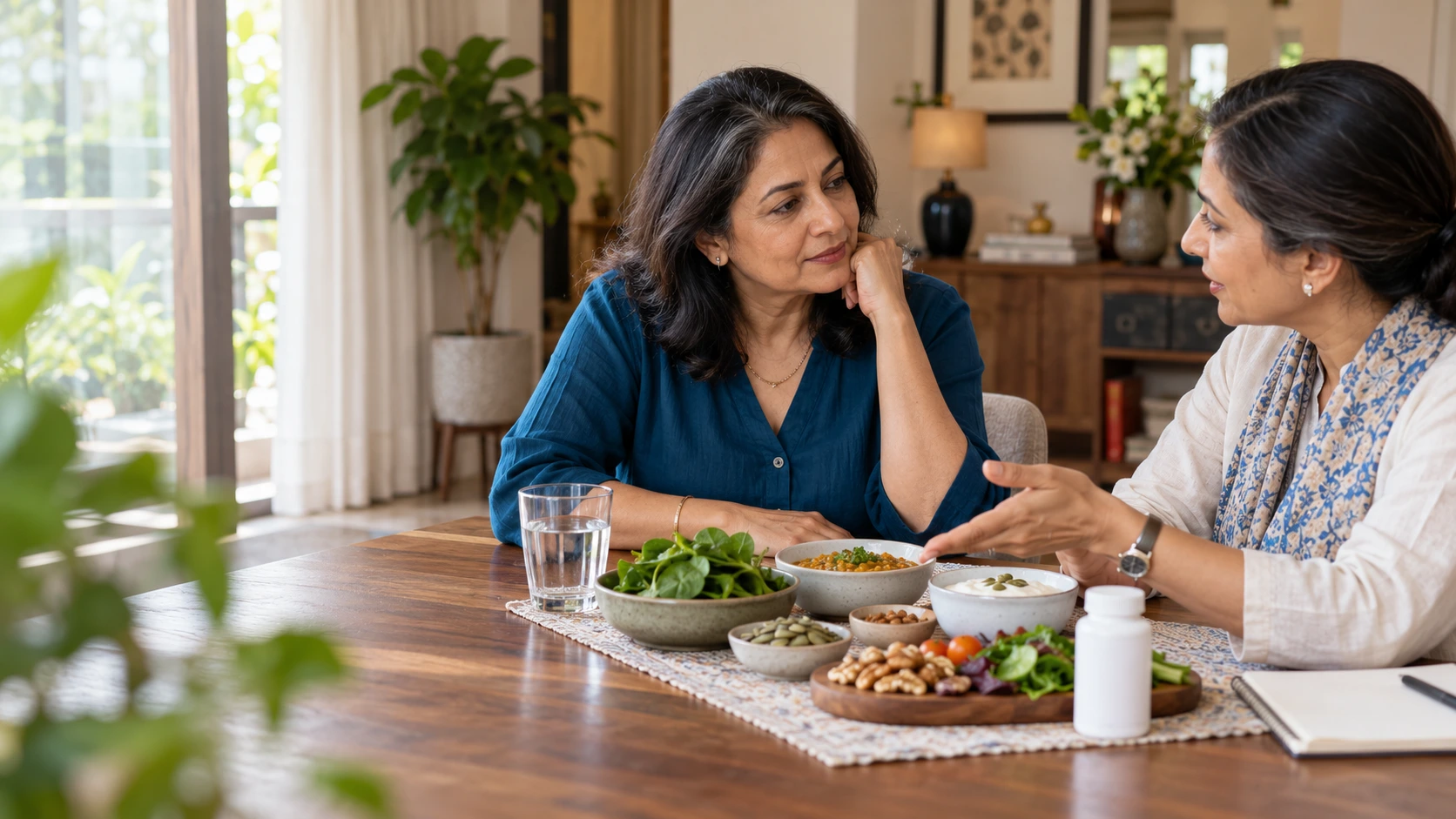

Emotional needs of women are not mysterious. They are not excessive. They are not “too much.”
They are human needs.
The need to feel seen.
The need to feel heard.
The need to feel emotionally safe.
The need to rest without guilt.
The need to express pain without immediately comforting someone else.
The need to be cared for, not only useful.
And yet, for many women, these needs become the last thing on the list. Not because women do not matter, but because many women were never taught that their emotional needs deserved the same urgency as everyone else’s.
They were taught to care. To adjust. To manage. To stay strong. To keep peace. To hold the family, the relationship, the workplace, the children, the parents and the home together.
Over time, this pattern becomes invisible. It stops feeling like sacrifice and starts feeling like personality.
This article is for every woman who has ever said, “I am fine,” when she was not. For every woman who has given more than she had and called it love. For every woman who has carried everyone’s emotional weight and rarely asked who was carrying hers.
What Are Emotional Needs?
Emotional needs are the psychological requirements that help a person feel safe, valued, connected and emotionally regulated.
They include the need for affection, respect, belonging, reassurance, emotional expression, autonomy, rest, intimacy, validation and support. They also include the right to have feelings without being judged, dismissed or rushed into being “okay.”
| Emotional Need | What It Sounds Like in Real Life |
|---|---|
| To be heard | “Please listen without fixing me immediately.” |
| To be seen | “Notice what I am carrying.” |
| To feel safe | “Let me express myself without fear.” |
| To rest | “I need space that does not require performance.” |
| To be supported | “I do not want to do this alone.” |
| To belong | “I want to feel emotionally included.” |
When emotional needs go unmet for years, they do not disappear. They often return as irritability, exhaustion, resentment, numbness, anxiety, loneliness, sleep disturbance, low mood or a quiet sense of disconnection from oneself.
This is not weakness. It is emotional deprivation becoming visible.
(USU).
Why Emotional Needs of Women Are So Often Ignored?
The emotional needs of women are often ignored because women are socialised to notice everyone else first.
This is especially true in cultures where femininity is closely linked with sacrifice, patience, adjustment and caregiving. A woman may become highly skilled at reading the room, anticipating conflict, managing family moods and keeping others comfortable, while losing touch with her own internal signals.
In India, this becomes even more layered. Many women manage paid work, unpaid domestic work, caregiving, social expectations and emotional labour at the same time. Ministry of Statistics and Programme Implementation linked reports on time use have shown that Indian women spend several hours daily on unpaid domestic and caregiving work, far more than men. This is not only a time issue. It is an emotional bandwidth issue.
(LL).
11 Painful Reasons the Emotional Needs of Women Stay Ignored
1. They Were Taught That Caring for Others Is Their Primary Purpose
Many women grow up absorbing one message repeatedly: a good woman gives.
She gives time. She gives attention. She gives softness. She gives forgiveness. She gives second chances. She gives emotional availability even when she has nothing left.
The problem is not care itself. Care is beautiful. The problem begins when care becomes one-directional.
A woman can spend years becoming fluent in everyone else’s emotional life while remaining almost unfamiliar with her own.
2. Emotional Labour Has No Off Switch
Emotional labour is the invisible work of managing feelings, moods, relationships and emotional comfort.
It is remembering who is upset. Sensing tension before it becomes conflict. Softening difficult conversations. Keeping celebrations meaningful. Managing the emotional temperature of the home. Checking on people. Anticipating needs.
The sociologist Arlie Hochschild popularised the idea of emotional labour in her work on how emotions are managed as part of social and professional roles. For women, this labour often extends beyond work into homes, marriages, parenting, friendships and caregiving.
Because it is invisible, it is rarely counted. Because it is rarely counted, women are expected to keep doing it.
3. People Pleasing Becomes a Survival Strategy
People pleasing is often misunderstood as niceness.
For many women, it is not niceness. It is protection.
It may begin in childhood, in homes where anger felt unsafe, needs were dismissed, or approval had to be earned by being easy, agreeable and helpful. A girl learns to scan the room before she speaks. She learns to make herself acceptable. She learns that peace is safer than honesty.
By adulthood, this becomes automatic.
She knows what others need before they ask.
She says yes before checking with herself.
She avoids conflict even when resentment is building.
She calls it kindness, but often it is self-abandonment.
4. Guilt Polices Every Attempt at Self Prioritisation
The moment a woman begins to honour her own emotional needs, guilt often arrives.
Guilt for resting.
Guilt for saying no.
Guilt for needing help.
Guilt for wanting space.
Guilt for not being endlessly available.
This guilt is not always a sign that she is doing something wrong. Often, it is a sign that she is doing something unfamiliar.
For women who have been trained to put themselves last, self care can initially feel like selfishness. That does not mean it is selfish. It means the nervous system is adjusting to a new boundary.
5. Caregiving Consumes Everything That Is Left
Caregiving can be meaningful, intimate and deeply loving. It can also be relentless.
Women often care for children, ageing parents, partners, in-laws and family members with illness, sometimes while managing professional responsibilities and household work. The emotional bandwidth required can leave very little room for self-attention.
Caregiver burnout is not a failure of love. It is what happens when giving is constant and replenishment is absent.
A woman may not stop caring. She may simply stop feeling herself.
6. They Are Conditioned to Minimise What They Feel
Many women learn to edit their emotional responses before anyone else can criticise them.
“Maybe I am overreacting.”
“Maybe it is not that serious.”
“Maybe I should just let it go.”
“Maybe I am being too sensitive.”
Over time, this self-minimisation becomes internalised. A woman may stop trusting her own emotional signals. She may wait until she is exhausted, resentful or physically unwell before admitting something is wrong.
Emotional regulation does not mean emotional erasure. A feeling does not have to be dramatic to be valid.
7. The Appearance of Strength Becomes Its Own Prison
There is a particular kind of woman everyone depends on because she seems so capable.
She handles crises. She keeps functioning. She remembers everything. She reassures others. She rarely asks for help.
But strength can become a prison when a woman is only allowed to be strong.
Behind the dependable woman may be someone who is deeply tired, but unsure how to admit it. Not because she does not need support, but because her identity has become fused with not needing anything.
When strength leaves no room for softness, it becomes isolation.
8. Hormonal Changes Make Emotional Suppression Harder
For women in their late 30s, 40s and 50s, emotional needs may become harder to ignore because the body itself is changing.
Perimenopause and menopause can affect sleep, mood, anxiety, hot flashes, night sweats, energy, body comfort and emotional regulation. During this phase, coping strategies that worked for decades may suddenly feel insufficient.
This does not mean every emotional struggle is hormonal. It means hormones can be part of the emotional picture.
A woman may not be “suddenly difficult.” She may be in a phase where her biology, stress load and emotional history are finally meeting each other.
9. There Is No Space in the Day That Belongs Only to Her
Emotional processing requires space.
Not just time, but space that is not interrupted, demanded from, monitored or filled with another responsibility.
Many women do not have this. Every hour belongs to someone or something: work, meals, school, parents, partners, calls, errands, messages, deadlines, appointments.
When there is no private space, feelings remain unprocessed. They accumulate in the background.
Eventually, a woman may say, “I do not even know what I feel anymore.”
That sentence is not confusion. It is depletion.
10. Asking for Help Feels Like Admitting Failure
For women who have been praised for managing everything, asking for help can feel like collapse.
It may feel embarrassing. Exposing. Unsafe. Even shameful.
But needing help is not failure. It is human design. People are not built to regulate every emotion, carry every responsibility and solve every problem alone.
Support is not something a woman earns after she has broken down. It is something she deserves before she reaches that point.
11. No One Has Ever Asked Her How She Actually Is
This may be the most quietly painful reason.
For some women, emotional needs remain ignored because no one asks with sincerity.
People ask for updates.
They ask for tasks.
They ask for decisions.
They ask for care.
But they do not ask, slowly and genuinely, “How are you really?”
The loneliness of being unseen does not always announce itself as loneliness. Sometimes it looks like busyness. Efficiency. Self sufficiency. A woman getting on with things.
Until one day, she realises she has been emotionally alone for years.
(Verywell Mind).
What Unmet Emotional Needs Can Cost Over Time
Unmet emotional needs can affect the body, mind and relationships.
They may not create a single dramatic symptom. Instead, they often create a pattern of slow emotional wear.
| Unmet Need | Possible Emotional Cost | Possible Body Signal |
|---|---|---|
| Not feeling heard | Resentment, withdrawal | Jaw tension, headaches |
| No emotional safety | Anxiety, guardedness | Poor sleep, restlessness |
| Constant caregiving | Burnout, numbness | Fatigue, body aches |
| No personal space | Irritability, overwhelm | Digestive discomfort |
| Suppressed feelings | Low mood, disconnection | Tight chest, heaviness |
| Lack of support | Loneliness, hopelessness | Low energy, poor recovery |
These symptoms can also overlap with depression, anxiety disorders, thyroid imbalance, low iron, vitamin deficiencies, sleep disorders, perimenopause and chronic stress. If symptoms persist or interfere with daily life, professional evaluation is important.
(The Mind Solution).
Emotional Needs Versus Emotional Dependence
Many women worry that needing emotional support makes them dependent. It does not.
| Emotional Needs | Emotional Dependence |
|---|---|
| Healthy and human | Fear based and consuming |
| Can coexist with independence | Often feels impossible to function alone |
| Strengthens relationships | Can create pressure or panic |
| Allows honest connection | May come from unresolved insecurity |
| Supports wellbeing | Often needs therapeutic support |
Having emotional needs does not make a woman needy. It makes her alive, relational and human.
What Actually Helps Women Honour Their Emotional Needs?
A.Start by Noticing:
Before emotional needs can be met, they have to be identified.
Ask yourself:
What am I feeling?
What do I need?
What am I pretending not to need?
What am I tired of carrying alone?
This is not indulgence. It is emotional literacy.
B.Set Limits Without Apology:
A limit is not rejection. It is information about what is sustainable.
You can love people and still need rest.
You can care deeply and still say no.
You can be responsible without being endlessly available.
Boundaries protect connection from becoming resentment.
C.Seek Spaces Where You Are Taken Seriously:
Therapy, women’s communities, peer groups and emotionally mature friendships can all become corrective spaces.
A corrective space is one where your feelings are not dismissed, rushed, mocked or minimised. It is where your inner life is treated as real.
For women who have spent years self-abandoning, being emotionally witnessed can be profoundly healing.
Address the Hormonal Layer When Needed
If perimenopause, menopause, poor sleep, mood swings, hot flashes, anxiety or fatigue are present, emotional care should include medical care.
A gynaecologist, psychologist, nutritionist or women’s health expert can help separate emotional overload from hormonal symptoms, nutrient deficiencies, thyroid concerns, sleep disruption or clinical anxiety and depression.
The mind and body are not separate conversations.
Where Miror Revive and Miror Bliss Can Actually Help
No supplement can replace emotional support, therapy or medical care. But supporting the body can make emotional work more possible.
Miror Revive is designed for women over 30 navigating fatigue, low energy, mood depletion, brain fog, gut health concerns, immunity and healthy ageing needs. It includes ingredients such as trans-resveratrol from Japanese knotweed extract, CoQ10, curcumin, brahmi, vitamin C, glutathione and ashwagandha.
Miror Bliss is designed for women navigating perimenopause, with 18 ingredients including magnesium glycinate, shatavari, lodhra bark and ashwagandha. It supports sleep, mood, hot flashes, menstrual discomfort and hormonal wellness during the transition.
DISCLAIMER: Revive and Bliss are not treatments for emotional neglect, depression or anxiety. They can be part of a broader women’s wellness routine that includes clinical guidance, nutrition, sleep, movement, emotional support and community.
The Miror Perspective
The emotional needs of women are not problems to be managed. They are not evidence of weakness, excess or instability. They are the reasonable needs of human beings who have often been giving more than they have been receiving for years.
You are not too much.
Your needs are not too demanding.
Your feelings are not inconvenient.
You have simply been taught to be more fluent in everyone else’s emotional life than your own.
That can change.
It begins with naming the need. It continues with support, boundaries, honest care and spaces where women are not expected to perform strength all the time.
Miror is India’s largest 360 degree women’s wellness ecosystem, with over 95,000 women across the country. Through the Miror app, communities, expert events and access to doctors, OBGYNs, psychologists, nutritionists and dietitians, women can find support that is science backed, compassionate and community driven.
Because your emotional needs deserve the same attention you have always given everyone else’s.
Join the Miror app today and find expert led support for every phase of womanhood.
FAQs
The emotional needs of women include feeling seen, heard, valued, respected, emotionally safe, supported and connected. Women also need rest, personal space, affection, validation, honest communication and the freedom to express feelings without guilt or judgement. These needs are not excessive. They are essential for emotional wellbeing and healthy relationships.
Many women ignore their emotional needs because they are taught to care for others first. Family expectations, caregiving, emotional labour, people pleasing, guilt and the pressure to stay strong can make women place their own feelings last. Over time, this can become a pattern of self abandonment where a woman stops noticing what she needs.
When the emotional needs of women are ignored for years, they may show up as resentment, emotional numbness, anxiety, irritability, exhaustion, poor sleep, loneliness, low mood or feeling disconnected from oneself. Unmet emotional needs can also affect relationships, confidence, boundaries and overall mental health.
Women can start by noticing what they feel, naming what they need and setting small boundaries without apology. Therapy, supportive friendships, women’s communities, journaling, rest, honest conversations and medical support during perimenopause or menopause can help women reconnect with their emotional needs and stop putting themselves last.
No. Having emotional needs does not mean a woman is needy. Emotional needs are healthy human needs for connection, safety, support and understanding. Being able to express needs clearly can actually strengthen relationships. The problem is not having needs. The problem is being taught to ignore them for too long.