
If you are searching for the best protein powder for menopause, start by asking whether your everyday diet already provides enough protein.
Protein becomes more relevant in midlife because muscle mass and strength gradually decline with age. Menopause overlaps with these changes, but it does not automatically mean every woman needs a supplement. Protein rich foods should remain the foundation of a menopause diet. For more on how food choices may support common menopause symptoms, explore our complete guide to nutrition during menopause.
Protein powder is simply a convenient option when food intake falls short.
Why Do Protein Needs Matter More in Midlife?
Muscle supports strength, balance, mobility and physical independence. With age, muscle can become less responsive to the muscle building effects of protein and exercise. Lower activity and less protein rich meals can add to this change.
Adequate protein helps maintain muscle, especially when paired with resistance or strength training. Research in postmenopausal women supports resistance training for improving strength and body composition. Protein supplements can help if they close a genuine dietary gap, but extra powder does not automatically create extra muscle.
For this reason, protein for women over 40 and protein for women over 50 should be considered as part of the whole diet and activity pattern.
Best Protein Powder for Menopause: What Does Best Actually Mean?
There is no single best protein powder for menopause for everyone. The right choice should fit your nutritional needs, digestion, dietary preferences, allergies and budget.
Check:
- Protein per serving and serving size
- Protein source and amino acid quality
- Added sugar
- Ingredient list, including added flavours or sweeteners
- Allergens such as milk or soy
- Independent quality testing, where available
Do not assume a product is better because it is expensive or labelled menopause support, women’s protein or metabolism support. A simple formula with transparent labelling is often easier to assess.
How Much Protein Do Women Need During Menopause?
There is no separate official protein requirement for menopause.
National Institute of Nutrition guidance gives a Recommended Dietary Allowance, or RDA, of about 0.83 grams of protein per kilogram of body weight per day for healthy Indian adults when protein quality is adequate.
Research in older adults often evaluates around 1.0 to 1.2 grams per kilogram per day for muscle health, but this is not a universal target for every midlife woman. Protein needs during menopause vary with age, body size, activity, resistance training, muscle mass, health conditions and dietary pattern.
A practical approach is to include a protein source at breakfast, lunch and dinner. A dietician can help estimate your needs if you are unsure.
Which Type of Protein Powder Is Best for Menopause?
Whey Protein: Is It the Best Protein Powder for Menopause?
Whey is a complete dairy protein containing all essential amino acids and is rich in leucine, which helps stimulate muscle protein synthesis.
Whey concentrate generally contains more lactose, while whey isolate is more highly filtered and usually contains less. Either can work if you consume dairy and tolerate it.
Evidence in postmenopausal women suggests whey protein for menopause is most useful for muscle related outcomes when combined with resistance training.
Plant Based Protein
Plant protein for menopause can suit vegetarians, vegans or women who avoid dairy. Soy is a complete protein. Pea, rice and other plant proteins have different amino acid profiles, so blends can be useful.
Research comparing soy and whey suggests both can support muscle and strength when overall protein intake and resistance training are appropriate. Neither source is automatically better.
Other Protein Options
Casein is another complete dairy protein, while egg white protein may suit some women who avoid dairy.
Collagen is protein, but it does not have the same complete essential amino acid profile. It should not be the main protein source when the goal is meeting protein needs for muscle health.
What Should You Look for on a Protein Powder Label?
Start with the nutrition panel, not front of pack claims. Check grams of protein per serving, serving size and the ingredient list.
Added sugar contributes extra calories. Added sweeteners and flavours may also matter depending on personal preference and tolerance. Check allergens carefully, especially milk, soy and egg.
Choose reputable products with transparent labelling and independent quality testing where available. Claims such as hormone support or fat burning do not make a powder more suitable.
Can Protein Powder Help With Weight Management During Menopause?
Protein powder itself does not cause weight loss.
Adequate protein can support fullness and help preserve lean tissue during weight loss, but a protein shake still contributes calories. Protein and menopause weight gain must therefore be considered within the overall diet.
Food quality, total calorie intake, physical activity, strength training, sleep and other individual factors also matter. Protein powder can be convenient, but it is not a fat loss product.
How to Include Protein Powder in Your Everyday Diet
If meals already provide enough protein, you may not need a powder.
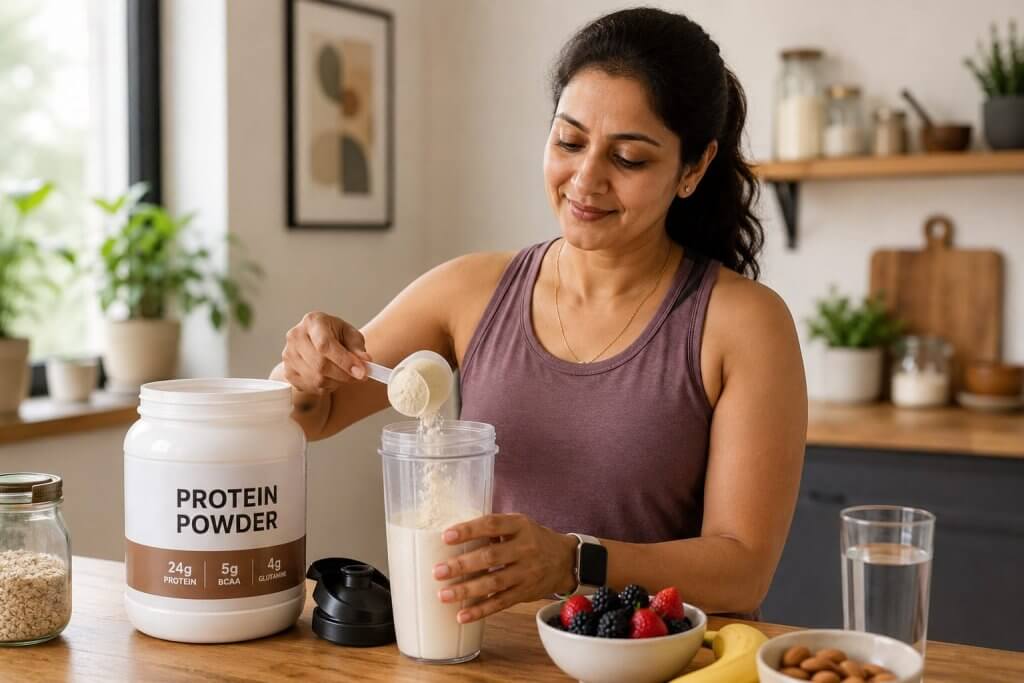
If there is a genuine gap, add it to a smoothie, oats or curd, use it after strength training when a meal is not convenient, or pair it with fruit as part of a balanced snack.
Keep food based sources central to menopause nutrition, including dal, chana, rajma, paneer, curd, milk, tofu, soy chunks, eggs, fish, chicken and lean meat according to preference.
Protein powder should supplement meals, not replace them.
Who May Need Extra Care When Choosing a Protein Powder?
Seek personalised advice if you have kidney disease or another significant medical condition, food allergies, major digestive intolerance, specific dietary restrictions, or take multiple medicines.
Pregnant or breastfeeding women should also discuss supplements with an appropriate healthcare professional, especially products containing herbs or added nutrients.
What Protein Powder Cannot Do
Protein powder does not replace a balanced diet, increase estrogen, balance hormones, treat menopause, automatically cause weight loss or replace strength training. It is not necessary for every woman.
Choosing What Works for You
The best protein powder for menopause is not necessarily the one with the strongest marketing claims. It is the one that fits individual nutritional needs, dietary preferences, tolerance and overall eating pattern.
Protein rich foods should form the foundation of a menopause diet. When food alone does not provide enough protein, a simple, well tolerated protein powder can be a convenient way to help meet nutritional needs. It should be viewed as a supplement to a balanced diet, not as a menopause treatment, hormone balancing product or shortcut to weight loss.
For more practical, expert led guidance on nutrition, fitness and health through perimenopause and menopause, download the MIROR app on the Apple App Store or Google Play Store and access support designed for women through midlife.
FAQs
Protein powder can be used regularly by healthy adults when it fits appropriately within the overall diet. It should complement nutritious food rather than replace meals, and women with kidney disease or other significant medical conditions should seek personalized guidance.
There is no specific time of day that makes protein powder more effective during menopause. Meeting overall daily protein needs and distributing protein across meals is generally more important, although taking protein after strength training can be a convenient option.
Protein powder does not directly cause weight loss or prevent menopause related weight changes. Adequate protein may support fullness and help maintain muscle while managing weight, but total calorie intake, diet quality, physical activity, sleep and other lifestyle factors also matter.
Women can continue to build and maintain muscle well into midlife and beyond. Protein powder can help provide the protein needed for this process, but progressive strength training, sufficient total protein, adequate nutrition and recovery remain the most important factors.
No. Many women can meet their protein needs through a balanced diet containing adequate protein rich foods. Protein powder may be useful when dietary intake is insufficient, appetite is low or getting enough protein through meals is difficult.