


Being scared to start hormone therapy can leave you caught between two competing thoughts:
“What if it helps me? And what if something goes wrong?”
You research the treatment, read about possible side effects, speak to other women and look for reassurance. Yet somehow, the more you read, the more frightened you become.
This is not necessarily a failure of research. Sometimes, the problem is that fear has begun directing the research.
As a clinical psychologist, I find that one concern often sits underneath these conversations: What if something goes wrong?
Let’s understand why this thought can feel so convincing, why fear sometimes resembles intuition, and how to distinguish a genuine medical concern from an anxious prediction.
1. Why Does a Possibility Start Feeling Like a Probability?
Our minds often judge how likely something is by how easily we can bring it to mind. Psychologists call this the availability heuristic.
This mental shortcut usually serves us well. But when we are frightened, imagining an event can make it feel more likely. Research has shown that the easier people find it to imagine contracting a particular illness, the more likely they may judge it to be.
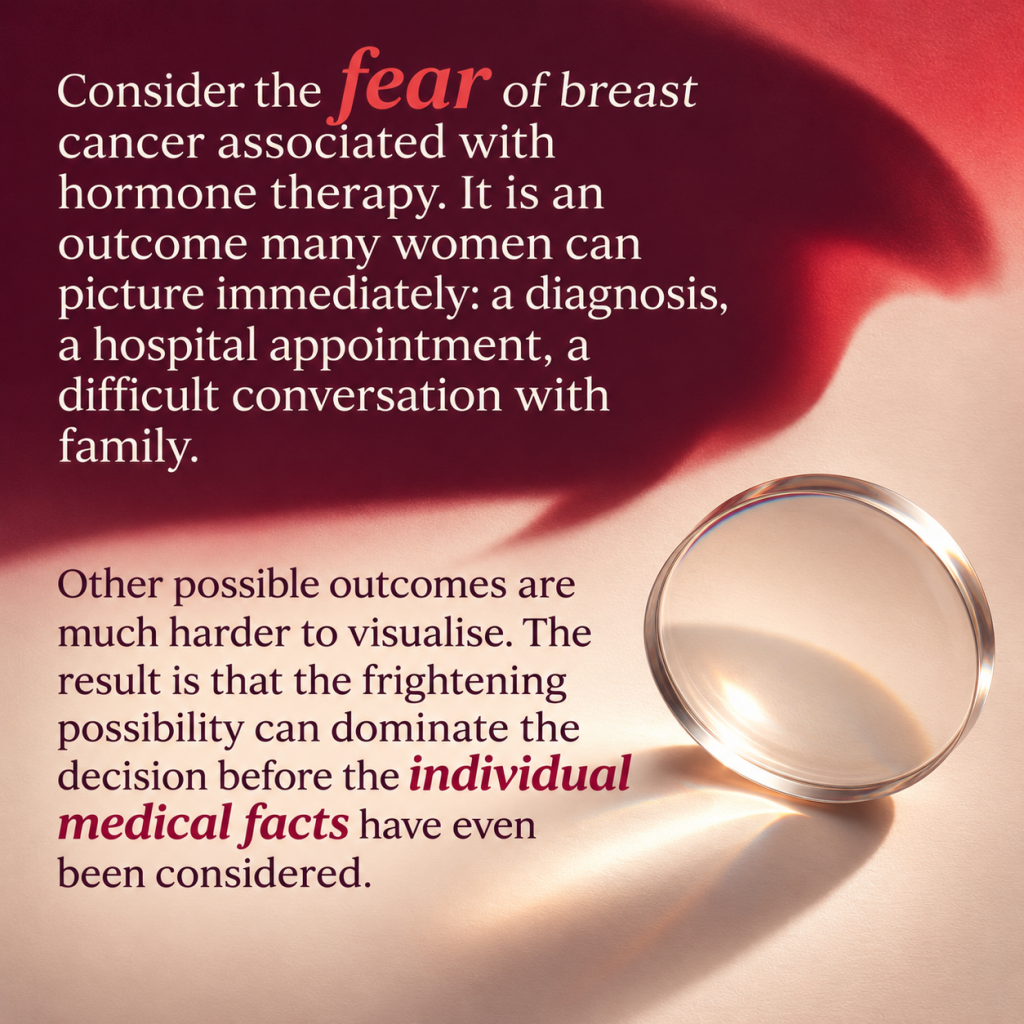
Your mind may be responding to how vividly you can imagine something, rather than how likely it is to happen.
2. Why Do the Numbers Sometimes Fail to Reassure Us?
When an outcome feels frightening, knowing that its probability is relatively low may not bring much relief.
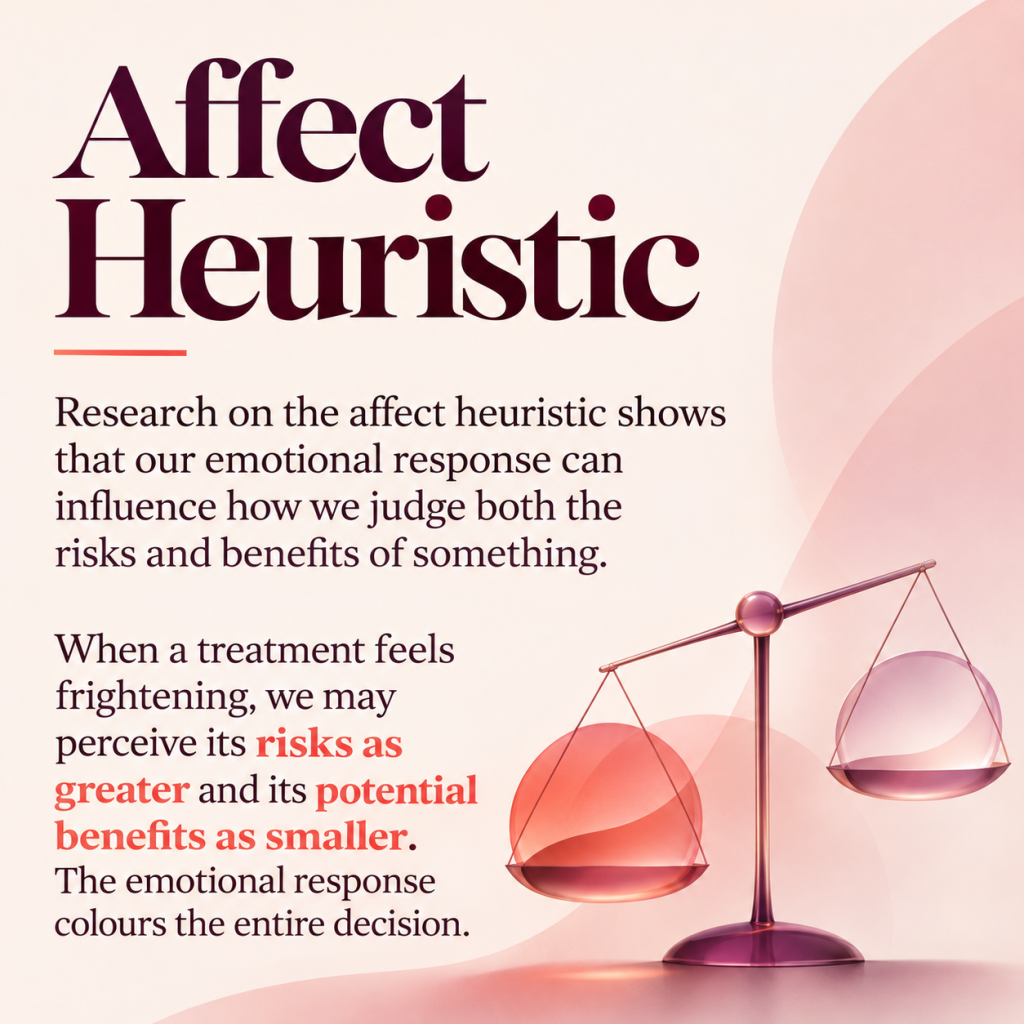
This is why simply hearing the risk is small may not settle your concerns.
You may understand the explanation intellectually and still feel anxious. That does not automatically mean you need more statistics. It may mean the emotional part of the decision needs attention too.
(Verywell Health)
3. Why Is It Easier to Picture Something Going Wrong?
There is an important imbalance in how we imagine treatment decisions.
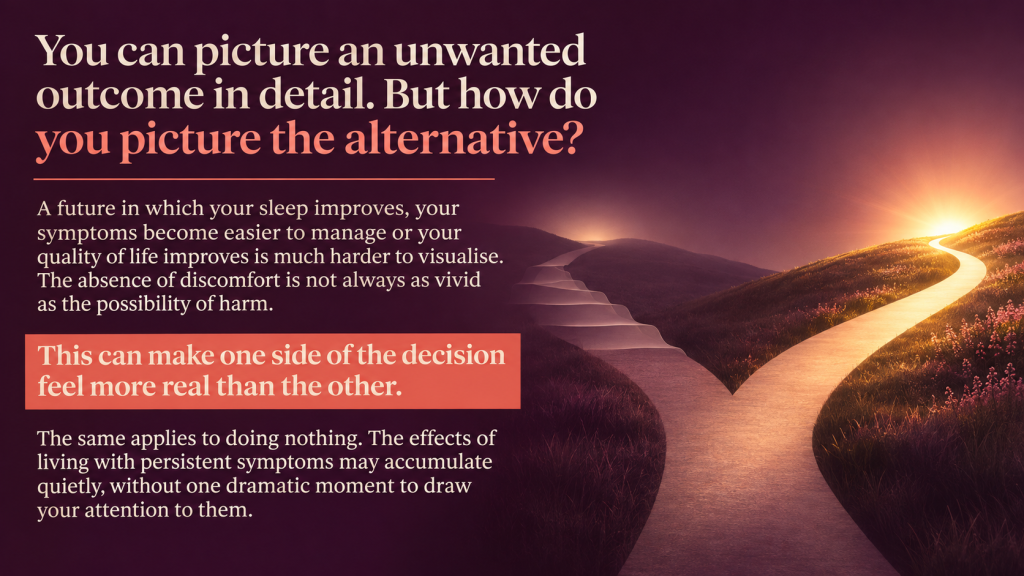
This does not mean the risks of treatment should be dismissed or that every woman needs hormone therapy.
It means both the decision to start treatment and the decision not to should be considered thoughtfully.
4. Why Can Fear Feel Like Intuition?
Women sometimes tell me:
I have a bad feeling about it. What if my gut is trying to warn me?
There is a psychological pattern known as emotional reasoning. It occurs when we interpret our feelings as evidence about the situation itself.
The thinking goes:
I feel afraid, so there must be something dangerous here.
Research has examined this pattern in people experiencing anxiety, showing how feelings of anxiety can influence judgements of danger.
But fear and intuition are not automatically the same thing.
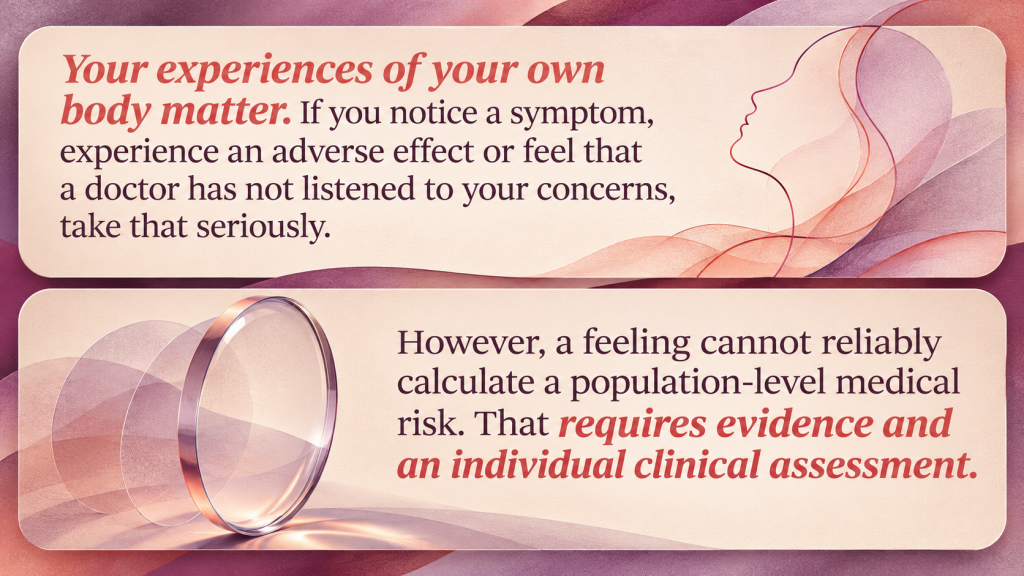
The useful question is not simply whether you should trust your gut. It is:
What is my feeling actually telling me, and what still needs a medical answer?
5. Three Questions to Separate Fear from Facts
When you’re scared to start hormone therapy, try working through these three questions before seeking more information.
Question 1: Is My Concern Specific and Answerable?
What if something goes wrong? is frightening, but it is too broad to answer.
Compare that with: Given my personal and family medical history, are there particular risks I should discuss before considering hormone therapy?
The second question gives your doctor something specific to assess.
Question 2: Would a Clear Answer Actually Settle It?
Imagine receiving a detailed explanation from your doctor. Would you feel reassured, or would another but what if…? immediately take its place?
A new concern appearing every time an earlier one is addressed may suggest that the difficulty is no longer simply a lack of information.
That is worth recognising, because repeatedly seeking reassurance can sometimes maintain health-related anxiety rather than resolve it.
Question 3: Has More Research Made Me Feel Better or Worse?
If weeks or months of reading have left you more frightened, pause and consider what is happening.
Are you finding genuinely useful answers, or repeatedly searching for something that will make you feel completely certain?
You may have enough information to prepare a proper medical conversation. What you need next may not be another search result, but support in working through the fear.
A practical step: Write down your specific medical questions separately from your worst-case predictions. Take the questions to your doctor. Discuss the recurring fears with a mental-health professional if they are difficult to manage.
One Last Thing to Remember
Research on regret suggests that people can experience stronger regret about actions in the short term, while regrets about inaction may become more prominent over time.
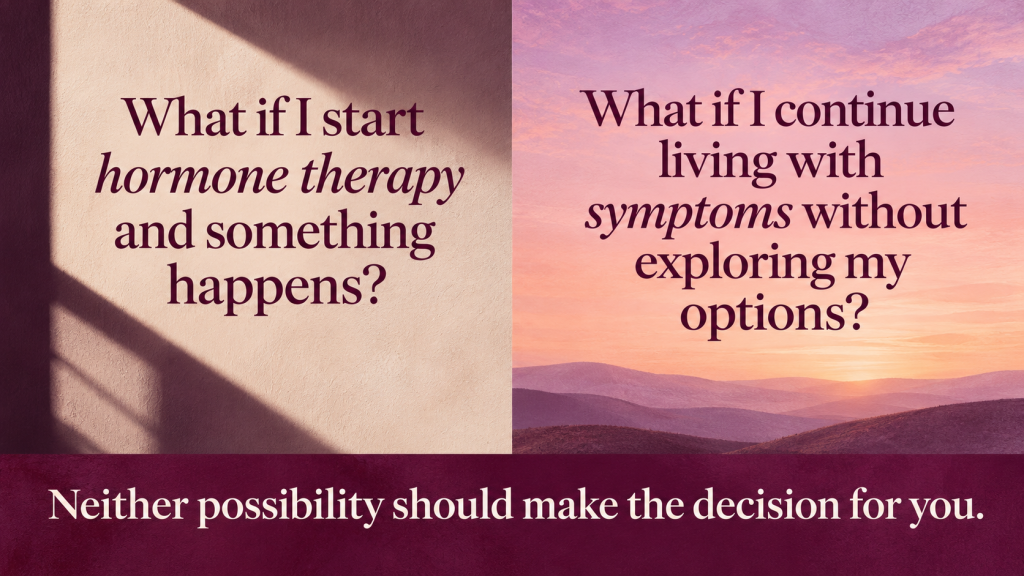
The purpose of asking questions is not to eliminate fear or persuade yourself to take treatment. It is to understand which concerns need medical answers and which need emotional support.
This is the fourth article in our series on the psychology of menopause treatment decisions. Understand your body. Understand your mind. Ask questions. Give yourself room to assess your experience. And make decisions with the right medical support.
Where Miror Fits In
Miror is India’s largest and only 360-degree integrative women’s wellness ecosystem and community.
More than 95,000 women have received expert insights and support through Miror.
Download the Miror app or join Miror Care Plus to connect with our doctors, health experts and mental-health professionals.