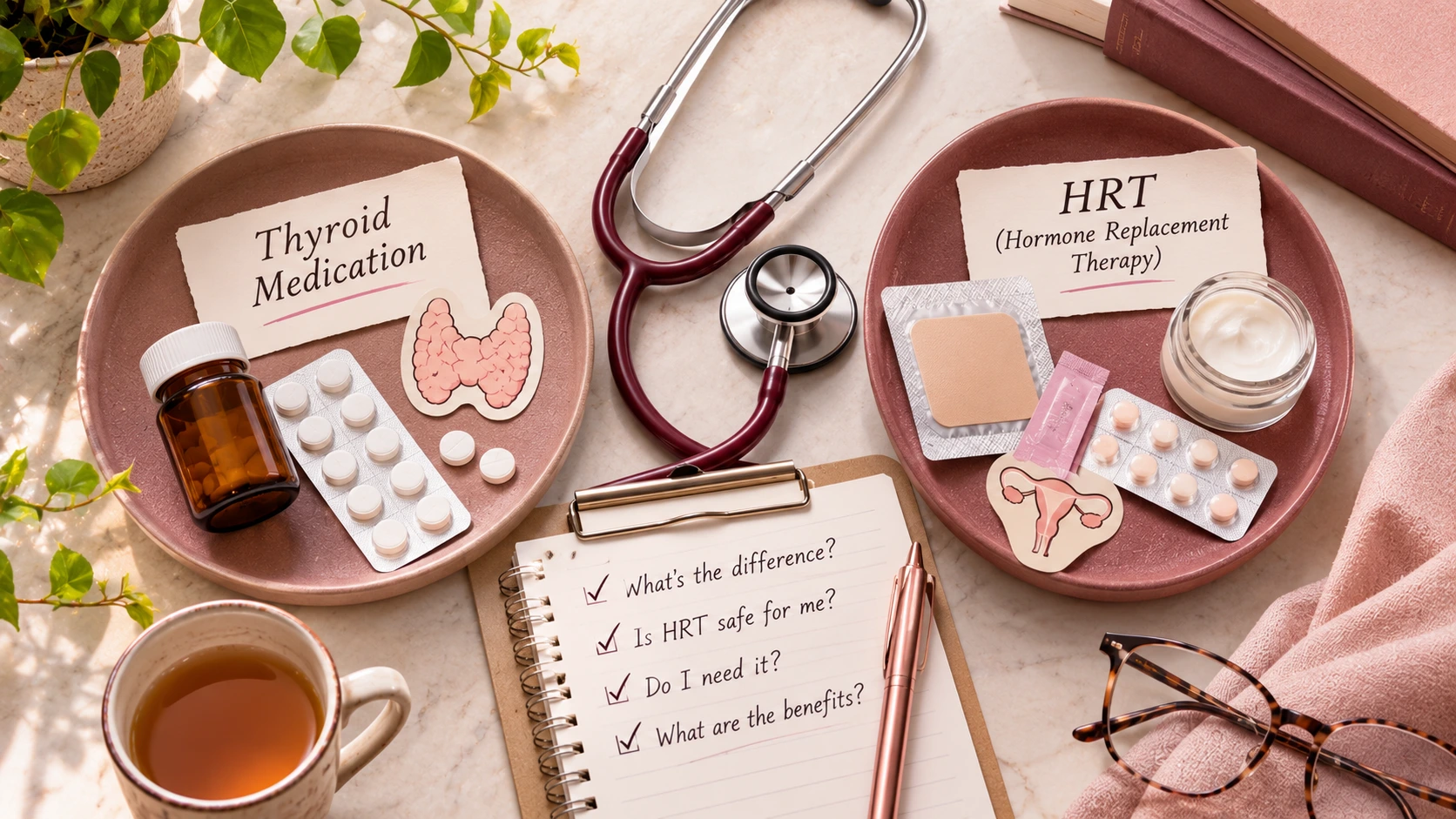

HRT vs Thyroid Medication
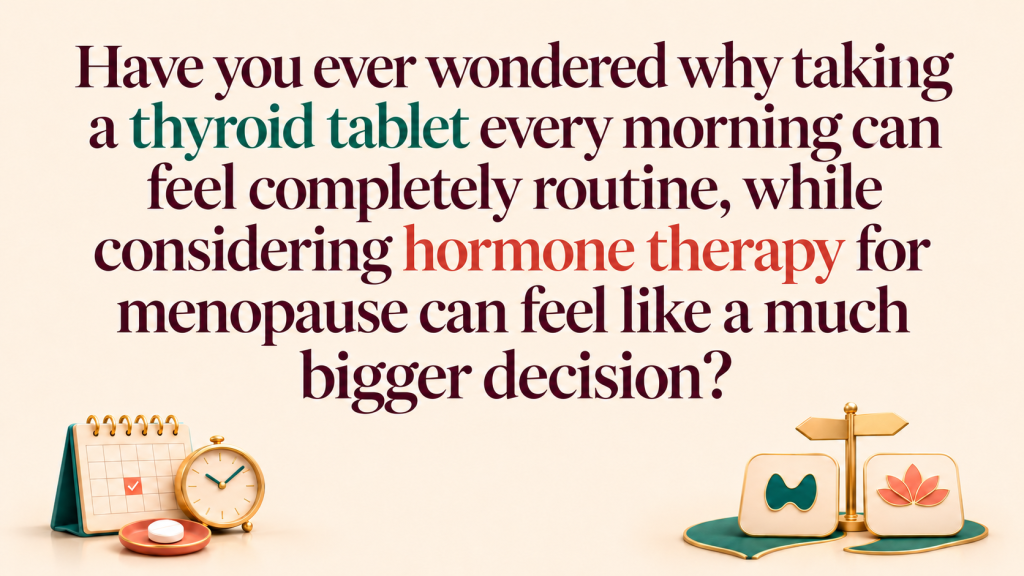
A woman may have taken levothyroxine for years without worrying about the word hormone.
Yet when her gynaecologist discusses menopausal HRT, she hesitates. She wants to know about the cancer risk, the long-term effects and whether she really needs it.
Both treatments involve hormones, but they are not medically interchangeable. What makes the comparison interesting is the difference in how we perceive them.
So why does one feel familiar and the other frightening? There are five psychological reasons worth examining.
1. The Name Changes How We Feel About the Treatment
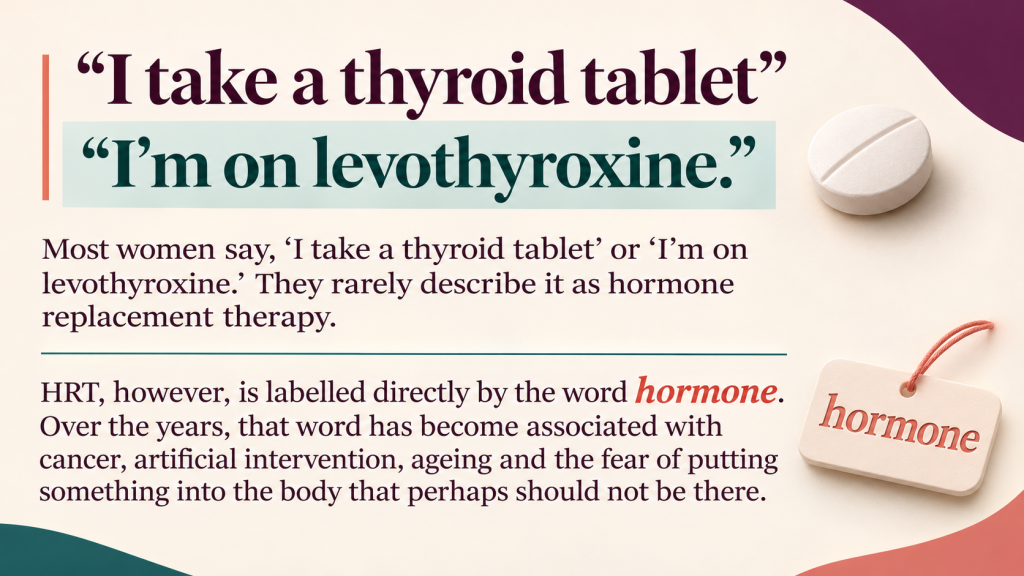
Psychology tells us that labels influence how we interpret information.
The name attached to a treatment can shape our emotional response before we have even considered what it does.
The medicine may involve a hormone, but the word used to describe it changes the conversation.
2. A Medical Condition Feels Different from a Natural Life Stage
Hypothyroidism is a medical condition. When the thyroid cannot produce enough hormone, levothyroxine replaces what the body needs. Treatment feels like correcting a recognised problem.
Menopause is different. It is a natural life transition, not a disease. And that distinction matters.
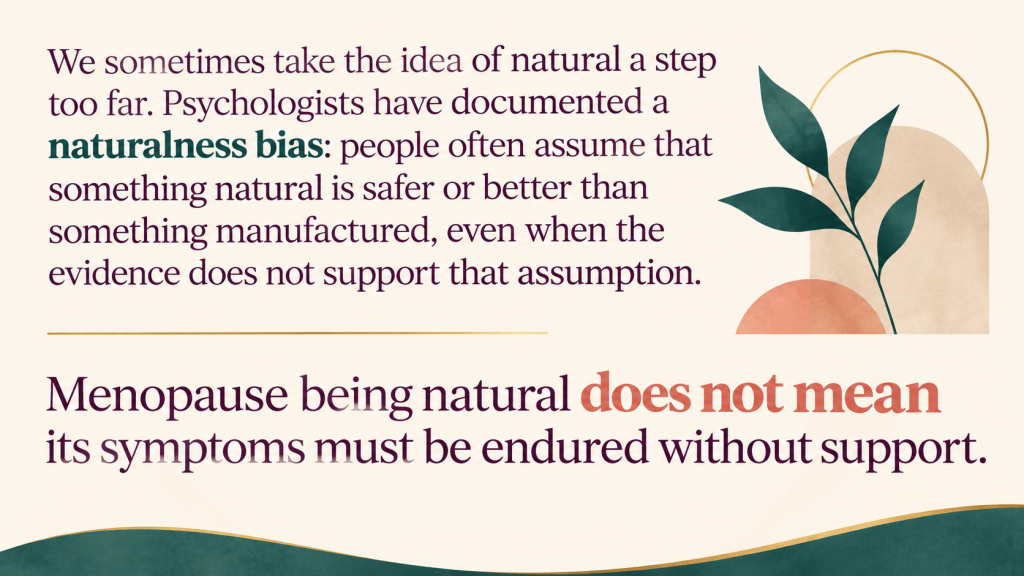
Some women manage the transition comfortably without HRT. Others experience symptoms that significantly affect sleep, work, relationships and quality of life.
Considering treatment is not rejecting nature.
It is exploring an option.
3. When There Is No Single Number to Confirm What You’re Experiencing
Thyroid treatment often comes with a measurable marker. TSH and thyroid hormone tests help doctors diagnose hypothyroidism, adjust levothyroxine doses and monitor treatment.
Menopause does not always offer that same sense of certainty.
For otherwise healthy women aged 45 and over with typical menopause symptoms, clinical guidelines generally recommend diagnosis based on symptoms and menstrual history rather than routine hormone blood tests. That can leave women feeling that their experience is harder to prove.
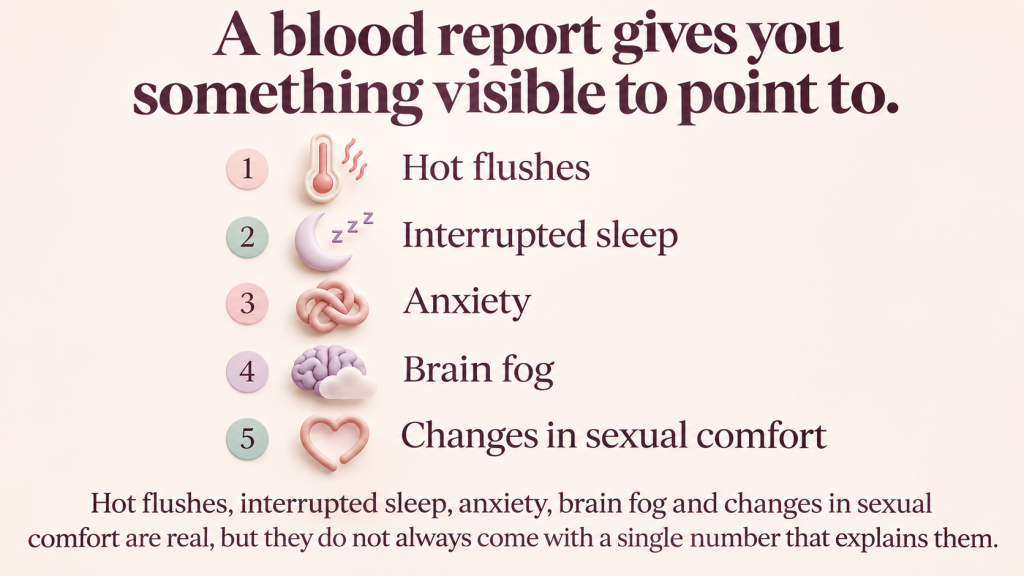
When symptoms are difficult to measure, women may feel they have to justify why they need treatment.
4. Cancer Feels Like a Bigger Risk Than Something Familiar
Risk is not experienced through numbers alone. It is also shaped by how frightening, uncontrollable or serious a possible outcome feels.
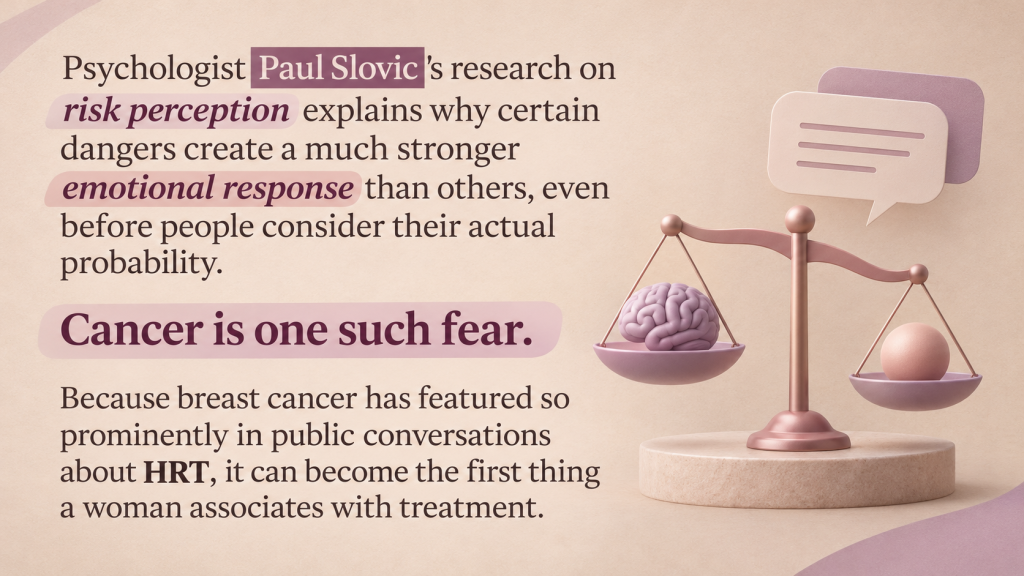
Meanwhile, the possible complications of other familiar medicines may receive less emotional attention simply because we have grown accustomed to them.
But familiarity is not the same as safety.
Even levothyroxine requires appropriate dosing and monitoring; taking too much thyroid hormone can have consequences, including effects on heart rhythm and bone health.
Equally, HRT is not one identical treatment for every woman. Its benefits and risks depend on factors such as the type of hormones, route, dose, duration, age and individual medical history.
These are questions to discuss with your doctor, not reasons to dismiss either treatment.
5. We Sometimes Believe Symptoms Need Proof Before They Deserve Treatment
This is perhaps the most important difference.
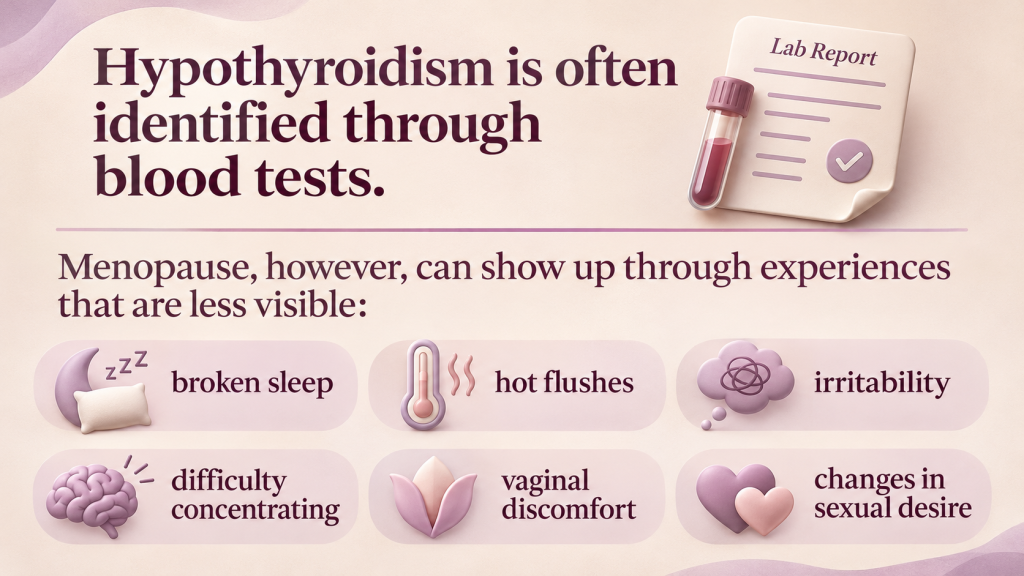
Women can become accustomed to questioning these symptoms themselves.
“Am I overreacting?”
“Is this just ageing?”
“Should I be able to manage it without medication?”
When symptoms are difficult to measure, treatment can begin to feel like an indulgence rather than legitimate healthcare. But the absence of a single confirming number does not make a woman’s experience less real. Her symptoms deserve to be heard and assessed.
Where the Comparison Ends
It is important to recognise that thyroid medication and menopausal HRT are not equivalent treatments.
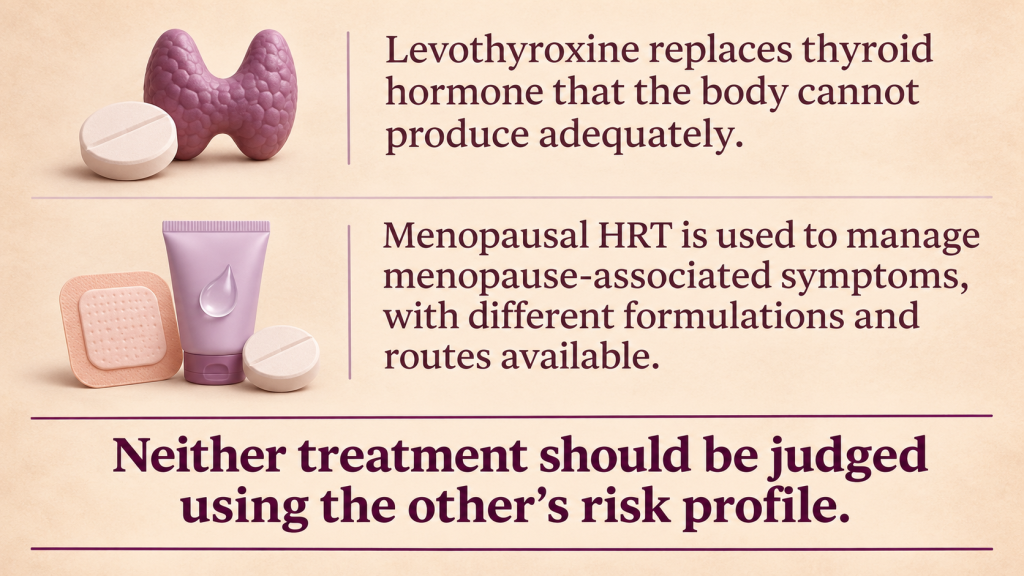
HRT is not necessary or appropriate for every woman.
Equally, the fact that menopause is natural does not mean a woman should automatically rule out treatment. The decision requires an individual assessment of symptoms, medical history, preferences and potential benefits and risks.
One Question Worth Asking Yourself
Before deciding whether HRT is right for you, consider this:
“Am I worried about the treatment itself, or am I responding to everything I have learnt to associate with the word HRT?”
That question does not tell you whether to take hormone therapy. It helps you identify which concerns need medical answers and which may need a little more reflection.
You can ask questions, take time to understand your options and make a decision with the right medical support.
This is the second article in our series on the psychology of HRT.
We are exploring how women understand their bodies, process fear, question the information they encounter and make decisions about their menopause experience.
Where Miror Fits In Perfectly
Miror is India’s largest and only 360-degree integrative women’s wellness ecosystem and community. More than 95,000 women have received expert insights and support through Miror.
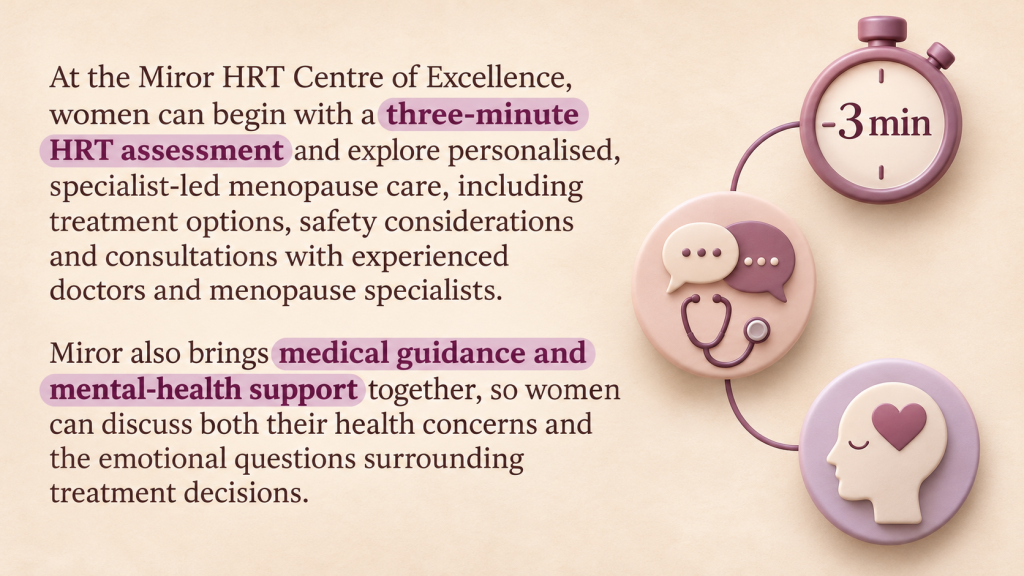
Download the Miror app or join Miror Care Plus to connect with our doctors, health experts and mental-health professionals.