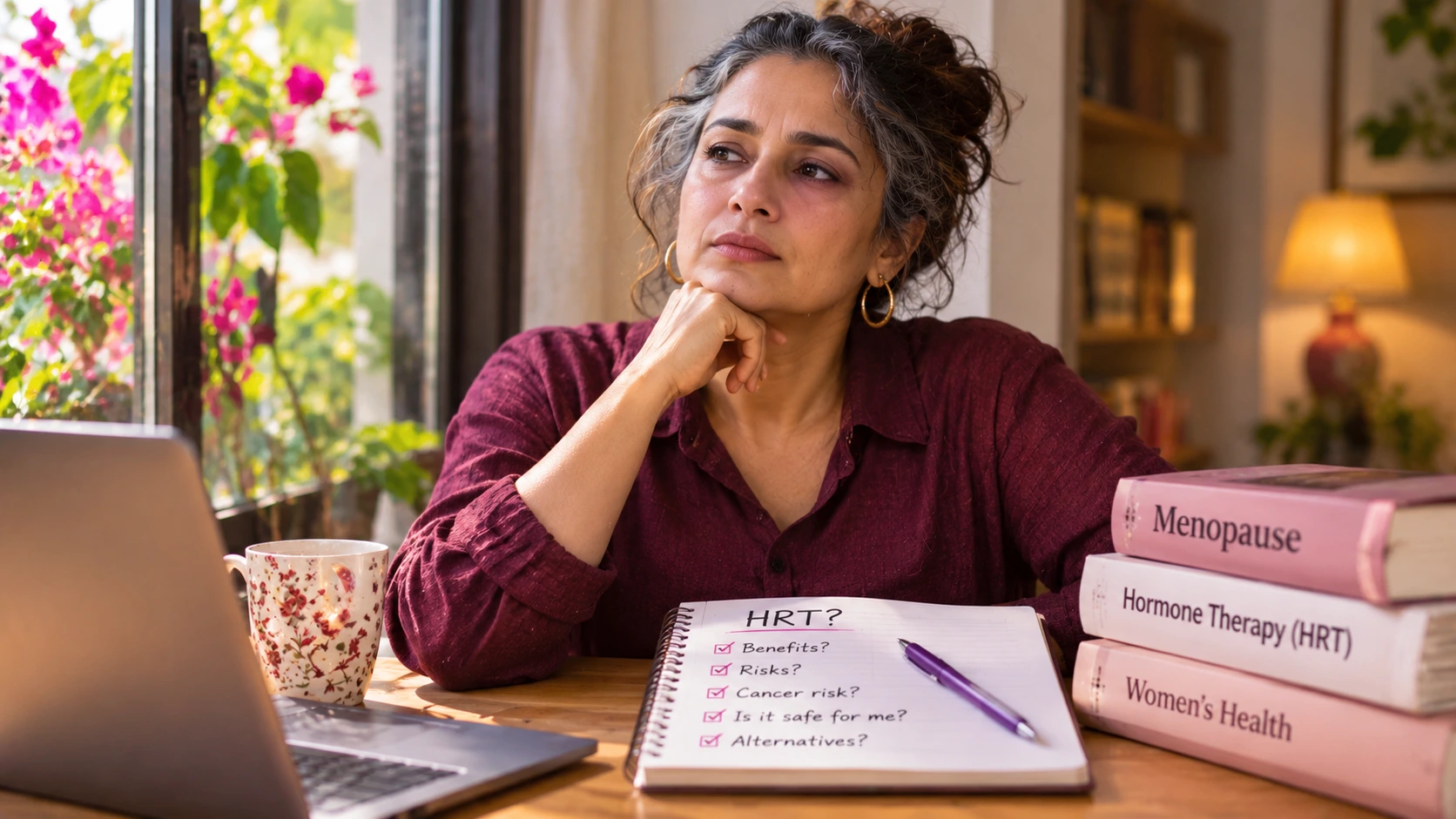

Fear of HRT is more common than many women realise.
Some women are firmly convinced that hormone replacement therapy is dangerous, even when they cannot remember exactly where that belief came from.
When I ask what makes them hesitant, the answer is often: It causes cancer, doesn’t it? And when I ask where that concern began, there is usually a pause. Perhaps it came from an old headline, a friend’s experience or something they heard years ago.
As a clinical psychologist, I find that gap between a deeply held belief and an uncertain memory of where it began particularly interesting. It is also entirely understandable.
The aim is not to convince women that HRT is safe or unsafe.
The aim is to help women understand the evidence, ask informed questions and make decisions appropriate to their own circumstances.
1. Frightening Headlines Are Hard to Forget
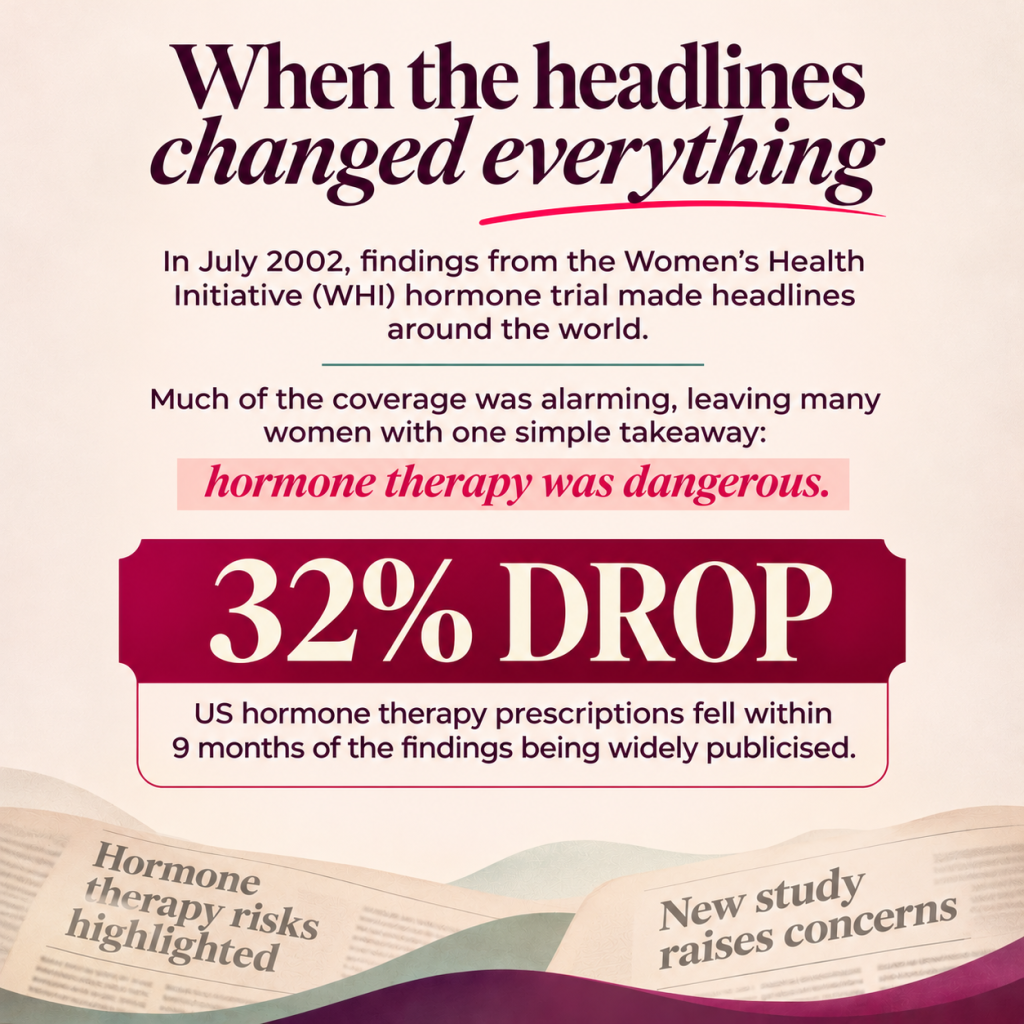
There is a psychological reason frightening messages stay with us. We tend to pay more attention to information that signals danger and remember it more strongly than reassuring information.
This is sometimes called negativity bias.
Later research and more nuanced explanations rarely receive the same attention as an alarming headline. The warning stays; the context gets lost.
(PubMed)
2. One Study Became the Whole Story
The Women’s Health Initiative HRT study was an important, large-scale research programme. But its findings were often treated as a universal verdict on every form of hormone therapy.
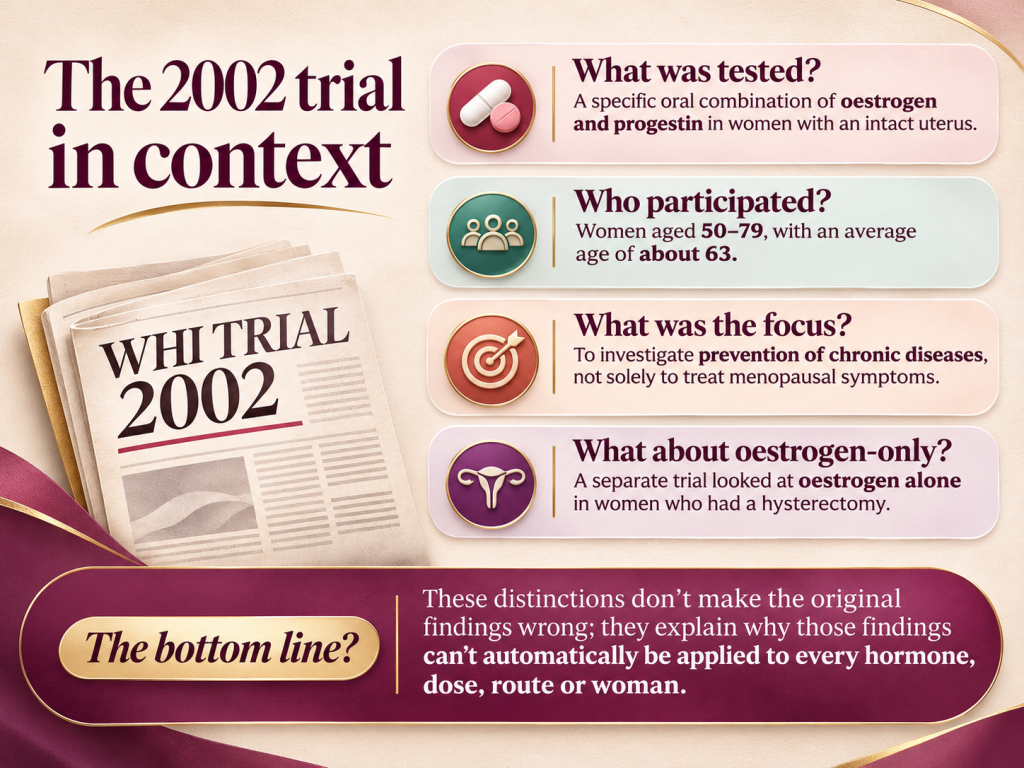
The way risk is communicated matters too. A percentage increase can sound frightening without context. Understanding absolute risk, how many additional people may be affected can give a more useful picture.
(PatientCare)
HRT risks and benefits depend on individual circumstances. Current Indian menopause guidance emphasises personalised assessment and shared decision-making, rather than a single recommendation for every woman.
3. Someone’s Personal Story Feels More Real Than Research
A friend who developed breast cancer after taking HRT. A relative who felt unwell on it. A neighbour who was advised to avoid hormones.
These stories carry enormous emotional weight. Not because women are irrational, but because we naturally learn from people we know and trust.
A research statistic is abstract. A personal story has a face, a name and an emotional connection.
But one person’s experience cannot establish what caused an illness or predict another woman’s individual risk. It has no comparison group and cannot tell us what might have happened otherwise.
The experience deserves to be heard. It simply needs to be understood alongside broader medical evidence.
4. Changing Medical Advice Can Damage Trust
Women have heard different messages about hormone therapy over the years: that it was beneficial, that it was dangerous, and, more recently, that its benefits and risks need to be assessed more carefully.
When advice changes, people do not automatically become more confident. Sometimes they lose confidence in the source altogether.
The thought becomes: “If experts have changed their minds before, how can I know what to believe now?”
And when a decision feels uncertain, doing nothing can seem safer than taking action. Psychologists call this tendency omission bias: we often feel more responsible for harm that follows an action than for harm that follows inaction.
But avoiding a decision is still a choice, and it deserves the same thoughtful consideration.
Why Does the Fear Outlast the Evidence?
Psychologists describe something called the continued influence effect. It explains why information can continue shaping our judgement even after it has been corrected — sometimes even when we accept that the original information was wrong.
A correction may remove a claim, but it does not always replace the explanation we built around it. The original story remains familiar, while the new information takes time to settle.
This helps explain why a woman may know that HRT guidance has evolved and still feel anxious about considering it.
That fear is not a failure of intelligence. It is a recognised feature of how memory, emotion and belief work.
What Can You Do With That Fear?
I am not telling you to take HRT. That is a medical decision that belongs in a conversation with a qualified clinician who understands your health history.
What I am suggesting is that the decision deserves to be yours.
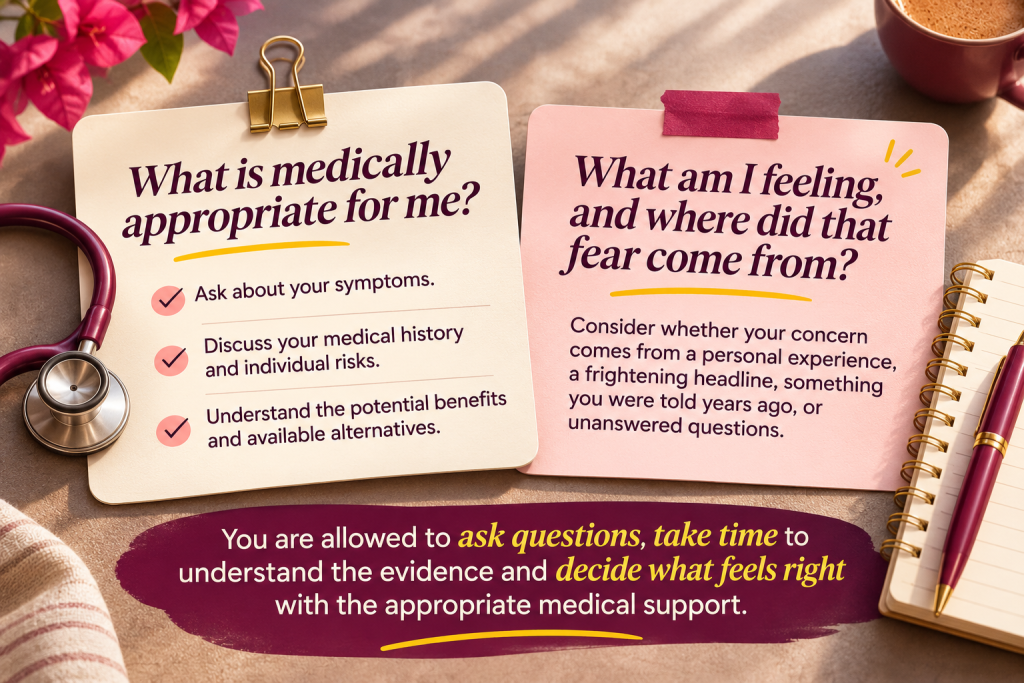
Some women will decide against HRT after considering their options. That is a valid outcome. What matters is that the decision comes from informed consideration rather than fear alone.
This is our first article in a series.
Together, we will explore how to understand your body, understand your mind, ask better questions and make room to assess your own experience; with the right medical support.
Where Miror Fits In?
Miror is India’s largest and only 360-degree integrative women’s wellness ecosystem and community.
More than 95,000 women have received expert insights and support through Miror.
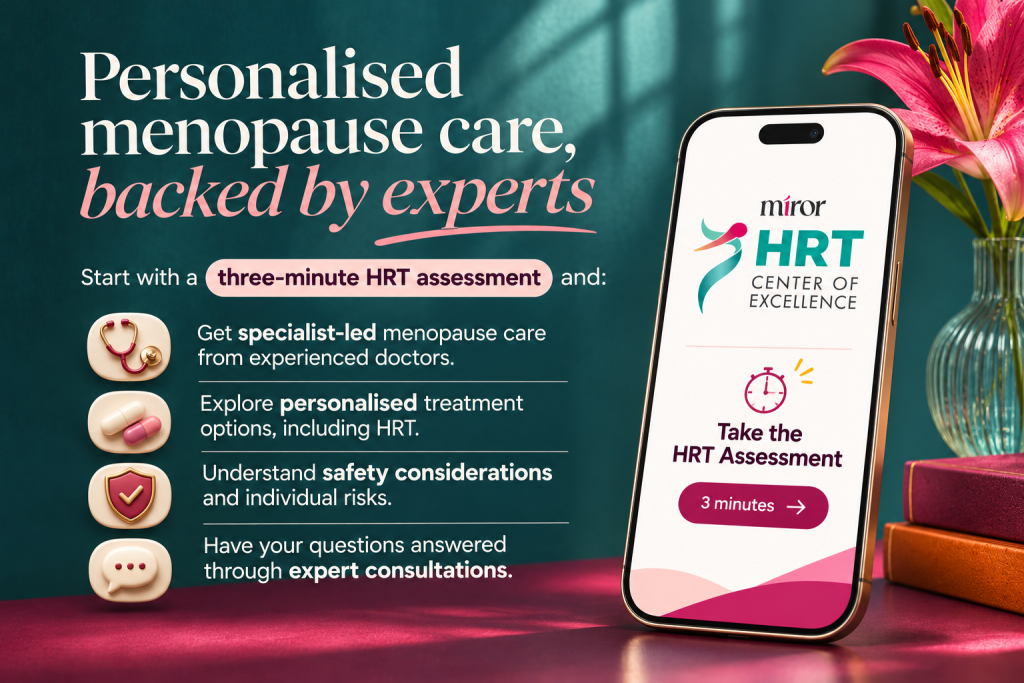
You can also access mental-health support to work through the anxiety, uncertainty and emotional concerns surrounding menopause and treatment decisions.
Download the Miror app and join Miror Care Plus to connect with our doctors, health experts and mental-health professionals today.