


What to expect when starting hormone therapy is not always easy to judge during the first few weeks.
It is day eleven. You expected something to feel different by now. Instead, you feel much the same, your breasts are tender, and you slept badly on Tuesday.
A question starts circling: “Is this working, or have I made a mistake?”
I want to talk about those first few weeks because many women become anxious about their treatment before it has had a fair opportunity to be assessed.
Here are five things worth understanding before you decide what your early experience means.
1. Improvement Does Not Happen Overnight
Most of us are accustomed to medicines that produce relatively quick results. You take a painkiller, wait an hour and know whether it has helped.
Hormone therapy works differently, and different symptoms may respond at different speeds.
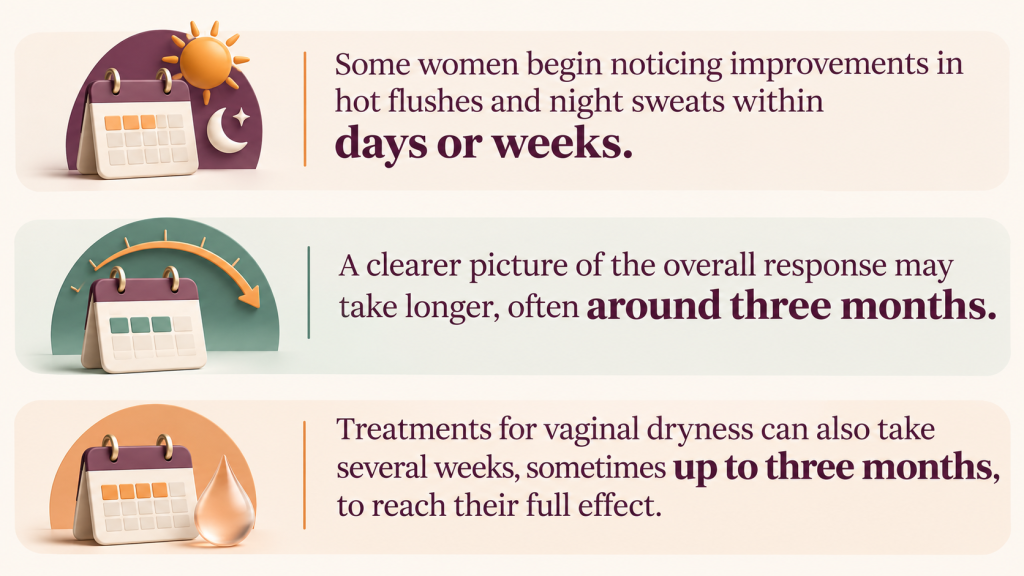
Sleep and mood may be less predictable because they are influenced by several factors beyond hormonal changes.
This is why one difficult fortnight cannot establish whether treatment is working.
(BodyLogicMD)
2. Early Side Effects Do Not Automatically Mean Something Is Wrong
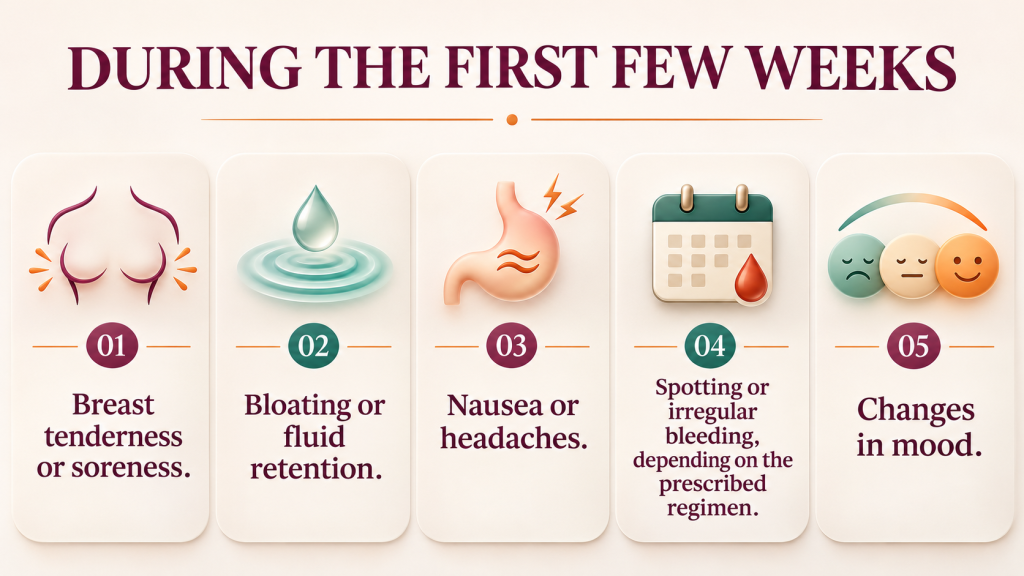
These effects are often temporary and may settle as the body adjusts.
Some can also overlap with symptoms you were already experiencing during menopause.
That distinction matters. A symptom appearing after treatment begins does not automatically establish that the treatment caused it.
However, you should not feel obliged to tolerate troublesome symptoms. Tell your prescribing doctor if they are persistent, worsening or affecting your daily life. A change in dose, formulation or route may be considered after an assessment.
(MMC)
3. You May Start Noticing Every Sensation
Before starting treatment, a headache might simply have been a headache.
Now, it becomes something you investigate.
Is it the medication? Is it a side effect? Does it mean something is wrong?
This heightened attention is understandable. When we start a new treatment, we naturally become more alert to changes in our bodies.
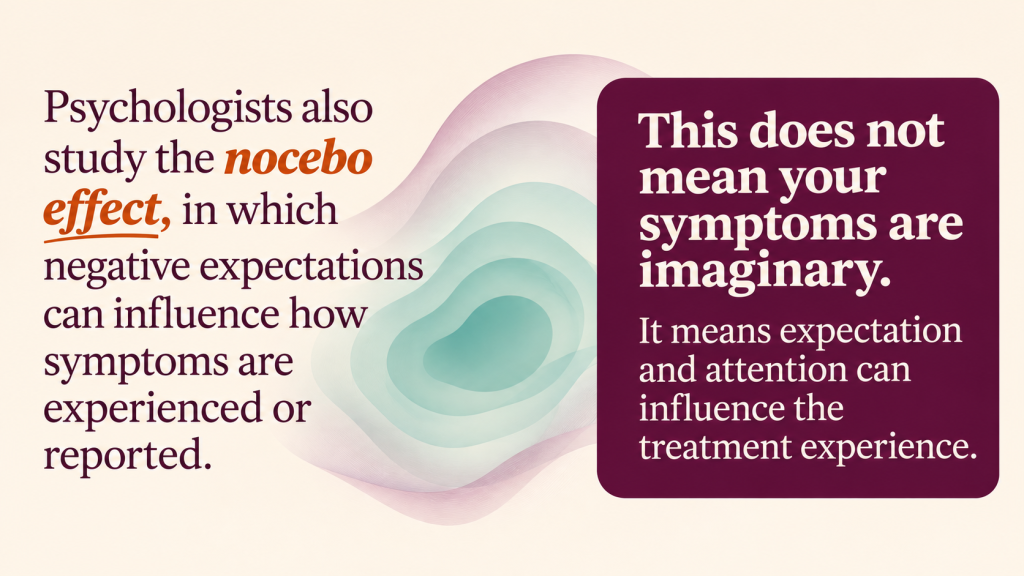
Take your sensations seriously, but avoid assuming that every change is caused by the medication. Your doctor can help you assess the difference.
(PubMed)
4. Look for Patterns, Not Individual Bad Days
One poor night’s sleep cannot tell you whether treatment is working. Nor can one particularly good day establish that it has.
A better approach is to record your experience over time.
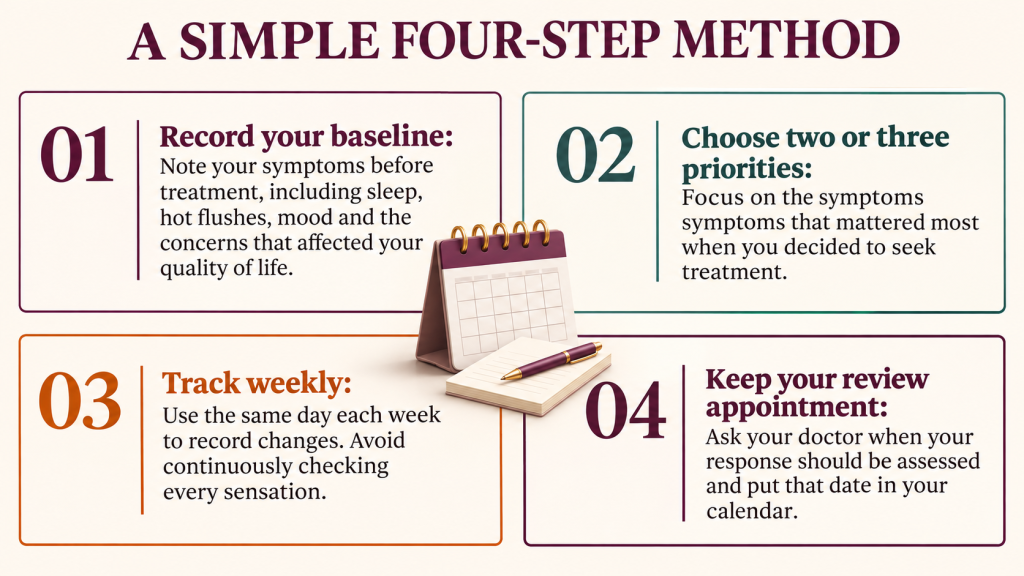
A weekly pattern is more useful than interpreting every difficult Tuesday as evidence of failure.
5. Know When to Wait, When to Call and When to Seek Urgent Help
Some early symptoms can be expected, but not every new symptom should be dismissed as an adjustment phase.
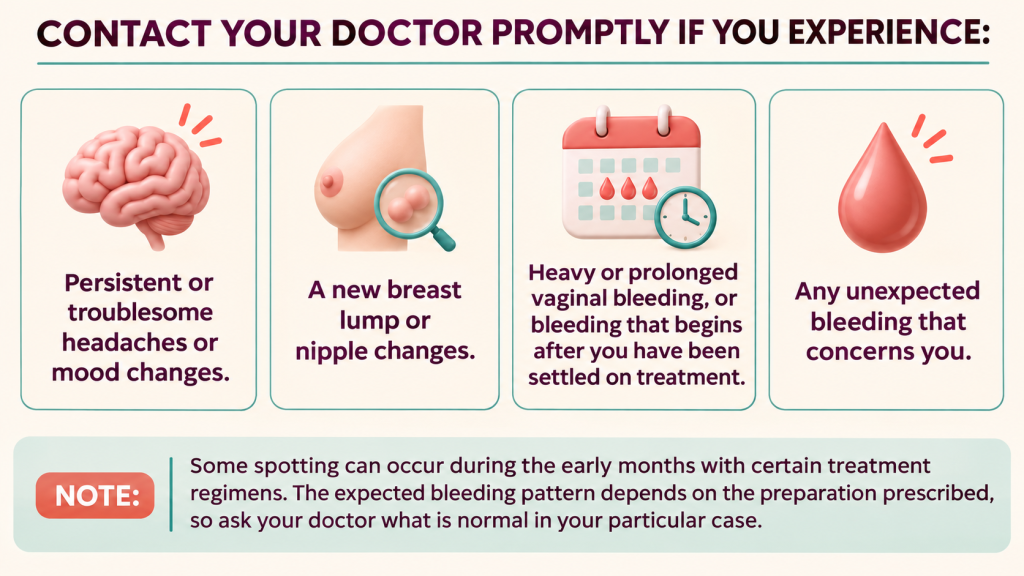
Seek urgent medical care if you develop sudden chest pain or breathlessness.
New pain and swelling in one leg, particularly around the calf, also requires urgent assessment because these can be warning signs of a blood clot.
Do not wait for your scheduled review if you experience a concerning symptom. Equally, do not change your dose or abandon treatment based on an isolated bad day without discussing it with your prescriber.
Giving Yourself Room to Assess Your Experience
The first few weeks can be emotionally demanding, particularly when you spent months overcoming your fears before starting treatment. You may want immediate reassurance that you made the right decision. But a few days of improvement or discomfort cannot provide the whole answer.
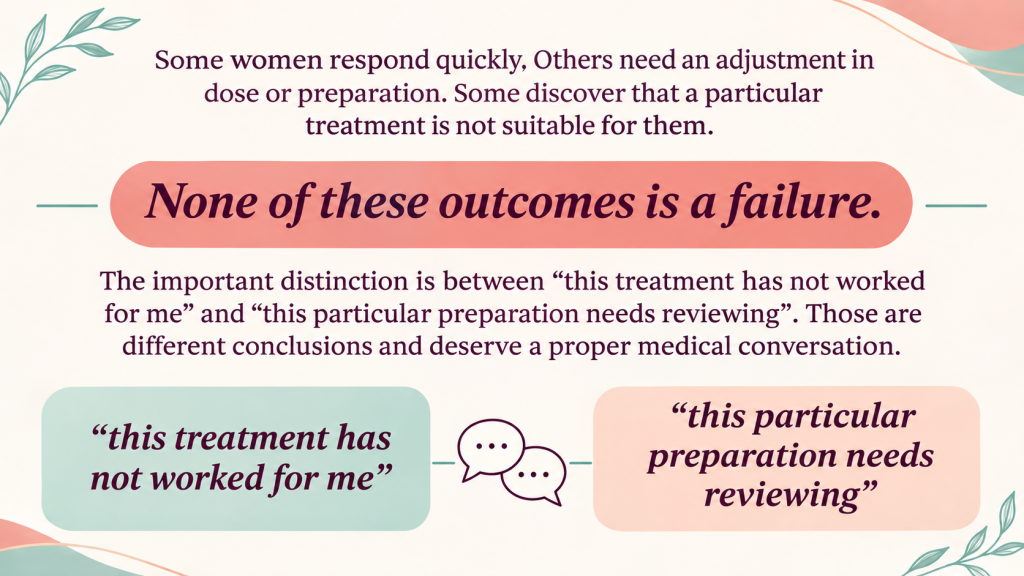
You do not have to reach a verdict every day. Give yourself time, observe your experience and make decisions with the right support.
Where Miror Fits In?
Miror is India’s largest and only 360-degree integrative women’s wellness ecosystem and community. More than 95,000 women have received expert insights and support through Miror.

Miror also brings medical and mental-health support together, helping women navigate both physical changes and the anxiety that can accompany starting treatment.
Download the Miror app or join Miror Care Plus to connect with our doctors, health experts and mental-health professionals.