
Menopause misinformation can make an already difficult health decision even more confusing.
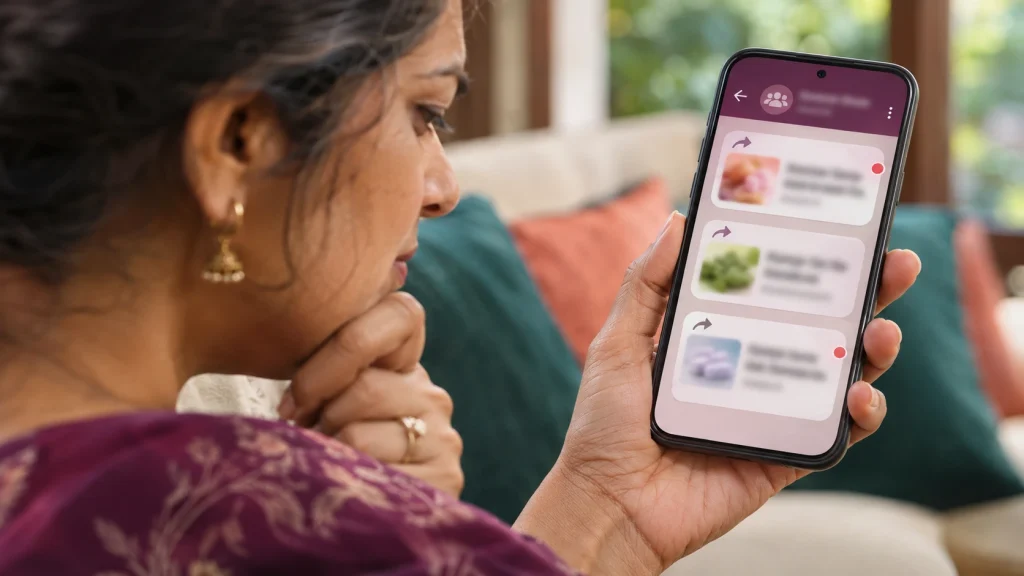
One day, you receive a frightening WhatsApp forward. The next, you watch a reel recommending the exact opposite. Then two doctors offer different opinions.
A woman I was seeing had almost made up her mind about a menopause treatment. Then a long message arrived in her family WhatsApp group.
It discussed hormone tablets, carried no author’s name or date, and included several alarming claims. It had been sent by an aunt who genuinely cared about her.
Two weeks later, she had read dozens of articles and was more confused than before.
(AAFP)
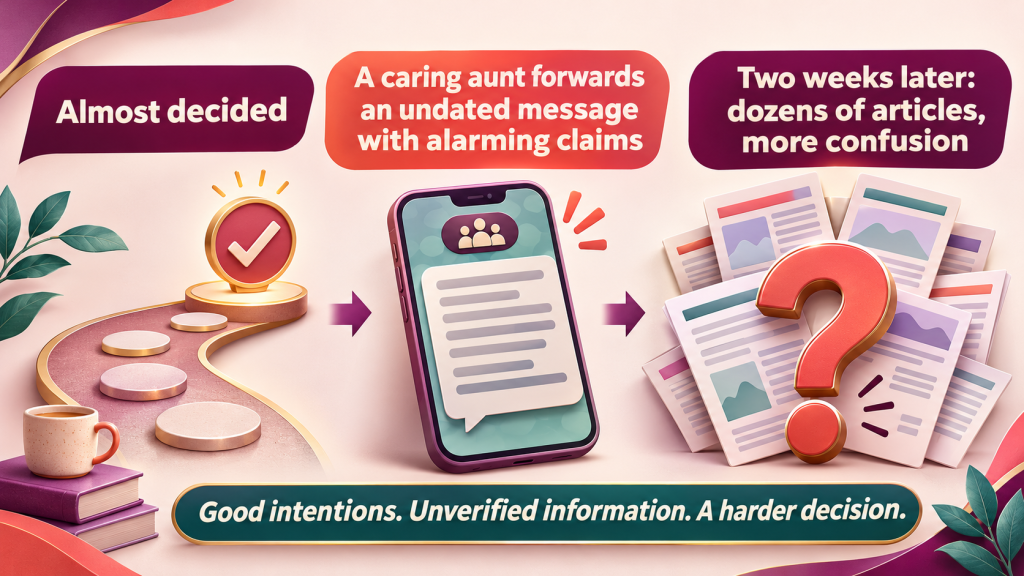
The problem was not a lack of information. It was knowing which information deserved her attention.
As a clinical psychologist, I find that this is an increasingly common experience.
We are not short of health advice. We are surrounded by it, and much of it arrives without enough context to judge whether it is reliable.
1. Why Does a Family WhatsApp Forward Feel So Convincing?
When a message comes from someone you love, you may trust the sender before examining the source.
Your aunt is not necessarily being careless. She has read something frightening, become concerned about you and passed it along because she wants to protect you.
That goodwill is genuine. But it does not establish whether the medical claim is accurate.
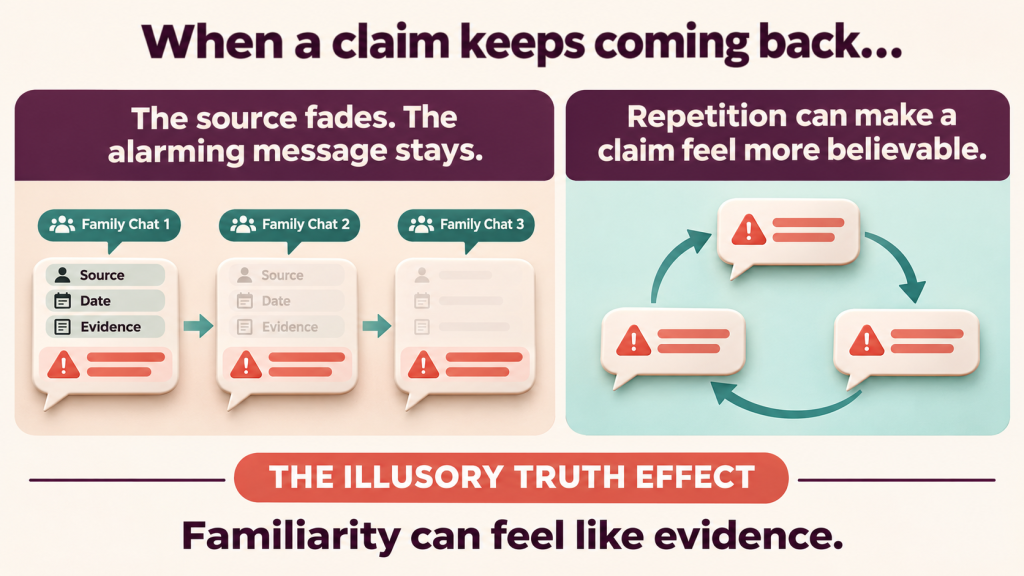
The same claim arriving from four different relatives may feel like four independent confirmations. It could simply be one unverified message forwarded four times.
2. Why Does Frightening Health Information Travel Further?
Think about the last health message you shared. Was it a routine, uneventful experience or something alarming?
People are naturally more inclined to pass on information that surprises, frightens or unsettles them. Reassuring experiences rarely generate the same urgency.
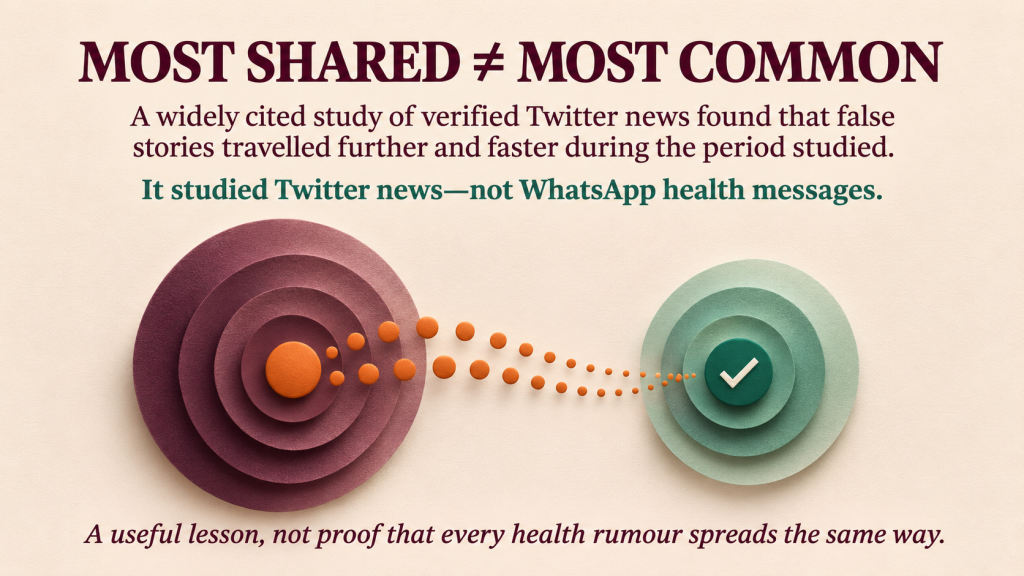
A frightening personal account can be real and still tell you very little about your own medical circumstances. An uneventful treatment experience may never become a story worth forwarding.
The information reaching you is therefore not a balanced picture of everyone’s experiences. It is a picture of what people chose to share.
3. Are You Looking for Information or Confirmation?
When we are anxious about a health decision, we may begin searching for information that supports what we already fear.
A meta-analysis examining 91 studies and nearly 8,000 participants found that people were more likely to choose information supporting their existing beliefs than information challenging them. A commonly reported summary of the findings was approximately 67% versus 33%.[3]
This is known as confirmation bias or selective exposure.
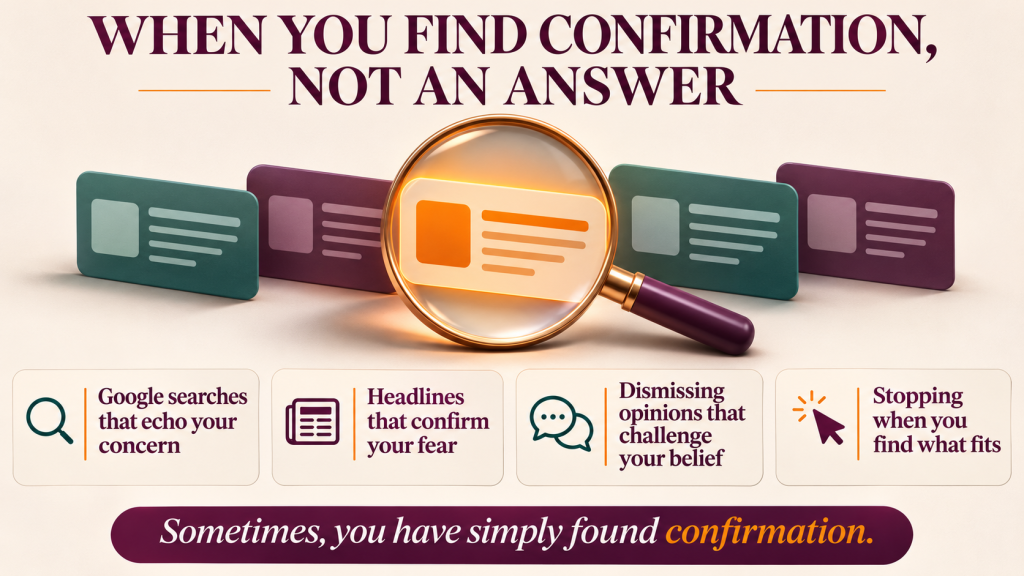
A useful question to ask yourself is: Am I searching for information that could help me make a decision, or am I searching for something that validates how I already feel?
4. A Confident Voice Is Not Necessarily a Reliable Source
A person speaking confidently can sound convincing. A professionally edited reel, a large following, a medical-looking background or even a white coat can create the impression of expertise.
But presentation and credibility are not the same thing. Before accepting a menopause health claim, consider whether the person has relevant medical qualifications, whether they are speaking within their area of expertise, and whether they can point to reliable evidence.
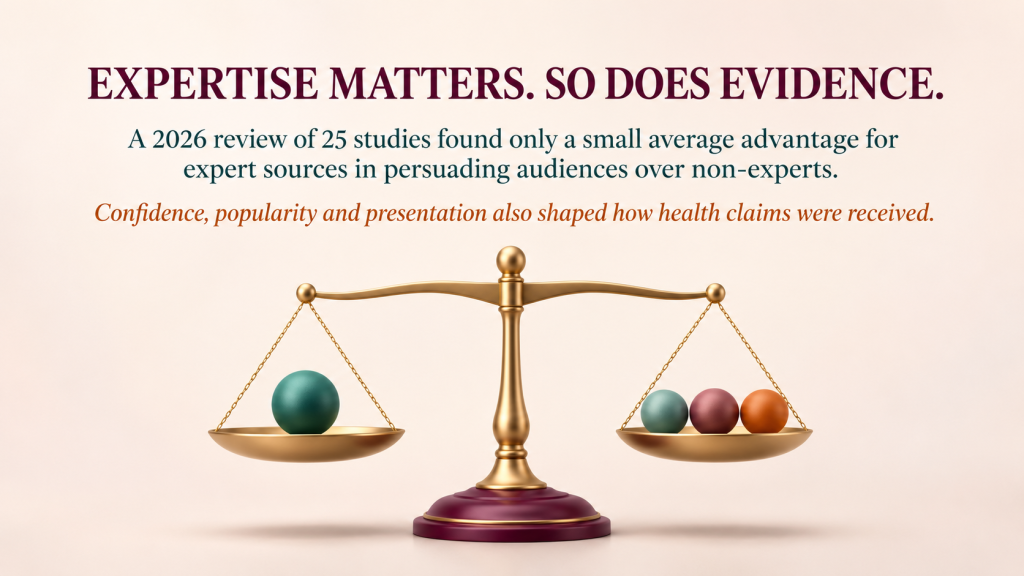
A person can sound certain and still be wrong. A credible source should be able to explain not only what they believe, but why.
(SNL)
When Two Doctors Disagree
Conflicting medical advice can be particularly unsettling. Research on exposure to contradictory health messages has linked it with confusion and reduced confidence in health recommendations.
But two doctors disagreeing does not automatically mean that one of them is wrong.
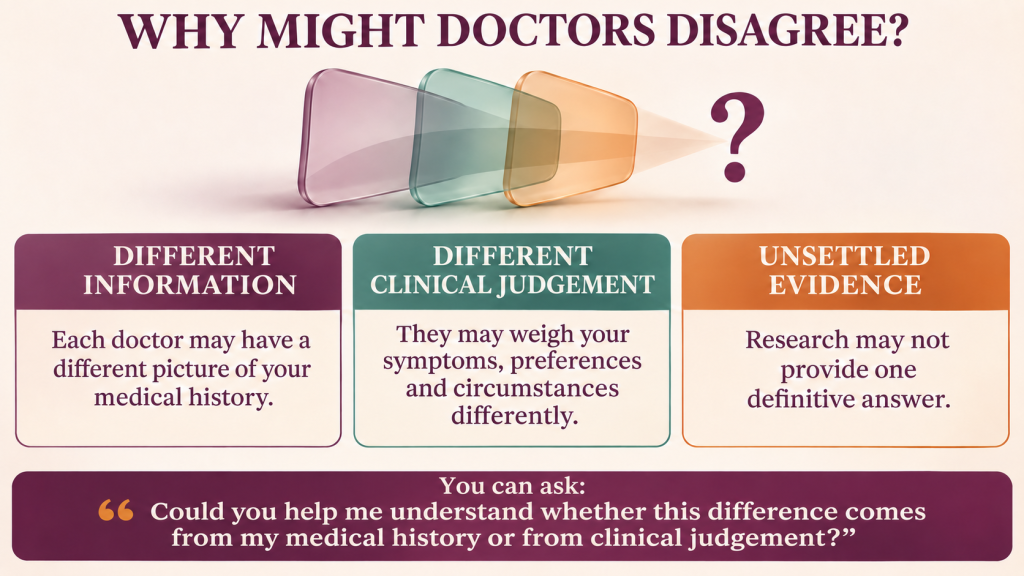
That is a perfectly reasonable question. A good medical conversation should leave room for honest explanations and appropriate uncertainty.
A Quick 3-Point Check Before Believing Health Information
Whether it’s a WhatsApp forward, an Instagram reel or medical advice, ask yourself these three questions:
| Check | Ask Yourself | What to Look For |
|---|---|---|
| 1. Source | Where did this information originate? | A named author, credible organisation and publication date. |
| 2. Relevance | Does this apply to someone in my situation? | Age, medical history, treatment, dosage and individual circumstances. |
| 3. Reliability | What evidence supports this claim? | Distinguish personal experiences and opinions from research and established clinical guidelines. |
Remember: Information can sound convincing, be widely shared and even be accurate — yet still not apply to you. Check before you believe or forward it.
And What About the Family WhatsApp Group?
You do not have to challenge every relative who sends you a health forward. Nor do you need to turn a family conversation into a medical debate.
Sometimes, a simple response is enough:
“Thank you for thinking of me. I’ll discuss this with my doctor before making any decisions.”
It acknowledges the concern without accepting the claim as fact. Most importantly, it takes the decision back to the place where your individual medical circumstances can be considered.
This is the fifth article in our series.
Together, let’s understand our bodies. Understand our minds.
Ask questions. Give ourselves room to assess our experience.
And make decisions with the right medical support.
Where Miror Fits In?
Miror is India’s largest and only 360-degree integrative women’s wellness ecosystem and community.
More than 1 lac women have received expert insights and support through Miror.
Miror also brings medical guidance and mental-health support together, helping women work through conflicting information, uncertainty and the emotional concerns that can accompany healthcare decisions.
Download the Miror app or join Miror Care Plus to connect with our doctors, health experts and mental-health professionals.