


It is 2:15 in the morning, and you are replaying a conversation from Tuesday.
You have thought about it several times already. You know what happened, you have considered what you could have said differently, and yet your mind keeps returning to it.
Perimenopause overthinking can feel exactly like this: knowing that you are worrying too much but being unable to stop.
Women often describe it to me in one sentence:
I know I’m overthinking. I just can’t switch my brain off.
Understanding why this happens is a useful first step.
Because repetitive thinking is not necessarily a sign that something is wrong with you. Sometimes it is a familiar mental strategy operating under conditions that make it harder to stop.
(Mirorpedia)
1. Your Brain Mistakes Worry for Preparation
Worry can feel productive. You rehearse conversations, anticipate problems and imagine different outcomes because you believe thinking things through will prepare you for what might happen.
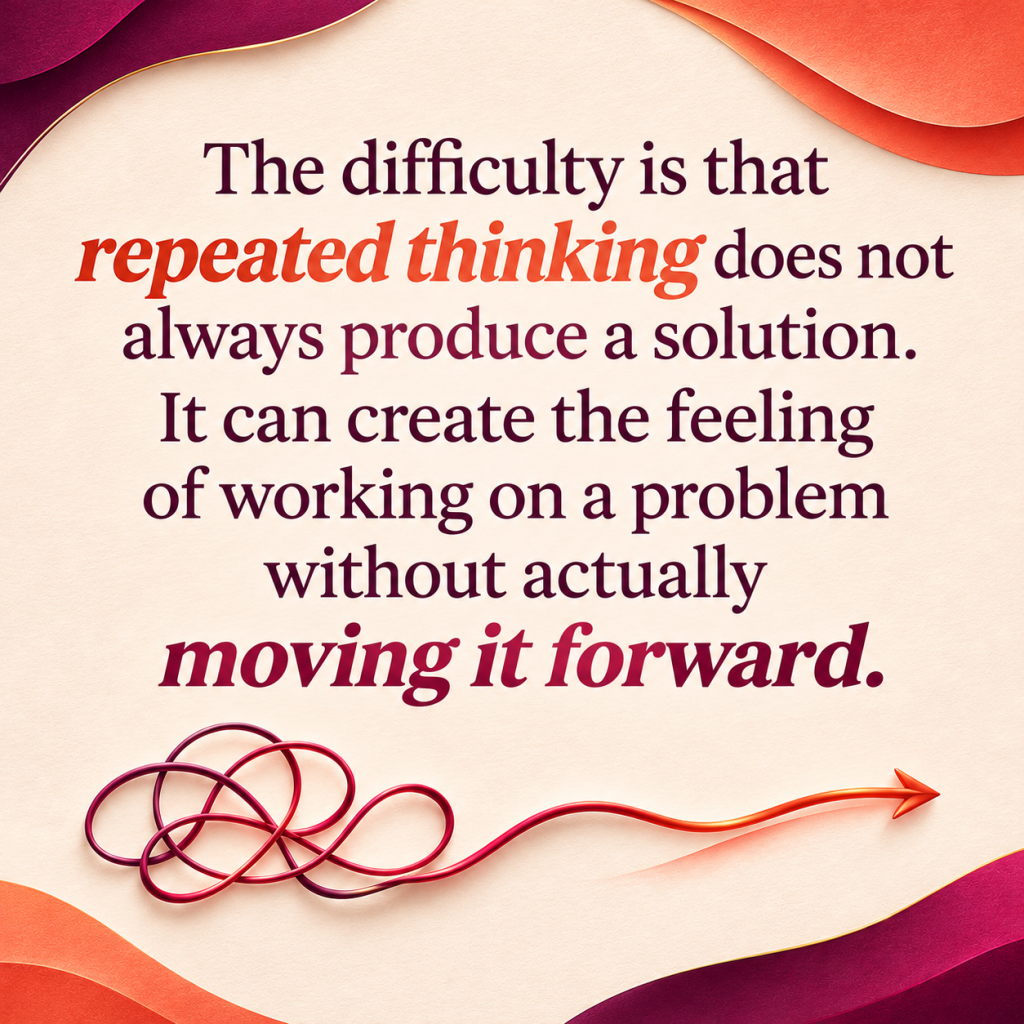
This is particularly frustrating when you already know that the worry is unhelpful. Your mind keeps returning to it because it has learnt to associate worrying with being prepared.
2. Unfinished Problems Keep Returning
Midlife often brings responsibilities that cannot be resolved overnight: an ageing parent’s health, a child’s future, career uncertainty, changing relationships or a personal health decision.
Psychologists have studied how unfinished goals can remain mentally active, repeatedly pulling our attention back towards them. Interestingly, research suggests that making a specific plan for an unfinished task can reduce these intrusive thoughts, even before the task itself is completed.
Your mind may not need every problem solved immediately. It may need to know that you have decided what to do next.
3. You’re Replaying the Problem, Not Solving It
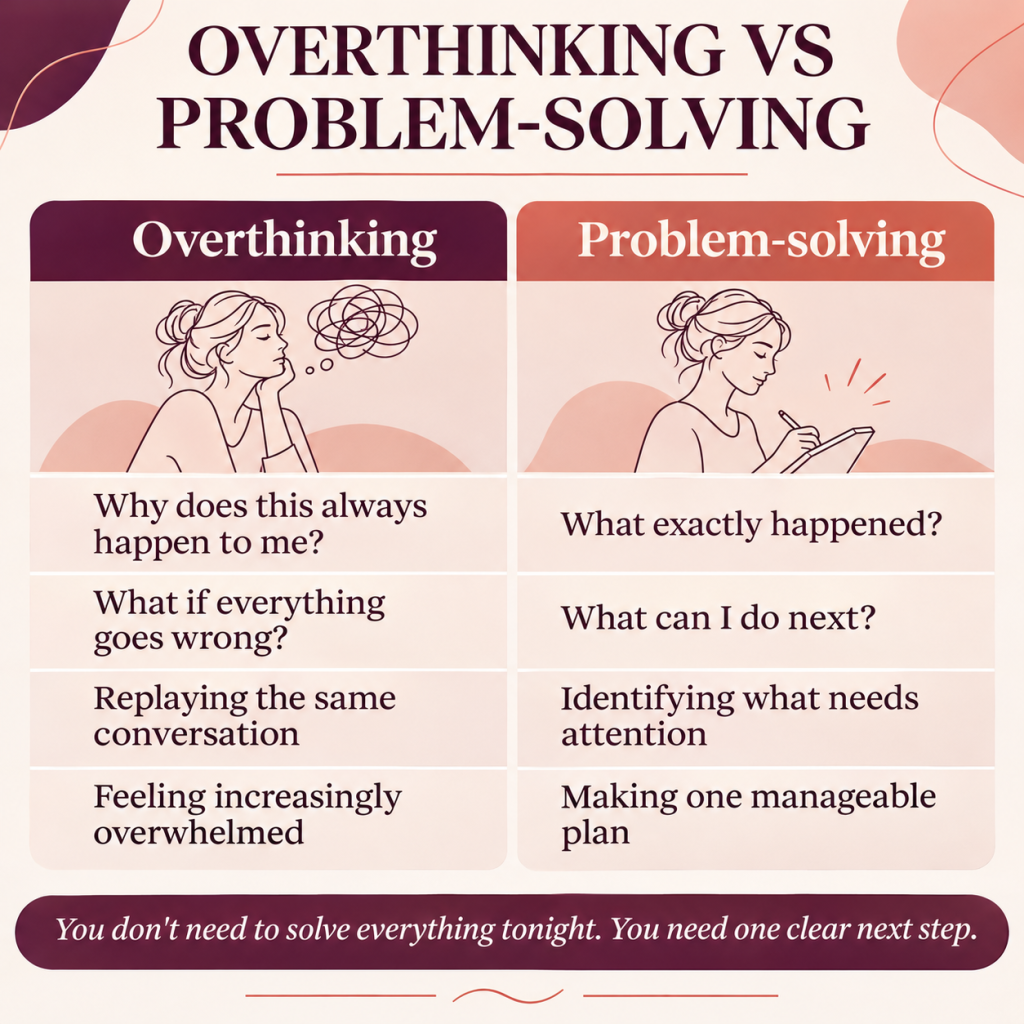
There is an important difference between thinking about a problem and ruminating over it.
Abstract thinking asks:
Why does this always happen to me?
Why can’t I get things right?
What does this say about me?
These questions can keep you circling the same emotional territory.
Concrete thinking asks:
What exactly happened?
What can I do about it?
What is one manageable next step?
Research on rumination suggests that shifting towards more specific, concrete thinking can support problem-solving rather than keeping someone trapped in repetitive thoughts.
A useful question to ask yourself is:
After twenty minutes of thinking, do I have a next step, or do I simply feel worse?
4. Sleep, Hormonal Changes and Mental Load Are Colliding
This is where midlife can make the experience more difficult.
Sleep disruption:
Night sweats, hot flushes and repeated waking can affect sleep quality. Poor sleep can leave you more irritable, anxious and less able to regulate your emotions the following day.
Mental load:
Women often carry a significant amount of invisible planning and anticipating: remembering appointments, monitoring family needs, organising household responsibilities and keeping track of what needs to happen next. Research on cognitive household labour has found that women in the studied couples carried more of the anticipating and monitoring work.
Hormonal changes:
Fluctuating hormones during perimenopause can contribute to changes in mood, anxiety and emotional regulation. These changes interact with sleep disruption, stress and individual mental-health history. Not every woman experiences them in the same way.
When all three overlap, even ordinary everyday demands can feel overwhelming.
5. An Overloaded Mind Can Delay Important Decisions
Overthinking does not always lead to a bad decision. Sometimes it prevents a decision altogether.

Weeks become months. No decision has been made, but that does not mean you have consciously decided against treatment.
The purpose of understanding this pattern is not to push you towards HRT. It is to recognise when an important health decision is being postponed because you feel overwhelmed, rather than because you have reached a considered conclusion.
What Actually Helps When You Can’t Switch Off?
Try a few practical changes:
Recognise rumination: Ask whether your thinking is producing a solution or simply repeating the same worry.
Make it specific: Replace broad questions about why things happen with one concrete action you can take.
Write down the next step: Give unfinished concerns a plan and a time to address them. You do not have to solve everything tonight.
Set aside worry time: Choose a short period during the day to address recurring concerns. When they arise at bedtime, note them and return to them later.
Take sleep seriously: If night sweats, waking or other physical symptoms are disrupting your sleep, discuss them with your doctor. You do not have to accept persistent sleep problems as an inevitable part of ageing.

Understanding Your Mind
A mind that will not switch off is not necessarily broken or weak. It may be responding to unfinished responsibilities, disrupted sleep, hormonal changes and emotional demands that have accumulated over time.
Before making an important decision, including one about menopause treatment, give yourself room to understand what is happening.
You do not need to make every decision tonight. But you do deserve the support and clarity to make it deliberately.
Where Miror Fits In
Navigating menopause involves understanding both your physical health and your emotional well-being.
Sometimes you need medical answers; at other times, you need the space and support to work through the uncertainty surrounding treatment decisions.
Miror is India’s largest and only 360-degree integrative women’s wellness ecosystem and community. More than 95,000 women have received expert insights and support through Miror.

Download the Miror app or join Miror Care Plus to connect with our doctors, health experts and mental-health professionals.