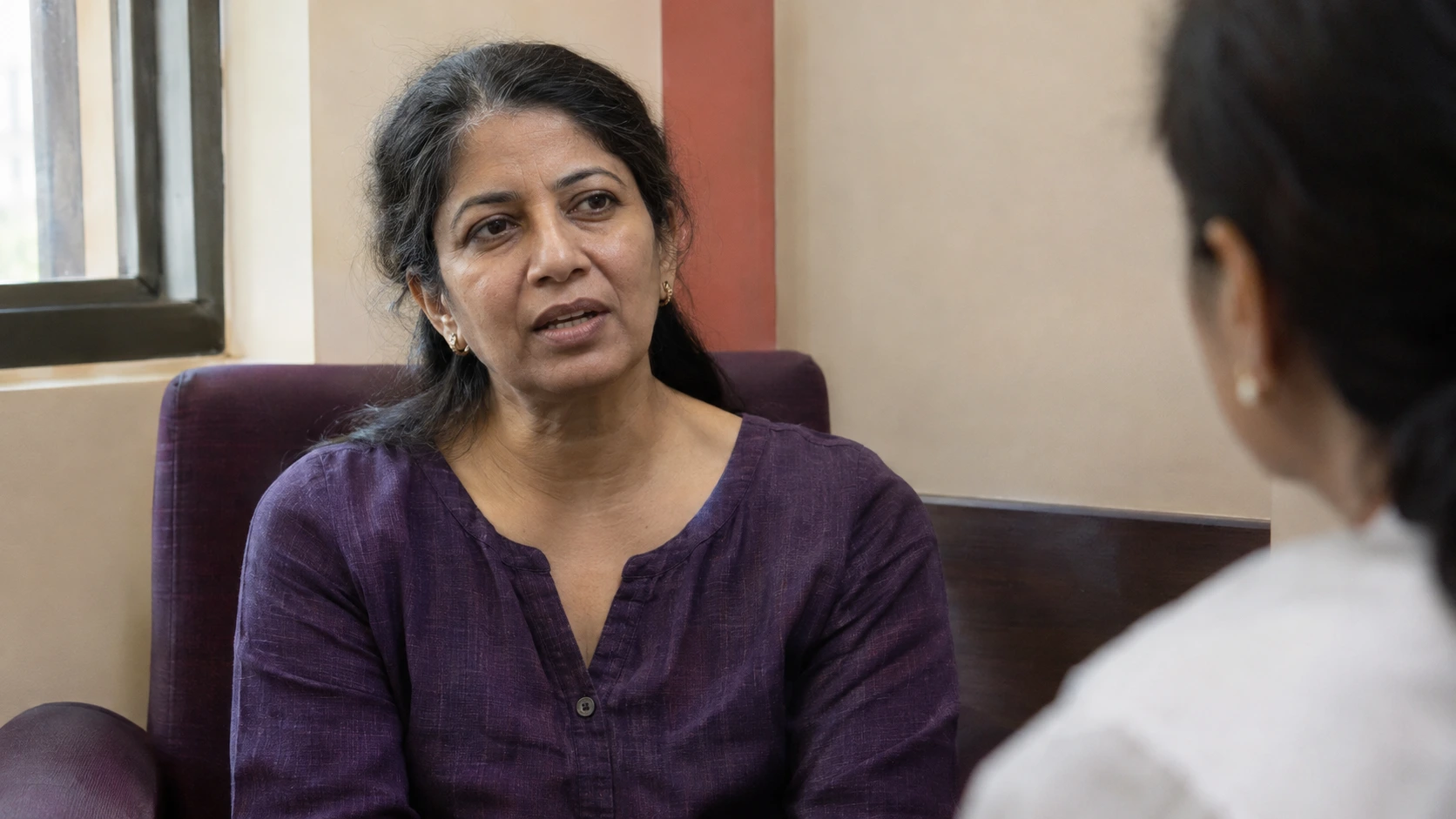

Hormone therapy side effects can leave women navigating more than physical discomfort.
They may also bring uncertainty, anxiety and difficult questions: Am I overthinking this? Should I mention it? Will I sound demanding if I raise another concern?
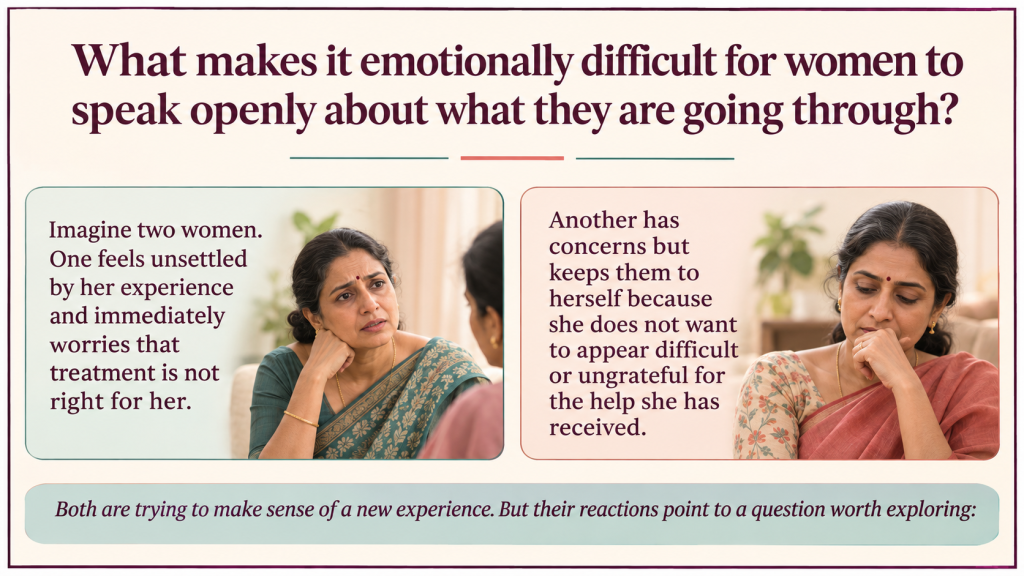
As a psychologist, I find that the answer often has less to do with the experience itself and more to do with how women have learned to communicate their needs, express discomfort and seek reassurance.
(Mirorpedia)
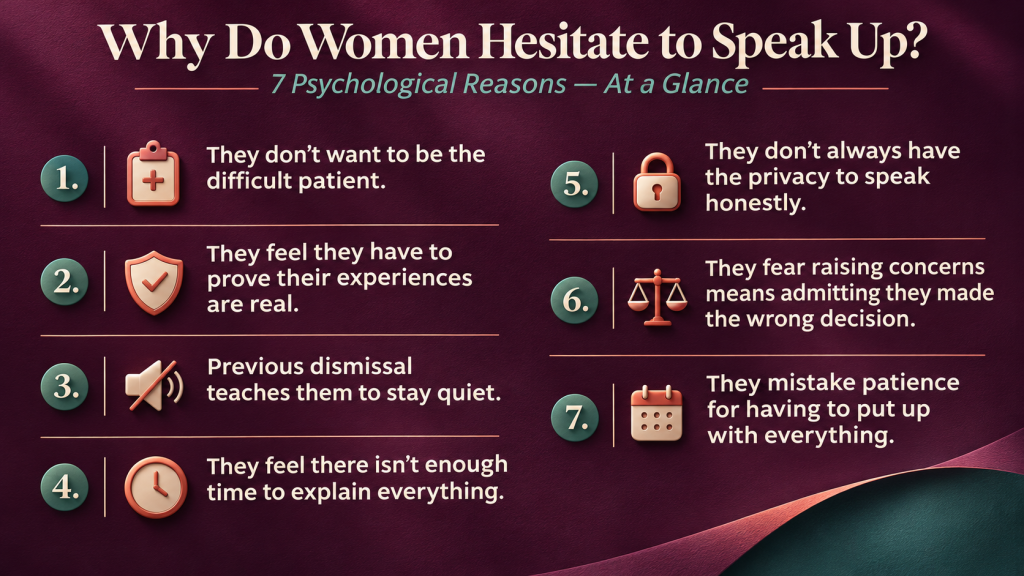
Why Do Women Hesitate to Speak Up? 7 Psychological Reasons
1. They don’t want to be the difficult patient.
Many women worry that asking too many questions or raising repeated concerns will make them appear demanding. They may wonder whether their doctor will think they are overreacting or being unnecessarily anxious.
Research has documented how the fear of being labelled a difficult patient can affect shared decision-making. For some women, the worry about how they will be perceived becomes more stressful than the conversation itself.
2. They feel they have to prove their experiences are real.
Some women carefully rehearse how to describe what they are going through. They try to sound convincing without appearing overly emotional. They may minimise their discomfort or leave out details they consider embarrassing.
This effort to be believed can become exhausting. Instead of focusing on what they need to communicate, they become preoccupied with how their words might be received.
3. Previous dismissal teaches them to stay quiet.
If a woman has previously been told that her concerns are simply stress, ageing or something she must tolerate, she may hesitate to raise them again.
Repeated experiences of dismissal can gradually weaken a person’s confidence in their own perceptions. Even when something feels important, she may automatically question herself: Am I making too much of this? Is it really worth bringing up?
4. They feel there isn’t enough time to explain everything.
A short appointment, a crowded waiting room and several competing concerns can make it difficult to speak openly.
Women sometimes prioritise what they believe is most important, leaving out the emotional or personal aspects of their experience. They may walk away feeling that they have not communicated what they actually came to discuss.
5. They don’t always have the privacy to speak honestly.
In some Indian households, women attend appointments with their husbands, parents or other family members. Discussing intimate or emotionally sensitive experiences in front of someone else can feel uncomfortable.
They may worry about being judged, misunderstood or having their personal concerns discussed after the appointment.
Asking for a few minutes alone with the doctor is a reasonable way to create space for an honest conversation. Women deserve to feel that their concerns can be expressed privately.
6. They fear that raising concerns means admitting they made the wrong decision.
Starting treatment can involve hope, uncertainty and a considerable amount of emotional investment. A woman may have spent months researching her options, overcoming fear or convincing herself to take that step.
When the experience becomes difficult, she may interpret it as a personal failure or feel that she made the wrong decision.
But expressing uncertainty does not mean regretting the decision. It simply means acknowledging that the experience is more complicated than expected. Women should not feel compelled to present themselves as completely confident or positive throughout the process.
7. They mistake patience for having to put up with everything.
Women are often encouraged to be patient, adjust and give themselves time. While patience can be valuable, it can also become a reason to suppress concerns.
A woman may tell herself, Perhaps I am just being anxious. Perhaps I should stop thinking about it.
But patience should never become a reason not to express what you are experiencing. You can give yourself time to understand a new experience while still acknowledging that parts of it feel difficult.
(CarerCircle)
How to Speak Up Without Feeling Difficult
Sometimes, having the words ready can make an uncomfortable conversation feel more manageable.
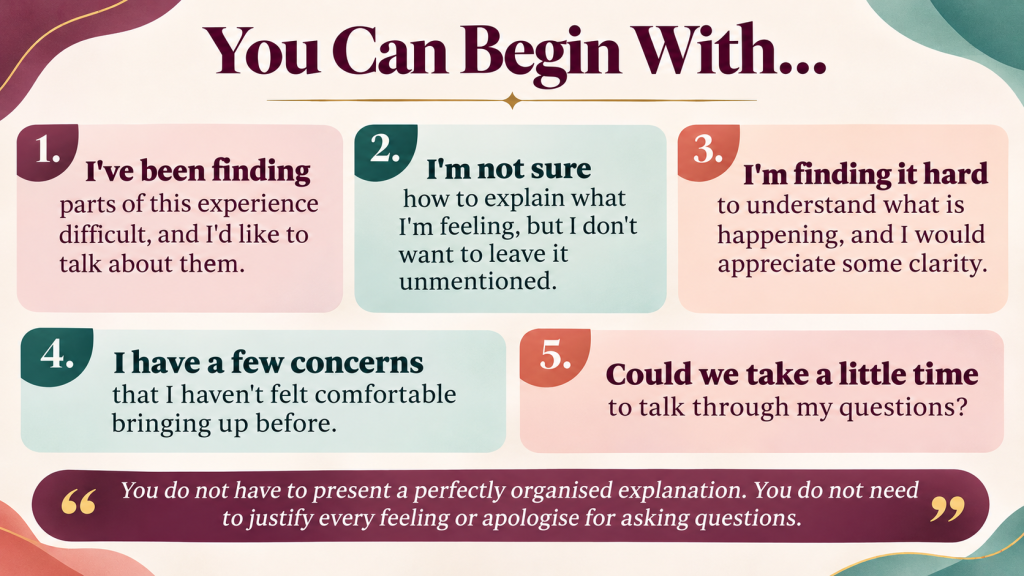
It may also help to write down the concerns you want to discuss before an appointment. A few simple notes can make it easier to remember what matters to you, particularly when you feel nervous or rushed.
Most importantly, remember that asking questions is not challenging someone’s expertise. It is participating in a conversation about your own experience.
Patience Without Self-Silencing
You can remain open to the possibilities of treatment without expecting yourself to feel positive every day. You can acknowledge uncertainty without interpreting it as failure. And you can ask for clarity without feeling that you are being difficult.
Your experience deserves to be heard, even when you are still trying to understand it yourself.
The problem was never patience. It was silent patience.
Speaking up is not complaining. It is an important part of feeling involved, informed and respected throughout your care.
Where Miror Fits In
Miror is India’s largest and only 360-degree integrative women’s wellness ecosystem and community. More than 95,000 women have received expert insights and support through Miror.
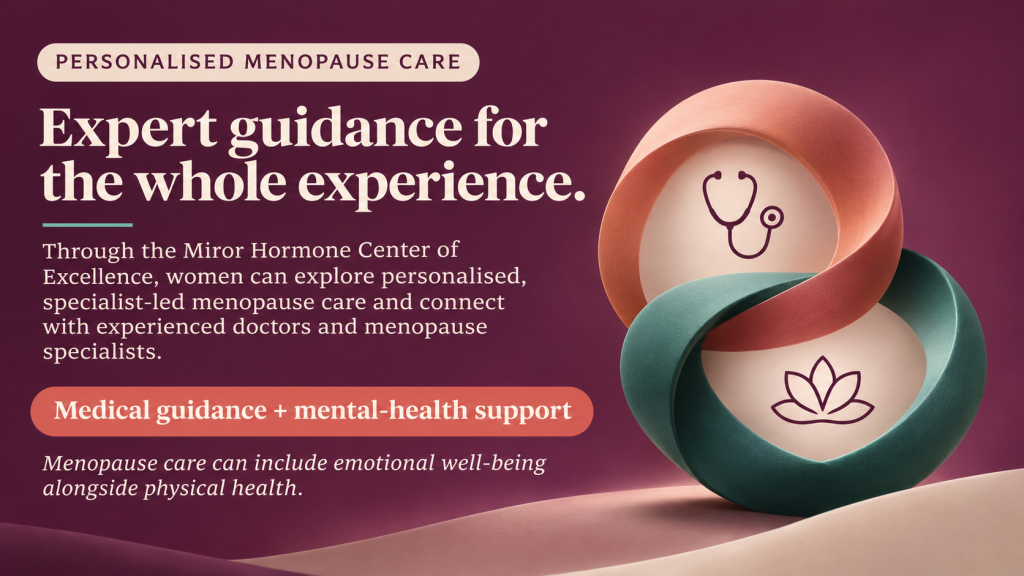
Download the Miror app or join Miror Care Plus to connect with our doctors, health experts and mental-health professionals.