
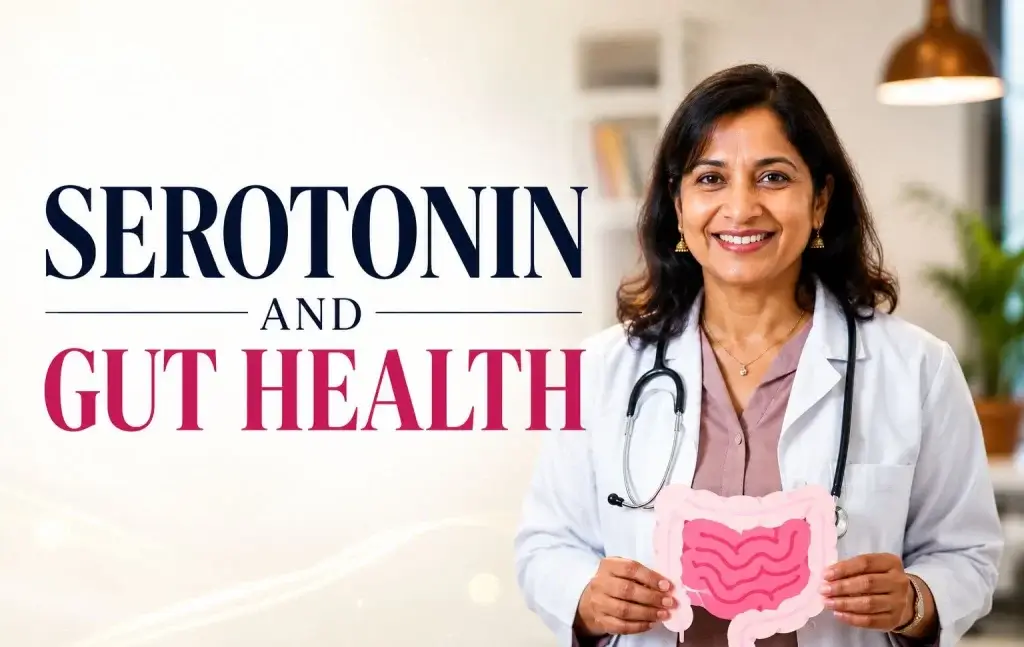
Serotonin is often called the happy hormone, but most women are not told where much of it begins: the gut.
In fact, most of the body’s serotonin is produced in the digestive system, not the brain. This does not mean your stomach directly creates happiness. The science is more nuanced. Your gut and brain communicate through the gut brain axis, using the vagus nerve, immune signals, hormones, microbial metabolites and inflammation pathways.
That is why digestion, cravings, bloating, stress, sleep and mood often change together.
For women with PCOS, this connection matters even more. PCOS is not only about irregular periods, acne or ovarian cysts. It is also linked with insulin resistance, inflammation, gut changes, cravings, mood shifts and stress sensitivity.
Understanding serotonin through the gut hormone lens is not just interesting. It is practical.
What Is Serotonin
Serotonin, also called 5 hydroxytryptamine or 5 HT, is a chemical messenger made from the amino acid tryptophan.
In the brain, serotonin is involved in mood stability, emotional regulation, sleep, appetite and stress resilience. In the gut, serotonin helps regulate intestinal movement, secretion, sensation and bowel function.
So when women experience mood changes along with bloating, constipation, cravings, acidity, IBS like symptoms or PCOS related metabolic concerns, the connection may not be random. It may be the gut brain axis asking for attention.
Serotonin in the Body:
| Where Serotonin Is Active | What It Helps Regulate |
|---|---|
| Gut | Bowel movement, digestion, gut sensation |
| Brain | Mood, sleep, appetite, emotional regulation |
| Platelets and blood vessels | Clotting and vascular tone |
| Nervous system | Pain perception, nausea, gut brain signalling |
| Hormonal and metabolic systems | Appetite, cravings, stress response interactions |
Why 90 Percent of Serotonin Is a Big Deal
Most serotonin is produced by specialised gut lining cells called enterochromaffin cells. These cells respond to what is happening inside the gut, including food, gut movement, inflammation, microbial activity and chemical signals.
But this fact needs to be understood carefully.
Gut serotonin does not directly cross into the brain. Instead, the gut affects mood through indirect but powerful pathways:
| Gut Pathway | How It May Influence Mood |
|---|---|
| Vagus nerve | Sends gut signals to the brain |
| Microbiome | Produces metabolites that influence inflammation and signalling |
| Immune system | Gut inflammation may affect mood pathways |
| Stress response | Stress can disturb digestion and microbiome balance |
| Blood sugar | Glucose swings can affect anxiety, cravings and irritability |
| Hormones | Estrogen, insulin and cortisol interact with gut health |
This is why gut health and serotonin should be seen as one connected system, not two separate topics.
(Harvard Health).
10 Powerful Ways Your Gut Supports Serotonin and Mood
1. Your Gut Helps Produce Most of Your Body’s Serotonin
The gut is one of the body’s major serotonin production sites. This serotonin is especially important for digestion, bowel rhythm and gut sensation.
If your gut is inflamed, sluggish, irritated or microbiome depleted, serotonin signalling in the digestive system may also feel disrupted. This can show up as constipation, diarrhoea, bloating, gut sensitivity or discomfort that worsens during stress.
2. Your Microbiome Influences Serotonin Signalling
Your gut microbiome is the community of bacteria, fungi and other microorganisms living in your digestive tract.
A diverse microbiome supports a healthier gut environment. Certain gut bacteria help produce short chain fatty acids and other metabolites that may influence serotonin related pathways, inflammation and gut barrier health.
This is why gut health is not just about digestion. It is also about the chemical environment your nervous system is constantly listening to.
3. The Gut Brain Axis Explains “Gut Feelings”
When you feel butterflies before a meeting or lose your appetite during stress, that is not imagination.
The gut and brain are constantly communicating. The vagus nerve, immune system, stress hormones and gut metabolites help send messages between the digestive system and the brain.
This is why anxiety can disturb digestion, and poor digestion can make stress feel worse.
4. PCOS Can Disturb the Gut Mood Connection
Women with PCOS often experience more than irregular periods. Many also report cravings, bloating, acne, fatigue, mood swings, anxiety, poor sleep and difficulty losing weight.
Research increasingly suggests that women with PCOS may have differences in gut microbiome diversity, inflammation and metabolic signalling compared with women without PCOS. This does not mean the gut is the only cause of PCOS. But it does mean gut health may be one important part of PCOS care.
For women with PCOS, supporting the gut may also support insulin sensitivity, cravings, inflammation and mood resilience.
5. Fibre Feeds the Bacteria That Support Mood
Fibre is one of the most underrated nutrients for serotonin support.
When gut bacteria ferment fibre, they produce short chain fatty acids such as butyrate, acetate and propionate. These compounds help nourish the gut lining, support barrier function and influence immune and metabolic signalling.
Simple fibre rich foods include:
| Food Group | Examples |
|---|---|
| Pulses | Dal, chana, rajma, sprouts |
| Whole grains | Oats, millets, brown rice |
| Vegetables | Bhindi, carrots, greens, beans |
| Fruits | Banana, guava, apple, berries |
| Seeds | Flaxseed, chia, pumpkin seeds |
For women with PCOS, fibre is especially helpful because it also supports satiety and blood sugar stability.
6. Fermented Foods May Improve Microbiome Diversity
Fermented foods can introduce beneficial bacteria and bioactive compounds into the diet.
Indian kitchens already have beautiful gut supportive foods: curd, chaas, idli, dosa, kanji, fermented pickles and hand fermented batters.
A healthy fermented food habit does not need to be fancy. It needs to be consistent, suitable for your body and safe. If you have severe acidity, IBS, histamine sensitivity or gut disease, speak to a clinician before adding large amounts suddenly.
7. Tryptophan Rich Foods Give Serotonin Its Raw Material
Serotonin is made from tryptophan, an essential amino acid that must come from food.
Tryptophan rich foods include:
| Vegetarian Options | Non Vegetarian Options |
|---|---|
| Paneer | Eggs |
| Curd | Fish |
| Pumpkin seeds | Chicken |
| Sesame seeds | Turkey |
| Oats | Prawns |
| Walnuts | Lean meat |
Protein at breakfast can be especially helpful for women who experience morning cravings, mood dips or blood sugar crashes.
8. Sugar and Ultra Processed Foods Can Disrupt the Gut
High sugar, refined carbohydrates and ultra processed foods can reduce diet quality, worsen cravings and affect the gut microbiome over time.
This matters for serotonin because the gut environment influences the signals sent through the gut brain axis.
For women with PCOS, this is even more important. Frequent glucose and insulin spikes may worsen cravings, energy crashes, irritability and inflammation.
The goal is not food fear. The goal is rhythm. Build meals around protein, fibre, healthy fats and slow carbohydrates.
9. Stress Can Change Digestion and Serotonin Signalling
Stress is not only mental. It is digestive.
When cortisol rises, the body may alter gut movement, acid secretion, appetite, bloating, bowel habits and gut barrier function. This is why stress can trigger constipation in one woman and diarrhoea in another.
A stressed gut can then send stress signals back to the brain.
This creates a loop:
| Stress Pattern | Gut Effect | Mood Effect |
|---|---|---|
| Poor sleep | Cravings, acidity, inflammation | Irritability, low mood |
| Chronic stress | Bloating, IBS like symptoms | Anxiety, overwhelm |
| Skipping meals | Blood sugar crashes | Mood swings, cravings |
| Overtraining | Gut stress, poor recovery | Fatigue, emotional depletion |
Supporting serotonin is not only about food. It is also about nervous system recovery.
10. Movement Supports the Gut Brain Axis
Exercise supports mood in several ways. It improves blood flow, insulin sensitivity, stress regulation, sleep and gut motility.
For women with PCOS, movement can be especially powerful because it supports metabolic health along with emotional wellbeing.
You do not need punishing workouts.
Start with:
Walking after meals
Strength training 2 to 3 times a week
Yoga or Pilates
Cycling or swimming
Stretching on high stress days
The most effective movement is the one you can repeat.
(CDHF).
Signs Your Gut Serotonin Axis May Need Support:
| Symptom Pattern | Possible Gut Brain Link |
|---|---|
| Bloating with anxiety | Stress gut interaction |
| Constipation with low mood | Gut motility and serotonin signalling |
| Sugar cravings with fatigue | Blood sugar and appetite regulation |
| IBS symptoms with stress | Gut brain sensitivity |
| Acne with cravings | PCOS, insulin and inflammation links |
| Brain fog after meals | Blood sugar or food sensitivity patterns |
| Poor sleep with acidity | Stress, digestion and circadian disruption |
This table is not for self diagnosis. These symptoms can also overlap with thyroid issues, iron deficiency, vitamin B12 deficiency, anxiety disorders, depression, IBS, endometriosis, perimenopause and medication effects.
How to Support Serotonin Through Gut Health
Start with small, repeatable habits that support your gut, blood sugar, mood and hormonal rhythm.
Begin your day with protein.
Add eggs, paneer, curd, dal, sprouts, tofu, nuts or seeds to breakfast to support satiety, cravings and steady energy.Add fibre to every meal.
Include vegetables, fruits, dal, legumes, millets, oats, chia seeds, flaxseeds or whole grains to nourish beneficial gut bacteria.Include fermented foods if they suit your body.
Curd, chaas, idli, dosa, kanji or fermented vegetables may support microbiome diversity. Start slowly if you have acidity, IBS or bloating.Reduce ultra processed snacks gradually.
Instead of cutting everything overnight, begin by replacing packaged snacks with fruit, nuts, roasted chana, makhana, curd or homemade options.Walk for 10 minutes after meals.
A short post meal walk can support digestion, blood sugar balance and metabolic health, especially for women with PCOS.Keep sleep timings consistent.
The gut, brain and hormones follow rhythm. Sleeping and waking at similar times can support mood, cravings and recovery.Do not skip meals to “compensate.”
Long gaps between meals can worsen cravings, irritability, fatigue and blood sugar swings.Hydrate through the day.
Water supports digestion, bowel regularity and overall metabolic function.Seek clinical help when symptoms persist.
Speak to a doctor or women’s health expert if you have persistent bloating, IBS symptoms, severe acne, irregular periods, mood changes, unexplained weight gain or worsening PCOS symptoms.
(Healthline).
The Miror Outlook
For too long, women’s mood has been treated as something separate from the body. But serotonin teaches us something gentler and more powerful.
Your mood is not just in your head.
Your cravings are not just willpower.
Your bloating is not just inconvenience.
Your PCOS symptoms are not just a period problem.
They may be connected through the gut, hormones, stress, metabolism and the nervous system.
At Miror, we believe women deserve care that sees the whole picture. Gut health, PCOS, mood, sleep, cravings, hormones and emotional wellbeing are not separate conversations. They are parts of the same body asking to be understood.
Your gut has been speaking to you for years. Maybe now is the time to listen.
Explore and join the Miror Community for expert led support across hormones, gut health, mood and women’s wellness.
FAQs
Serotonin is a chemical messenger that supports mood, sleep, appetite, digestion, pain sensitivity, stress response and emotional steadiness. It is often called the happy hormone, but it does much more than influence mood. Most of the body’s serotonin is produced in the gut, which is why gut health and emotional wellbeing are closely connected.
Yes, most of the body’s serotonin is produced in the digestive system, mainly by specialised gut lining cells. However, gut serotonin does not directly enter the brain to create happiness. Instead, the gut and brain communicate through the gut brain axis, which includes the vagus nerve, immune signals, hormones, inflammation pathways and microbial metabolites.
Gut health can influence serotonin related pathways through the microbiome, digestion, inflammation, blood sugar balance and stress response. When the gut is irritated or imbalanced, women may notice bloating, constipation, cravings, mood swings, anxiety, poor sleep or fatigue. These symptoms can overlap because the gut and brain are constantly communicating.
Serotonin is important for women with PCOS because PCOS is linked with insulin resistance, inflammation, cravings, gut changes, mood shifts and stress sensitivity. Supporting gut health may help improve metabolic rhythm, digestion, cravings and emotional steadiness as part of a broader PCOS care plan. PCOS should always be managed with proper medical guidance.
Women can support serotonin through gut health by eating protein at breakfast, adding fibre to meals, including fermented foods like curd or chaas if tolerated, reducing ultra processed foods, walking after meals, sleeping consistently, staying hydrated and managing stress. For women with PCOS symptoms, Miror PCOS can be part of a supportive wellness routine alongside nutrition, movement and expert guidance.