

There is a moment many women describe with surprising accuracy.
A sudden wave of heat rises from the chest to the face. Skin begins to flush. Sweat appears almost instantly, even in a cool room. The body feels as if someone has quietly turned up an invisible thermostat.
Then, just as suddenly, it passes.
For millions of women navigating hormonal transitions, this experience is known as a hot flash.
Hot flashes and night sweats are among the most common symptoms of menopause. Yet many women reach this stage without understanding why they happen, how long they last, or what can help.
Understanding the science behind hot flashes, their causes, and available relief options allows women to navigate this phase with confidence rather than confusion.
This guide explains the meaning of hot flashes, their hormonal triggers, duration, and evidence-based strategies for relief.
Hot flashes are sudden episodes of intense warmth, flushing, and sweating that occur when the brain’s temperature regulation system becomes sensitive to hormonal changes.
They are a hallmark symptom of menopause and perimenopause.
During a hot flash, blood vessels near the skin rapidly expand, increasing blood flow and creating a sensation of heat across the chest, neck, and face.
(Cleveland Clinic).
Women often experience:
• Sudden warmth in the upper body
• Facial flushing
• Sweating
• Rapid heartbeat
• Chills after the episode ends
According to The North American Menopause Society, up to 80 percent of women experience hot flashes during menopause.
Hot flashes occur because declining estrogen levels affect the hypothalamus, the brain region responsible for regulating body temperature.
Estrogen normally helps stabilise this internal thermostat.
When estrogen fluctuates or declines, the hypothalamus becomes hypersensitive to even small changes in body temperature.
(Cedars-Sinai).
The brain responds by activating cooling mechanisms such as:
• Blood vessel dilation
• Increased heart rate
• Sweating
This biological response creates the sensation women experience as a hot flash or hot flush.
Research published in The Journal of Clinical Endocrinology and Metabolism confirms that estrogen decline is the primary trigger for hot flashes during menopause.
1. Declining Estrogen Levels:
The primary cause of hot flashes is the decline of estrogen during perimenopause and menopause. Estrogen helps regulate the brain’s temperature control system.
2. Hypothalamus Temperature Sensitivity:
Hormonal fluctuations make the hypothalamus more sensitive to small temperature changes, triggering sudden heat responses.
3. Hormonal Fluctuations During Perimenopause:
Before menopause is reached, estrogen levels fluctuate dramatically, which can cause unpredictable hot flashes.
4. Stress and Cortisol Spikes:
High stress levels increase cortisol, which can amplify the body’s heat response and trigger hot flashes.
5. Certain Foods and Beverages:
Caffeine, alcohol, and spicy foods are known triggers that can worsen hot flashes.
6. Environmental Heat and Tight Clothing:
Overheated environments and synthetic fabrics can trap heat and intensify hot flashes.
7. Lifestyle and Metabolic Factors:
Smoking, obesity, and low physical activity levels have been associated with increased frequency of hot flashes.
(Mayo Clinic).
Although closely related, hot flashes and night sweats occur at different times.
| Symptom | When It Happens | What It Feels Like |
|---|---|---|
| Hot flashes | Daytime | Sudden warmth, flushing and sweating |
| Night sweats | During sleep | Intense sweating that disrupts sleep |
Night sweats are essentially hot flashes that occur during sleep, often severe enough to wake women and disrupt rest.
Studies show that sleep disruption caused by night sweats is one of the most common reasons women seek menopause treatment.
(Women’s Wellness MD).
Hot flashes usually begin during perimenopause, the hormonal transition leading up to menopause.
Perimenopause can start as early as the early forties, though timing varies.
| Stage | When It Happens | What Women Experience |
|---|---|---|
| Early perimenopause | Early to mid 40s | Occasional hot flashes |
| Late perimenopause | Late 40s | Frequent episodes |
| Menopause | Around age 50 to 51 | Peak symptom intensity |
| Postmenopause | After menopause | Symptoms gradually decline |
However, every woman’s experience is unique.
Some women experience mild symptoms, while others have frequent and intense hot flashes.
(NIH).
The duration of hot flashes varies significantly.
Individual episodes usually last 30 seconds to five minutes, though the sensation can feel longer.
The overall period during which women experience hot flashes can extend for several years.
Research published in Harvard Health found that the average duration of hot flashes across menopause is seven years, though some women may experience them for longer.
| Duration | What It Means |
|---|---|
| 1 to 2 years | Mild hormonal transition |
| 4 to 7 years | Average duration |
| 10 years or more | Persistent vasomotor symptoms |
Understanding that hot flashes are temporary helps women navigate the transition with less anxiety.
Although hormonal changes drive hot flashes, certain triggers can intensify them.
Women often notice patterns linked to daily habits.
Common Hot Flash Triggers:
• Stress and anxiety
• Alcohol consumption
• Spicy foods
• Caffeine
• Smoking
• Overheated environments
• Tight clothing
Managing these triggers can significantly reduce the frequency of episodes.
Night sweats can significantly disrupt sleep patterns.
When the body overheats during sleep, women often wake suddenly with intense sweating and damp bedding.
This repeated sleep interruption may lead to:
• Daytime fatigue
• Irritability
• Difficulty concentrating
• Reduced resilience to stress
Sleep disruption is one reason many women seek medical advice for menopause symptoms.
Restorative sleep is essential for hormonal stability, emotional balance, and metabolic health.
(Healthline).
Hot flashes are highly treatable.
Medical research identifies several effective treatment approaches depending on symptom severity.
1. Hormone Replacement Therapy (HRT):
Hormone replacement therapy remains the most clinically effective treatment for moderate to severe hot flashes during menopause.
By restoring declining estrogen levels, HRT helps stabilise the brain’s thermoregulation system and significantly reduces both hot flashes and night sweats. Multiple studies published in The North American Menopause Society Journal confirm that HRT can reduce vasomotor symptoms by up to 75 percent when appropriately prescribed.
Recognising the growing need for specialised menopause care in India, Miror has launched India’s first dedicated HRT Centre of Excellence, designed specifically for Indian women navigating perimenopause and menopause.
This centre brings together endocrinologists, gynaecologists, nutrition specialists, and midlife health experts to provide personalised hormonal care, comprehensive diagnostic support, and evidence based treatment protocols tailored to the unique physiological and lifestyle needs of Indian women.
By integrating clinical expertise with long term hormonal health planning, Miror is pioneering a new standard of menopause care in India.
2. Non Hormonal Medical Treatments:
Not every woman requires hormone therapy. For many women, especially those in early perimenopause or those who prefer natural support, targeted nutraceutical formulations can provide meaningful symptom relief.
Two science backed formulations developed by Miror are specifically designed to support women through hormonal transitions.
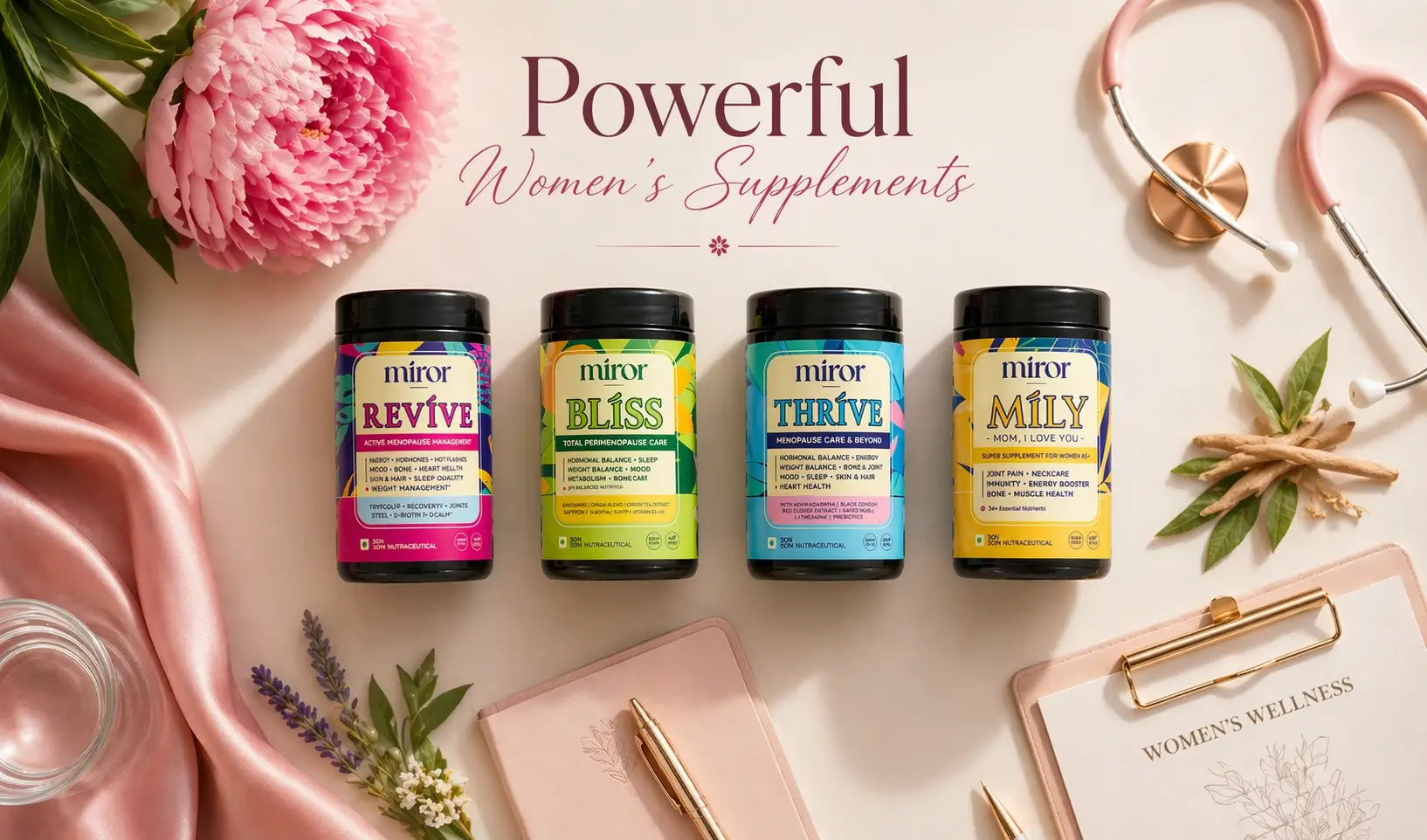
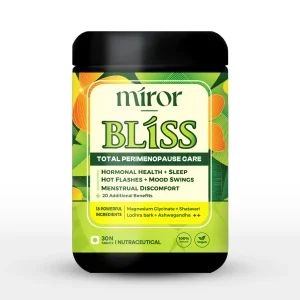
Miror Bliss is formulated for women in perimenopause and early hormonal transition. Its blend of adaptogens, minerals, and botanical extracts helps stabilise hormonal fluctuations, reduce hot flashes, improve sleep quality, and support mood balance during the early stages of menopause.
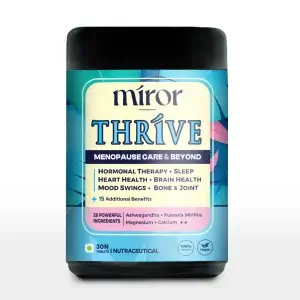
For women in later menopause stages, Miror Thrive provides targeted postmenopausal support. It combines phytoestrogens, adaptogenic herbs, and micronutrients that help reduce hot flashes and night sweats while supporting bone health, cardiovascular health, mood stability, and sustained energy levels.
Both formulations are developed with evidence informed ingredients including black cohosh, ashwagandha, magnesium glycinate, shatavari, and essential micronutrients known to support hormonal balance and thermoregulation.
When used consistently alongside lifestyle strategies, these formulations can help many women navigate menopausal symptoms more comfortably and naturally.
3. Lifestyle Strategies That Reduce Hot Flashes: Scientific studies show that lifestyle changes can also help reduce symptom intensity.
Evidence based strategies include:
• Regular physical activity
• Stress reduction techniques such as yoga or meditation
• Maintaining a healthy body weight
• Limiting caffeine and alcohol
• Keeping sleeping environments cool
These approaches support overall hormonal resilience.
For women seeking deeper guidance, Miror also offers personalised menopause wellness plans developed by a multidisciplinary panel of doctors, nutritionists, and midlife health specialists with over 14 years of clinical experience. These plans combine nutrition, lifestyle adjustments, hormonal insights, and targeted supplementation to support women through perimenopause and menopause more effectively.
You can explore personalised guidance here: https://miror.in/free-consultation/
Certain nutrients support hormonal balance and nervous system stability during menopause.
Research suggests benefits from:
• Magnesium
• Vitamin D
• Calcium
• Omega 3 fatty acids
• Phytoestrogens from plant sources
A balanced diet rich in whole foods supports metabolic health and hormone adaptation during this life stage.
Menopause care has historically been overlooked in India, leaving many women to navigate profound hormonal changes without structured medical guidance or community support.
Miror was created to change that.
Today, Miror has supported over 75,000 women across India through various stages of hormonal transition including perimenopause, menopause, and postmenopause. The platform combines clinical expertise, personalised guidance, science backed formulations, and community support to ensure women do not face midlife health challenges alone.
Through its specialised menopause programs, India’s first HRT Centre of Excellence, and a growing support ecosystem of doctors, health experts, and community mentors, Miror is building a comprehensive support system for women navigating midlife hormonal changes.
Because menopause should never feel isolating.
Women seeking expert guidance, support networks, or personalised care can join the Miror community here:
Join the Miror Community: https://miror.in/j?s=meta/
Hot flashes can be uncomfortable, sometimes even disruptive.
But they are also temporary.
With the right knowledge, lifestyle adjustments, and medical support when necessary, most women find relief and regain balance.
Understanding what hot flashes are, why they happen, and how to manage them empowers women to move through menopause with confidence.
Because menopause is not a loss of vitality.
It is a transition.
And with the right support, it can be navigated with strength, clarity, and resilience.
Hot flashes are sudden feelings of intense heat that spread across the face, neck, and chest. They occur when declining estrogen levels affect the brain’s temperature regulation system, causing the body to react as if it is overheating. Hot flashes are one of the most common symptoms of menopause and can occur during both perimenopause and postmenopause.
Hot flashes typically last between 30 seconds and five minutes, although the frequency varies from woman to woman. Some women experience them occasionally, while others may have several episodes daily. Research shows that hot flashes can persist for 7 to 10 years during the menopause transition, though their intensity usually decreases over time.
Hot flashes and night sweats occur primarily due to declining estrogen levels, which affect the hypothalamus, the brain’s temperature control centre. This hormonal change makes the body more sensitive to small temperature shifts, triggering sudden heat, sweating, and flushing of the skin. Stress, caffeine, alcohol, and warm environments can also trigger episodes.
Yes, hot flashes can continue even after menopause. Some women experience symptoms for several years after their last period because estrogen levels remain low and the body takes time to fully adapt to hormonal changes. However, persistent or severe symptoms can often be managed with lifestyle changes, medical treatments, or targeted menopause support.
Several strategies can help reduce hot flashes naturally. Maintaining a healthy weight, practising stress management, avoiding caffeine and alcohol triggers, wearing breathable clothing, and ensuring adequate sleep can all help. Nutritional support, hormone therapy when appropriate, and science backed supplements designed for menopause may also help regulate symptoms.


 ×
×