
Heavy periods can feel like your body has quietly changed its rules without telling you.
One month feels manageable. The next feels overwhelming. The bleeding is heavier, longer, and harder to predict.
You may find yourself planning your day around it, carrying extra protection, or simply feeling exhausted in ways that are difficult to explain.
If you are in your late 30s or 40s, this shift is often not random.
Heavy periods during this phase are frequently connected to two very common conditions, fibroids and adenomyosis, both of which tend to become more noticeable during perimenopause.
This is not just about inconvenience. It is about understanding what your body is trying to communicate.
Perimenopause is not a straight line. It is a phase of hormonal fluctuation where estrogen and progesterone rise and fall unpredictably.
This hormonal imbalance affects how the uterine lining builds and sheds.
When estrogen dominates without sufficient progesterone:
The uterine lining can become thicker
Periods may become heavier and longer
Bleeding may feel less controlled
At the same time, underlying conditions like fibroids and adenomyosis can amplify these changes.
(Hello Clue).
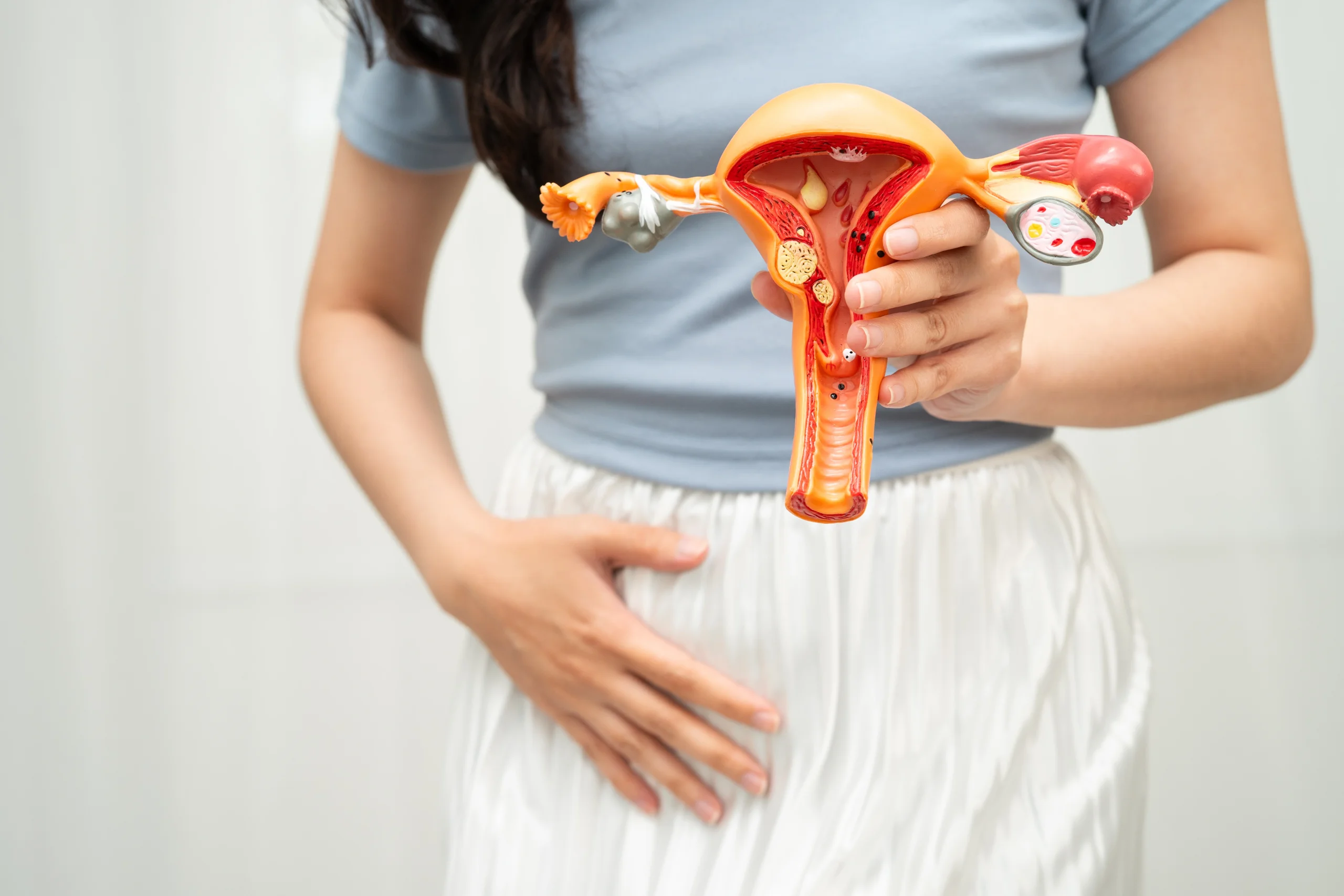
Both conditions are common, but they affect the uterus differently.
| Feature | Fibroids | Adenomyosis |
|---|---|---|
| What it is | Non-cancerous growths in the uterus | Uterine lining grows into the muscle wall |
| Common age | 30s to 50s | 35+ |
| Bleeding pattern | Heavy, prolonged periods | Heavy, painful, clot-filled periods |
| Uterus feel | Enlarged, irregular | Enlarged, tender, boggy |
| Pain level | Variable | Often more intense cramping |
Clinical insight: Studies highlight that both conditions are strongly estrogen-sensitive, which explains why symptoms intensify during perimenopause.
(Indira IVF).
Fibroids are extremely common. In India, research suggests that up to 25–30% of women may develop fibroids during their reproductive years.
They can cause heavy periods in several ways:
Increasing the surface area of the uterine lining
Interfering with normal uterine contractions
Causing prolonged bleeding duration
Some women notice:
Passing large clots
Bleeding lasting more than 7 days
A sense of pelvic heaviness
(PMC).
Adenomyosis is less talked about, but equally important.
Instead of growing outward like fibroids, the uterine lining grows inward into the muscle wall.
This leads to:
Intense cramping
Deep pelvic discomfort
Heavier, more painful periods
The uterus may become slightly enlarged, and bleeding can feel more “dense” or difficult to manage.
(Cleveland Clinic).
This is where things become more complex.
During perimenopause:
Hormones fluctuate unpredictably
Existing fibroids may grow faster
Adenomyosis symptoms may worsen
The result?
Heavy periods that feel:
More frequent
Less predictable
More physically draining
You may also experience:
Fatigue due to iron loss
Mood changes linked to hormonal shifts
Disrupted daily routines
| Symptom | Possible Cause |
|---|---|
| Very heavy bleeding | Fibroids + estrogen dominance |
| Severe cramping | Adenomyosis |
| Irregular cycles | Perimenopause hormones |
| Clotting | Thickened uterine lining |
| Fatigue | Iron deficiency due to blood loss |
Heavy menstrual bleeding affects nearly 1 in 3 women at some point in life.
According to The Lancet:
Blood loss exceeding 80 ml per cycle is considered heavy
Chronic heavy periods can lead to iron deficiency anemia
Indian clinical observations also show that:
Fibroids are a leading cause of heavy periods in urban populations
Adenomyosis is often underdiagnosed due to overlapping symptoms
Heavy periods should not be dismissed as “just part of aging.”
You may want to consult a doctor if you notice:
Bleeding that soaks through protection every 1–2 hours
Periods lasting longer than 7–8 days
Severe pain interfering with daily life
Symptoms of fatigue, dizziness, or weakness
These are not just inconveniences. They are signals.
While medical evaluation is important, everyday support also matters.
Focus on:
Iron-rich foods like lentils, leafy greens, jaggery
Vitamin C for better iron absorption
Balanced meals to stabilize energy
Tracking patterns helps you:
Notice changes early
Communicate clearly with your doctor
Feel more in control of your body
Heavy periods are physically demanding. Your body may need:
More rest
Slower routines during difficult days
(Healthline).
It is easy to feel frustrated with your body during this phase.
But heavy periods are not your body “failing.”
They are often your body responding to:
Hormonal transitions
Structural changes like fibroids or adenomyosis
Understanding this does not remove the discomfort entirely.
But it changes how you relate to it.
Heavy periods during perimenopause are common, but they are not something you have to silently endure.
When you understand the role of fibroids, adenomyosis, and hormonal shifts, the experience begins to make sense.
And when something makes sense, it becomes easier to manage with clarity instead of confusion.
If you are navigating changes like these and want guidance that feels grounded, practical, and genuinely supportive, the Miror community brings together women who are asking the same questions and experts who help make sense of them, one step at a time.
Heavy periods during perimenopause are usually caused by hormonal fluctuations, especially higher estrogen levels without enough progesterone. This imbalance can thicken the uterine lining, leading to heavier bleeding. Conditions like fibroids and adenomyosis can further intensify heavy menstrual bleeding during this phase.
Yes, fibroids are one of the most common causes of heavy periods in women in their 40s. These non-cancerous growths can increase the surface area of the uterus and disrupt normal contractions, leading to prolonged, heavy bleeding and clotting.
Adenomyosis causes heavy periods by allowing the uterine lining to grow into the muscle wall, leading to painful, heavy bleeding. Fibroids, on the other hand, are separate growths in the uterus that can also cause heavy menstrual bleeding, but often with less intense cramping compared to adenomyosis.
Heavy periods can be common in perimenopause, but they should not be ignored. While hormonal changes play a role, consistently heavy bleeding may indicate underlying conditions like fibroids or adenomyosis and should be evaluated by a doctor.
You should consult a doctor if your heavy periods involve soaking through pads every 1–2 hours, last longer than a week, include large clots, or cause fatigue and dizziness. These symptoms may signal heavy menstrual bleeding that needs medical attention.


 ×
×