

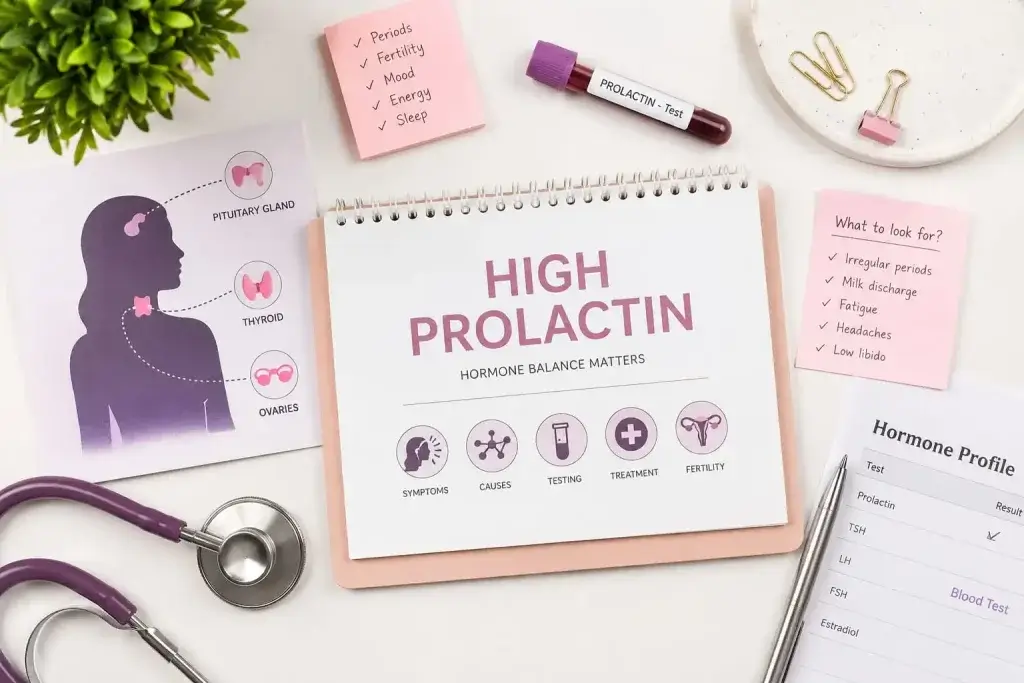
Many women discover they have high prolactin levels only after investigating symptoms such as irregular periods, difficulty conceiving, or unexpected breast discharge.
Hormones do not work in isolation. Instead, they function as an interconnected network that influences everything from menstrual cycles and fertility to mood and energy levels. While prolactin is most commonly associated with breastfeeding, this important hormone plays a much broader role in women’s health.
When prolactin levels become elevated outside of pregnancy or breastfeeding, they can interfere with reproductive hormones and affect menstrual health. Understanding why prolactin levels are elevated is often the first step toward identifying the root cause of symptoms and determining the most appropriate course of action.
What Is Prolactin?
Prolactin is a hormone produced primarily by the pituitary gland, a small gland located at the base of the brain. Its primary role is supporting breast development and milk production after childbirth.
In addition to its role in lactation, prolactin interacts closely with other reproductive hormones involved in ovulation, menstrual cycles, and fertility.
Prolactin levels naturally increase during pregnancy and breastfeeding to support milk production. These hormonal changes are normal and expected.
One of the most common misconceptions I see in clinical practice is that prolactin is only relevant during pregnancy. In reality, prolactin remains an important hormone throughout a woman’s reproductive years.
It’s important to remember that prolactin itself is not harmful. Problems typically arise when prolactin levels remain elevated outside of normal physiological situations such as pregnancy or breastfeeding.
What Is Considered High Prolactin?
High prolactin levels are medically referred to as hyperprolactinemia.
In simple terms, hyperprolactinemia means that the amount of prolactin circulating in the bloodstream is higher than the normal reference range.
However, there is no single prolactin value that applies universally. Reference ranges can vary between laboratories, testing methods, and individual circumstances.
Many women are surprised to learn that a prolactin result should never be interpreted in isolation. When evaluating hormone-related symptoms, healthcare professionals consider laboratory findings alongside medical history, symptoms, medications, and other hormone levels.
A blood test is typically required to confirm elevated prolactin levels. In some cases, repeat testing may be recommended because factors such as stress, recent exercise, or inadequate sleep can temporarily influence prolactin measurements.
Symptoms of High Prolactin in Women
The symptoms of high prolactin in women can vary significantly from person to person. Some women experience noticeable symptoms, while others discover elevated prolactin levels during routine fertility or hormonal investigations.
Irregular or Absent Periods
One of the most common prolactin symptoms is a change in menstrual cycles.
Elevated prolactin levels can interfere with ovulation, making periods irregular, infrequent, or absent altogether. Some women may notice longer cycles, while others may stop menstruating for several months.
Difficulty Conceiving
Because prolactin can affect ovulation, high prolactin levels may make conception more challenging.
When ovulation becomes irregular or does not occur consistently, fertility may be affected. However, difficulty conceiving does not necessarily mean pregnancy is impossible.
Breast Milk Production Without Pregnancy or Breastfeeding
A symptom known as galactorrhea can occur in some women with elevated prolactin levels.
Galactorrhea refers to the production or leakage of breast milk despite not being pregnant or breastfeeding. While this symptom can be alarming, it is often a clue that prolactin levels may require further evaluation.
Reduced Libido
Hormonal changes associated with elevated prolactin levels may contribute to a decrease in sexual desire.
Changes in reproductive hormone balance can affect libido differently from one woman to another.
Vaginal Dryness
In women with elevated prolactin levels, changes in estrogen regulation may contribute to vaginal dryness and discomfort.
These symptoms can sometimes affect sexual wellbeing and quality of life.
Mood Changes and Fatigue
Hormonal fluctuations may influence mood, energy levels, and overall wellbeing.
While fatigue and mood changes are common symptoms with many potential causes, they may occur alongside other signs of hormonal imbalance in women.
Headaches or Visual Changes
Persistent headaches or changes in vision warrant prompt medical evaluation, particularly when a pituitary gland condition is being considered.
Although these symptoms do not automatically indicate a serious problem, they should not be ignored.
It’s important to note that not every woman with high prolactin experiences all of these symptoms. Symptom patterns can vary considerably based on the underlying cause and the degree of prolactin elevation.
What Causes High Prolactin?
Identifying the causes of high prolactin is often just as important as identifying the elevated level itself.
A comprehensive assessment is often needed because several different factors can contribute to hyperprolactinemia.
Pregnancy and Breastfeeding
Pregnancy and breastfeeding are the most common physiological causes of elevated prolactin levels.
During these stages, prolactin rises naturally to support breast development and milk production. This increase is normal and does not require treatment.
Certain Medications
Several medications can affect prolactin regulation.
These may include:
– Certain antidepressants
– Antipsychotic medications
– Some blood pressure medications
– Medications that influence dopamine pathways
If medication-related prolactin elevation is suspected, a healthcare professional can help determine whether further investigation is needed.
Pituitary Gland Conditions
The pituitary gland is responsible for producing prolactin.
In some cases, a non-cancerous growth called a prolactinoma may develop within the pituitary gland and produce excess prolactin.
Many women become concerned when they hear the term “pituitary tumour.” However, prolactin-producing adenomas are often benign, and effective treatment options are available in many cases.
Thyroid Disorders
The connection between thyroid health and prolactin is often overlooked.
Hypothyroidism, a condition in which the thyroid gland does not produce enough thyroid hormone, can sometimes lead to elevated prolactin levels.
This is one reason thyroid function testing is commonly included when investigating hormonal symptoms.
Chronic Stress
Many women are surprised to learn that chronic stress may influence prolactin levels.
Stress activates several hormonal pathways within the body, and prolonged stress exposure can affect hormone regulation over time.
While stress alone may not explain every case of hyperprolactinemia, it can contribute to hormonal disruption in some individuals.
PCOS and Hormonal Conditions
Conditions such as PCOS may coexist with elevated prolactin levels.
When evaluating hormone-related symptoms, healthcare professionals often assess multiple hormone systems simultaneously because hormonal imbalances rarely occur in isolation.
The key message is simple: finding the underlying cause is essential for determining the most appropriate management strategy.
How Prolactin Affects Other Hormones
Hormones operate as a highly interconnected system.
When prolactin levels become elevated, they can influence the hormonal signals that regulate ovulation and reproductive function.
Elevated prolactin may suppress gonadotropin-releasing hormone (GnRH), which helps coordinate the release of reproductive hormones involved in ovulation.
As a result, estrogen and progesterone regulation may be affected.
This can lead to:
– Irregular menstrual cycles
– Missed periods
– Disrupted ovulation
– Changes in fertility
Rather than viewing prolactin as a standalone hormone, it is often more helpful to understand it as one part of a larger hormonal network.
Prolactin and Fertility
The relationship between prolactin and fertility is often a major concern for women who receive a diagnosis of hyperprolactinemia.
Because elevated prolactin levels can disrupt ovulation, they may contribute to difficulties conceiving.
Changes in cycle length, irregular ovulation, or absent periods can all affect the chances of pregnancy.
However, an important point to remember is that high prolactin does not automatically mean infertility.
Many women successfully conceive after appropriate evaluation and treatment. Identifying the underlying cause, addressing contributing factors, and restoring hormonal balance can often improve reproductive outcomes.
For women trying to conceive, professional assessment can provide valuable clarity and guidance.
When Should Women Speak to a Doctor?
Women should consider seeking medical advice if they experience:
– Irregular or absent periods
– Difficulty conceiving
– Unexplained breast discharge
– Persistent headaches
– Visual disturbances
– Ongoing hormonal symptoms that affect daily life
Professional evaluation is important because symptoms associated with elevated prolactin can overlap with other hormonal conditions.
A healthcare provider can determine whether further testing is needed and help identify the underlying cause.
Early evaluation often provides reassurance and helps women make informed decisions about their health.
Looking Beyond a Single Hormone
Prolactin is an essential hormone with important functions throughout a woman’s reproductive life.
When prolactin levels become elevated, symptoms may include irregular periods, fertility challenges, breast discharge, and other signs of hormonal imbalance. However, symptoms can vary considerably between individuals.
Understanding the underlying cause is often the most important part of the evaluation process. Whether the cause relates to medications, thyroid health, stress, pituitary function, or another hormonal condition, effective treatment depends on an accurate diagnosis.
Rather than focusing on a single laboratory result, a comprehensive approach helps create a clearer picture of overall hormonal health.
Looking for trusted support on your hormone health journey? The MIROR app offers expert-led education, symptom tracking tools, and evidence-based resources to help women better understand their hormones and make informed health decisions with confidence.
FAQs
Prolactin is a hormone produced primarily by the pituitary gland. It plays a key role in breast development and milk production after childbirth while also interacting with reproductive hormones involved in menstrual health and fertility.
High prolactin can result from pregnancy, breastfeeding, certain medications, pituitary gland conditions, hypothyroidism, chronic stress, and other hormonal disorders.
High prolactin can result from pregnancy, breastfeeding, certain medications, pituitary gland conditions, hypothyroidism, chronic stress, and other hormonal disorders.
Yes. Elevated prolactin levels can interfere with ovulation, leading to irregular periods, infrequent periods, or the absence of menstrual cycles.
High prolactin may affect fertility by disrupting ovulation. However, many women conceive successfully after appropriate evaluation and treatment.
High prolactin is typically diagnosed through a blood test. Depending on symptoms and medical history, additional investigations may also be recommended.