

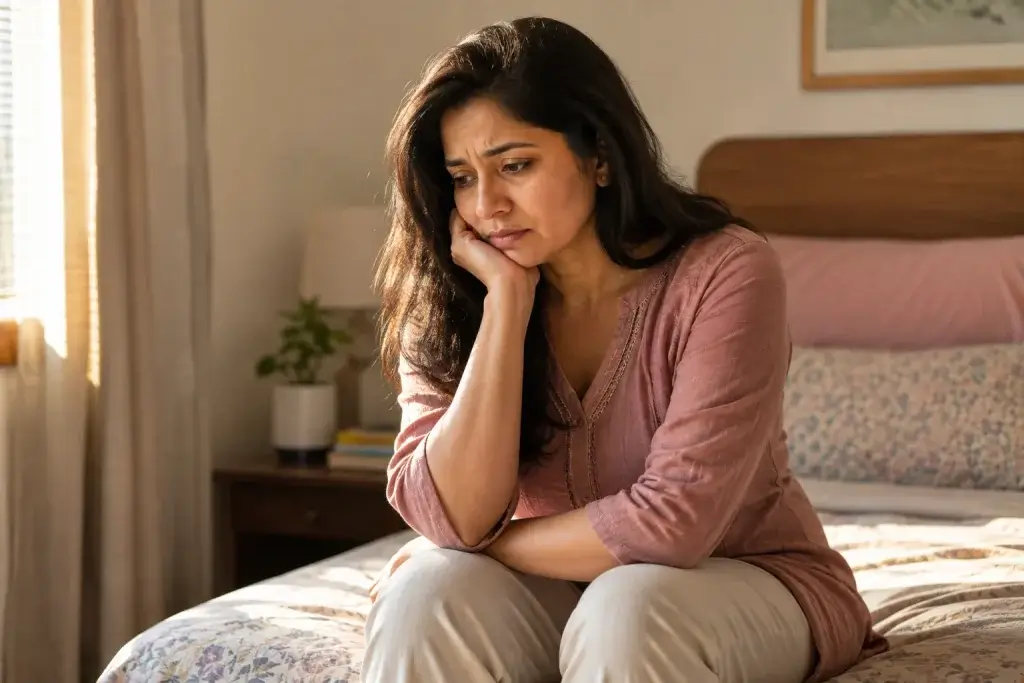
Pain during sex is not something women have to simply accept after menopause. Yet many women hesitate to talk about it. They may assume that vaginal dryness, discomfort or pain with penetration is just another unavoidable part of getting older.
It is not.
One of the most common reasons sex becomes painful after menopause is the decline in estrogen. As estrogen levels fall, the tissues of the vagina and vulva can become thinner, drier and less elastic. This can make penetration uncomfortable or painful and may also cause burning, irritation or soreness.
The good news is that painful sex after menopause is treatable. The right approach depends on what is causing the pain and how severe the symptoms are.
Why is sex painful after menopause?
After menopause, the ovaries produce much less estrogen. Estrogen plays an important role in maintaining the health, elasticity, blood supply and lubrication of vaginal tissues.
When estrogen levels decline, the vaginal lining can become thinner and less flexible. Natural lubrication may also decrease. As a result, friction during sex can cause discomfort, burning, soreness and sometimes small areas of irritation or bleeding.
Pain during intercourse is medically known as dyspareunia. It can occur at the vaginal opening, during penetration, deeper inside the vagina or in the pelvis.
For some women, the discomfort develops gradually. For others, it may become noticeable several years after menopause.
What is genitourinary syndrome of menopause?
You may have heard the term vaginal atrophy or vaginal dryness. Today, doctors often use the broader term genitourinary syndrome of menopause, or GSM.
GSM describes the changes that can occur in the genital and urinary tissues when estrogen levels remain low after menopause. Symptoms can include vaginal dryness, burning, irritation, pain during sex and urinary symptoms such as discomfort while urinating or recurrent urinary infections.
Not every woman experiences the same symptoms. Some mainly notice dryness, while others may experience painful penetration or urinary discomfort.
The important point is that these symptoms are related to physical changes in the tissues and are not simply a consequence of ageing.
How does low estrogen make sex uncomfortable?
Think of healthy vaginal tissue as flexible tissue that can stretch and respond to sexual activity.
With less estrogen, several changes can occur.
- The vaginal lining may become thinner.
- The tissue may lose some of its elasticity.
- Natural lubrication may decrease.
- The vaginal environment can change.
- The vaginal opening may become less flexible.
These changes can increase friction and make penetration painful. The tissue can also become more sensitive and vulnerable to irritation.
This is why simply trying to tolerate the discomfort may not solve the problem. If the underlying tissue changes continue, symptoms can persist.
Is Vaginal Dryness the Only Cause of Painful Sex After Menopause?
Vaginal dryness is a common cause of painful sex after menopause, but it is not the only one.
Pelvic floor muscle tension can also contribute to pain. Some women may unconsciously tighten these muscles because they anticipate discomfort during penetration. Over time, this can create a cycle in which pain leads to muscle tension, and muscle tension makes penetration more uncomfortable.
Infections, vulvar skin conditions and urinary problems can also cause pain or irritation. Certain medications may contribute to vaginal dryness or sexual difficulties, while previous pelvic surgery, childbirth related changes and other gynaecological conditions may also play a role.
This is why persistent or severe pain should not automatically be attributed to menopause. A gynaecological evaluation can help identify the underlying cause and guide appropriate treatment.
What does painful sex after menopause feel like?
The experience can be different for every woman.
You may notice:
* Dryness during penetration
* Burning or stinging
* A feeling of tightness
* Pain at the vaginal opening
* Deeper pelvic pain during intercourse
* Soreness that continues after sex
* Irritation or small amounts of bleeding after intercourse
* Urinary discomfort alongside vaginal symptoms
Some women describe sex as uncomfortable rather than distinctly painful. Others may start avoiding intimacy altogether because they anticipate discomfort.
If pain is affecting your sexual relationship or making you anxious about intimacy, it deserves attention.
Can lubricants help painful sex after menopause?
For women with mild symptoms, a good quality personal lubricant can reduce friction and make intercourse more comfortable.
Vaginal moisturizers are another option. Unlike lubricants, which are generally used during sexual activity, moisturizers are intended for regular use to help with ongoing vaginal dryness.
These options can be useful, but they may not be enough when the underlying tissue changes are more significant.
If symptoms continue despite using lubricants or moisturizers, it is worth speaking to a gynaecologist rather than repeatedly trying to manage the pain yourself.
What treatments are available for painful sex after menopause?
Nonhormonal options for painful sex
For some women, regular vaginal moisturizers and lubricants may provide adequate relief. Lubricants can help reduce friction during sexual activity, while vaginal moisturizers can be used more regularly to help manage ongoing dryness.
Local vaginal estrogen
When symptoms are related to genitourinary syndrome of menopause, a doctor may discuss local vaginal estrogen. It can help improve vaginal tissue health and reduce symptoms such as dryness and painful intercourse. Local estrogen is available in different forms, including creams, tablets and rings.
Other prescription treatments
Other prescription options may be considered depending on the individual situation. Vaginal DHEA and oral ospemifene are among the treatments that may be appropriate for some women.
Pelvic floor physiotherapy
Pelvic floor physiotherapy can also be helpful when muscle tension or pelvic floor dysfunction contributes to pain. A trained physiotherapist can assess the pelvic floor and recommend appropriate exercises or techniques.
The treatment should be individualized rather than based simply on your age or how long it has been since menopause.
Does painful sex mean you should stop having sex?
Not necessarily.
If sex is painful, continuing through the pain is unlikely to make intimacy more enjoyable. It may also cause you to anticipate pain the next time, which can increase anxiety and involuntary pelvic floor tightening.
Instead, it can help to pause penetration and discuss the symptoms with your partner. Other forms of intimacy may remain comfortable while the underlying cause is being addressed.
There is also no rule that says sexual activity has to look the same after menopause as it did before. Comfort, communication and pleasure matter more than following a particular routine.
When should you see a gynaecologist?
Consider seeing a gynaecologist if pain during sex is persistent, worsening or affecting your quality of life.
You should also seek medical assessment if you experience bleeding after sex, unusual vaginal discharge, persistent burning or itching, urinary symptoms or significant pelvic pain.
Bleeding after menopause should not automatically be assumed to be caused by vaginal dryness. It needs appropriate medical evaluation to identify the cause.
A consultation can also help distinguish genitourinary syndrome of menopause from infections, skin conditions, pelvic floor problems and other gynaecological causes of pain.
Pain during sex is not something women have to simply accept after menopause. Yet many women hesitate to talk about it. They may assume that vaginal dryness, discomfort or pain with penetration is just another unavoidable part of getting older.
Can painful sex after menopause be treated?
Yes. Painful sex is common after menopause, but it does not mean you have to accept discomfort as a normal part of ageing. Estrogen related changes, vaginal dryness, pelvic floor tension and other conditions can contribute to pain, and the right treatment depends on the underlying cause.
If painful sex is affecting your comfort, intimacy or quality of life, it is worth speaking to a qualified gynaecologist rather than continuing to live with it.
Looking for personalized support? Download the MIROR app and book an appointment with a women’s health expert who can understand your symptoms, identify possible causes and guide you towards the right treatment for you.
FAQs
No. Genitourinary symptoms can persist for years after menopause, and treatment can still be considered based on your symptoms, medical history and individual needs
Burning after sex can occur when dry or sensitive vaginal tissue experiences friction. However, infections, skin conditions and other causes can produce similar symptoms. Persistent burning should therefore be assessed rather than automatically attributed to menopause.
Reduced sexual activity may contribute to changes in vaginal tissue flexibility and can sometimes make penetration more uncomfortable. However, pain should not be blamed simply on how often you have sex. The underlying cause should be assessed.
Bleeding after menopause should not be dismissed as normal. Vaginal tissue changes can sometimes cause irritation or bleeding, but postmenopausal bleeding requires appropriate medical evaluation to establish the cause.
Yes. Pelvic floor muscles can become tense or overactive, particularly when someone has experienced pain during penetration. This can contribute to ongoing discomfort. Pelvic floor physiotherapy may be useful for selected women.