


Vaginal dryness during sex is more common than many women realise, yet it’s often difficult to talk about.
Even with a doctor.
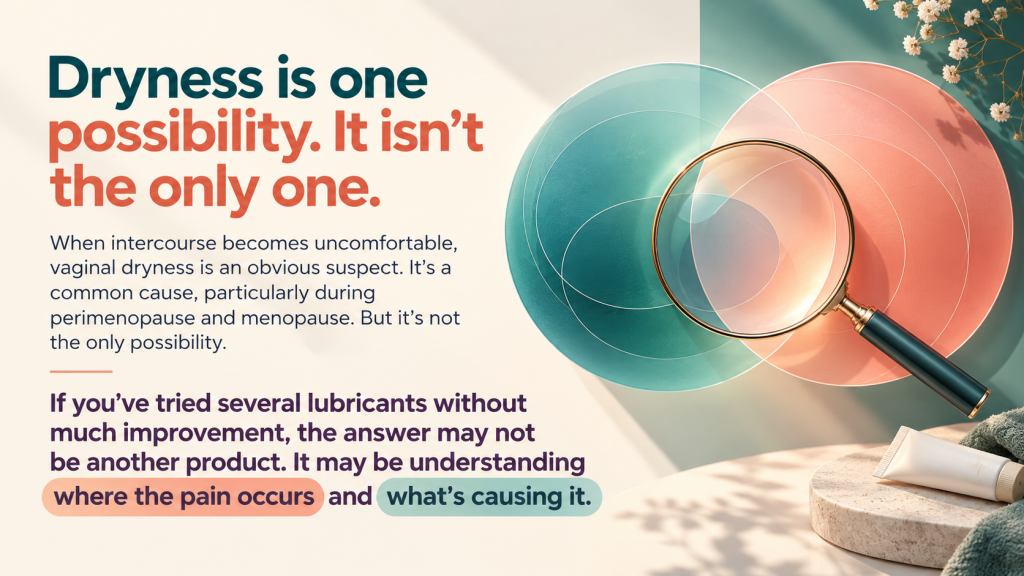
Let’s look at the possible causes, what you can do to feel more comfortable, and when it’s time to seek medical advice.
(Mirorpedia)
1. Entry Pain or Deep Pain? Start Here
Pain during intercourse, medically known as dyspareunia, can occur at the vaginal opening or deeper inside the pelvis.
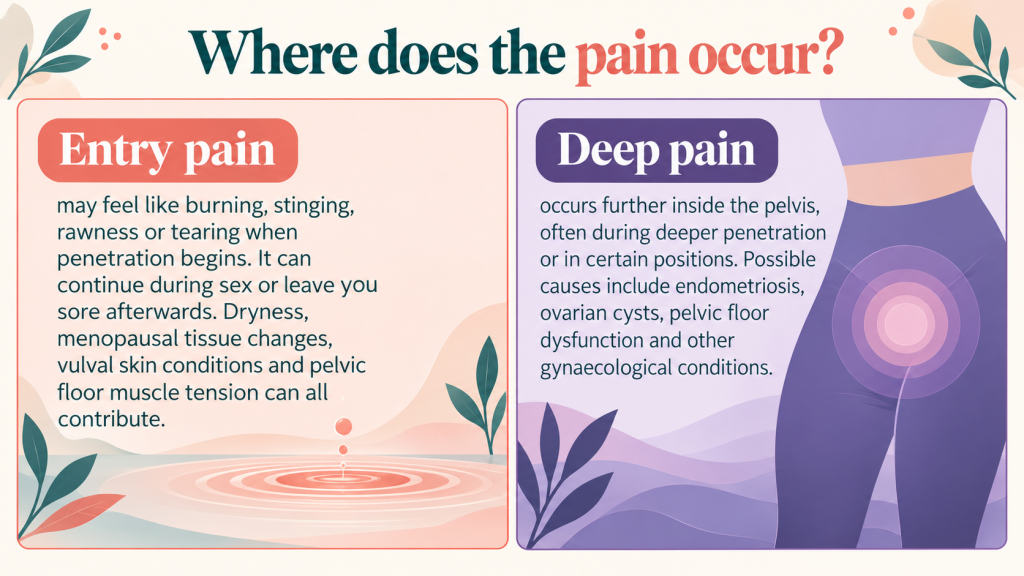
Some women experience both.
Paying attention to where the pain occurs, when it began and whether it continues afterwards can help your gynaecologist identify the cause. However, the location alone cannot establish a diagnosis.
2. Why Vaginal Dryness Can Make Sex Painful
Oestrogen helps maintain the thickness, elasticity and lubrication of vaginal tissues. During perimenopause and menopause, declining oestrogen levels can cause the tissues of the vulva and vagina to become thinner, drier and more vulnerable to irritation.
This may lead to genitourinary syndrome of menopause (GSM), which can cause vaginal dryness, burning, soreness, discomfort during sex and sometimes urinary symptoms.
Hormonal changes aren’t the only cause of dryness. Certain medications, inadequate arousal and other health conditions may also contribute.
Unlike some menopausal symptoms that improve over time, GSM can persist or progress without appropriate treatment. Recognising the cause matters because symptom relief may require more than lubrication.
(Cleveland Clinic)
3. When Lubricant Isn’t Enough: Other Causes of Painful Sex
If lubrication hasn’t helped, several other explanations deserve consideration.
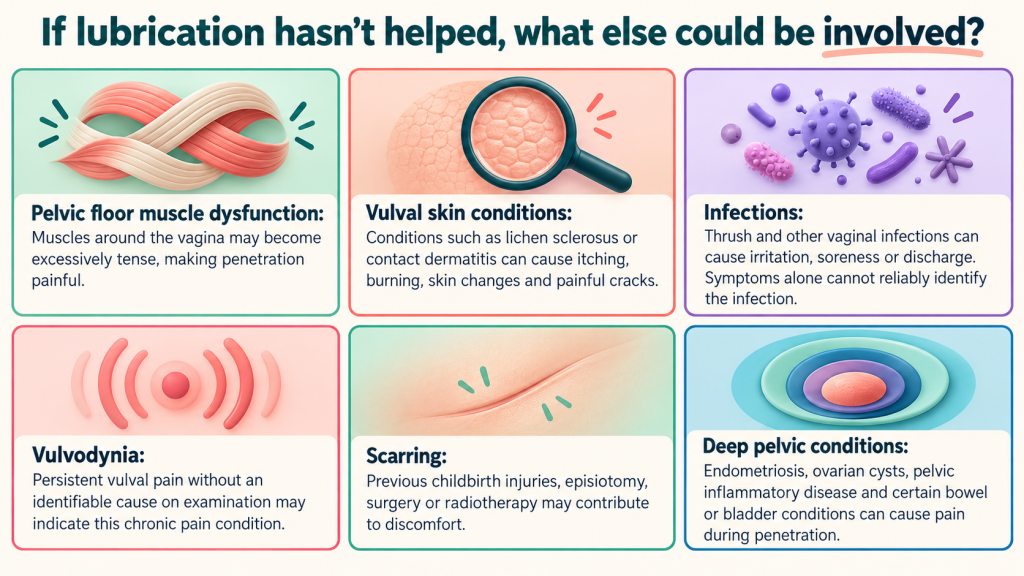
The important point is that these conditions require different approaches. More lubricant may reduce friction, but it won’t treat an infection, a skin disorder or an underlying pelvic condition.
(Mayo Clinic)
4. The Pelvic Floor: A Frequently Overlooked Part of the Problem
Here’s something worth understanding: pain can cause muscles to tighten protectively.
If penetration has hurt before, your pelvic floor muscles may contract in anticipation of further discomfort. This response can happen involuntarily. Tense muscles can then make penetration more painful, reinforcing the cycle.
Even when the original problem, such as dryness; improves, the muscular tension may continue.
This doesn’t mean the pain is imagined. The discomfort is real, and the physical response can perpetuate it.
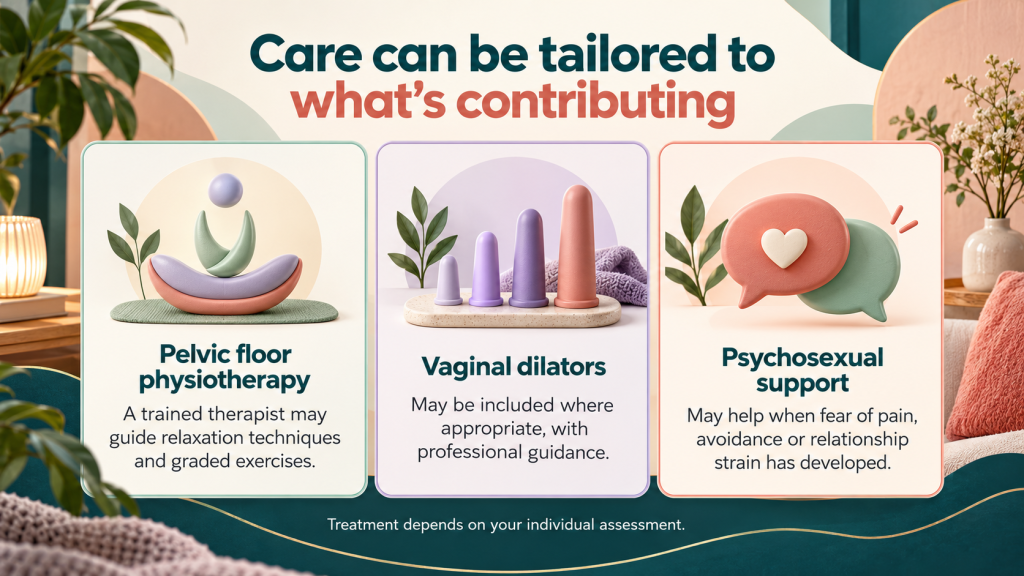
Treatment should be individualised rather than assuming that every woman needs the same combination of approaches.
(Cleveland Clinic)
5. Choosing a Lubricant That Works for You
A suitable lubricant can reduce friction and make sexual activity more comfortable, particularly when natural lubrication is insufficient.
A. Water-based lubricants are a common starting point. They’re generally easy to wash off and compatible with latex condoms, but some formulations dry out faster than others.
B. Silicone-based lubricants tend to last longer and may be helpful when more sustained lubrication is needed. Check compatibility if you’re using silicone sex toys or vaginal medications.
C. Oil-based products, including coconut oil, can weaken latex condoms. They may also irritate some people and aren’t all formulated or tested for vaginal use.
Ingredients matter, too. Fragrances, flavourings and warming or cooling additives can irritate sensitive tissues. If a product repeatedly causes burning or soreness, stop using it.
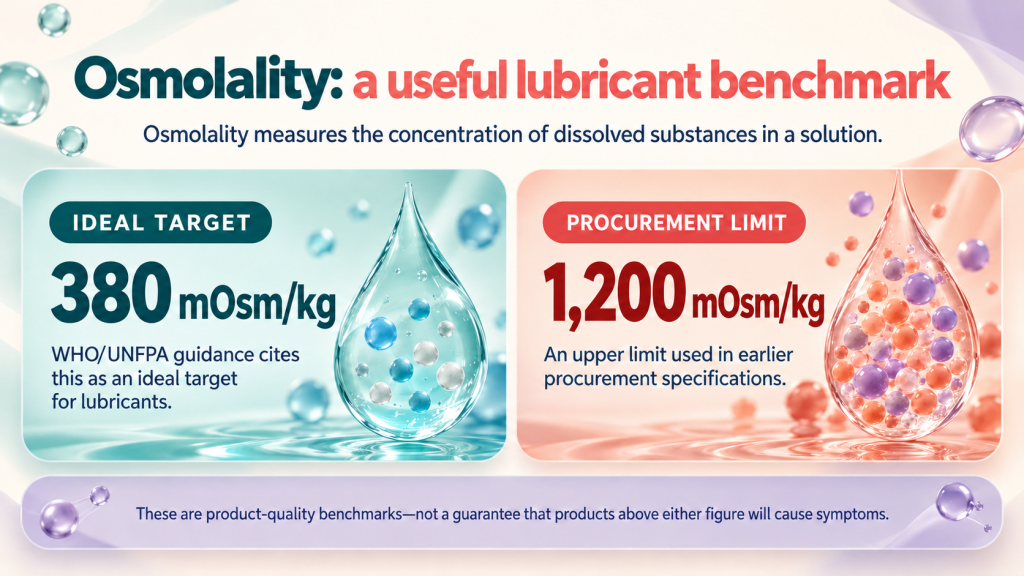
Use enough lubricant, reapply when needed and allow time for arousal. Natural lubrication varies, and taking more time can make a difference.
For more guidance, read our article on vaginal moisturisers versus lubricants.
6. Treatments That Address the Underlying Cause
The right treatment depends on what’s causing the pain.
1. Vaginal moisturisers may help when ongoing dryness is part of the problem. They’re used regularly, according to product instructions, rather than only during sex.
2. Low-dose vaginal oestrogen may be recommended for menopausal genitourinary symptoms. It treats oestrogen-related changes in vaginal tissue rather than simply reducing friction. It is available in different local formulations, and systemic absorption is generally much lower than with systemic hormone therapy.
A clinician can help determine whether it’s suitable for you.
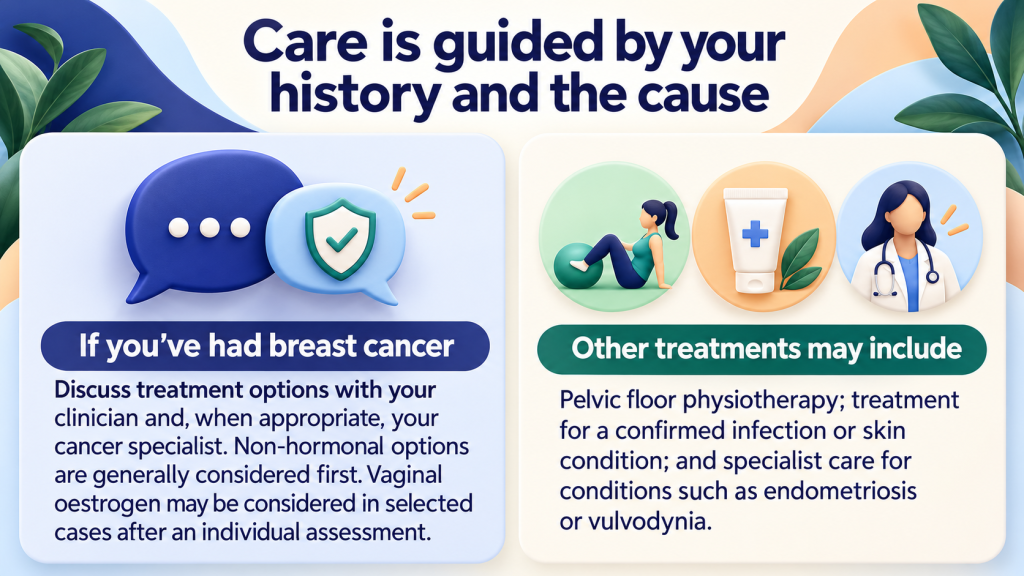
If symptoms persist despite using lubricants and moisturisers correctly, don’t assume you’ve simply chosen the wrong product. Ask your gynaecologist to investigate the cause.
7. When Should You See a Doctor?
Arrange a medical assessment if you experience:
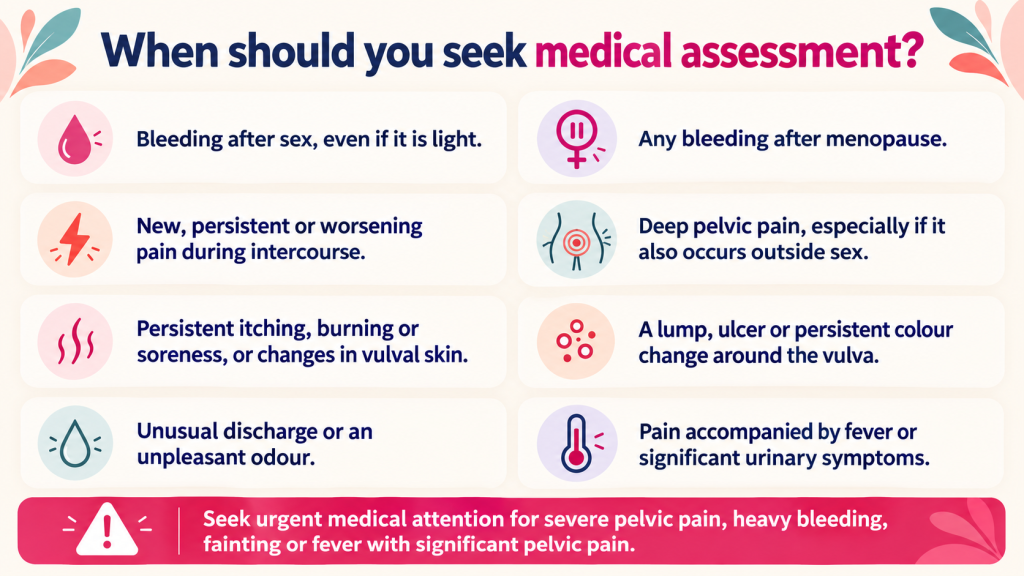
A doctor may ask about your symptoms, medical history and medications, and perform an examination or recommend tests where needed.
You can ask for an explanation before any examination and discuss your comfort and preferences.
Something Worth Saying Plainly
In India, conversations about painful sex can be difficult to initiate. Some women worry about embarrassment; others assume discomfort is something they must tolerate.
It isn’t.

Where Miror Fits In?
Painful sex deserves thoughtful, compassionate care; not guesswork or endless experimentation with products.

Through the Miror app and Miror Care Plus, you can now connect with doctors, women’s health experts and mental-health professionals, discuss concerns that may feel difficult to raise, and explore appropriate next steps for your health.
Download the Miror app or join Miror Care Plus to access expert support and take a more informed approach to your well-being.