


What do vaginal dryness and frequent urination have in common?
More than you might think.
If you’ve noticed vaginal discomfort alongside an increasingly urgent need to urinate, these changes may not be entirely unrelated. During perimenopause and menopause, declining estrogen can affect both vaginal and urinary tissues.
This connection is part of what doctors call genitourinary syndrome of menopause (GSM), a condition involving genital, sexual and urinary symptoms associated with hormonal changes.
Recognising the connection matters because these symptoms can resemble infections or other conditions, and identifying the underlying cause is essential for choosing appropriate treatment.
What Is Genitourinary Syndrome of Menopause?
Genitourinary syndrome of menopause (GSM) is a collection of genital, sexual and urinary symptoms associated with hormonal changes during the menopausal transition.
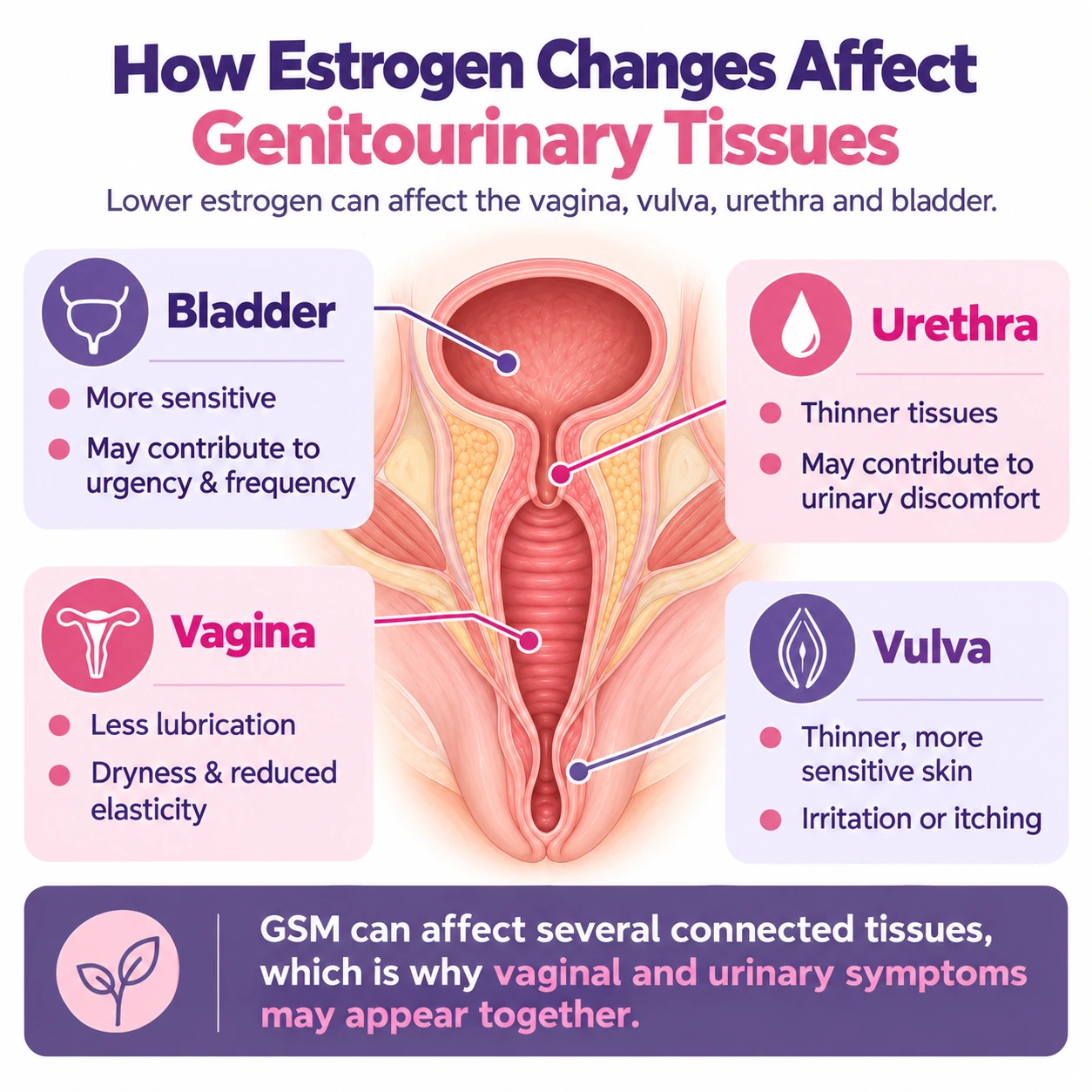
Estrogen helps maintain the health of tissues in the vagina, vulva and lower urinary tract. When estrogen levels decline, these tissues may become thinner, less elastic and more sensitive.
Some women primarily experience vaginal discomfort. Others notice changes in urination, painful intimacy or a combination of symptoms.
GSM is a broader term than vaginal atrophy, which refers specifically to changes affecting vaginal tissues. Our guide to vaginal atrophy after 40 explains these changes in greater detail.
Unlike hot flashes, which may become less frequent over time, GSM symptoms often persist without appropriate management.
Importantly, not every vaginal or urinary symptom is caused by menopause. Other medical conditions can produce similar discomfort.
What Are the Symptoms of Genitourinary Syndrome of Menopause?
GSM does not look the same for everyone. Symptoms may develop gradually and differ considerably in severity.
Vaginal and Vulvar Symptoms
Possible symptoms include:
Vaginal dryness or reduced natural lubrication
Burning, irritation or itching around the vagina
Tenderness around the vaginal opening
Discomfort caused by friction or tight clothing
Increased sensitivity of vulvar tissues
These symptoms may affect everyday comfort even when a woman is not sexually active.
Urinary Symptoms
The relationship between menopause and urinary health is less widely recognised.
Some women with GSM experience:
Increased urinary urgency
Frequent urination
Burning or discomfort while passing urine
Recurrent urinary tract infections
Urinary discomfort alongside vaginal dryness
However, urinary urgency and frequency can also result from an overactive bladder, infection or other medical conditions.
GSM should not be assumed to be the cause of urinary symptoms without appropriate assessment.
Sexual Symptoms
GSM may also affect sexual comfort.
Reduced lubrication and changes in tissue elasticity can make penetration uncomfortable. Some women experience burning, soreness or pain during intercourse, medically known as dyspareunia.
Discomfort may continue after sexual activity, particularly when vaginal tissues are sensitive.
Painful intimacy can have several contributing factors, including pelvic floor muscle tension. Understanding the different causes of painful sex after menopause can help women recognise when further medical evaluation may be necessary.
Why Does GSM Develop During Menopause?
Estrogen supports the structure, moisture and function of several tissues in the lower genital and urinary tract.
As estrogen levels decline, changes may occur in the vaginal lining, surrounding connective tissues and local microbial environment.
The vaginal lining may become thinner, while natural lubrication and elasticity can decrease. Changes in vaginal acidity may also affect the balance of protective bacteria.
The lower urinary tract is influenced by hormones too. This helps explain why some women experience vaginal and urinary symptoms together.
These changes are particularly associated with menopause, although symptoms can begin during perimenopause.
Other circumstances involving lower estrogen levels, including certain cancer treatments or surgical removal of the ovaries, may produce similar changes.
Understanding low estrogen symptoms can provide a broader perspective on how hormonal changes may affect different aspects of women’s health.
These changes are easier to understand when we look at how estrogen supports each of the tissues involved.
Genitourinary Syndrome of Menopause vs UTI: What’s the Difference?
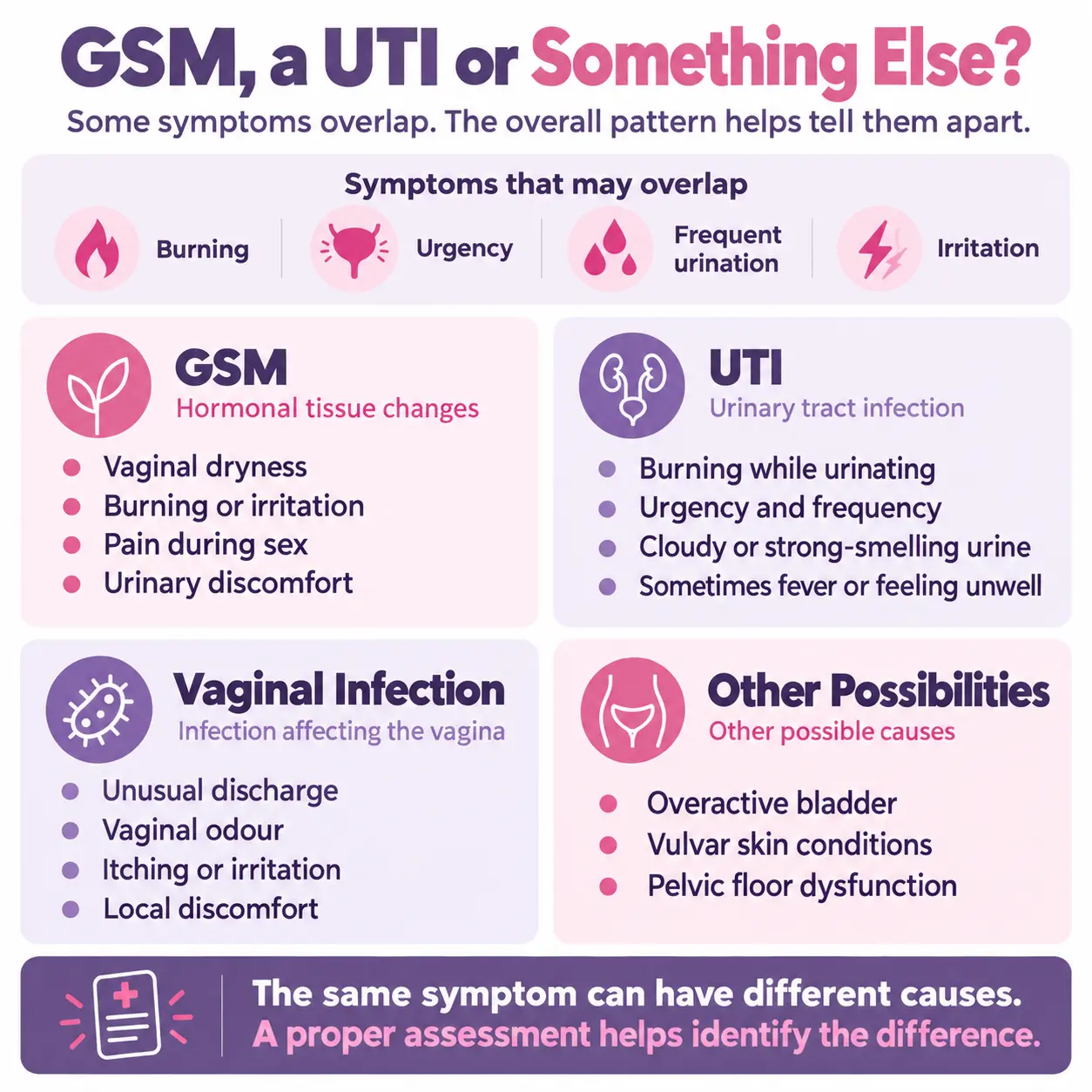
Burning, urinary urgency and genital irritation do not always point to one single condition. These symptoms can overlap, which is why they are often confusing.
For example, GSM may cause vaginal dryness, burning, irritation, urinary discomfort or a frequent urge to pass urine. But some of these symptoms can also happen with a urinary tract infection (UTI), a vaginal infection, overactive bladder or certain vulvar skin conditions.
The key difference is that GSM is linked to hormonal changes affecting vaginal and urinary tissues, while other conditions have different underlying causes.
A UTI is more likely to cause burning while passing urine, urinary urgency and frequency, and may sometimes be associated with cloudy urine, fever or feeling unwell.
A vaginal infection may cause irritation too, but it is more often associated with unusual discharge, vaginal odour or more obvious itching.
Overactive bladder usually causes urgency and frequent urination, but without the vaginal dryness or irritation that may be seen with GSM.
Vulvar skin conditions, such as lichen sclerosus or dermatitis, may cause itching, soreness, burning or visible skin changes around the vulva.
It is also possible for a woman to have GSM alongside another condition, which makes proper assessment especially important.
That is why repeated urinary symptoms should not automatically be assumed to be an infection, and ongoing burning or dryness should not automatically be blamed on menopause either.
A healthcare professional may recommend a urine test, pelvic examination or other investigations depending on the symptom pattern.
How Is Genitourinary Syndrome of Menopause Diagnosed?
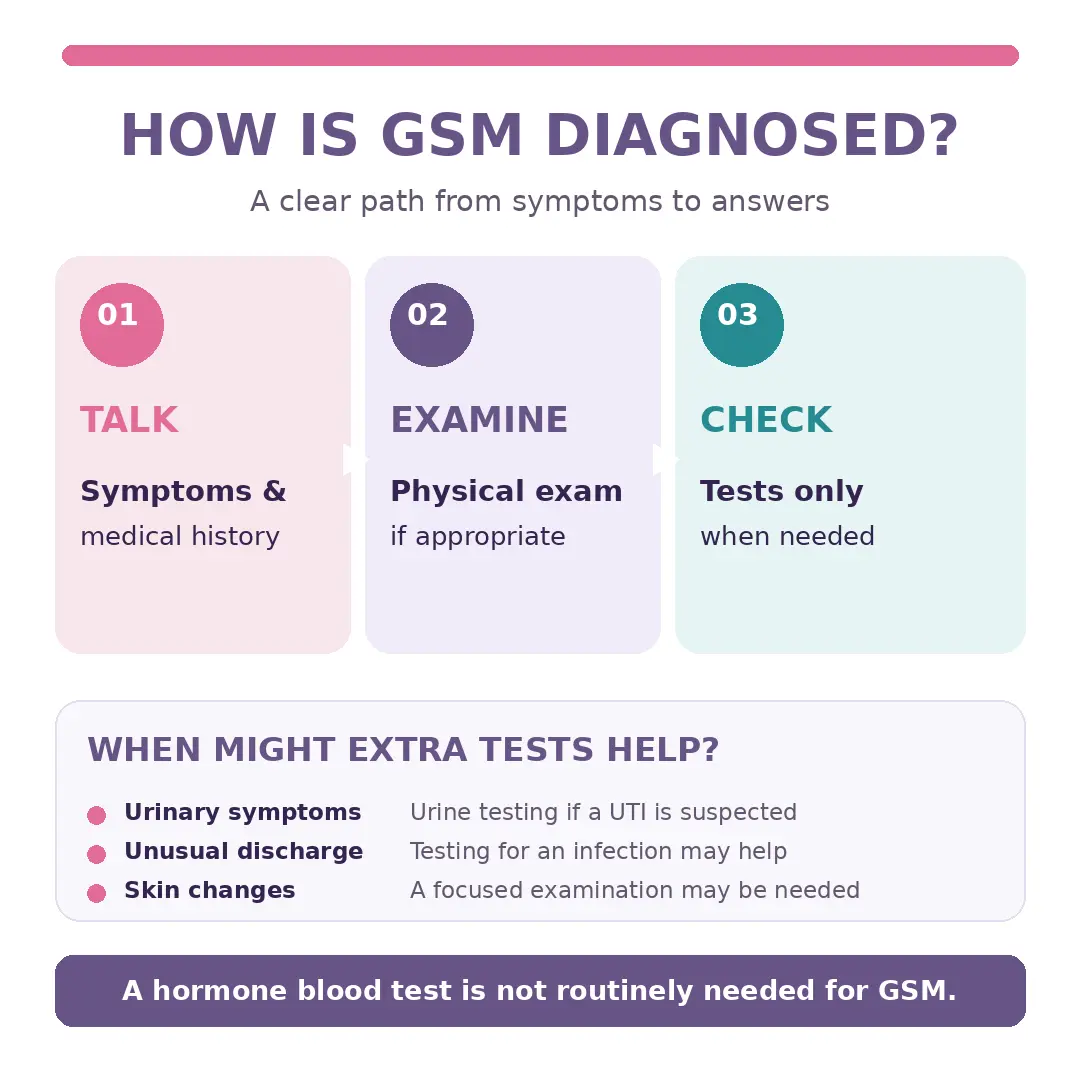
Diagnosing genitourinary syndrome of menopause involves evaluating symptoms, medical history and possible alternative causes. There is no single test that confirms every case of GSM.
Diagnosis begins with understanding the symptoms, medical history and menopausal stage.
Discussing Your Symptoms
A clinician may ask when the discomfort began, whether it is persistent or intermittent, and how it affects everyday activities.
Urinary symptoms, sexual discomfort, previous infections and medications are also relevant.
Physical Examination
A pelvic examination may be recommended to assess vaginal or vulvar tissue changes and identify conditions that need separate treatment.
However, visible tissue changes do not always reflect how severe a woman’s symptoms feel.
Are Blood Tests Necessary?
Routine estrogen blood tests are generally not required to diagnose GSM.
Estrogen levels fluctuate during perimenopause, and a single measurement does not reliably establish the cause of genital or urinary discomfort.
Additional investigations may be appropriate when infection, another medical condition or an unusual clinical presentation is suspected.
The Indian Menopause Society’s 2026 clinical recommendations emphasise evaluating symptoms and excluding other potential causes before diagnosing GSM.
What Treatments Are Available for GSM?
Treatment for genitourinary syndrome of menopause depends on the symptoms, their severity, medical history and individual needs.
Because GSM is associated with declining estrogen levels, certain prescription treatments can help address the underlying changes in vaginal tissues rather than simply providing temporary symptom relief.
Local Vaginal Estrogen
Low-dose vaginal estrogen is an evidence-supported treatment for genitourinary syndrome of menopause, particularly when symptoms include vaginal dryness, irritation and painful intercourse.
It works directly on vaginal tissues, helping improve their moisture, thickness and elasticity over time. Depending on suitability and availability, it may be prescribed as a vaginal cream, tablet, pessary or ring.
Local vaginal estrogen is different from systemic hormone replacement therapy (HRT).
While systemic HRT delivers hormones throughout the body, low-dose vaginal estrogen acts predominantly on local tissues, with generally low systemic absorption.
The 2025 clinical guideline on genitourinary syndrome of menopause also recommends local vaginal estrogen to reduce the risk of future urinary tract infections in appropriate women experiencing recurrent UTIs.
Treatment should be individualised, particularly for women with a history of breast cancer or other relevant medical conditions. A qualified healthcare professional can help determine whether vaginal estrogen is appropriate.
Other Prescription Treatments
For women who may require an alternative approach, treatments such as vaginal dehydroepiandrosterone (DHEA) or oral ospemifene may be considered in selected cases.
These treatments work differently from local vaginal estrogen, and their suitability depends on medical history, symptoms and availability in the country.
It is also important to distinguish evidence-supported treatments from procedures that are still being investigated.
Although vaginal laser treatments are sometimes promoted for menopause-related discomfort, current evidence does not support their routine use. The NICE menopause guideline recommends restricting vaginal laser treatment for these symptoms to randomised controlled trials.
The most suitable approach depends on identifying the underlying cause of symptoms and discussing the available options with a healthcare professional.
When Should You Consult a Doctor?
Although GSM symptoms may develop gradually, persistent discomfort should not be overlooked or automatically attributed to menopause.
Consider consulting a gynaecologist or qualified women’s health specialist if:
Vaginal dryness, burning or irritation persists.
Urinary urgency, frequency or discomfort repeatedly occurs.
You experience pain during intercourse.
Vaginal or urinary symptoms interfere with everyday activities.
You notice unusual vaginal discharge or persistent vulvar irritation.
Your symptoms are becoming more frequent or difficult to manage.
Any bleeding after menopause requires medical assessment, even if vaginal dryness or fragile tissues are suspected.
Urinary symptoms accompanied by fever, chills, flank pain or significant illness also require prompt medical attention, as they may indicate an infection needing urgent treatment.
A clinical assessment can help determine whether the symptoms are associated with GSM or another condition and identify appropriate treatment options.
Understanding GSM Is the First Step Towards Relief
Genitourinary syndrome of menopause is an important part of midlife health that deserves greater attention.
Recognising that genital and urinary symptoms may be connected can help women seek appropriate care rather than repeatedly managing discomfort without understanding its cause.
Not every symptom is hormonal, but persistent changes deserve a conversation with a healthcare professional.
Download the MIROR app to access expert-informed guidance on perimenopause, menopause and hormonal health, and explore personalised support for your midlife wellbeing.