
Vaginal discomfort isn’t always an infection.
Dryness that doesn’t go away. A burning sensation without an obvious cause. Intimacy that suddenly feels uncomfortable.
These changes are sometimes mistaken for infections or dismissed as a normal part of ageing. But they may be signs of vaginal atrophy, a condition linked to declining estrogen levels during and after menopause.
Understanding what causes these changes, how to recognise the symptoms and which treatments actually help is the first step towards finding relief.
What Is Vaginal Atrophy?
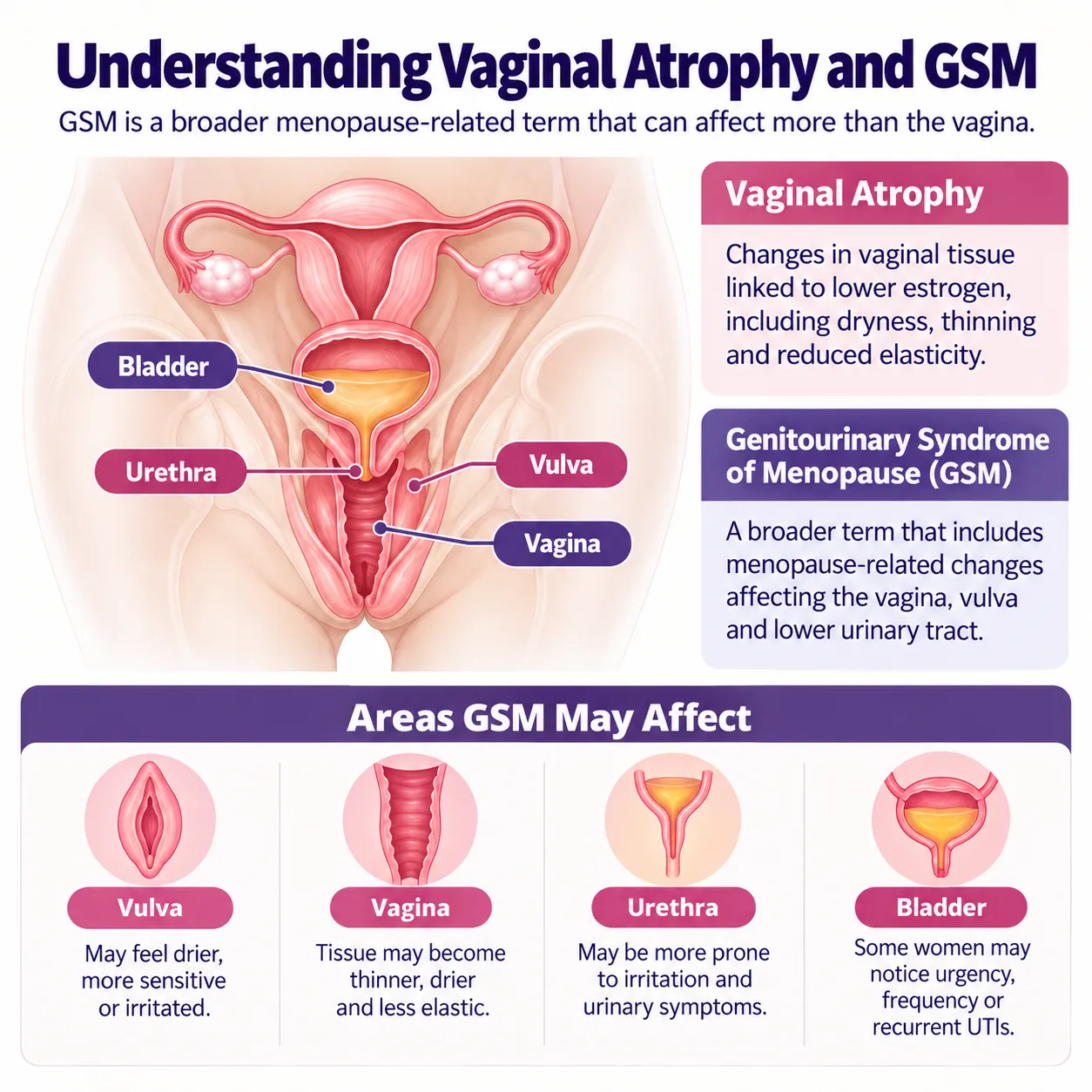
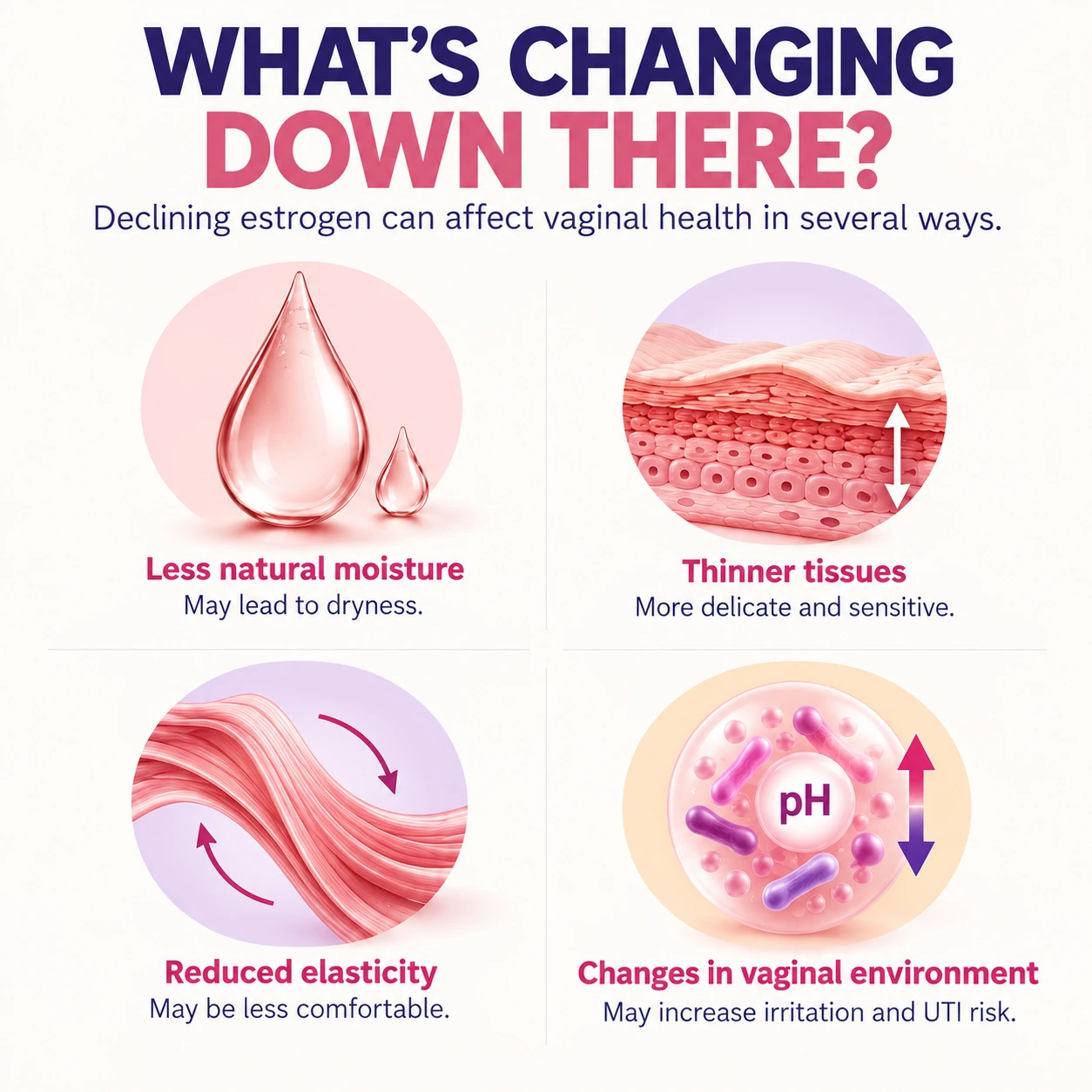
Vaginal atrophy refers to changes in vaginal tissue associated with reduced estrogen levels. The vaginal lining can become thinner, drier and less flexible, making it more sensitive to friction and irritation.
You may also hear the term atrophic vaginitis, although inflammation is not always present.
Vaginal atrophy is commonly seen after menopause, but symptoms can begin earlier as hormone levels change.
Vaginal Atrophy vs Genitourinary Syndrome of Menopause (GSM)
Doctors now commonly use the broader term genitourinary syndrome of menopause, or GSM.
GSM includes menopause-related changes affecting the vagina, vulva and lower urinary tract. Vaginal atrophy describes part of this broader condition.
Understanding this distinction matters because symptoms may involve more than vaginal dryness alone.
What Causes Vaginal Atrophy After 40?
Estrogen helps maintain the vaginal lining’s thickness, moisture, elasticity and blood supply.
As estrogen levels decline, vaginal tissues may become more fragile. Natural lubrication can decrease, and changes in vaginal acidity and protective bacteria may also occur.
These changes can make everyday activities and sexual intercourse uncomfortable.
Why It Becomes More Common Around Menopause
During perimenopause, estrogen levels fluctuate. After menopause, they generally remain lower.
Over time, this can affect vaginal tissue health.
Unlike hot flashes, which often become less frequent with time, untreated vaginal atrophy symptoms may persist or gradually worsen.
Learn more about the wider hormonal transition in MIROR’s guide to perimenopause and menopause symptoms.
Can It Happen Before Menopause?
Yes. Vaginal changes associated with low estrogen can also occur during breastfeeding, after removal of both ovaries or during certain medical treatments that suppress estrogen production.
However, dryness or irritation before menopause is not automatically vaginal atrophy.
Other conditions and medications may produce similar symptoms, making an accurate diagnosis important.
Vaginal Atrophy Symptoms: What Should You Look For?
Vaginal atrophy symptoms do not always begin suddenly. They may develop gradually and vary considerably between women.
Common symptoms include:
- Vaginal dryness: A persistent feeling of reduced moisture or lubrication.
- Burning or irritation: Discomfort around the vagina or vaginal opening.
- Pain during intercourse: Friction or reduced tissue flexibility can make penetration uncomfortable.
- Soreness: Sensitive tissue may become irritated following sexual activity.
- Urinary discomfort: Some women with GSM experience urgency, burning or recurrent urinary tract infections.
Not every woman experiences all these symptoms.
For a closer explanation of intimacy-related discomfort, read why sex can become painful after menopause.
When Should You See a Doctor?
If vaginal discomfort persists, keeps returning or begins affecting your daily life, it’s worth speaking to a gynaecologist. You don’t have to wait until symptoms become severe to seek help.
Some symptoms, however, need more immediate attention. Any bleeding after menopause, including bleeding after intercourse, should be medically evaluated. Unusual vaginal discharge, persistent pelvic pain or new vulval sores also warrant assessment.
If urinary symptoms are accompanied by fever, chills or pain in your back or side, seek prompt medical care, as these could indicate a urinary infection requiring treatment.
Not every symptom is caused by vaginal atrophy. A proper assessment can help identify the underlying cause and guide appropriate treatment.
How Is Vaginal Atrophy Diagnosed?
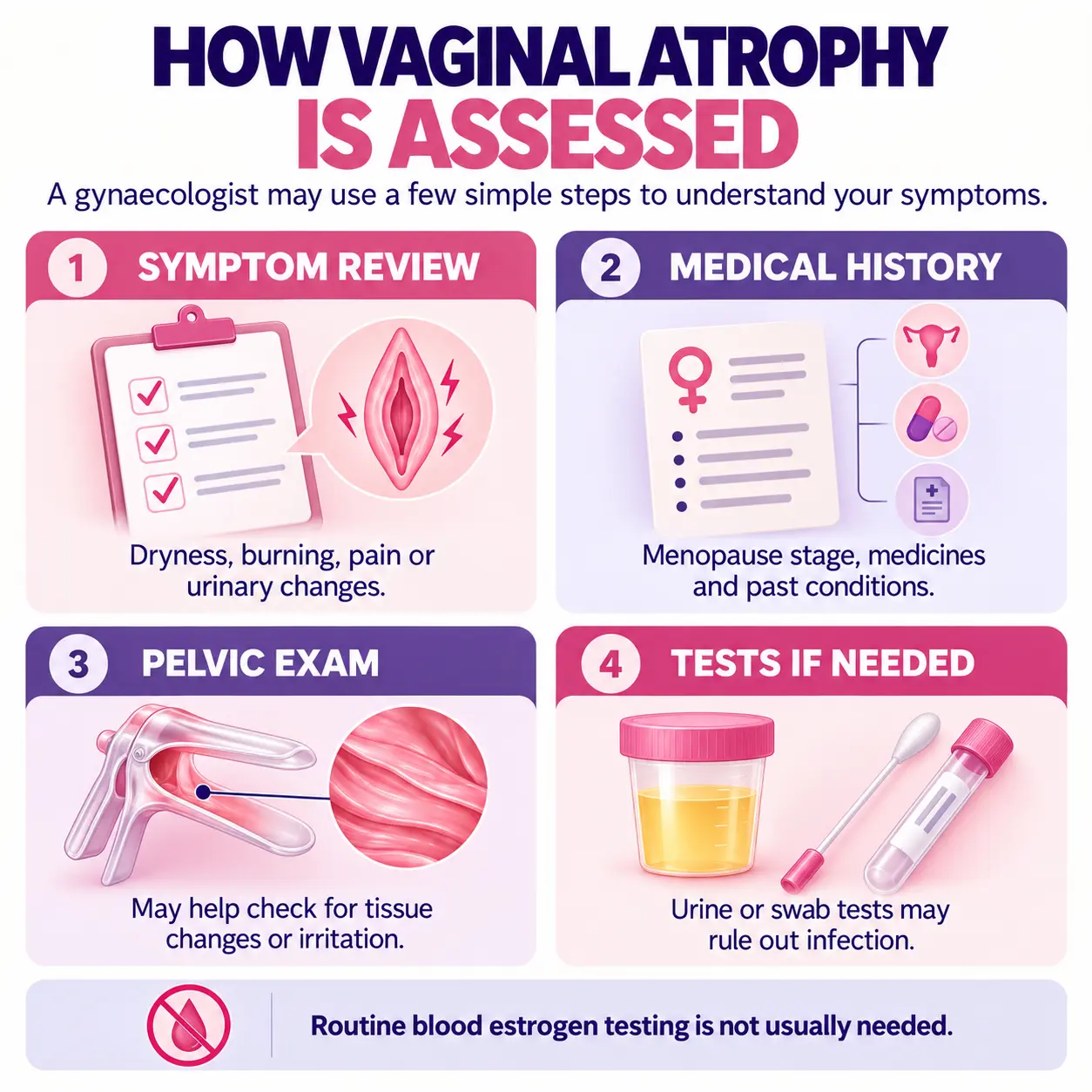
Vaginal atrophy is usually diagnosed through a clinical assessment rather than a single test.
The aim is not only to recognise estrogen-related changes but also to rule out other conditions that may cause similar discomfort.
For example, vaginal infections, vulval skin conditions and certain urinary problems can produce overlapping symptoms but may require different treatments.
Understanding the underlying cause helps your gynaecologist recommend care that is appropriate for your symptoms and medical history.
Vaginal Atrophy Treatment: What Actually Helps?
The right vaginal atrophy treatment depends on your symptoms, their severity, medical history and personal preferences.
Some women benefit from non-hormonal products, while others may need prescription treatment to address estrogen-related tissue changes.
Vaginal Moisturisers and Lubricants
These products serve different purposes.
A vaginal moisturiser is used regularly to improve moisture and comfort between sexual activities.
A lubricant reduces friction during intercourse or other sexual activity.
Both may provide relief, particularly for mild symptoms or women who prefer non-hormonal options.
Choose products intended for vaginal use, preferably fragrance-free, and stop using anything that causes irritation.
For more information on practical non-hormonal approaches, explore MIROR’s guide to natural remedies for painful intercourse after menopause.
Local Vaginal Estrogen Therapy
Local vaginal estrogen is one of the most extensively studied treatments for menopause-related vaginal and genitourinary symptoms.
Available formulations vary by country and may include vaginal creams, tablets, inserts or rings.
The treatment acts primarily on local tissues, helping improve moisture, tissue health and discomfort.
Unlike systemic HRT, local vaginal estrogen is not intended to treat symptoms throughout the body, such as hot flashes.
According to NICE menopause guidance, vaginal estrogen can be considered for menopausal genitourinary symptoms, either alone or alongside non-hormonal moisturisers and lubricants.
Systemic absorption is generally low compared with systemic HRT, although it is not zero and varies by formulation and dose.
For a more detailed explanation, read MIROR’s article on estriol cream for vaginal dryness.
A clinician should determine which formulation is suitable and explain the expected benefits, precautions and follow-up.
Other Prescription Treatment Options
Other treatments include vaginal prasterone, also called DHEA, and oral ospemifene.
These may be considered for selected women when commonly used options are unsuitable, ineffective or difficult to use.
However, their availability and regulatory approval vary between countries, including India.
They are not interchangeable treatments, and the decision to use one requires individual medical assessment.
Treatments That Need More Evidence
Some clinics promote vaginal laser or other energy-based procedures as solutions for menopause-related dryness and discomfort.
However, their long-term effectiveness and safety remain insufficiently established.
NICE advises that vaginal laser treatment should not be offered for menopausal genitourinary symptoms outside a randomised controlled trial.
Treatment decisions should prioritise established evidence over promotional claims.
Living More Comfortably With Vaginal Atrophy
Medical treatment is important, but small everyday adjustments may also help minimise irritation.
Avoid perfumed intimate washes, vaginal douching and products that cause stinging or discomfort.
If intercourse is painful, do not force penetration. Give yourself time for arousal, use appropriate lubrication and discuss persistent discomfort with a healthcare professional.
Some women may also benefit from pelvic-floor physiotherapy when muscle tension contributes to pain.
Remember that vaginal atrophy is often a long-term condition. Symptoms may return when effective treatment is stopped, so follow-up and an appropriate maintenance plan can be important.
Finding the Right Support for Vaginal Atrophy
Vaginal atrophy can affect comfort, intimacy and confidence, but these changes do not have to remain unaddressed.
Recognising symptoms early and discussing them with a qualified healthcare professional can help you understand the cause and explore suitable treatments.
For expert-informed guidance on vaginal atrophy, menopause symptoms and personalised midlife care, download the MIROR app and explore the support available for your health.