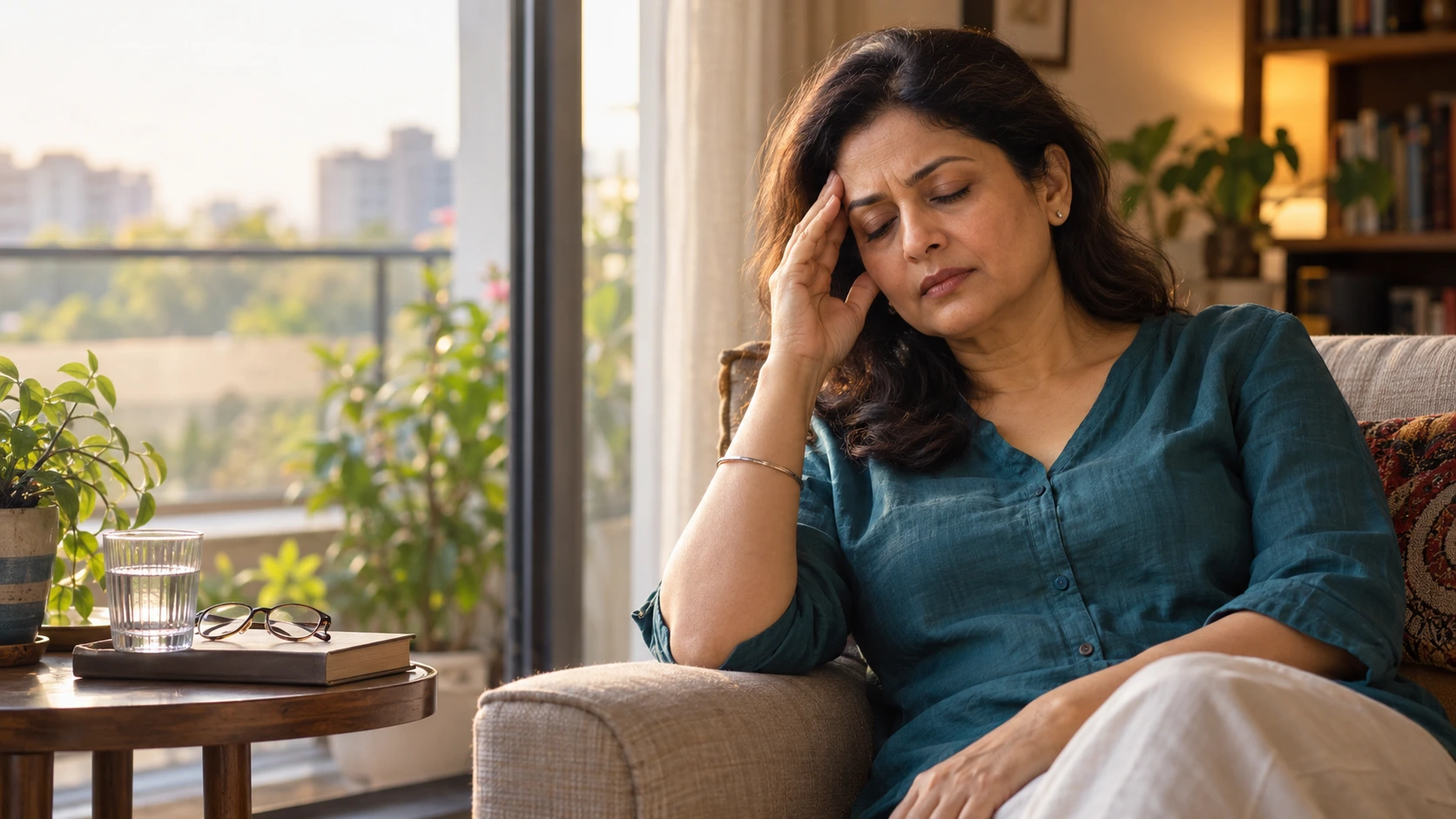


Almost every week, a woman sits across from me and says some version of the same sentence: sex has started to hurt, and she would like to try something natural before she considers hormones. That is a completely reasonable place to begin, and you deserve an honest answer about it.
Natural remedies for painful intercourse after menopause can help, but not every option marketed as “natural” is backed by good evidence. Some approaches may genuinely improve comfort, while others have little evidence behind them or may even cause irritation. The key is knowing what is worth trying, what to avoid, and when it is time to seek medical advice.
You can read our detailed guide to genitourinary syndrome of menopause (GSM) and vaginal dryness if you would like to understand these changes in more depth. Here, we focus on the non-hormonal and practical approaches that may help make intercourse more comfortable, and what the evidence tells us about them.
What “natural” should and shouldn’t mean
Two things get confused constantly.
“Non-hormonal” does not mean ineffective. Some non-hormonal approaches have been studied in clinical trials, although the strength of evidence varies considerably between treatments. For women with milder symptoms, these approaches may provide meaningful relief and can sometimes be used on their own.
“Herbal” does not mean safe or proven. Supplements and vulval oils are largely unregulated, quality varies enormously between brands, and vaginal tissue absorbs what you apply to it. A product being plant-derived tells you nothing about whether it works or whether it interacts with your other medicines.
Non-hormonal approaches that genuinely help
Keep the tissue in regular use
Regular sexual activity, with a partner or on your own, maintains blood flow and elasticity in vaginal tissue. The Menopause Society lists it among the supportive measures worth recommending. Arousal itself improves natural lubrication, so the more relaxed and unhurried the encounter, the better the tissue responds.
It is also important not to push through painful sex. If intercourse hurts, stop and give yourself time to understand what is causing the discomfort. When pain keeps happening, the pelvic-floor muscles can tighten as a protective response, which may make sex more uncomfortable the next time.
Pelvic floor physiotherapy
Pelvic floor physiotherapy can be helpful when pain has become part of the experience of sex. If penetration has been painful for some time, the pelvic-floor muscles may start to tighten automatically in anticipation of discomfort. This can make the muscles less able to relax during penetration and may add to the pain.
A pelvic health physiotherapist can assess what your muscles are doing. They may be too tight, too weak or simply not coordinating well, and the treatment depends on what they find.
There is some evidence that pelvic-floor therapy can reduce pain and improve sexual function in women with dyspareunia, including postmenopausal women, although the studies are generally small.
Treatment may include exercises, techniques to help the muscles relax, hands-on therapy and, when appropriate, gradual vaginal stretching. The aim is not to force penetration, but to help the pelvic floor become more comfortable with touch and movement over time.
Change how sex happens, not just what you apply
Small practical adjustments often help more than any product:
- Allow far more time for arousal than you needed at 30
- Choose positions that let you control depth and pace
- Include non-penetrative intimacy so sex isn’t all-or-nothing
- Empty your bladder beforehand if urinary symptoms flare afterwards
- Tell your partner what hurts, specifically
Treat the fear as well as the friction
When sex has been painful before, it is natural to worry that it will hurt again. That anticipation can make the pelvic-floor muscles tighten without you consciously trying to do so. If the muscles stay tense, penetration can become more uncomfortable, which can then increase the fear of pain the next time.
This is where approaches such as cognitive behavioural therapy (CBT) and mindfulness-based therapy may help. Research in women with genito-pelvic pain has found that these approaches can reduce pain and the distress associated with it. However, much of this research has involved younger women with vulval pain rather than postmenopausal women, so the evidence cannot be directly applied to every woman after menopause.
For some women, addressing the fear and anxiety around painful sex alongside the physical cause can make intimacy feel more comfortable again.
Everyday vulval care
The skin around the vulva can become more sensitive during and after menopause, so everyday products may sometimes cause irritation. Avoid fragranced washes, intimate wipes, douches and daily panty liners if they make the area uncomfortable. Washing the outside with plain water is usually enough. Loose, breathable cotton underwear can also help reduce irritation.
If the skin feels sore or dry, a simple, fragrance-free emollient may provide some comfort. These small changes may not treat the underlying cause of vaginal pain, but they can reduce additional irritation and make the area more comfortable.
Lifestyle factors that support comfort
Some everyday habits can support genital health and overall comfort. Smoking can reduce blood flow to genital tissues, so stopping can benefit both your general health and sexual health.
Regular physical activity, moderate alcohol intake and good sleep can also support overall vascular and sexual health. These are helpful habits, but they should be seen as part of your overall wellbeing rather than treatments for painful sex.
It is also worth reviewing your medicines with your doctor. Some medicines, including certain antihistamines and antidepressants, as well as tamoxifen and aromatase inhibitors, can contribute to vaginal dryness or other sexual symptoms.
Natural remedies for painful intercourse after menopause with limited or unclear evidence
Vitamin E and sea buckthorn oil
Vaginal vitamin E has been studied as a way to ease menopausal vaginal symptoms, and some women may find it helpful. However, there is not enough good-quality evidence to know how well it works or how it should be used long term. There is even less evidence for sea buckthorn oil.
They may sound like simple natural options, but neither is currently an established treatment for painful intercourse after menopause.
Coconut oil, olive oil and ghee
These are commonly used because they are inexpensive and may feel soothing on dry skin around the vulva. The problem is that we do not have enough evidence to say that they actually reduce pain during intercourse after menopause.
There are also a few practical things to keep in mind. Oils can weaken latex condoms, and they may cause irritation or contribute to thrush in some women. If you choose to use an oil, it is better suited to the external skin rather than inside the vagina.
Phytoestrogens and herbal supplements
Black cohosh, red clover and evening primrose oil are often promoted as natural solutions for menopause symptoms. But most of the research on these products has looked at symptoms such as hot flushes, not painful sex.
So it is difficult to say whether they will actually help with intercourse-related pain. Some supplements can also interact with medicines or cause side effects. If you take regular medication, check with your doctor before starting a herbal supplement.
Probiotics
Probiotics are sometimes suggested for vaginal health because menopause can affect the vaginal microbiome. They are an interesting area of research, but there is not enough evidence yet to say that probiotics reliably reduce pain during sex.
What should not replace medical care?
Just because something is described as natural or hormone-free does not mean it has been proven to work.
Energy-based vaginal treatments, such as fractional CO2 laser, are sometimes promoted as an alternative to other treatments for menopausal vaginal symptoms. However, the evidence so far has not shown a clear benefit that justifies recommending them routinely.
Vaginal steaming, douching and putting acidic products or essential oils inside the vagina are also best avoided. Menopausal tissues can be more sensitive, and these products may cause irritation or burns.
If your symptoms are moderate or severe, natural approaches may simply not be enough. There are well-studied medical treatments that can help, and whether you need one depends on what is causing your pain, your medical history and your preferences.
Choosing a non-hormonal approach should be an informed decision. It should not mean avoiding effective treatment simply because it is not considered “natural”.
When painful intercourse needs professional assessment
It is worth seeing a doctor rather than continuing to treat the problem yourself if you notice:
– Bleeding after sex at any point after menopause
– A lump, ulcer, thickened area or sore that does not heal
– White, shiny or fragile skin, or splitting around the vaginal entrance
– Deep or one-sided pelvic pain
– Recurrent urinary infections or persistent burning
– Pain that starts suddenly or is getting worse
– Symptoms that do not improve despite trying simple measures consistently
Dryness is common after menopause, but it is not the only possible cause of pain. Infections, skin conditions, pelvic-floor problems, prolapse and vulval pain conditions can all cause similar symptoms and may need different treatment.
A sensible place to start
You do not need to try everything at once. Start with simple changes that make the area more comfortable, such as avoiding irritating products and using adequate lubrication and moisturization.
If the pain continues, a pelvic-floor assessment may be worth considering. It can also help to address any worry or fear around painful sex, rather than focusing only on the physical symptoms.
If these measures are not helping, speak to your doctor about what else might be appropriate for you.
Natural remedies for painful intercourse after menopause can have a place, but the evidence varies from one approach to another. Be cautious of anything that promises a cure, and remember that choosing a natural option does not mean you have to put up with pain.
If you would like personalized guidance for your symptoms, you can book a consultation with me, Dr. Archana Nirula. Download the MIROR app from the Google Play Store or Apple App Store to schedule an appointment.
FAQs
Any single change deserves eight to twelve weeks of consistent use. Tissue changes and muscle retraining are slow processes. If there has been no improvement at all by that point, it is useful information rather than a failure, and it marks the right moment for reassessment rather than adding a fourth product to the routine.
Yes. Vaginal dryness is common after menopause, but it is not the only possible cause of painful intercourse. Infections, vulval skin conditions, pelvic-floor problems, vaginal narrowing and other gynaecological conditions can also cause pain. The location and pattern of the pain can provide useful clues, which is why persistent or unexplained pain is worth discussing with a gynaecologist.
Non-hormonal measures such as physiotherapy, dilators, moisturizers and vulval care are generally suitable and are considered first-line in this group. Herbal phytoestrogens are a different matter and should be discussed with an oncologist, particularly for women taking tamoxifen or aromatase inhibitors.
Unlike hot flushes, which usually settle over time, genitourinary symptoms tend to persist or slowly progress without treatment. Waiting rarely helps.
Comfort here is maintained rather than cured. Most women need to continue moisturising and some form of regular tissue use indefinitely, although the frequency can usually be reduced once symptoms have settled.