

Do you notice that your vagina feels drier in the days leading up to your period?
Perhaps you experience less natural lubrication, notice a change in discharge or find intercourse less comfortable than usual.
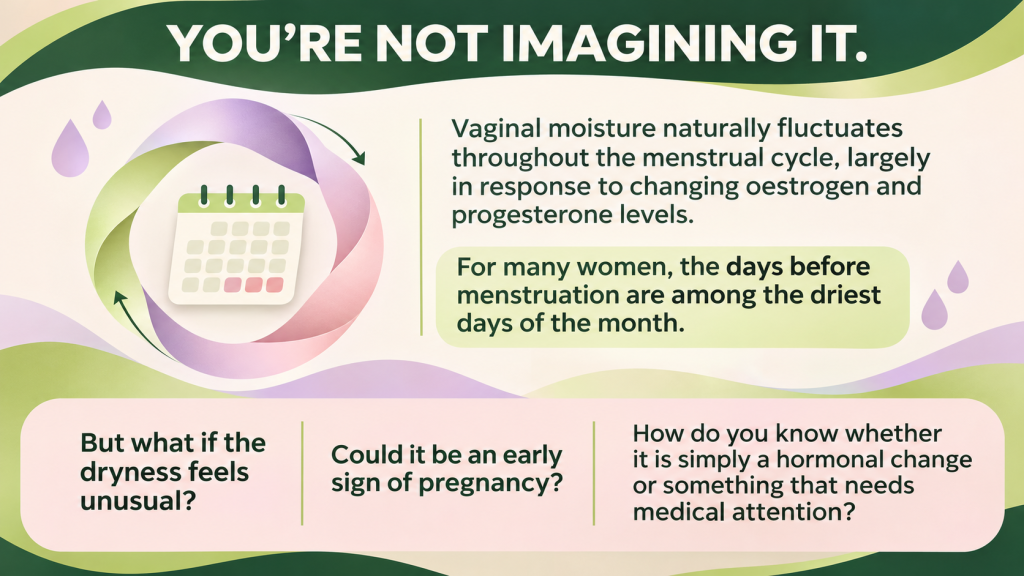
Let’s understand what’s happening in your body, explore nine possible reasons for vaginal dryness, and look at when you should speak to a gynaecologist.
Why Does Vaginal Dryness Happen Before Your Period?
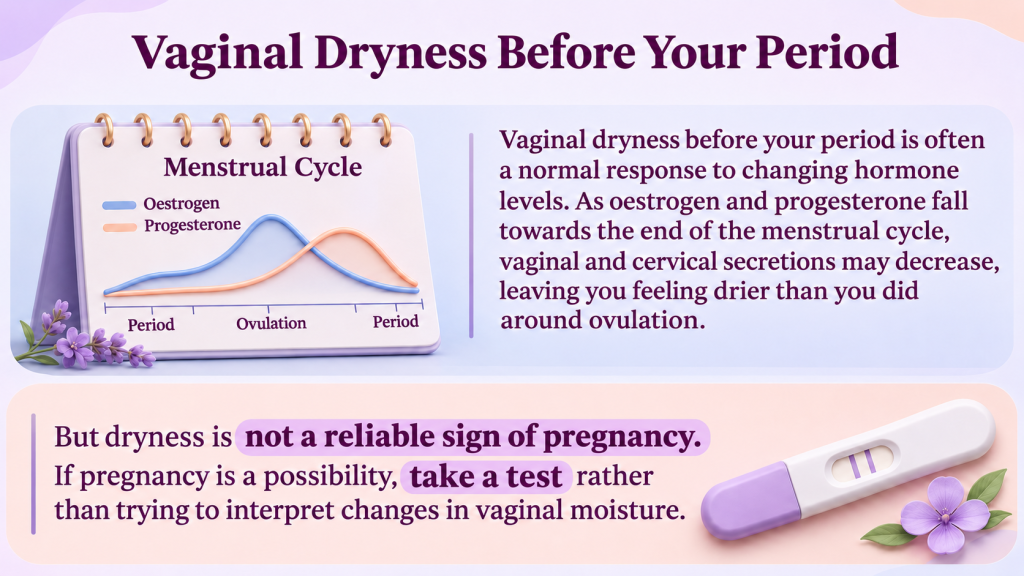
Vaginal and cervical secretions change throughout the menstrual cycle. Oestrogen plays an important role in regulating these secretions, which is why you may notice changes in vaginal moisture at different points in the month.
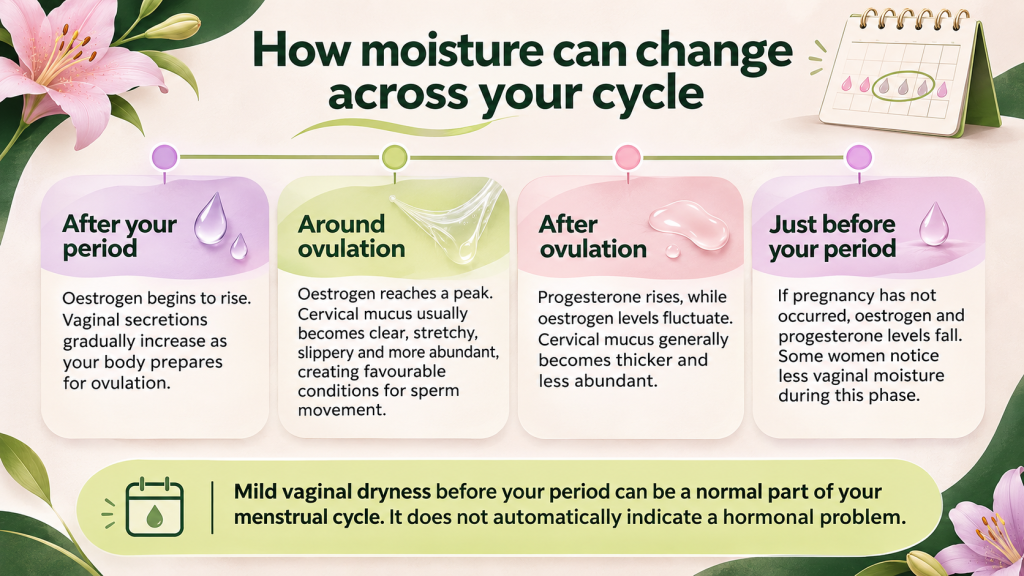
However, if the dryness is persistent, uncomfortable or accompanied by other symptoms, there may be additional factors involved.
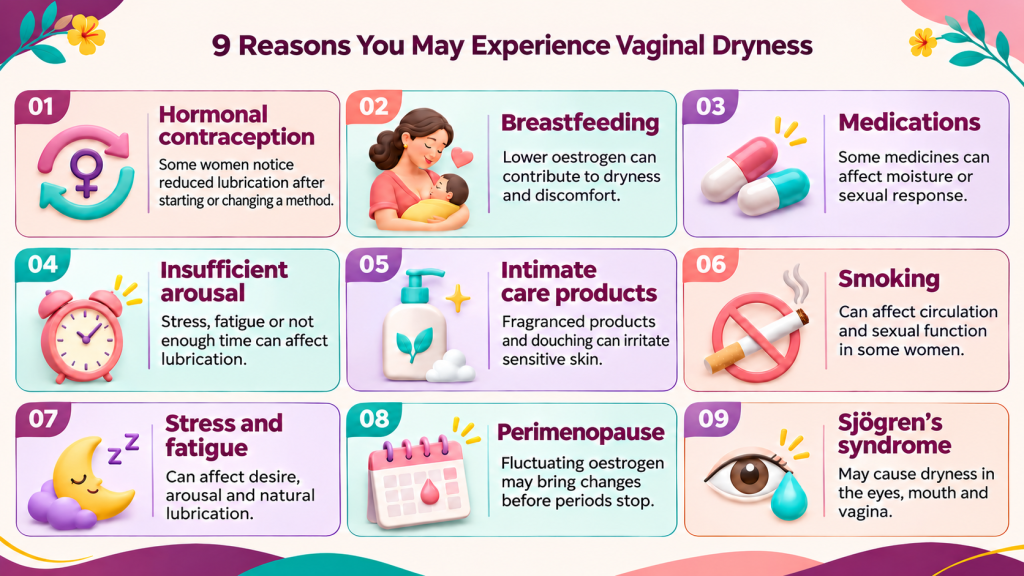
9 Reasons You May Experience Vaginal Dryness
If your dryness is more noticeable than usual, consider whether any of these factors could be contributing.
1. Hormonal Contraception
Some women experience reduced vaginal lubrication after starting or changing hormonal contraception. Combined hormonal contraceptives can affect hormonal patterns, and reduced lubrication is a recognised side effect for some users.
If you started noticing dryness after beginning a contraceptive method, discuss the timing with your gynaecologist. An alternative method may be worth considering, depending on your individual needs.
2. Breastfeeding
Oestrogen levels can remain relatively low during breastfeeding because of hormonal changes associated with milk production. This can contribute to vaginal dryness, reduced lubrication and discomfort during sex.
The symptoms are often temporary, but you do not have to tolerate the discomfort. Appropriate vaginal moisturisers and lubricants may help.
3. Medications
Certain medications can affect moisture levels and sexual response. Antihistamines, for example, can reduce secretions throughout the body. Some antidepressants and other medicines may also affect sexual function.
If dryness begins after starting a new medication, discuss it with your doctor rather than stopping the medicine yourself.
4. Insufficient Arousal
Vaginal lubrication is influenced by sexual arousal as well as hormones. Stress, discomfort, fatigue or simply not having enough time to become aroused can affect natural lubrication.
Allowing more time for arousal and using a suitable lubricant when needed can make intercourse more comfortable.
5. Irritation from Intimate Care Products
Scented intimate washes, fragranced soaps, wipes, deodorants, douches and perfumed panty liners can irritate sensitive vulval skin.
Douching is particularly unnecessary. The vagina has its own natural mechanisms for maintaining its environment, and internal washing can disrupt them.
For everyday intimate care, gentle external cleansing is usually sufficient.
6. Smoking
Smoking can affect blood circulation and is associated with changes in sexual function, including reduced lubrication in some women.
If you smoke and experience persistent vaginal dryness, it is worth discussing this with your doctor as part of your overall health assessment.
7. Stress and Fatigue
Sexual response involves both physical and psychological factors. Stress, anxiety, poor sleep and exhaustion can affect sexual desire and arousal, which may reduce natural lubrication.
This does not mean the symptoms are imaginary. It means that your emotional and physical well-being can influence how your body responds to intimacy.
8. Perimenopause
Vaginal dryness is not limited to women who have stopped menstruating. During perimenopause, which can begin several years before menopause, oestrogen levels may fluctuate unpredictably.
Some women notice changes in vaginal moisture, discomfort during sex or altered discharge even while their periods continue.
If you are in your forties and experiencing new or persistent dryness, a conversation with your gynaecologist can help establish whether hormonal changes are contributing.
9. Sjögren’s Syndrome
Sjögren’s syndrome is an autoimmune condition that affects the body’s moisture-producing glands. It can cause persistent dryness in different parts of the body, including the eyes, mouth and vagina.
If vaginal dryness occurs alongside unusually dry eyes and a persistently dry mouth, mention the combination to your doctor. It may warrant further evaluation.
Is Vaginal Dryness a Sign of Pregnancy?
This is a common question, particularly among women trying to conceive or waiting for their periods.
The straightforward answer is no. Vaginal dryness is not a reliable sign of pregnancy.
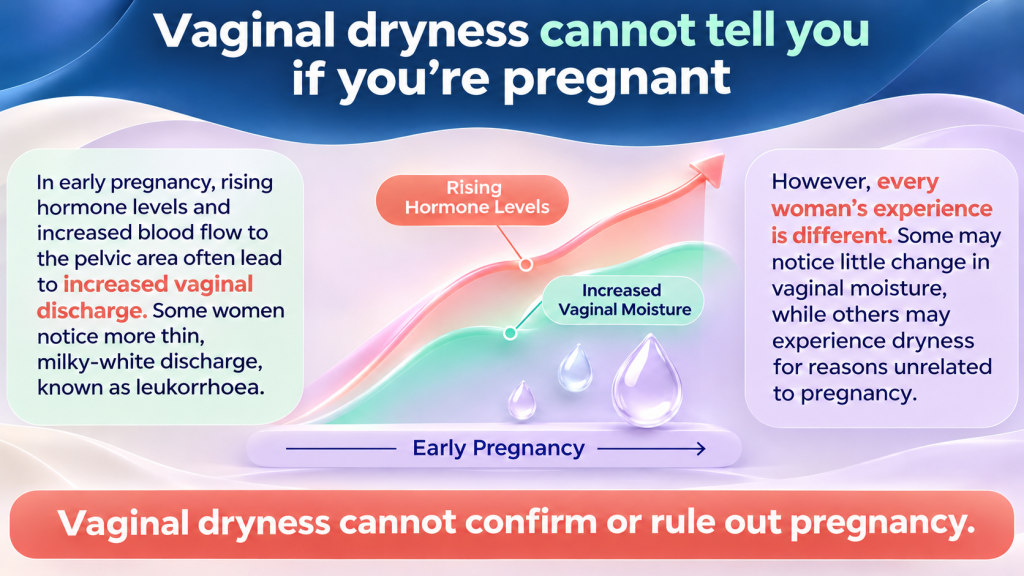
If you think you may be pregnant, take a pregnancy test. Home urine pregnancy tests are generally reliable from around the first day of a missed period. If your result is negative but your period still hasn’t arrived, consider repeating the test after a few days.
It is better to rely on a test than to interpret individual symptoms.
Vaginal Dryness and Fertility: What If You’re Trying to Conceive?
If you are trying to get pregnant, changes in vaginal moisture can sometimes make it difficult to interpret your fertile window.
Around ovulation, cervical mucus generally becomes clearer, stretchier and more slippery. This is associated with rising oestrogen and helps create favourable conditions for sperm movement.
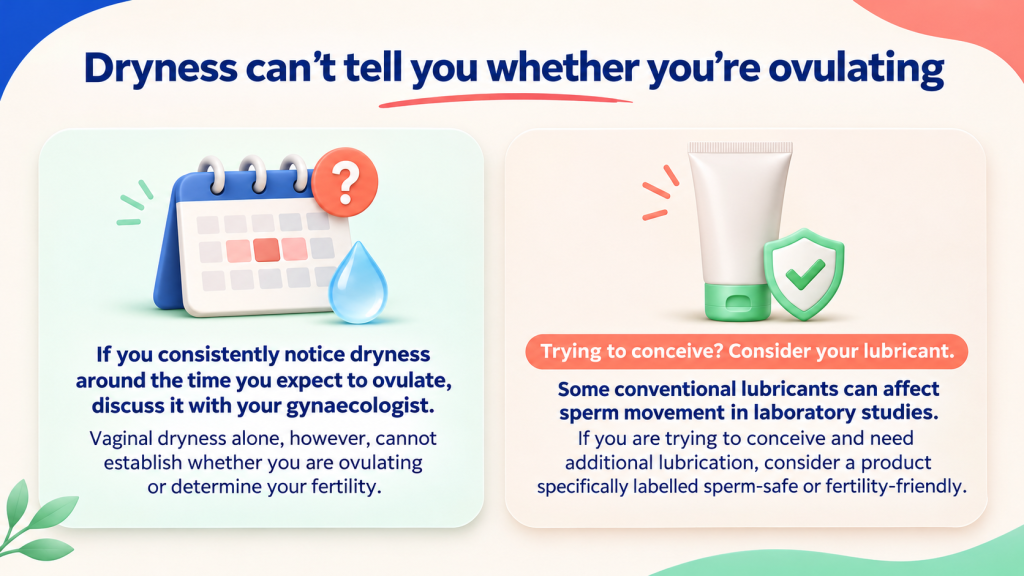
These products are designed to be more compatible with sperm. However, laboratory findings do not necessarily tell us how much ordinary lubricants affect the chances of conception in real-life situations.
How to Track Vaginal Dryness Across Your Cycle
If you are unsure whether your dryness is part of your normal menstrual pattern, tracking it over two or three cycles can help you identify a pattern.
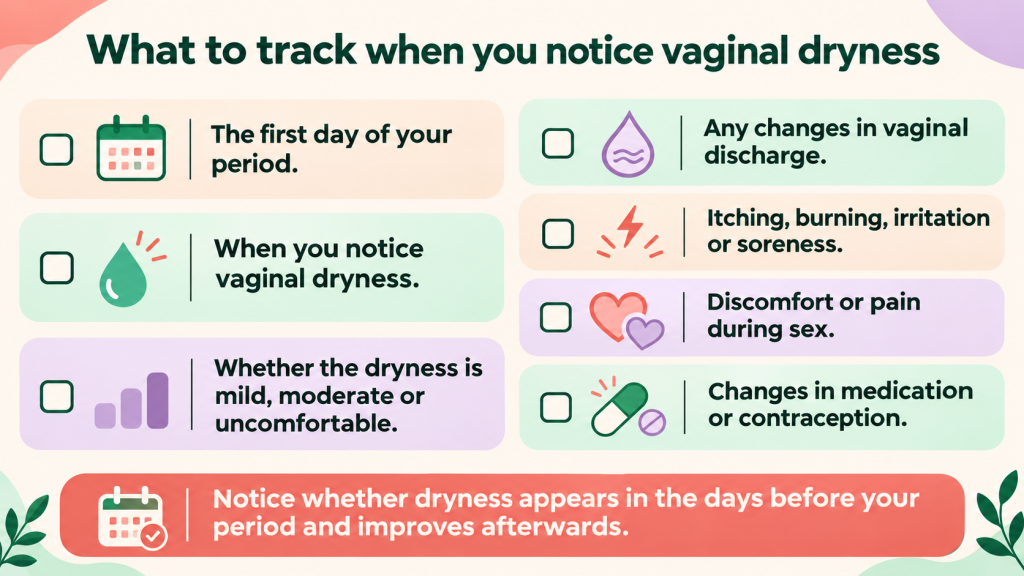
A recurring pattern that follows your cycle, without other symptoms, is generally reassuring. Dryness that persists throughout the month or comes with itching, soreness, unusual discharge or pain may have another cause.
This information can also help your gynaecologist understand what you are experiencing.
What Helps Relieve Vaginal Dryness Before Your Period?
Mild cyclical dryness usually does not require medical treatment. If it is causing discomfort, a few practical changes may help.
1. Avoid potential irritants. Use gentle, unscented products for external cleansing. Avoid douching, fragranced intimate washes and perfumed wipes.
2. Consider a vaginal moisturiser. Vaginal moisturisers are designed to provide ongoing hydration and can be used regularly, rather than only during sexual activity. Follow the product instructions.
3. Use a lubricant during sex. If dryness causes friction or discomfort during intercourse, a suitable lubricant can help. Look for water-based or silicone-based options with a short ingredient list. Avoid fragranced, flavoured or warming products if you are prone to irritation.
4. Allow enough time for arousal. Natural lubrication increases with sexual arousal. Slowing down and allowing more time can help improve comfort.
5. Review your medication or contraception. If the dryness began after starting a new medicine or contraceptive method, discuss the possible connection with your doctor.
6. Address the underlying cause. Persistent dryness may require an examination or further investigation, particularly if it is accompanied by other symptoms. Treatment should depend on what is causing it.
When Should You See a Gynaecologist?
Occasional dryness before menstruation is usually not a cause for concern. However, do not assume that every episode of vaginal dryness is hormonal or cyclical.
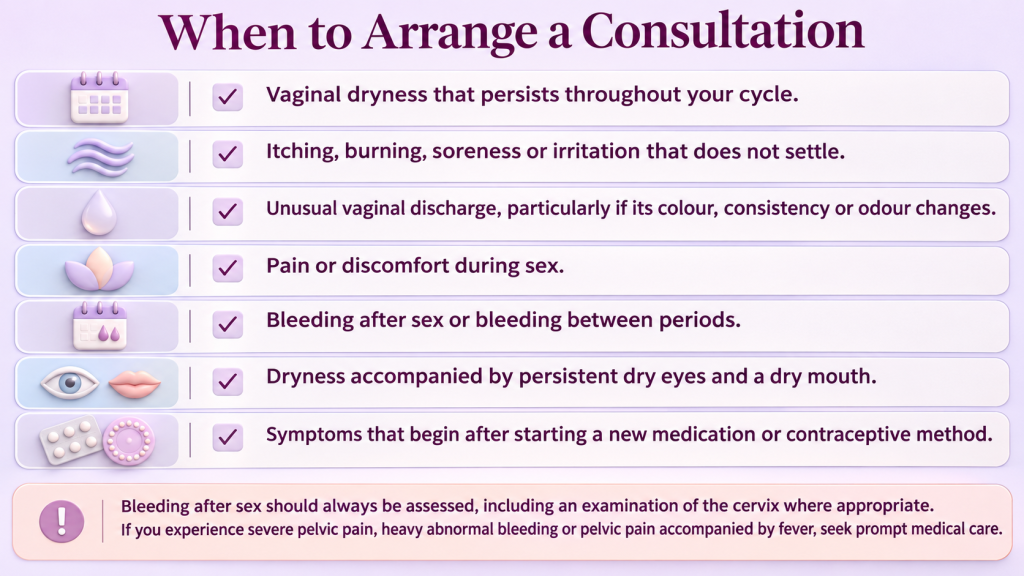
You do not need to wait until the discomfort becomes severe to discuss it with a doctor. If something feels different from your usual cycle, it is reasonable to ask.
The Takeaway
Most importantly, pay attention to the pattern. Mild dryness that comes and goes with your cycle is different from persistent dryness accompanied by itching, burning, unusual discharge or pain.
Your body changes throughout the month. Understanding those changes can help you recognise what is normal for you — and when it is time to seek advice.
Where Miror Fits In
Vaginal health is an important part of overall well-being, yet concerns such as dryness, discomfort and changes in discharge are often left unspoken.

Download the Miror app or join Miror Care Plus to access personalised guidance and support for your health at every stage of life.