


Vaginal Moisturisers vs Lubricants: What’s the Difference?
If you’ve ever bought a vaginal lubricant hoping it would solve persistent dryness, only to find yourself uncomfortable again a few hours later, you’re not alone.
As a gynaecologist, I’d encourage women to understand this distinction before spending money on products that may not address their particular symptoms.
(Mirorpedia)
Let’s look at how these products work, what to check on the label, and when you might need more than either one.
1. Vaginal Moisturiser vs Lubricant: The Core Difference
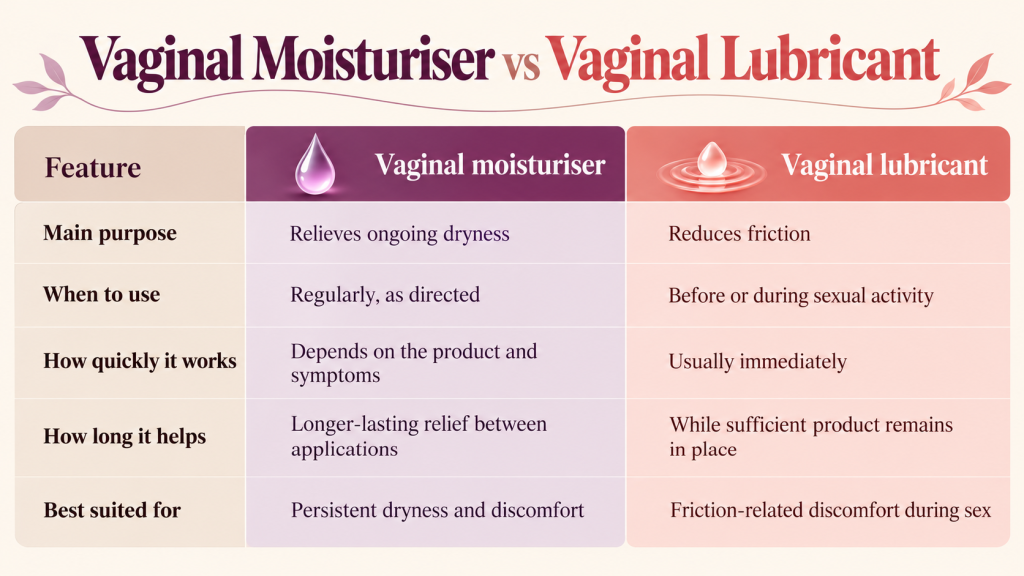
A vaginal moisturiser is for ongoing dryness. A lubricant is for reducing friction during sexual activity.
Vaginal moisturisers are designed for regular use, often every two to three days, depending on the product. They help relieve dryness and improve everyday comfort.
Lubricants are used when needed, particularly before or during sexual activity.
They reduce friction and can make penetration more comfortable.
Neither product restores vaginal tissue thickness or elasticity lost through hormonal changes. They provide symptom relief rather than treating the underlying cause.
(Harvard Health)
2. Why You Might Need Both
Imagine feeling dry and irritated throughout the day, then experiencing additional discomfort during sex.
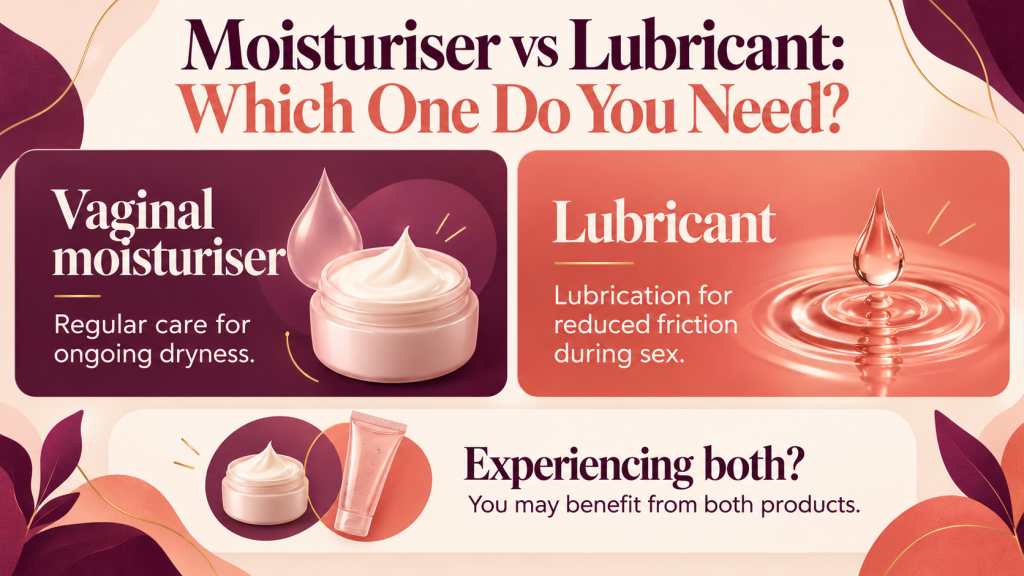
A lubricant may reduce friction during intercourse, but it isn’t designed to provide ongoing relief from daily dryness. A moisturiser may improve everyday comfort, but you might still need a lubricant during sex.
Using both can therefore make sense when you experience both types of discomfort.
For menopausal women, persistent dryness may be associated with genitourinary syndrome of menopause (GSM). Falling oestrogen levels can affect the tissues of the vulva and vagina, causing dryness, irritation and painful sex. Urinary symptoms may also occur.
Moisturisers and lubricants can help manage symptoms, but they don’t reverse the underlying hormonal changes.
If discomfort continues despite using them correctly, speak to your gynaecologist about additional treatments.
3. The Science to Know: What Is Osmolality?
Here’s a product detail worth understanding: osmolality.
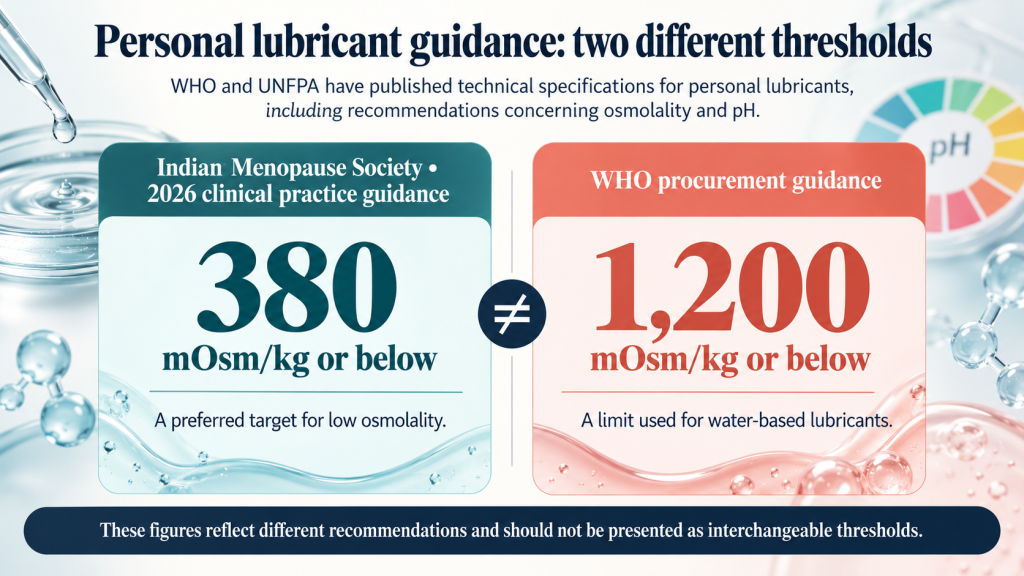
Osmolality measures the concentration of dissolved substances in a solution. Some lubricants contain high concentrations of ingredients such as glycerol and propylene glycol. Depending on their formulation, products with high osmolality may draw water out of cells and potentially irritate or damage delicate tissue.
This matters because a product designed to reduce friction should not unnecessarily aggravate the tissue it touches.
What should you do with this information?
1. Check whether the manufacturer publishes the product’s osmolality.
2. Look for transparent ingredient and product information.
3. If the information isn’t available, ask the manufacturer.
4. Stop using a product that repeatedly causes burning or irritation.
Osmolality is only one factor in product suitability.
A lubricant’s ingredients, your individual sensitivity and how you use it also matter.
(NIH)
4. Water-Based, Silicone-Based or Oil-Based?
Not all lubricants behave in the same way.
1. Water-based lubricants are a practical starting point for many women. They wash off easily and are generally compatible with latex condoms. However, some formulations dry out relatively quickly and may need reapplication. Their ingredients and osmolality vary, so check the label.
2. Silicone-based lubricants generally last longer without drying out as quickly. They may be useful when longer-lasting lubrication is needed. Check the manufacturer’s compatibility guidance if you use silicone sex toys or vaginal medications.
3. Oil-based lubricants can provide lasting lubrication, but they can weaken latex condoms and increase the risk of condom breakage. They may also be difficult to wash away and may not suit everyone.
If you’re using condoms, check the lubricant’s compatibility with the specific condom material rather than assuming every product is suitable.
5. Which Ingredients Should You Watch For?
Vulval and vaginal tissues can be sensitive, particularly when hormonal changes contribute to dryness.
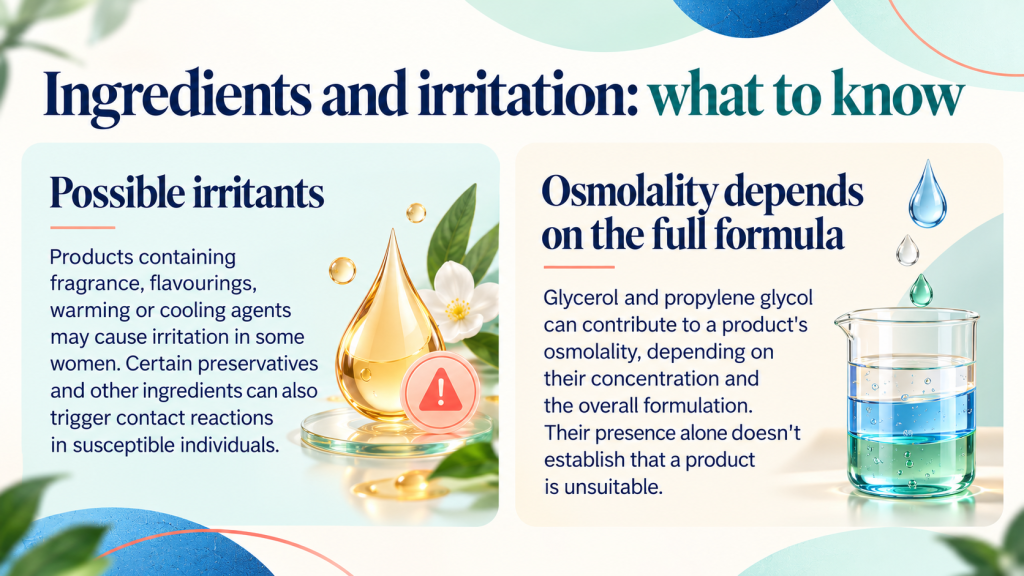
Instead of relying on marketing terms such as natural, gentle or feminine, look at the ingredients and choose a product designed for vaginal use.
If a product consistently causes burning, itching or worsening discomfort, discontinue it. Persistent symptoms deserve assessment rather than repeated experimentation with different products.
6. Can You Use Coconut Oil, Ghee or Petroleum Jelly?
These remedies come up frequently, especially when women are looking for affordable alternatives.
1. Coconut oil: Some women use it and find it comfortable, but evidence supporting its use as a vaginal moisturiser or lubricant is limited. It can weaken latex condoms, so it isn’t suitable when you’re relying on them.
2. Ghee and other cooking oils: These aren’t formulated or tested specifically for vaginal use. Oil-based substances can also weaken latex condoms.
3. Petroleum jelly: Avoid assuming that a product suitable for external skin is suitable for internal vaginal use. Petroleum jelly is oil-based, can weaken latex condoms and isn’t designed as an intravaginal moisturiser.
A product specifically formulated for vaginal use gives you clearer information about its intended application and compatibility.
If you’ve already used a household product, don’t panic. Simply stop if it causes irritation, and seek medical advice if symptoms persist.
7. When Moisturisers and Lubricants Aren’t Enough
This is an important distinction: managing dryness isn’t always the same as treating its cause.
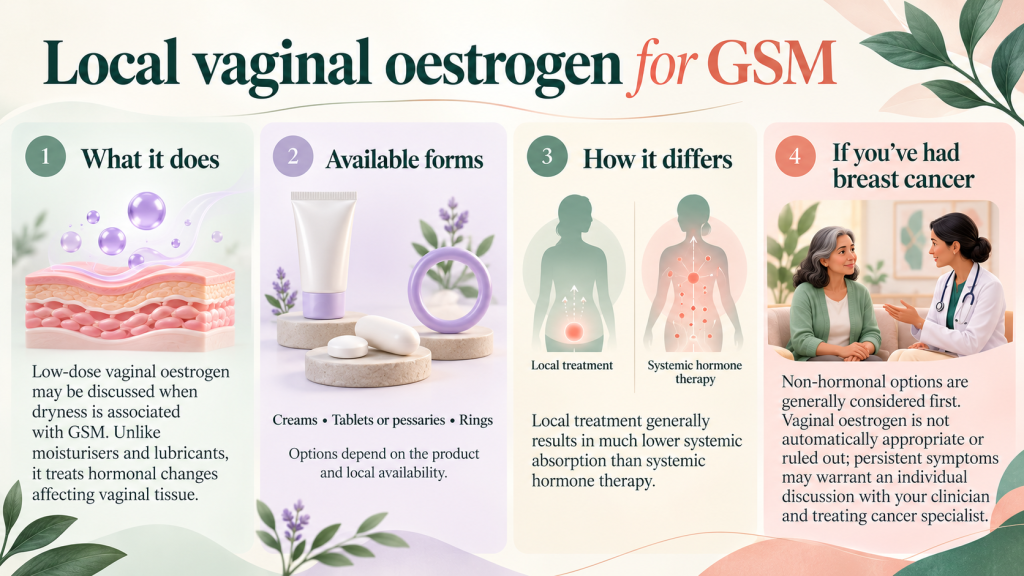
Other prescription treatments may be suitable in some circumstances, but availability and approval vary by country. Ask your gynaecologist which options are appropriate and accessible to you.
Seek medical advice if you have persistent dryness, pain during sex, ongoing itching, unusual discharge, urinary symptoms or symptoms that don’t improve after trying suitable products for several weeks.
Any bleeding after menopause needs medical assessment. Don’t try to manage it with moisturisers or lubricants.
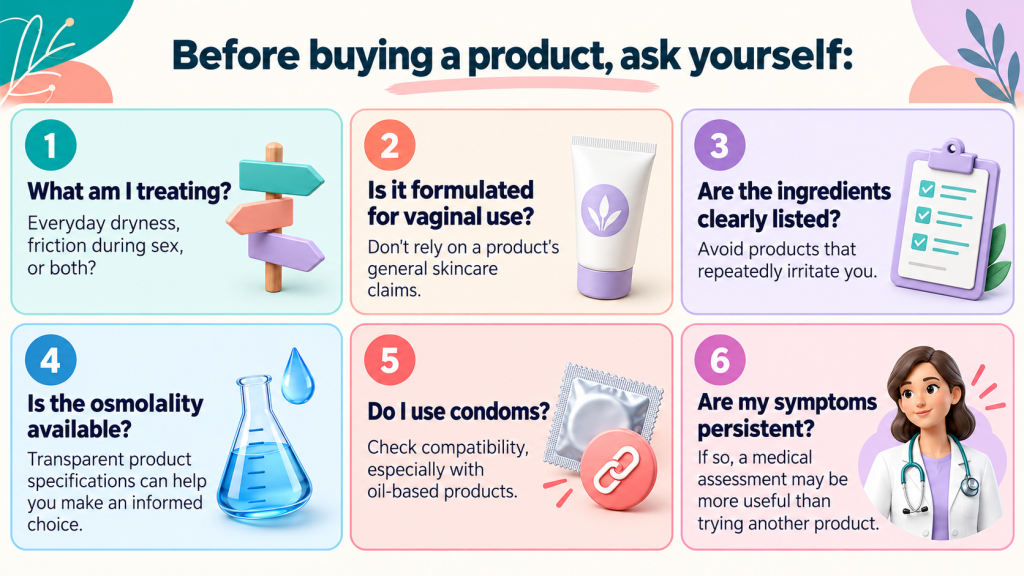
Choosing the Right Product: A Quick Checklist
Where Miror Fits In?
Vaginal dryness is common, treatable and worth discussing openly. You don’t have to keep experimenting with products when discomfort persists.
Miror is India’s largest and only 360-degree integrative women’s wellness ecosystem and community. More than 95,000 women have received expert insights and support through Miror.