

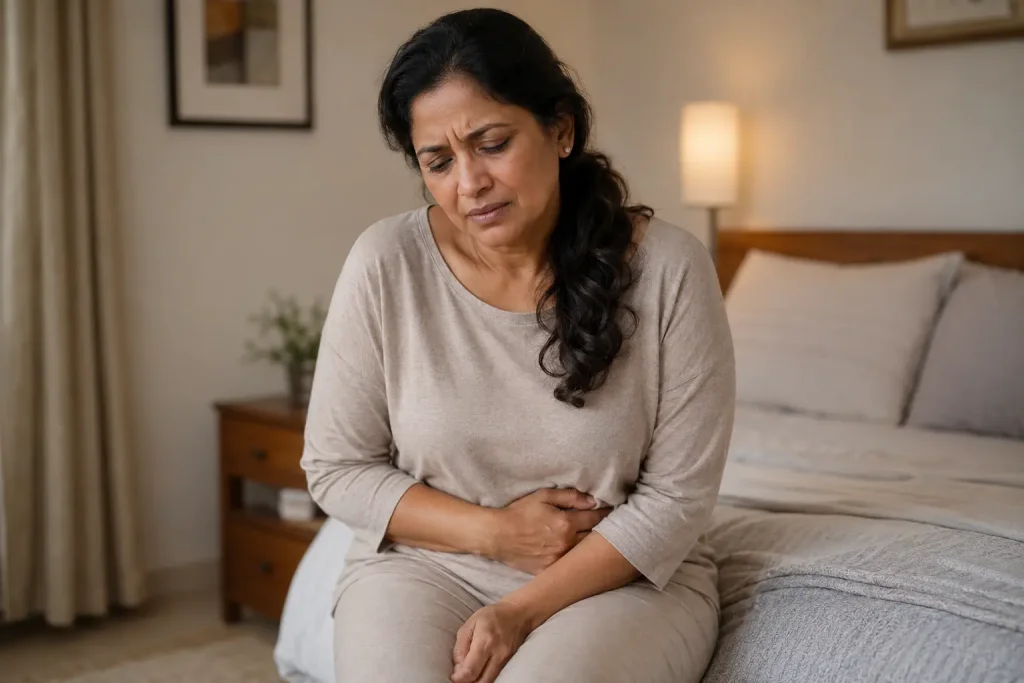
Sex may have been comfortable for most of your adult life, and then somewhere around or after menopause, something changes.
There may be dryness. Penetration may sting or burn. You may feel sore afterwards. Or you may start avoiding intimacy because you already expect it to hurt.
Many women quietly assume this is simply another part of getting older. Others feel embarrassed bringing it up, even with their doctor.
But painful sex after menopause is common, and it is not something you simply have to accept.
One possible reason is Genitourinary Syndrome of Menopause, or GSM, a group of changes that can affect the vagina, vulva and urinary system as estrogen levels decline. GSM is treatable, but it is also important to remember that not every case of painful sex is caused by hormones.
Understanding what is causing the discomfort is the first step towards finding what actually helps.
Why Does Sex Become Painful After Menopause?
Estrogen does much more than regulate periods.
It also helps maintain the health of the tissues around the vulva, vagina, urethra and bladder.
As estrogen levels fall through the menopause transition, vaginal and vulval tissues can gradually become thinner, drier and less elastic. Natural lubrication may decrease too.
For some women, this makes penetration feel uncomfortable or creates more friction during sex. The vaginal opening may become sensitive, and soreness or burning may continue even after intercourse.
These changes do not affect every woman in the same way. Some barely notice them, while for others, vaginal dryness after menopause and discomfort during sex can significantly affect intimacy and quality of life.
What Is Genitourinary Syndrome of Menopause (GSM)?
GSM is the medical term used for a collection of genital, sexual and urinary changes associated with lower estrogen levels during and after menopause.
It is broader than vaginal dryness alone because menopause-related changes can involve the vulva, vaginal opening, vagina, urethra and bladder. (The Menopause Society)
You may notice:
- vaginal or vulval dryness
- burning, itching or irritation
- reduced natural lubrication
- discomfort or pain during penetration
- tenderness or soreness after sex
- urinary burning or discomfort
- increased urinary urgency or frequency
- recurrent urinary tract infections
You do not have to experience all of these symptoms to have GSM.
For some women, dryness is the first sign. For others, the first clue is simply that sex suddenly does not feel the way it used to.
GSM can also develop gradually. Some women do not begin experiencing troublesome symptoms until several years after menopause. (The Menopause Society)
Most importantly, GSM is one possible reason for painful sex after menopause, not the only one.
Infections, vulval skin conditions, pelvic floor problems and other causes of pelvic pain can produce similar symptoms. Persistent pain therefore deserves assessment rather than automatically being blamed on menopause.
What Does Pain During Sex Feel Like?
Painful intercourse after menopause does not feel the same for every woman.
Where you feel the pain and what it feels like can help your doctor understand what might be causing it.
Pain at the vaginal opening
You may notice burning, stinging, stretching or tenderness as penetration begins.
Dryness and GSM can contribute, but pelvic floor muscles that tighten involuntarily may also make entry uncomfortable.
Dryness and friction
Some women describe sex as feeling rough, scratchy or uncomfortable despite feeling interested in intimacy.
There may also be soreness afterwards.
Burning or stinging
The vaginal or vulval tissues may feel sensitive during sex and continue burning afterwards.
If burning happens at other times too, it is worth checking for irritation, infection or a vulval skin condition rather than assuming dryness is the only cause.
Deeper pain
Pain that feels deeper inside the pelvis is not always explained by vaginal dryness.
If deep pain keeps happening, it should be evaluated rather than repeatedly treated with lubricant alone.
Pain after sex
Soreness or burning may sometimes continue after intercourse, particularly when dry or sensitive tissues have been exposed to friction.
Whatever the pattern, pain is useful information from your body. You do not need to keep pushing through it.
Why Can Painful Sex Become a Cycle?
Once intercourse has hurt several times, it is natural to start anticipating the pain.
Your body may then respond protectively. The pelvic floor muscles can tighten, penetration becomes more difficult, and discomfort increases.
You may then become even more hesitant the next time.
Pain → expecting pain → muscle tightening → more discomfort → avoiding intimacy.
This does not mean the pain is psychological.
The original pain is real. The muscle response is simply your body trying to protect you from something it expects will hurt.
Over time, both the physical cause of the pain and the pelvic floor response may need attention.
What Actually Helps Painful Sex After Menopause?
The best approach depends on why sex is hurting. For some women, managing dryness is enough. Others may need treatment for GSM, pelvic floor tension or another underlying problem.
Lubricants and vaginal moisturisers
They are useful for different reasons.
Lubricants reduce friction during sexual activity, while vaginal moisturisers are used regularly to help with ongoing dryness.
For mild symptoms, these may be a good starting point.
Local vaginal estrogen
When GSM is causing dryness, irritation and painful sex, low-dose vaginal estrogen can help improve the health and comfort of the tissues.
It acts mainly in the vaginal area and is available in different forms, depending on what is suitable and locally available. (The Menopause Society)
Your doctor can help you decide whether it is appropriate for you.
Other prescription options
For some women, other prescription treatments may be considered if symptoms continue or vaginal estrogen is not suitable.
Treatment needs to be individualised rather than choosing a product simply because it worked for someone else.
Pelvic floor physiotherapy
If the pelvic floor muscles are tightening or becoming tender in response to pain, physiotherapy may help improve relaxation and make penetration more comfortable.
This can be particularly useful when sex feels unusually tight or painful despite improvement in dryness.
Allow more time for arousal
Your body may need more time than it once did to become fully comfortable with penetration.
Slowing things down, spending longer on arousal and using enough lubricant can make a meaningful difference.
And if something hurts, you do not need to continue simply because you have already started.
Treat anything else contributing to the pain
Not every case of painful sex after menopause is GSM.
Infections, vulval skin conditions, pelvic floor problems and other pelvic conditions may need completely different treatment.
If symptoms continue despite basic measures, it is worth getting assessed instead of repeatedly treating presumed dryness.
What about systemic HRT?
Systemic menopausal hormone therapy may improve vaginal symptoms for some women, especially when it is already being used for other menopause symptoms.
However, GSM can still occur while taking systemic HRT, and some women may need local treatment specifically for vaginal symptoms. (The Menopause Society)
Is Vaginal Estrogen Safe?
It is understandable to have questions about using estrogen, especially if you have heard conflicting information about hormone therapy.
Low-dose vaginal estrogen is different from systemic HRT.
It is intended to work mainly in the vaginal tissues, and only a small amount enters the bloodstream compared with systemic hormone therapy. (The Menopause Society)
For many women, it can be an appropriate treatment for GSM. But your health history still matters, so it is worth discussing your individual situation with your doctor rather than deciding based on general advice online.
What if you have had breast cancer?
If you have a history of breast cancer, speak with your doctor before starting hormonal treatment.
Non-hormonal options are often considered first. If symptoms remain troublesome, your doctor and, where appropriate, your cancer specialist can help you weigh the available options based on your treatment history and individual risk. (ACOG)
When Should You See a Doctor About Painful Sex?
You do not need to wait until the pain becomes severe.
See a healthcare professional if painful sex keeps happening, is becoming worse or is beginning to affect your intimacy or quality of life.
It is particularly important to get checked if you have:
- bleeding during or after sex
- any bleeding after menopause
- unusual or persistent discharge
- recurrent urinary symptoms
- persistent itching, cracking or changes in the skin around the vulva
- increasing difficulty with penetration
- persistent or deep pelvic pain
- symptoms that do not improve despite trying simple measures
Sometimes the solution may be straightforward. The important part is understanding what is actually causing the pain.
Can You Prevent Painful Sex After Menopause?
There is no guaranteed way to prevent GSM.
What you can do is recognize changes early and respond to them instead of waiting until discomfort becomes severe.
If dryness or irritation begins, using an appropriate moisturizer or lubricant may help. Avoid products that irritate sensitive vulval or vaginal tissues, and speak with your doctor if symptoms persist.
It is also important not to repeatedly force penetration through significant pain.
Your aim is not simply to continue having sex despite discomfort. It is to protect comfortable, consensual intimacy in whatever form feels right for you.
Sex After Menopause Can Be Comfortable Again
When sex starts hurting after menopause, it can affect much more than the physical act itself. It may influence confidence, desire, relationships and how comfortable you feel in your own body. If you’re still trying to understand why sex may feel different or painful after menopause, our introductory guide explains the common causes and treatment options.
But pain does not have to become the new normal.
GSM is one possible cause, and there are treatments that can help. Sometimes the answer is as simple as managing dryness. Sometimes local vaginal estrogen, pelvic floor support or another treatment is needed. And sometimes pain has another cause altogether.
What matters is that you do not have to keep guessing or quietly put up with it.
If sex has become painful, uncomfortable or noticeably different since menopause, speak with a women’s health professional about what you are experiencing.
Download the MIROR App on the Apple App Store or Google Play Store to book a consultation with a women’s health expert and get guidance based on your symptoms, health history and needs.
FAQs
Yes. GSM does not always appear immediately when periods stop. Some women notice symptoms during perimenopause, while others only begin experiencing significant dryness, irritation or urinary changes several years after menopause. (The Menopause Society)
Yes. GSM can involve the urethra and bladder as well as the vaginal and vulval tissues. Some women experience urinary urgency, burning or recurrent urinary tract infections alongside vaginal symptoms.
Absolutely. Sexual desire and physical comfort are not the same thing. You may still want intimacy while experiencing dryness, tissue sensitivity or pelvic floor tension that makes penetration uncomfortable. Pain should not automatically be interpreted as a lack of interest in sex.
No. Vaginal moisturizers are intended to help ongoing vaginal dryness and comfort, so they may be useful whether or not you are currently sexually active. Lubricants, on the other hand, are generally used around sexual activity to reduce friction.
Will treatment mean I can have penetrative For many women, the right treatment can make a significant difference. Improvement depends on what is causing the pain, and some women may need a combination of treatments before sex feels comfortable again.