

Could vaginal dryness be a sign of low estrogen?
You may notice discomfort during intimacy, an unfamiliar feeling of dryness, or irritation that wasn’t there before. Naturally, you wonder whether your hormones are changing.
Vaginal dryness can be one of the low estrogen symptoms experienced during perimenopause and menopause. But it isn’t always caused by hormones, and dryness alone cannot confirm estrogen deficiency.
Understanding what estrogen does, what other symptoms may appear, and when to seek medical advice can help you make sense of these changes without jumping to conclusions.
What Does Estrogen Do for Vaginal Health?
Estrogen plays an important role in maintaining the vaginal environment, but its influence goes beyond natural lubrication.
One lesser-known function involves glycogen, a carbohydrate stored in vaginal epithelial cells. As these cells mature and shed, glycogen-derived sugars help support beneficial bacteria called Lactobacillus. These bacteria produce lactic acid, helping maintain the vagina’s naturally acidic environment.
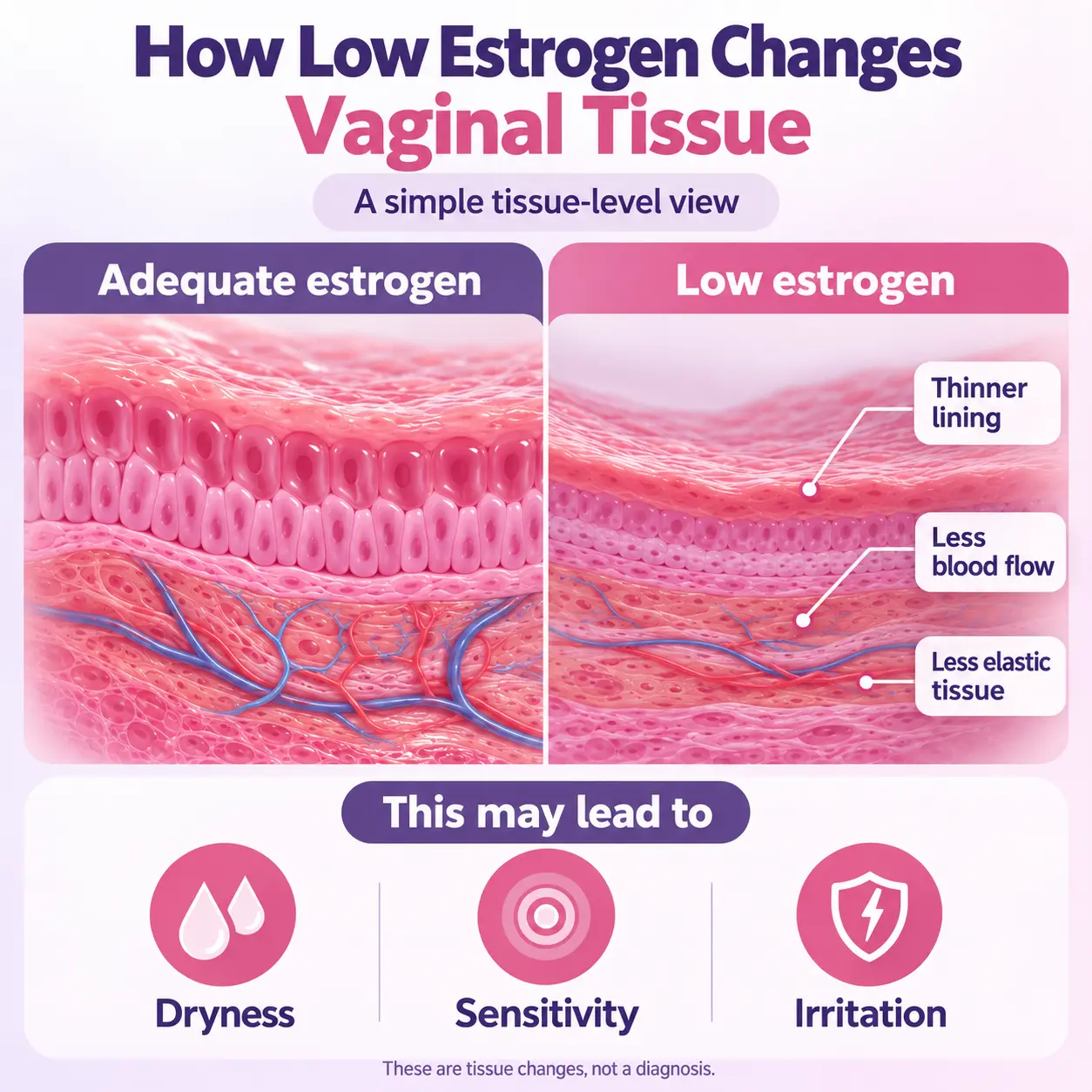
When estrogen declines, the vaginal lining may contain less glycogen. This can alter the balance of bacteria and increase vaginal pH, although these changes vary between women.
Lower estrogen can also affect the structure and blood supply of vaginal tissues. These changes help explain why vaginal dryness may involve more than simply producing less moisture.
Is Vaginal Dryness One of the Low Estrogen Symptoms?
Yes. Vaginal dryness is a recognised symptom associated with reduced estrogen activity, particularly around menopause.
You might notice less natural lubrication, a feeling of tightness, or discomfort during sexual activity. Some women also experience burning or irritation during everyday activities.
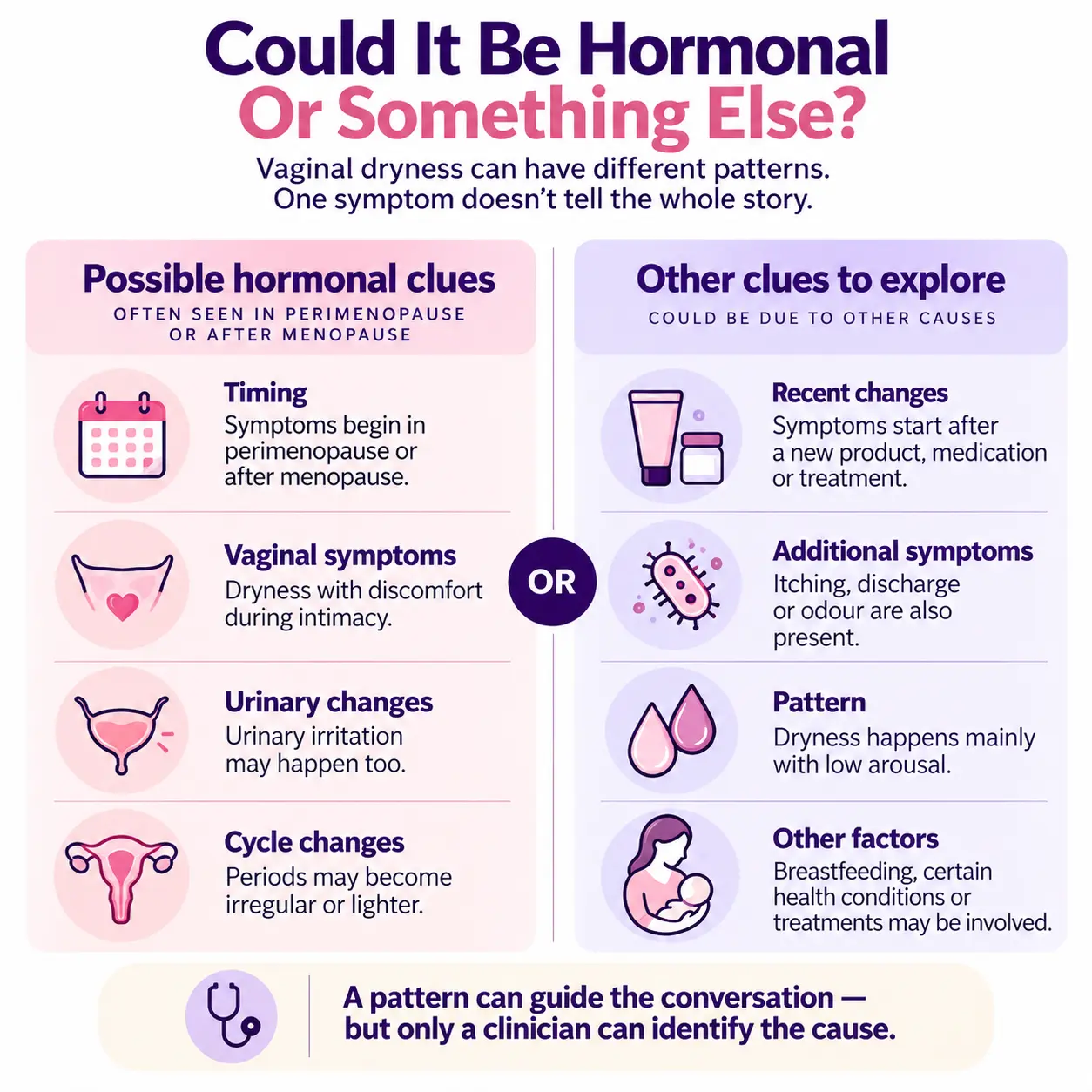
The timing of these symptoms can offer useful clues, although it cannot establish the cause by itself.
Vaginal Dryness During Perimenopause
During perimenopause, estrogen levels fluctuate rather than decline steadily.
This means vaginal dryness during perimenopause may begin while you are still menstruating. Your periods might be irregular, but they can also remain relatively predictable during the earlier stages.
Symptoms may vary from month to month, and vaginal dryness does not necessarily occur alongside hot flashes or night sweats.
Vaginal Dryness After Menopause
After menopause, sustained lower estrogen levels can affect vaginal and urinary tissues.
These changes may contribute to genitourinary syndrome of menopause (GSM), which can involve dryness, irritation, painful intercourse and certain urinary symptoms.
Unlike hot flashes, which may lessen over time, untreated GSM symptoms can persist or worsen.
If intimacy has become uncomfortable, our article on why sex can become painful after menopause explores the possible reasons in greater detail.
What Other Low Estrogen Symptoms Might You Notice?
Vaginal dryness may occur alongside other changes associated with the menopausal transition.
Common experiences include:
- Menstrual changes: Periods becoming less predictable, heavier, lighter or further apart.
- Hot flashes and night sweats: Sudden warmth, sweating or disrupted sleep.
- Sleep difficulties: Waking frequently or struggling to feel rested.
- Mood changes: Increased irritability, emotional changes or difficulty coping.
- Sexual discomfort: Reduced lubrication or pain during intimacy.
Not everyone experiences these changes together. Their intensity and timing can also vary.
Importantly, these symptoms are not exclusive to low estrogen. Sleep difficulties, mood changes and irregular periods can have other explanations.
So, how can you tell whether your symptoms are related to hormonal changes or something else? The timing of your symptoms and what accompanies them can offer useful clues, although they cannot confirm the cause on their own.
How Do Doctors Evaluate Vaginal Dryness and Possible Low Estrogen?
Understanding what’s causing vaginal dryness begins with more than checking estrogen levels. A gynaecologist considers your symptoms, medical history and stage of life to determine which factors may be contributing.
There is no single symptom or blood test that can reliably explain every case of vaginal dryness.
Medical History and Examination
Your doctor may ask when the discomfort first appeared, whether your menstrual cycle has changed and if the symptoms affect your everyday activities or sexual wellbeing.
Your medical history matters, too. Previous cancer treatment, pelvic surgery, hormonal contraception and certain medications can influence how symptoms are interpreted.
Depending on your concerns, a pelvic examination may be recommended. This can help identify visible tissue changes or conditions that require separate attention.
An examination isn’t necessarily required for every woman, and your doctor should explain why it may be helpful.
Are Estrogen Blood Tests Necessary?
Not always.
During perimenopause, estrogen levels fluctuate considerably. A blood sample captures hormone levels at one particular moment, which may not reflect the changes occurring across your menstrual cycle.
This is why a single estrogen result cannot reliably establish whether vaginal dryness is caused by hormonal changes.
According to NICE menopause guidelines, doctors can often identify perimenopause and menopause clinically in otherwise healthy women aged 45 and older with typical symptoms, without routine hormone testing.
However, the approach may differ when menopause is suspected at a younger age or when the clinical picture is unclear. In selected circumstances, a doctor may recommend further investigations, including follicle-stimulating hormone (FSH) testing.
Your age can therefore influence how suspected menopause is investigated.
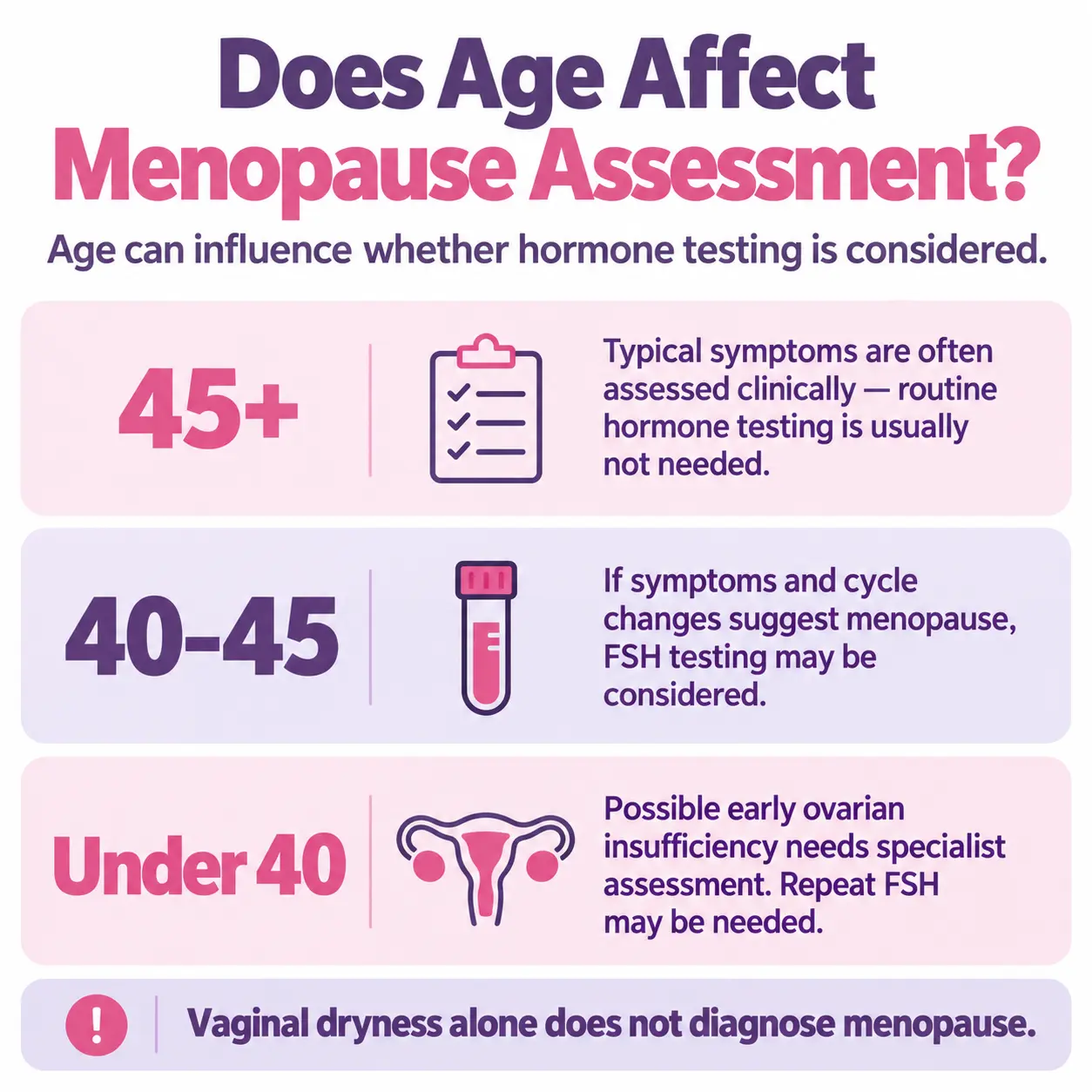
The important distinction is that testing for menopause and investigating vaginal dryness are not necessarily the same process. Even when menopause is established, a clinician may need to assess persistent genital discomfort separately.
What Can Help With Estrogen-Related Vaginal Dryness?
Treatment begins with understanding how much the symptoms affect your comfort and quality of life, along with your medical history and preferences.
For some women, non-hormonal vaginal moisturisers and lubricants provide useful relief. Moisturisers are designed for ongoing vaginal comfort, while lubricants help reduce friction during sexual activity.
For more practical guidance, explore our article on natural remedies for vaginal dryness.
When symptoms are associated with genitourinary syndrome of menopause (GSM), prescription low-dose vaginal estrogen is an evidence-supported option. Other treatments may be considered according to individual circumstances.
Clinical guidelines recognise low-dose vaginal estrogen as an effective treatment option for menopause-related vaginal dryness and discomfort. However, whether it’s appropriate depends on a woman’s symptoms, medical history and individual needs.
Some women also experience hot flashes, night sweats or other menopausal symptoms that warrant broader evaluation. In these situations, systemic hormone replacement therapy may be discussed if clinically appropriate.
However, vaginal dryness alone does not mean that systemic HRT is necessary.
Treatment decisions should account for medical history, contraindications, personal preferences and the symptoms that matter most to you.
For readers who want to explore individual treatments, MIROR’s guides to vaginal dryness creams and gels and vaginal estriol treatment provide more detailed information.
When Should You See a Gynaecologist?
Vaginal dryness may seem like a minor inconvenience at first. But if it begins affecting your comfort, intimacy or daily activities, you don’t have to simply tolerate it.
Consider seeking medical advice if your symptoms persist, recur or don’t improve with appropriate self-care.
Unusual discharge, persistent itching, painful urination or recurrent urinary symptoms also deserve evaluation.
Bleeding after menopause should always be medically assessed, even if it happens only once. Unexplained bleeding after sex should also be checked promptly.
Seeking help early can make it easier to identify the problem and find appropriate relief.
Understanding Your Symptoms Is the First Step
Low estrogen symptoms can include vaginal dryness, but recognising a symptom is not the same as identifying its cause.
Whether you’re approaching menopause or experiencing unexplained discomfort, understanding the changes in your body can help you seek the right support.
Download the MIROR app for expert-informed guidance on hormonal health, perimenopause and navigating your wellbeing through midlife.