
Not all vaginal dryness creams work the same way.
You might notice dryness while going about your day, discomfort when sitting for long hours, or irritation during intimacy. Naturally, you start looking for something that can help. But choosing a vaginal dryness cream can be confusing when pharmacy shelves and online searches offer creams, gels, moisturisers and hormonal treatments.
Some products provide moisture, others reduce friction, and prescription treatments address changes in vaginal tissue linked to lower estrogen levels.
Understanding these differences can help you choose an option that suits your symptoms rather than simply buying the first product labelled for vaginal dryness.
Vaginal Dryness Cream vs Gel vs Moisturiser: What’s the Difference?
The first thing to understand is that cream, gel and moisturiser are not entirely separate categories.
A cream or gel describes a product’s formulation, while a moisturiser describes what it is designed to do. Both creams and gels can contain non-hormonal ingredients, while certain prescription creams and gels contain estrogen.
Here’s how the main options compare.
| Product Type | What It Does | When It May Help |
|---|---|---|
| Non-hormonal vaginal cream | Provides moisture and helps relieve dryness | Regular discomfort or irritation |
| Vaginal gel for dryness | Provides moisture or lubrication, depending on the formulation | Everyday dryness or temporary friction |
| Vaginal moisturiser | Helps maintain moisture over time | Persistent or recurring dryness |
| Personal lubricant | Reduces friction during sexual activity | Discomfort during intimacy |
| Prescription local estrogen | Treats estrogen-related changes in vaginal tissue | Menopause-related symptoms requiring medical treatment |
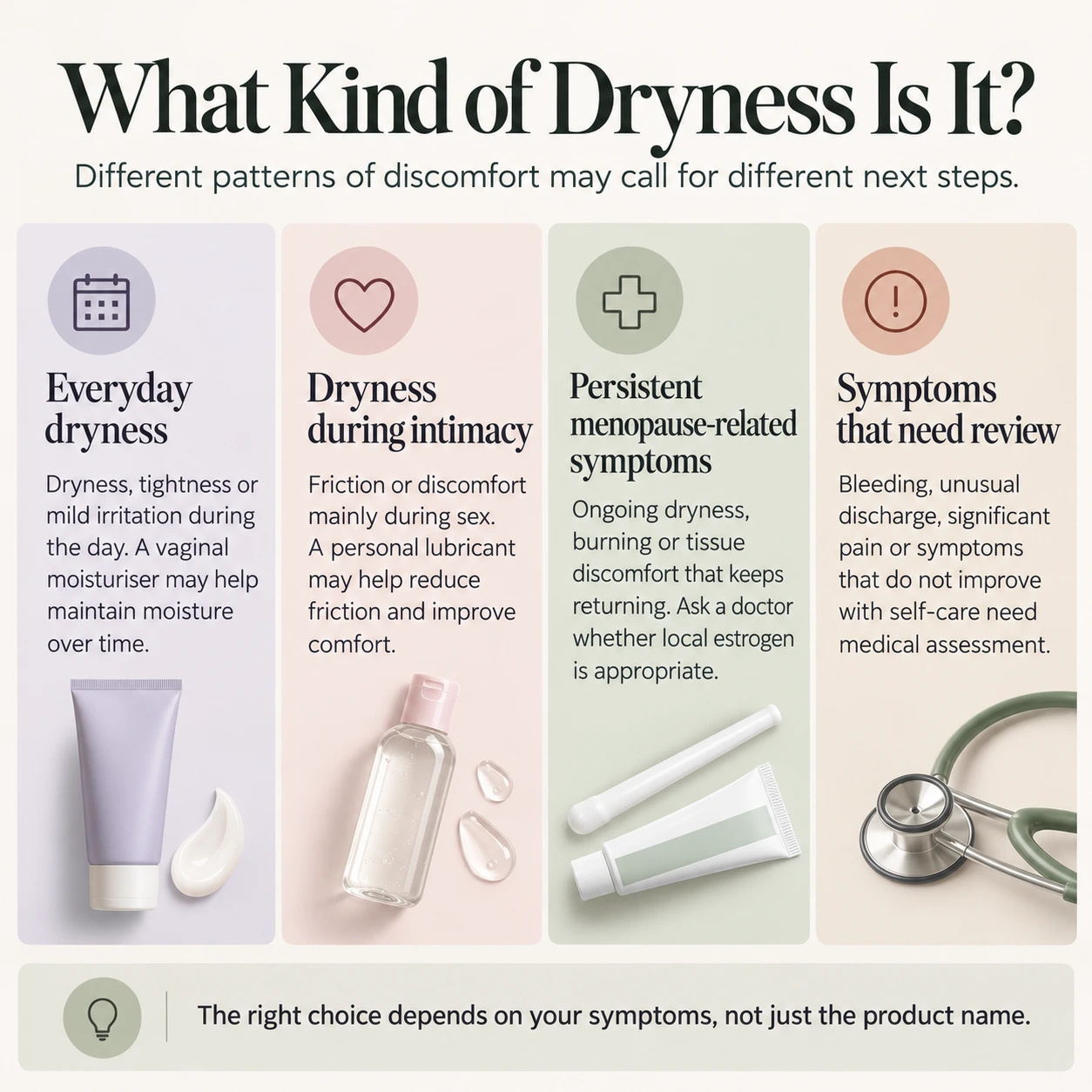
There is no universally best cream for vaginal dryness. A woman experiencing occasional discomfort during intimacy may need something different from someone dealing with dryness and burning throughout the day.
The important distinction is whether you need temporary lubrication, regular moisturisation or treatment for an underlying cause.
Non-Hormonal Options for Vaginal Dryness
A non-hormonal vaginal dryness cream or moisturiser may be a useful option for women with mild symptoms or those who prefer to avoid hormonal treatments.
The Indian Menopause Society’s 2026 clinical guidelines recognise vaginal moisturisers and lubricants as options for managing dryness and discomfort.
Vaginal Moisturising Creams and Gels
A vaginal moisture cream or gel is designed to help maintain moisture in the vaginal tissues.
Unlike lubricants, which are mainly used during sexual activity, moisturisers are generally applied regularly according to the product instructions.
Some formulations are intended for use inside the vagina, while others are designed for the external vulval area. These products should not be used interchangeably unless the manufacturer specifically indicates that both uses are appropriate.
If dryness is affecting your everyday comfort, a vaginal moisturiser may provide more sustained relief than relying on lubricant alone.
Lubricants for Dryness During Intimacy
If discomfort mainly occurs during sex, a personal lubricant may help reduce friction.
Water-based lubricants are commonly available and compatible with most condoms. Silicone-based options may last longer, although compatibility with sex toys and other materials varies.
Oil-based products can weaken latex condoms, increasing the risk of breakage.
A lubricant can improve comfort, but it does not necessarily treat the underlying cause of painful intercourse.
If pain continues despite lubrication, read MIROR’s guide on painful sex after menopause to understand other possible causes.
What About Hyaluronic Acid?
Hyaluronic acid is a moisture-binding ingredient found in some non-hormonal vaginal gels and moisturisers.
Research suggests that these formulations can help relieve vaginal dryness, although product quality and study findings vary.
They may be worth discussing with a healthcare professional if you prefer a non-hormonal approach.
However, hyaluronic acid products should not automatically be considered equivalent to prescription vaginal estrogen, particularly when menopause-related tissue changes are more pronounced.
When Might a Doctor Recommend Local Vaginal Estrogen?
During perimenopause and menopause, changing estrogen levels can affect the vaginal lining, making it thinner, drier and less elastic.
For some women, moisturisers provide sufficient relief. Others experience persistent burning, discomfort during sex or recurring irritation that needs further evaluation.
A gynaecologist may recommend local vaginal estrogen when symptoms are associated with these hormonal changes.
Unlike systemic hormone replacement therapy, local vaginal estrogen acts primarily on tissues in and around the vagina. Only a small amount is typically absorbed into the bloodstream compared with systemic HRT.
According to NICE menopause treatment recommendations, vaginal estrogen can be used alone or alongside non-hormonal moisturisers and lubricants.
Local estrogen treatments are available in different formulations, including creams, gels, tablets, pessaries and rings. The right option depends on symptoms, medical history and individual preference.
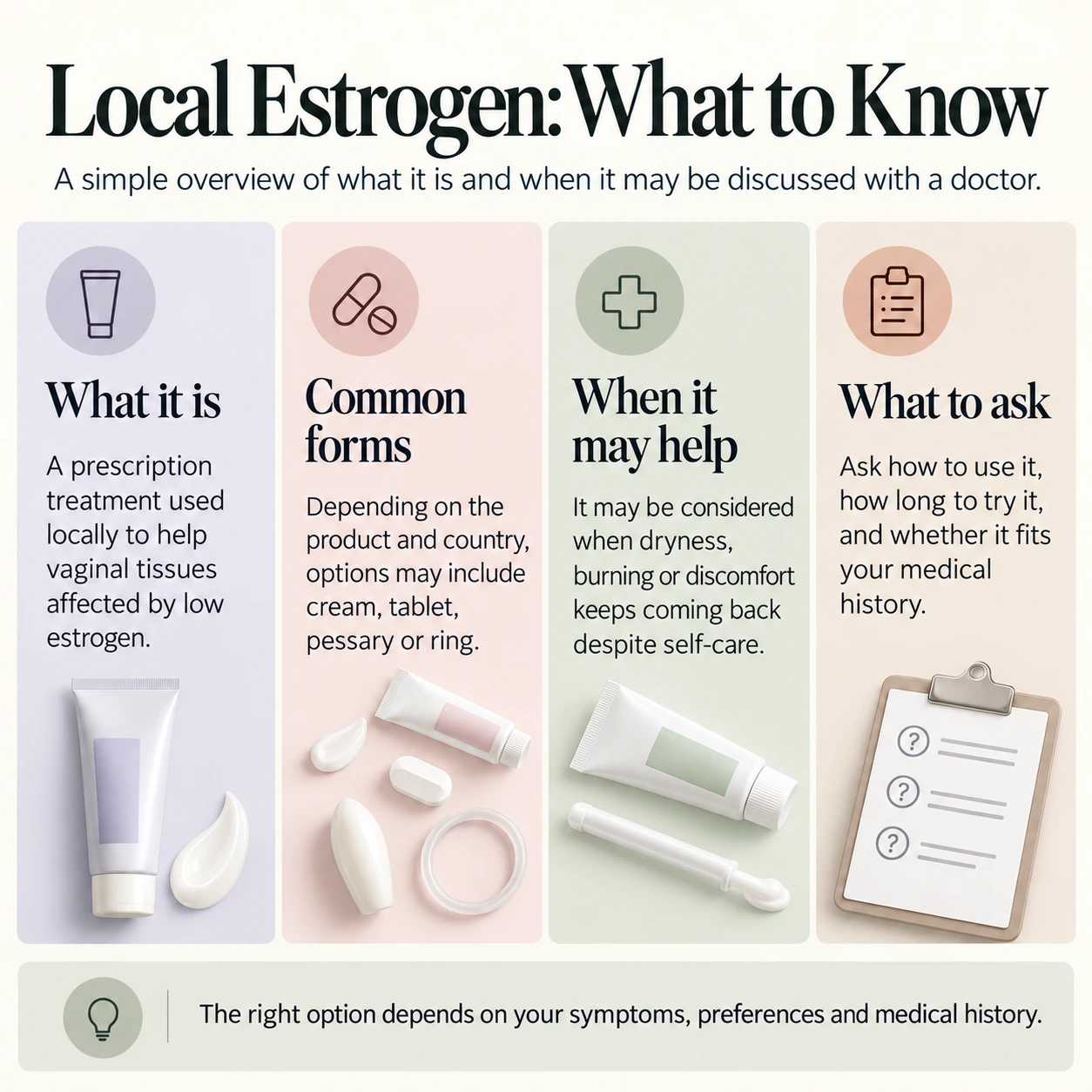
For a more detailed explanation of vaginal estriol treatment, read MIROR’s guide on how estriol cream works.
Prescription treatment should always be selected with appropriate medical guidance.
How to Choose the Best Cream for Vaginal Dryness Safely
When shopping for a vaginal dryness product, the first question should not be which brand is most popular.
It should be whether the product is appropriate for your symptoms and the area where you intend to use it.
Check the Ingredients and Intended Use
When choosing a vaginal dryness cream, look for a product specifically formulated for vaginal or vulval use.
Check whether the formulation contains fragrances, colouring agents or other ingredients that could cause irritation.
Read the instructions carefully. A product intended for external application should not automatically be inserted into the vagina.
If you have sensitive skin or have reacted to intimate-care products before, ask a pharmacist or gynaecologist to help you review the ingredients.
Consider Your Symptoms and Medical History
Occasional dryness during intimacy may respond to lubricant, while symptoms that occur throughout the day may benefit from a regular moisturiser.
However, persistent vaginal burning, painful intercourse or urinary discomfort may require medical assessment.
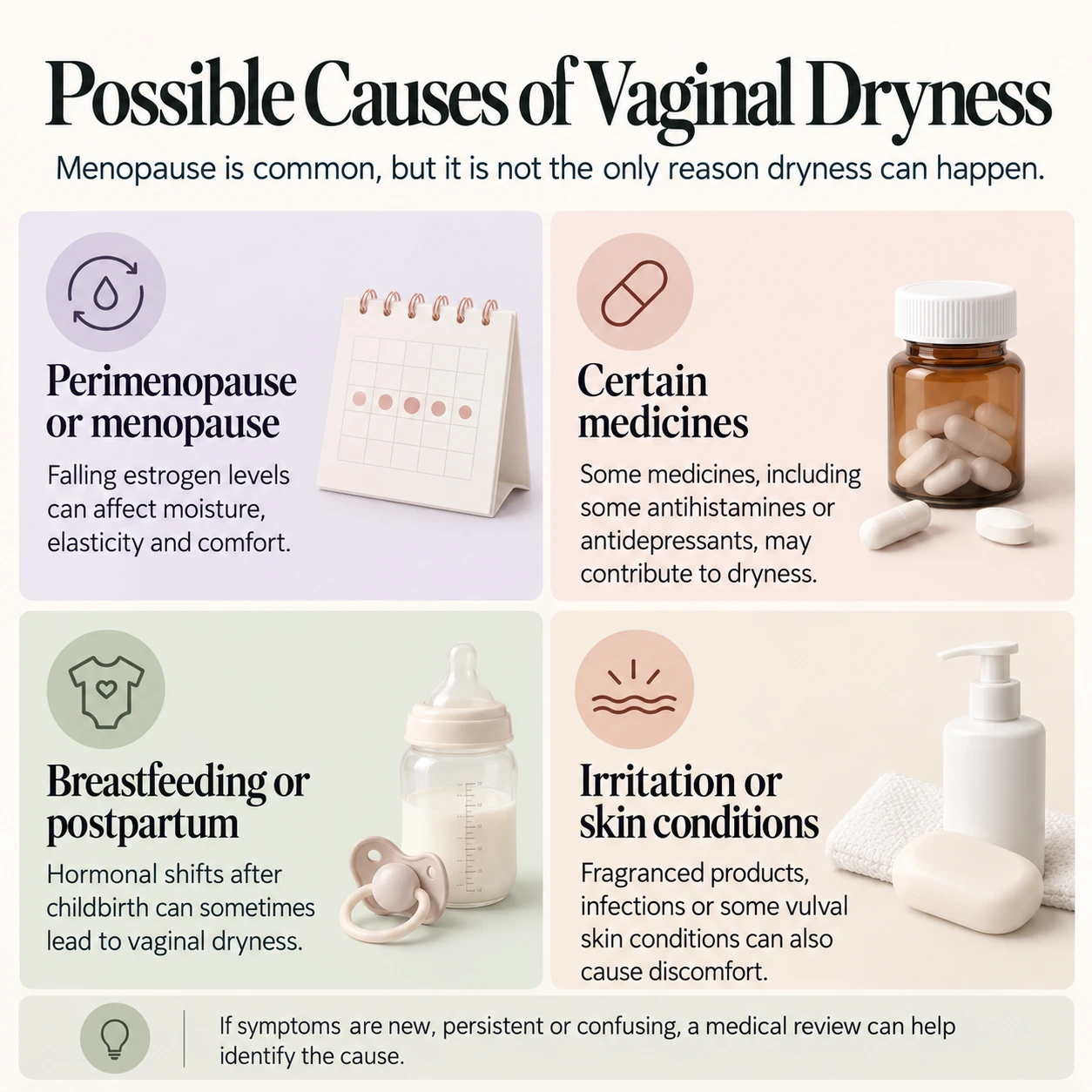
Vaginal dryness isn’t always caused by menopause. Other factors may also play a role, which is why understanding the cause matters when choosing the right treatment.
Know What to Avoid
Choosing the right product is only part of managing vaginal dryness. Everyday habits and seemingly harmless products can sometimes make discomfort worse.
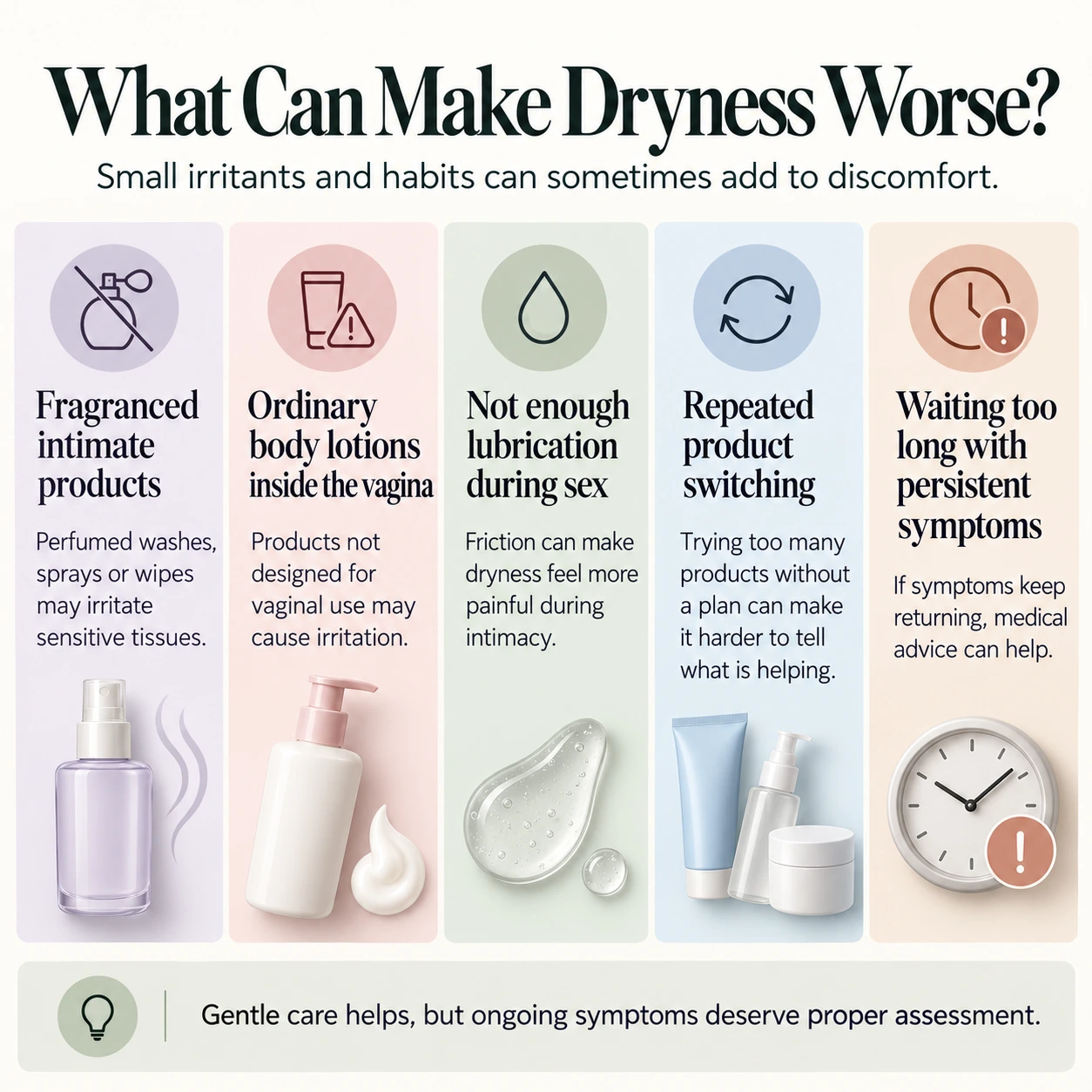
Many home remedies promoted for vaginal dryness lack reliable evidence of safety and effectiveness, particularly when used inside the vagina.
For additional evidence-based guidance, explore MIROR’s article on non-hormonal approaches to painful intercourse.
When choosing a product, look for one specifically formulated for vaginal or vulval use, with clear ingredients and application instructions.
When Should You See a Gynaecologist for Vaginal Dryness?
Vaginal dryness is common, but persistent discomfort shouldn’t automatically be dismissed as part of ageing.
According to NHS guidance on vaginal dryness, it’s important to seek medical advice when symptoms continue despite self-care, interfere with daily life or occur alongside unusual discharge or bleeding.
Consult a gynaecologist if you experience persistent irritation, worsening pain, unusual discharge or bleeding after sex. Any bleeding after menopause should be medically evaluated.
These symptoms aren’t always caused by low estrogen levels. Infections, vulval skin conditions and other underlying concerns may require different treatments.
If you have a history of hormone-sensitive cancer or other relevant medical conditions, speak with your treating clinician before considering local vaginal estrogen.
Getting the right assessment can help identify the cause of your symptoms and guide you towards treatment that is appropriate for your needs.
Finding the Right Relief for Vaginal Dryness
The right vaginal dryness cream depends on what is causing your discomfort and the kind of relief you need.
A moisturiser may help with everyday dryness, a lubricant may make intimacy more comfortable, and prescription local estrogen may be appropriate when hormonal tissue changes require treatment.
Finding relief starts with understanding your symptoms and choosing an approach that works for your body.
For expert-informed guidance on menopause symptoms and personalised care options, download the MIROR app and explore the support available for your vaginal and midlife health.