


Most women who experience vaginal itching want the same thing: relief.
And understandably, many reach for an antifungal cream or tablet, assuming they have a yeast infection.
But what if the problem isn’t an infection at all?
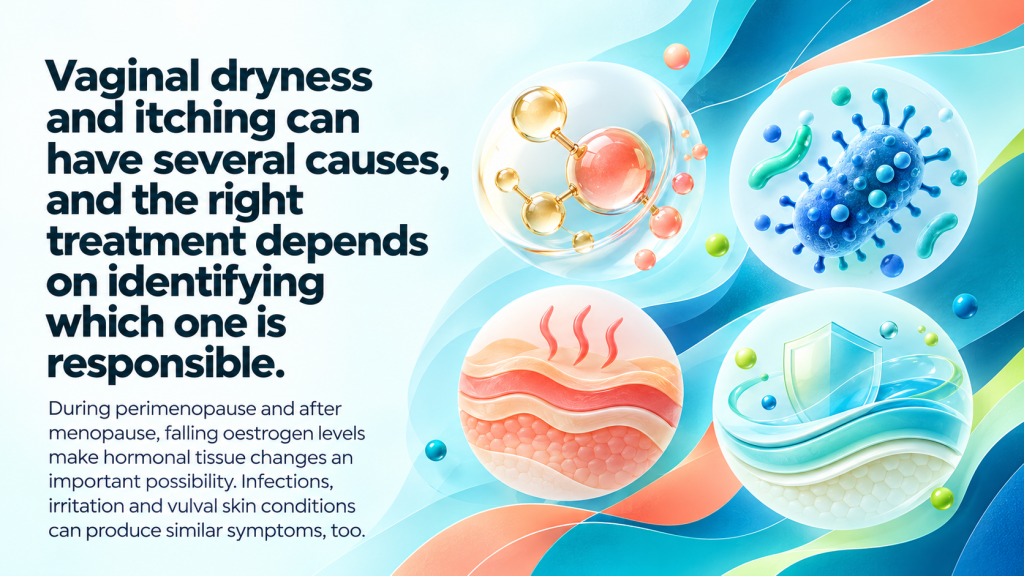
As a gynaecologist, I would encourage you not to keep treating the symptoms without understanding their cause.
Let’s look at five possibilities and what can help.
1. Genitourinary Syndrome of Menopause (GSM)
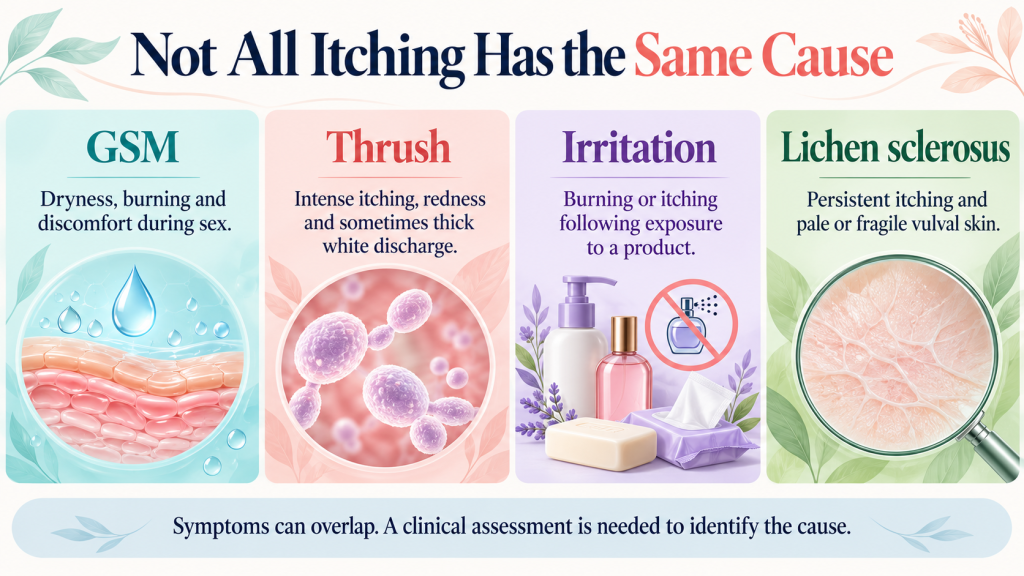
One of the common causes of vaginal dryness and itching around menopause is genitourinary syndrome of menopause (GSM).
As oestrogen levels decline, the tissues of the vulva and vagina can become thinner, less elastic and less naturally lubricated.
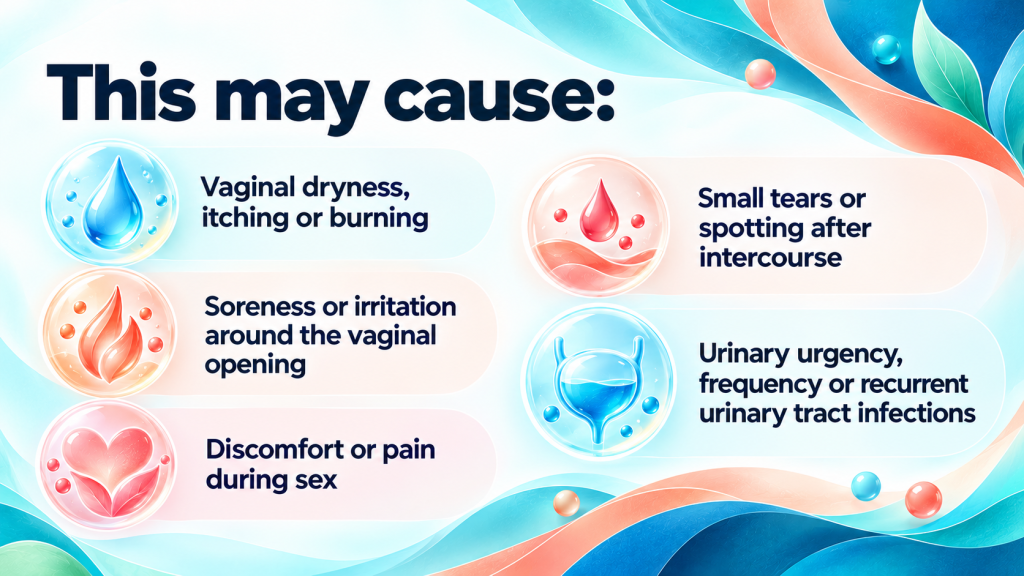
GSM can begin during perimenopause and persist after menopause. It does not necessarily disappear on its own, but effective treatments are available.
The important thing to remember is that these symptoms are not something you simply have to tolerate as you get older.
(NIH)
2. Thrush and Other Vaginal Infections
Yeast infections, bacterial vaginosis (BV) and some sexually transmitted infections can cause vaginal or vulval discomfort. However, itching alone cannot confirm which infection, if any, is present.
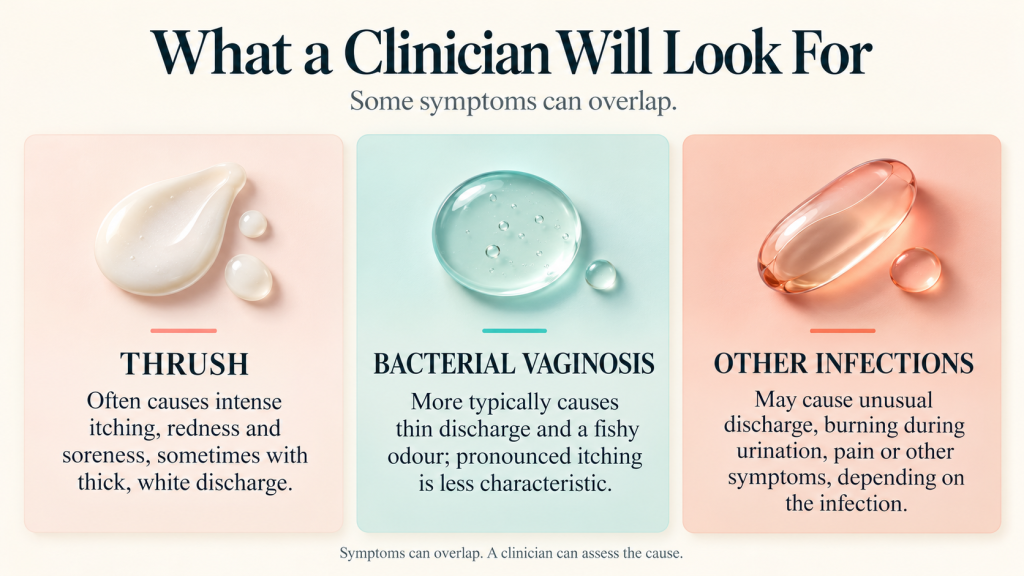
These patterns are clues, not a reliable way to diagnose yourself. Symptoms can overlap, and some infections cause few noticeable symptoms.
Repeatedly using antifungals without lasting relief may delay the correct diagnosis. If treatment has not worked, seek an assessment rather than automatically repeating it.
(ACOG)
3. Irritation From Everyday Products
Sometimes the problem begins with something intended to keep you feeling fresh.
Scented intimate washes, fragranced soaps, wet wipes, douches, detergents, panty liners and certain lubricants can irritate the sensitive skin around the vulva. This is known as irritant or contact dermatitis.
Menopause-related tissue changes may make the area more vulnerable to irritation.

Remember that the vulva is the external genital area, while the vagina is the internal canal. Vaginal cleansing products are unnecessary, and inserting home remedies can worsen irritation.
4. Lichen Sclerosus and Other Vulval Skin Conditions
Persistent itching isn’t always hormonal or infectious. Conditions such as eczema, psoriasis and lichen sclerosus can affect the vulval skin.
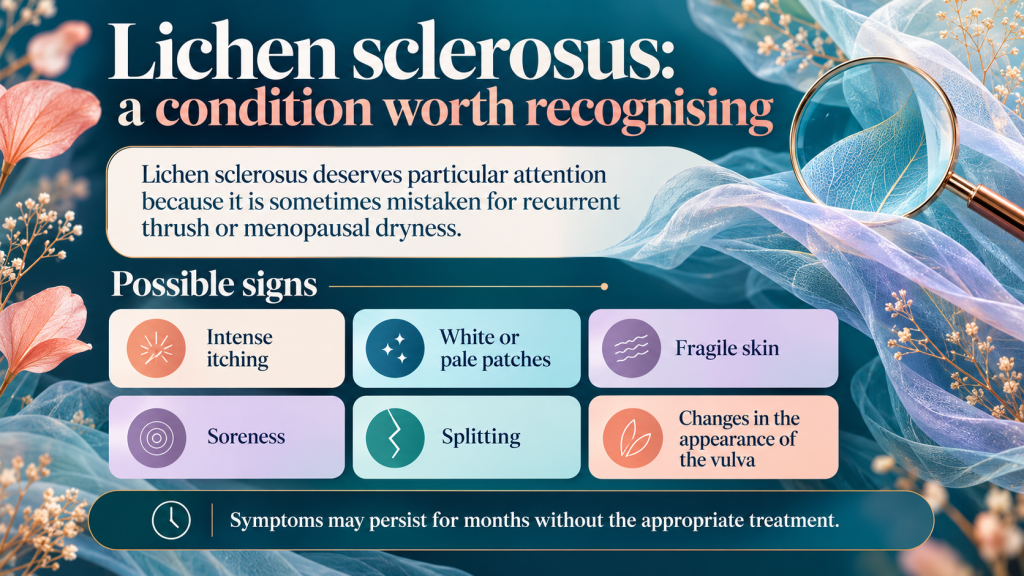
Lichen sclerosus is treatable, usually with a prescribed topical corticosteroid and ongoing clinical follow-up. Untreated disease can cause scarring, and the condition is associated with a small increased risk of vulval cancer.
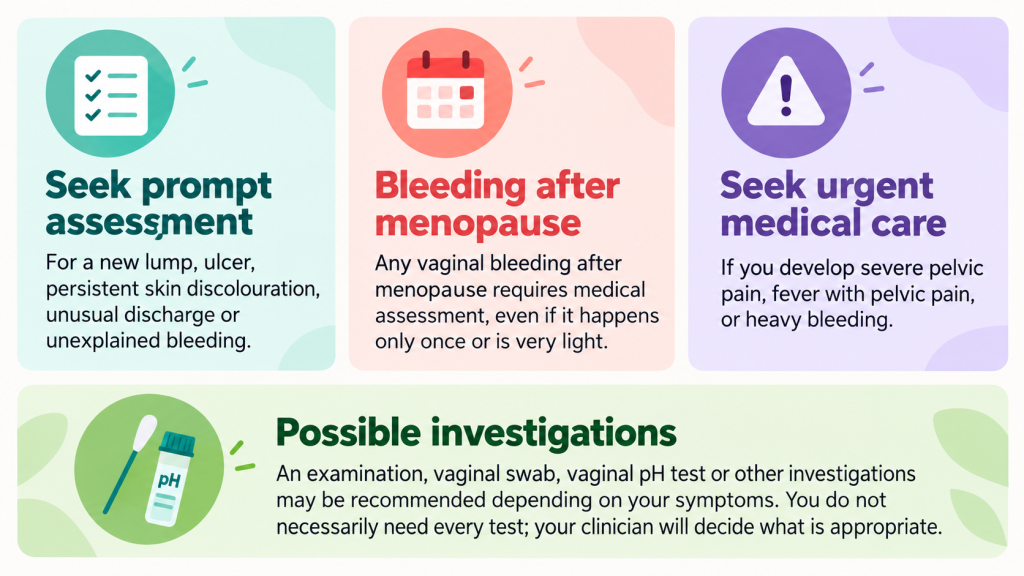
Persistent itching, visible skin changes, a lump or an ulcer that does not heal should be examined by a clinician.
(NIH)
5. Recurrent Thrush and Underlying Health Conditions
If you have repeated episodes of confirmed thrush, it is worth investigating why they keep returning.
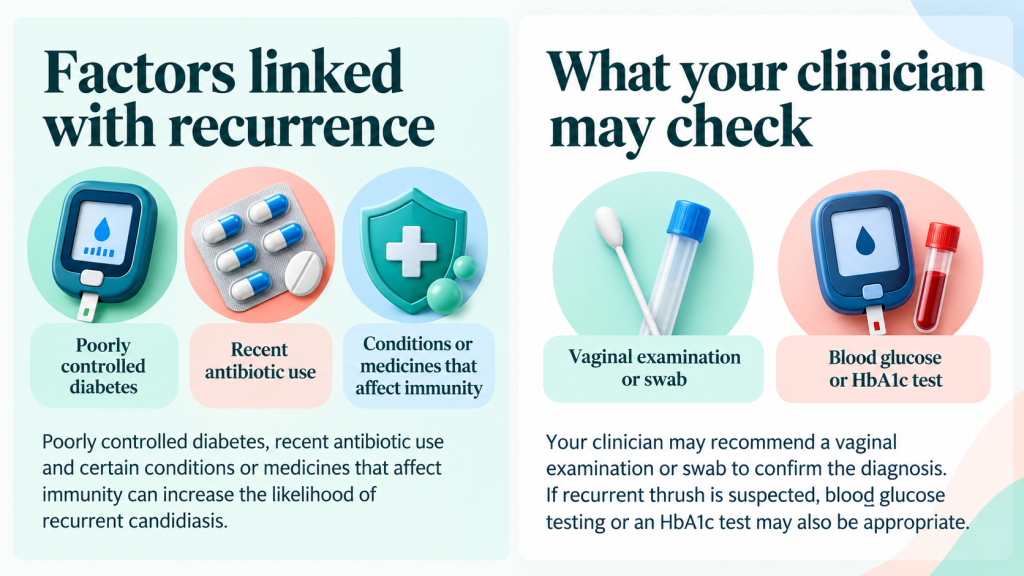
This matters because repeatedly treating symptoms without addressing an underlying contributor can leave you stuck in the same cycle.
How Is Vaginal Dryness and Itching Treated?
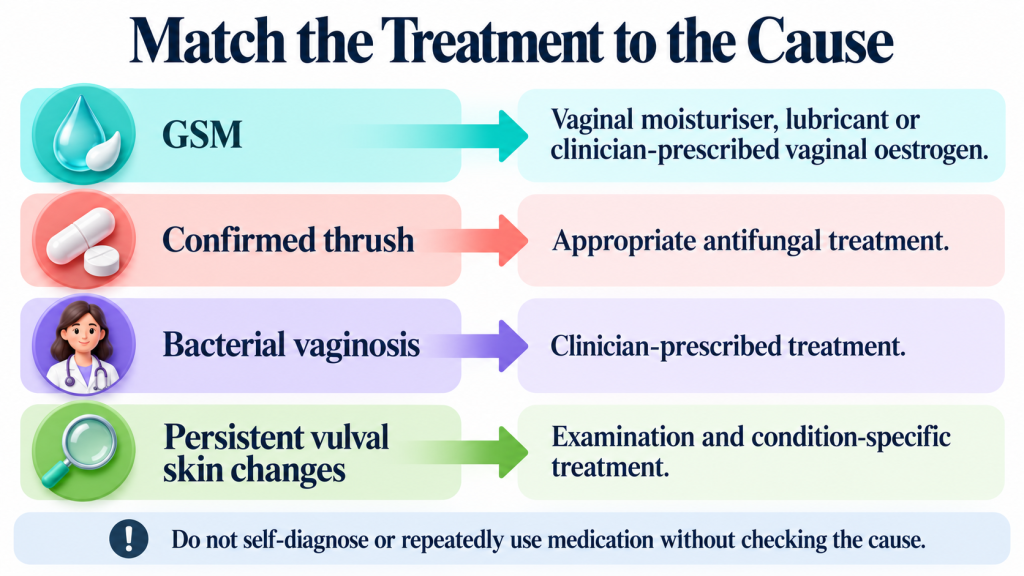
Treatment depends on the cause. There is no single cream that works for every type of vaginal itching.
For menopause-related dryness
Low-dose vaginal oestrogen is an effective treatment for GSM. Available preparations include creams, vaginal tablets or pessaries, and rings, depending on local availability.
Because treatment acts primarily on vaginal tissues, systemic absorption is generally low. However, suitability should be assessed individually. If you have a history of breast cancer or unexplained vaginal bleeding, discuss this with your clinician before starting treatment.
Non-hormonal vaginal moisturisers can help relieve dryness when used regularly, while lubricants can reduce friction during sexual activity. They serve different purposes and may be used together.
For infections
Thrush requires appropriate antifungal treatment, while bacterial vaginosis and other infections may require different medicines. Treatment should match the diagnosis.
For irritation or skin conditions
Avoiding the irritant may be sufficient for mild contact dermatitis. Lichen sclerosus and other persistent skin conditions need specific treatment and follow-up.
When Should You See a Gynaecologist?
Arrange an appointment if vaginal dryness and itching persist, repeatedly return, interfere with sleep or sexual activity, or fail to improve with appropriate treatment.
The Takeaway
Vaginal dryness and itching are common, particularly during and after menopause, but they should not automatically be blamed on hormones—or assumed to be thrush.
GSM, infections, everyday irritants and vulval skin conditions can feel remarkably similar. The difference lies in identifying the cause and choosing the right treatment.
If you have been trying one cream after another without lasting relief, consider this your reminder: you deserve a diagnosis, not another guess.
How Miror Can Help?
You don’t have to navigate menopause or intimate health concerns alone.

Through the Miror app and Miror Care Plus, you can now connect with doctors, women’s health experts and mental-health professionals, discuss concerns that may feel difficult to raise, and explore appropriate next steps for your health.
Download the Miror app or join Miror Care Plus to access expert support and take a more informed approach to your well-being.