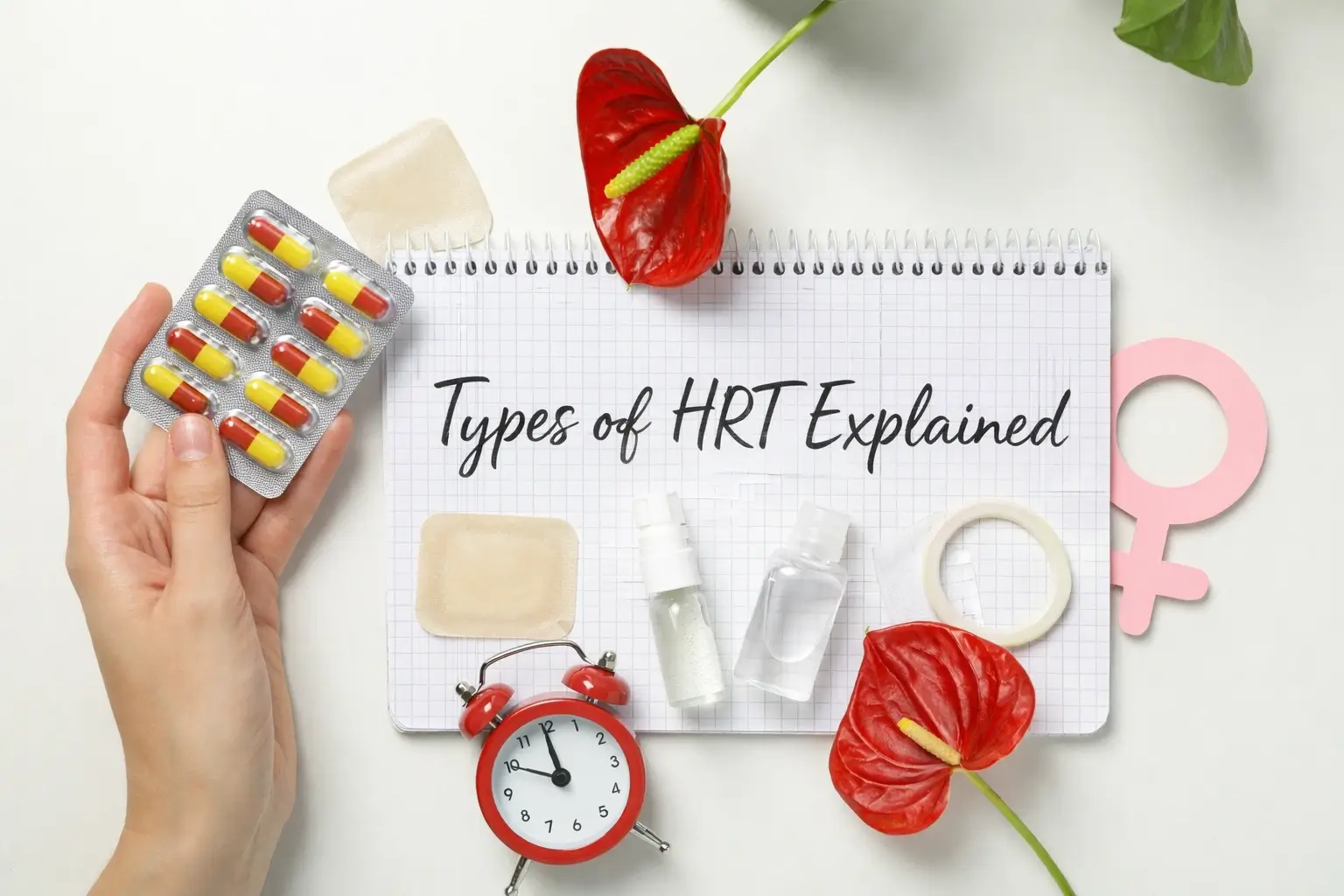


There is a question women across the world type quietly into search bars at midnight, often after another interrupted night of sleep:
It is a simple question.
And yet, it carries fear, exhaustion, and the unspoken worry that this discomfort might be permanent.
This guide is written by a woman, for women. It is science-backed, globally referenced, and grounded in compassion rather than dismissal. Here, we will explore how long menopause symptoms last, why the timeline varies so widely, what the research actually says, and how women can move through this transition with clarity, support, and agency.
Because menopause is not an event.
It is a transition.
And transitions deserve understanding.
(Cleveland Clinic).
Menopause is officially diagnosed when a woman has gone 12 consecutive months without a menstrual period. But symptoms do not begin or end neatly at that point.
Clinically, the menopausal transition unfolds in four interconnected phases, each with its own symptom profile and duration.
This is where confusion often arises. Many women believe menopause symptoms should stop once periods end. Research shows otherwise.
Typical age range: Late 30s to early 40s
Duration: 1 to 3 years
This phase often goes unrecognised.
Hormone levels, especially estrogen and progesterone, begin to fluctuate unpredictably. Periods may still be regular, which is why symptoms are frequently misattributed to stress or ageing.
Common symptoms include:
Sleep disturbances
Increased anxiety or irritability
Heavier or shorter cycles
Worsened PMS
Subtle brain fog
Many women are already experiencing menopause-related symptoms at this stage without realising it.
(Franciscan Health).
Typical age range: Mid 40s to early 50s
Duration: 2 to 4 years
This is when symptoms intensify and become harder to ignore.
Ovulation becomes irregular. Estrogen levels swing sharply rather than declining steadily, which explains why symptoms can feel sudden and severe.
Common symptoms include:
Hot flashes and night sweats
Irregular or skipped periods
Mood swings and emotional sensitivity
Sleep disruption
Weight redistribution
Increased fatigue
For many women, this is the most physically and emotionally challenging phase.
(My Menopause Center).
Defined as: 12 months without a period
Menopause itself is a diagnostic point, not a long phase. However, the hormonal environment at this stage shifts from fluctuation to consistently low estrogen.
Symptoms do not suddenly stop here. For many women, they continue or even worsen temporarily as the body adapts.
(NIH).
Begins: After menopause is diagnosed
Duration: Several years to lifelong, depending on symptom type
This is where the most misunderstood aspect of the question lies.
When women ask how long do menopause symptoms last, they are often surprised to learn that some symptoms can persist well into postmenopause.
(Cleveland Clinic).
| Symptom | Average Duration | What Research Shows |
|---|---|---|
| Hot flashes & night sweats | 7 to 10 years | The SWAN study found symptoms may last over a decade for many women |
| Sleep disturbances | Variable | Often persist without treatment |
| Mood changes & anxiety | Several years | Closely linked to estrogen and cortisol shifts |
| Vaginal dryness | Long term | Tends to worsen without intervention |
| Bone density loss | Progressive | Accelerates after menopause |
| Brain fog | Improves for many | May persist in some women |
Large-scale studies published in JAMA and The New England Journal of Medicine confirm that menopause symptoms often last far longer than previously believed, especially vasomotor symptoms like hot flashes.
There is no single timeline. The duration of menopause symptoms is influenced by multiple factors:
Genetics
Age at menopause
Stress levels
Metabolic health
Sleep quality
Body composition
Access to medical support
Hormone therapy use
Women who experience early or surgical menopause often report more intense and longer-lasting symptoms.
(The Menopause Clinic).
Beyond physical symptoms lies something deeper. Many women report:
Feeling unlike themselves
Reduced emotional tolerance
A loss of confidence or clarity
Increased introspection
These are not personal failings. Estrogen plays a direct role in serotonin and dopamine regulation. When levels fall, emotional resilience is affected.
Understanding this alone can be profoundly relieving.
Yes. And this is where modern menopause care matters.
While menopause cannot be reversed, symptoms can be significantly reduced, stabilised, and supported with the right approach.
Evidence-based options include:
Lifestyle optimisation
Nutritional and botanical support
Targeted supplementation
Hormone Replacement Therapy when appropriate
Ignoring symptoms does not make them resolve faster. Supporting the body often does.
(OASH).
At Miror, we believe menopause deserves the same clinical respect and personalisation as any other major health transition.
This belief has led to two core pillars of support.
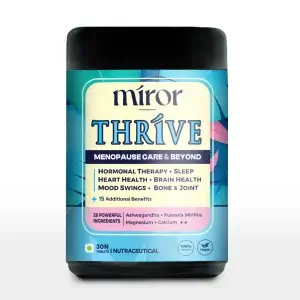
Miror Thrive is formulated specifically for women navigating menopause and postmenopause.
Thrive supports:
Hormonal balance
Hot flashes and night sweats
Sleep quality
Mood stability
Bone and joint health
Cognitive clarity
Cardiovascular and metabolic health
With 28 science-backed ingredients including phytoestrogens, adaptogens, vitamins, and minerals, Thrive works gently with the body as estrogen levels stabilise at a lower baseline.
Miror is also pioneering structured, evidence-led hormone care in India through its HRT Centre of Excellence.
Hormone Replacement Therapy is not a one-size-fits-all solution. It requires:
Individual assessment
Risk evaluation
Ongoing monitoring
Specialist guidance
At Miror, women have access to personalised hormonal evaluations and clinician-led pathways that prioritise safety, transparency, and choice.
For many women, HRT has been shown to significantly reduce the duration and intensity of menopause symptoms when used appropriately.
Menopause symptoms do not last forever in the same way. They evolve.
Some fade naturally.
Some require support.
Some deserve medical care rather than endurance.
The most important shift is this:
Women do not need to suffer silently while waiting for symptoms to end.
So, how long do menopause symptoms last?
For most women:
Symptoms begin years before menopause
Peak during late perimenopause
Continue for several years after menopause
Become manageable and stabilised with the right care
This is not the closing of a chapter.
It is a physiological recalibration.
At Miror, our commitment is simple and unwavering: women deserve clarity, options, and care that evolves with them.
You are not late.
You are not broken.
And you are not alone.
We’re here. Together.
Menopause symptoms typically last 7 to 10 years for many women, though the duration varies. Symptoms often begin during perimenopause, intensify as menopause approaches, and may continue for several years after periods stop. Factors such as genetics, stress, lifestyle, and whether treatment is used can significantly influence how long menopause symptoms last.
Not always. While menopause is diagnosed after 12 months without a period, many symptoms can continue into postmenopause. Hot flashes, sleep disturbances, vaginal dryness, and mood changes may persist for years if left unsupported, which is why ongoing care remains important even after menstruation stops.
The length of menopause symptoms varies due to differences in hormone sensitivity, age at menopause, overall health, stress levels, and access to medical support. Women who experience early or surgical menopause often report longer-lasting and more intense symptoms compared to those who transition naturally.
Yes. Menopause symptoms can often be eased and stabilised through lifestyle changes, nutritional support, targeted supplements, and medical options such as Hormone Replacement Therapy when appropriate. Early intervention and personalised care can significantly improve quality of life and reduce symptom severity.
You should seek medical guidance if menopause symptoms interfere with sleep, mental health, work, or daily functioning, or if symptoms persist for several years without improvement. Early support can help protect long-term bone, heart, and metabolic health while improving overall wellbeing.


 ×
×