

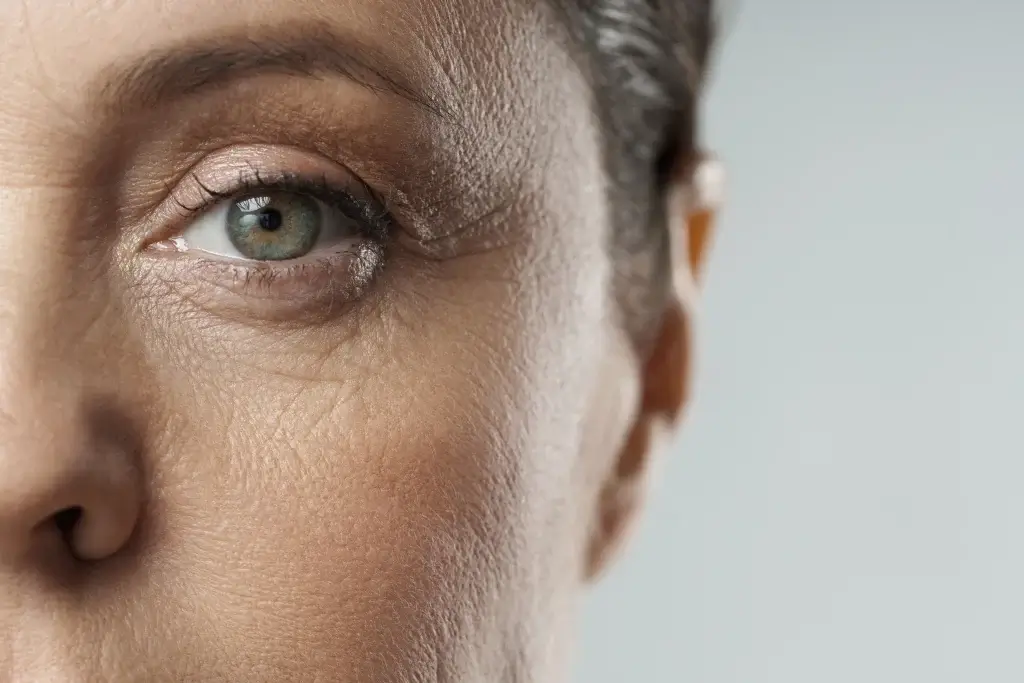
For many women, menopause doesn’t just feel like a hormonal shift. It becomes visible in the mirror.
One day your skin feels fine, and then suddenly it looks drier, less firm, and those fine lines seem a little more noticeable. It can feel confusing, especially when nothing in your routine has changed.
The truth is, your skin is responding to what’s happening inside your body.
This is where the conversation around hrt and aging skin begins.
Hormone Replacement Therapy, or HRT, is commonly used to manage symptoms like hot flashes, poor sleep, and bone loss. But over time, more women have started asking whether it can also slow down visible aging. Can it reduce wrinkles? Can it protect collagen? Can it help the skin stay firmer for longer?
The answer is not as simple as yes or no.
In this blog, we will break down what really happens to your skin during menopause, how estrogen skin aging works, and what research actually says about hrt wrinkles, collagen loss, and long-term skin health. The goal is to give you clarity so you know what to expect and what actually makes a difference.
What Happens to Your Skin During Menopause?
Menopause brings a series of internal changes, and your skin is one of the first places where these shifts become visible. What makes this phase different from regular aging is how quickly and noticeably the changes can happen.
As estrogen levels begin to decline, the skin’s natural ability to maintain itself starts to slow down. This affects multiple functions at once. The skin produces less oil, holds less moisture, and becomes less efficient at repairing itself. Over time, it also loses some of the structural support that keeps it firm and smooth, which is why conversations around hrt and aging skin have become more relevant during this phase.
This is why many women feel like their skin suddenly behaves differently. It may feel dry even after moisturizing, look dull even when you are well-rested, or appear thinner and more delicate than before. Products that worked earlier may no longer give the same results.
The early years after menopause are especially important. This is when the most rapid changes tend to happen, particularly when it comes to collagen loss. Fine lines may appear more quickly, and existing wrinkles can become more noticeable.
Another important aspect is that menopause affects deeper layers of the skin, not just the surface. The dermis, which gives the skin its strength and structure, begins to weaken. At the same time, the skin barrier becomes less effective, making it more prone to dryness and sensitivity.
These menopause skin changes are not just cosmetic. They reflect deeper biological shifts. Understanding this makes it easier to see why approaches like hrt and aging skin are being explored as a way to support the skin from within.
The role of estrogen in skin health
Estrogen plays a key role in maintaining healthy, resilient skin. It supports several processes that keep the skin stable and balanced.
It helps maintain skin thickness by supporting the dermal layer, stimulates natural oil production to prevent dryness, and supports collagen and elastin which give the skin its firmness and elasticity. It also improves blood circulation, which contributes to a healthier and more even-looking complexion.
When estrogen levels drop, all of these processes begin to slow down together. This is why the skin does not just age gradually. It can feel like it loses hydration, structure, and glow at the same time.
Common menopause skin changes
The menopause skin changes many women experience are the result of these hormonal shifts happening together.
Change | What it looks like | Why it happens |
Dryness | Tight, rough, dull skin | Reduced oil production and moisture retention |
Wrinkles | Fine lines and deeper creases | Accelerated collagen breakdown |
Sagging | Loss of firmness and elasticity | Elastin weakens |
Thinning | Fragile, sensitive skin | Reduced dermal density |
These changes often overlap. Dryness can make wrinkles appear deeper, and thinning skin can make sagging more visible. This combination is what makes skin aging during menopause feel more noticeable.
The Link Between Estrogen and Skin Aging
To understand estrogen skin aging, it is important to focus on what happens beneath the surface, especially when it comes to collagen.
Collagen loss during menopause
Collagen is the protein that gives your skin structure and firmness. It helps keep the skin smooth, supported, and resilient, which is why it plays such an important role when we talk about hrt and aging skin.
During menopause, collagen levels drop significantly. Women can lose up to 30 percent of their collagen within the first five years. After that, the decline continues steadily over time.
This is why the skin can suddenly appear thinner, looser, and more lined. It is not just about aging over time. It is about a faster breakdown of the skin’s internal support system.
Estrogen helps regulate how collagen is produced and maintained in the body. It signals the skin to produce new collagen and helps maintain its structure.
When estrogen levels decrease, collagen production slows down and breakdown increases. The skin gradually loses its ability to stay firm and bounce back.
This is why collagen menopause becomes such a key concern. The skin is not just aging on the surface. It is losing the foundation that keeps it strong.
Can HRT Actually Prevent Wrinkles?
This is one of the most common questions, and it is important to answer it realistically.
What research suggests about HRT and wrinkles
Research on hrt wrinkles suggests that HRT can support the skin, but the effects are usually subtle.
HRT may help slow down collagen loss, improve hydration, and slightly increase skin thickness. These changes can make the skin feel softer and more comfortable, and in some cases, fine lines may appear less noticeable.
However, these improvements are gradual. Most women notice changes in how their skin feels before they see a visible difference.
What HRT cannot do
HRT does have limitations when it comes to visible aging, especially when we talk about hrt and aging skin in a real, practical sense.
It does not remove deep wrinkles, reverse years of sun damage, or replace targeted skincare treatments. It also does not stop the natural aging process.
This is why it helps to view HRT as internal support rather than a direct anti-aging solution.
What the Research Actually Shows
Looking at research helps bring clarity to what HRT can and cannot do.
Evidence on collagen and HRT
Studies suggest that women using HRT tend to have higher collagen levels, improved skin thickness, and better moisture retention compared to those who are not using it.
That said, results are not the same for everyone. Lifestyle factors like sun exposure, diet, and overall health continue to influence skin aging.
Timing matters more than most people think
Timing plays an important role in how effective HRT can be.
Starting HRT closer to menopause may help slow early collagen loss and support skin structure more effectively. Starting later may not provide the same benefits because much of the collagen loss has already taken place.
HRT and Aging Skin – Benefits vs Limitations
Benefit | What it helps with | Level of impact |
Collagen support | Slows further breakdown | Moderate |
Hydration | Improves skin comfort | Noticeable |
Skin thickness | Reduces fragility | Mild to moderate |
Wrinkles | Softens fine lines | Limited |
HRT supports the skin, but it does not replace other approaches that target visible aging directly.
How HRT Compares to Other Anti-Aging Approaches
HRT works differently from most treatments used for skin aging, which is why expectations need to be adjusted.
HRT vs skincare
HRT works internally by addressing hormonal changes, while skincare works externally on visible concerns like texture, tone, and wrinkles.
Using both together tends to give better results than relying on either one alone.
HRT vs collagen supplements
HRT supports the body’s natural ability to produce collagen, while supplements provide nutrients that may help support collagen formation. The results from supplements can vary depending on absorption and consistency.
HRT vs aesthetic treatments
Aesthetic treatments such as lasers or fillers provide faster and more visible results because they directly target wrinkles and sagging. HRT works more slowly and indirectly.
What Experts Recommend Instead of Relying Only on HRT
One of the biggest misconceptions around hrt and aging skin is that it can work as a complete solution on its own. In reality, most experts agree that while HRT can support skin health, it is only one part of the picture.
Skin aging during menopause is influenced by several factors at the same time. Hormonal changes play a role, but so do sun exposure, nutrition, stress, sleep, and daily skincare habits. If only one of these is addressed, the results are often limited.
This is why experts recommend a more balanced approach. Instead of relying only on HRT, the focus shifts to supporting the skin both internally and externally. HRT can help slow down internal changes like collagen loss, but visible improvements often depend on how well the skin is cared for on the outside.
Another important point is that HRT mainly helps maintain what you already have. It slows further decline but does not actively repair damage that has already occurred. This is where lifestyle choices and skincare become essential.
When these elements are combined, the results are more noticeable and more consistent over time. Instead of expecting one solution to do everything, the goal becomes supporting the skin in a way that actually matches how it changes during menopause.
Support your skin from multiple angles
Daily habits play a major role in how your skin responds during menopause.
Strength training can help improve circulation and support overall hormonal balance. A protein-rich diet provides the building blocks needed for collagen, while healthy fats help maintain the skin barrier and reduce dryness.
Hydration becomes even more important as the skin loses its ability to retain moisture. At the same time, consistent sun protection is essential because UV exposure accelerates collagen breakdown and speeds up visible aging.
Skincare that works with your skin changes
As your skin changes, your skincare routine needs to adapt as well.
Ingredients like retinoids can help stimulate collagen production, hyaluronic acid improves hydration and smoothness, and peptides support the skin’s structure over time.
Unlike HRT, these ingredients directly target visible signs of aging, which is why they play an important role alongside internal support.
The Real Takeaway on HRT and Aging Skin
HRT can support your skin, but it will not transform it.
It helps maintain collagen, improve hydration, and support skin thickness. But aging is influenced by multiple factors, and no single approach can address all of them.
If you are exploring hrt and aging skin, it helps to see it as one part of a broader strategy rather than a complete solution. And if you are considering HRT, the first step is understanding whether it is right for you. You can start by filling out a simple form, after which a dedicated HRT guide reaches out to understand your needs, explain your results, and walk you through the next steps.
At MIROR, this entire process is designed to feel clear and supported. As India’s HRT & MHT Center of Excellence, the focus is on helping you make informed decisions with the right medical guidance, so you are not left figuring it out on your own.
FAQs
No, HRT does not completely prevent wrinkles. It may slow collagen loss and improve hydration, which can make fine lines appear softer. However, deeper wrinkles caused by aging and sun exposure will still develop over time.
Skin improvements with HRT are gradual and may take a few months to become noticeable. Hydration may improve first, while changes in collagen and skin thickness take longer. Results vary from person to person.
HRT helps regulate natural collagen production, while supplements provide nutrients. Both can support skin health, but they work differently and are often more effective when combined with good nutrition and lifestyle habits.
HRT can improve dryness and thinning, but it does not fully reverse wrinkles or sagging. It is more effective at slowing further changes rather than reversing existing ones.
HRT is not recommended solely for skin concerns. It is primarily used to manage menopause symptoms, with skin benefits being a secondary effect.