

There are moments during menopause that arrive without warning.
A sudden rush of heat. A wave of sweating. A heartbeat that feels louder than usual. Skin that flushes, then chills.
If you have experienced this, you are not imagining it. You are experiencing menopause hot flash symptoms, one of the most common and misunderstood transitions in a woman’s midlife health journey.
This guide is written by a woman, for women. It is science-backed, globally referenced, and grounded in compassion. Here, we will explore what menopause hot flash symptoms really are, why they happen, what triggers them, and what actually helps, so you can move from confusion to clarity and from discomfort to informed relief.
Menopause hot flash symptoms are sudden sensations of heat that spread across the upper body, often affecting the face, neck, chest, and arms. They may be accompanied by sweating, redness of the skin, heart palpitations, anxiety, or chills afterward.
Hot flashes can last anywhere from 30 seconds to several minutes, and their frequency varies widely. Some women experience a few episodes a week, while others experience them multiple times a day or night.
According to global health data, up to 75 percent of menopausal women experience hot flashes, making them one of the defining symptoms of menopause.
At the core of menopause hot flash symptoms lies estrogen fluctuation and decline.
Estrogen plays a critical role in regulating the hypothalamus, the part of the brain responsible for temperature control. When estrogen levels drop, the hypothalamus becomes more sensitive to even slight changes in body temperature.
As a result, the brain mistakenly signals that the body is overheating. Blood vessels dilate, sweat glands activate, and the body initiates cooling responses even when no real temperature threat exists.
This is not a malfunction. It is a biological recalibration.
Hot flashes can begin during perimenopause, intensify during menopause, and in some women, continue into postmenopause.
| Stage | What Happens |
|---|---|
| Perimenopause | Irregular hot flashes begin |
| Menopause | Peak frequency and intensity |
| Postmenopause | Gradual reduction over time |
Globally, the average age of menopause is 51 years, though Indian women often experience menopause slightly earlier, between 46 and 48 years, which may influence symptom timing and severity.
While hormonal changes create the foundation, certain triggers can intensify or provoke hot flashes.
Stress is one of the most powerful and underestimated triggers of menopause hot flash symptoms. Elevated cortisol directly interferes with the hypothalamus, the brain’s temperature control center. During menopause, when estrogen no longer buffers stress responses, emotional overload can rapidly trigger flushing, sweating, and palpitations. Chronic stress also worsens sleep quality, creating a cycle where fatigue further amplifies hot flashes.
(Mirorpedia).
Spicy foods contain capsaicin, a compound that activates heat receptors in the body. In menopausal women, whose thermoregulation is already sensitive, this can provoke sudden warmth, facial flushing, and sweating. While not all women are affected equally, many notice that hot flashes worsen after spicy meals, particularly in the evening.
(Click Pharmacy UK).
Caffeine stimulates the nervous system and increases heart rate and blood vessel dilation. In menopause, this stimulation can exaggerate temperature sensitivity and trigger hot flashes, anxiety, or palpitations. Excessive caffeine intake may also disrupt sleep, indirectly worsening night sweats and daytime hot flashes.
(Bonafide).
Alcohol dilates blood vessels and alters estrogen metabolism in the liver. Even small amounts can provoke sudden heat, facial redness, and sweating in menopausal women. Alcohol consumption close to bedtime is especially likely to worsen night sweats and sleep fragmentation.
(PubMed Central).
Sleep deprivation heightens nervous system reactivity and lowers the body’s tolerance for hormonal fluctuations. Poor sleep not only increases the frequency of hot flashes but also makes them feel more intense. Night sweats, in turn, further disrupt sleep, reinforcing a difficult cycle that deserves early intervention.
(John Hopkins Medicine).
Warm rooms, high humidity, and layered or synthetic clothing can overwhelm the body’s already narrowed thermoneutral zone during menopause. Because estrogen helps regulate heat dissipation, its decline makes menopausal women more sensitive to environmental temperature changes, triggering hot flashes more easily. (PubMed Central).
Skipping meals or consuming high-sugar foods can cause rapid rises and falls in blood glucose. These fluctuations activate stress hormones like adrenaline and cortisol, which can provoke hot flashes. Stable meal timing and balanced macronutrients are often key in reducing symptom frequency.
Understanding your personal triggers is one of the most powerful tools for managing menopause hot flash symptoms.
(The Ohio State University).
| Trigger | How It Worsens Hot Flashes |
|---|---|
| Stress | Disrupts hypothalamic temperature control |
| Spicy foods | Activates heat receptors |
| Caffeine | Stimulates nervous system and blood vessels |
| Alcohol | Dilates blood vessels, disrupts estrogen metabolism |
| Poor sleep | Heightens nervous system sensitivity |
| Hot environments | Overwhelms reduced thermoregulation |
| Blood sugar swings | Activates stress hormones |
Nighttime hot flashes, often called night sweats, can be particularly disruptive.
At night, the body naturally lowers its core temperature to support deep sleep. Estrogen decline interferes with this process, making the brain more likely to misfire temperature signals.
This leads to:
Sudden sweating
Sleep fragmentation
Fatigue the next day
Mood changes
Over time, poor sleep can worsen overall menopause symptoms, creating a cycle that deserves early attention.
(Contemporary OB GYN).
Menopause hot flash symptoms are not merely uncomfortable. Long-term unmanaged symptoms may impact broader health.
| Area | Impact |
|---|---|
| Sleep | Chronic insomnia |
| Mental health | Anxiety, irritability |
| Metabolism | Weight gain |
| Heart health | Vascular strain |
| Bone health | Indirect risk through estrogen loss |
This is why hot flashes should be acknowledged, not minimised.
(University of Rochester Medical Center).
There is no single solution that works for every woman. Relief is personal, layered, and responsive.
Consistent meal timing
Hydration throughout the day
Breathwork or stress regulation
Daily movement
Sleep hygiene
These foundational changes often reduce symptom frequency significantly.
Foods rich in phytoestrogens, magnesium, omega-3 fatty acids, and antioxidants support nervous system stability and estrogen metabolism.
Common supportive foods include:
Soy and legumes
Leafy greens
Seeds and nuts
Fermented foods
For women with severe or persistent menopause hot flash symptoms, Hormone Replacement Therapy may be considered after personalized evaluation. HRT is not one-size-fits-all and should always be guided by trained clinicians.
(Mayo Clinic).
Global studies, including those published in The Journal of Clinical Endocrinology and Metabolism, show that appropriately prescribed HRT remains the most effective treatment for hot flashes, particularly in early menopause.
At Miror, we believe menopause hot flash symptoms deserve context, not dismissal.
Hot flashes are not a sign of weakness. They are a signal that the body is recalibrating its hormonal communication. Our approach focuses on supporting the nervous system, hormonal balance, and long-term wellbeing rather than silencing symptoms temporarily.
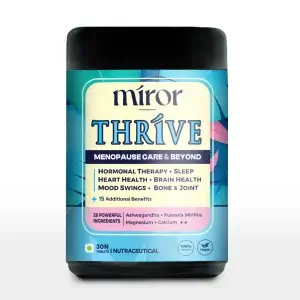
For women navigating menopause and the years that follow, Miror Thrive offers comprehensive, science-backed support beyond symptom suppression. Thrive is formulated specifically for post-menopausal care, addressing not only menopause hot flash symptoms, but also the broader physical and emotional changes that emerge after estrogen levels stabilize at a lower baseline.
Miror Thrive supports hormonal balance, emotional steadiness, restorative sleep, bone density, cardiovascular health, cognitive clarity, and sustained energy. Its formulation includes 28 carefully selected, all-natural ingredients such as phytoestrogens from Pueraria Mirifica, Soy Isoflavones, Red Clover, Wild Yam, Vitex agnus castus, and Black Cohosh, alongside adaptogens, vitamins, minerals, and antioxidants that work synergistically to reduce hot flashes, night sweats, mood swings, brain fog, joint stiffness, and fatigue. Rather than offering short-term relief, Thrive is designed to uplift, strengthen, and protect women through menopause and well into post-menopausal life.
Relief is not about suppressing your body. It is about understanding it.
While lifestyle strategies and targeted formulations help many women, some experience persistent or severe menopause hot flash symptoms that require medical evaluation. This is where Hormone Replacement Therapy, when appropriately prescribed, can play a transformative role.
Miror is pioneering India’s first HRT Centre of Excellence, redefining how hormone care is delivered to women across the country. At the Miror HRT Centre of Excellence, menopause care is personalised, evidence-based, and clinically guided, recognising that HRT is never one-size-fits-all. Through comprehensive hormonal assessments, specialist consultations, and long-term follow-up, Miror is helping women access safe, transparent, and modern hormone care, empowering them to move through menopause with confidence rather than fear.
Consult a healthcare professional if:
Hot flashes disrupt sleep consistently
Symptoms worsen rapidly
Anxiety or palpitations accompany episodes
You feel overwhelmed or exhausted
Early support improves outcomes and quality of life.
(Manipal Hospitals).
Menopause hot flash symptoms are real, biological, and widely experienced by women across the world.
You are not imagining them.
You are not failing at coping.
You are responding to a profound hormonal shift.
With the right information, awareness of triggers, and access to supportive care, hot flashes can become manageable rather than defining.
At Miror, we believe menopause education is not optional. It is foundational women’s healthcare.
And you deserve to feel informed, supported, and steady as your body enters this new chapter.
Menopause hot flash symptoms are sudden sensations of heat, often affecting the face, neck, chest, and upper body. They may be accompanied by sweating, flushing, palpitations, anxiety, or chills afterward. These symptoms occur due to changes in estrogen levels that disrupt the brain’s temperature regulation system.
Common triggers include stress, poor sleep, spicy foods, caffeine, alcohol, hot environments, and blood sugar fluctuations. While hormonal changes create the underlying cause, these triggers can significantly increase the frequency and intensity of menopause hot flash symptoms.
Menopause hot flashes can last from a few months to several years. For many women, they begin during perimenopause, peak around menopause, and gradually decrease in postmenopause. On average, hot flashes may persist for 4 to 7 years, though duration varies individually.
Yes, many women experience relief through lifestyle changes such as stress management, regular meals, hydration, sleep optimisation, and avoiding known triggers. Nutritional support and targeted supplementation may also help. However, medical options like Hormone Replacement Therapy may be considered for severe or persistent symptoms.
You should consult a healthcare professional if hot flashes disrupt sleep, affect daily functioning, worsen rapidly, or are accompanied by anxiety, palpitations, or extreme fatigue. Early evaluation helps rule out other conditions and allows for personalised, effective management.


 ×
×