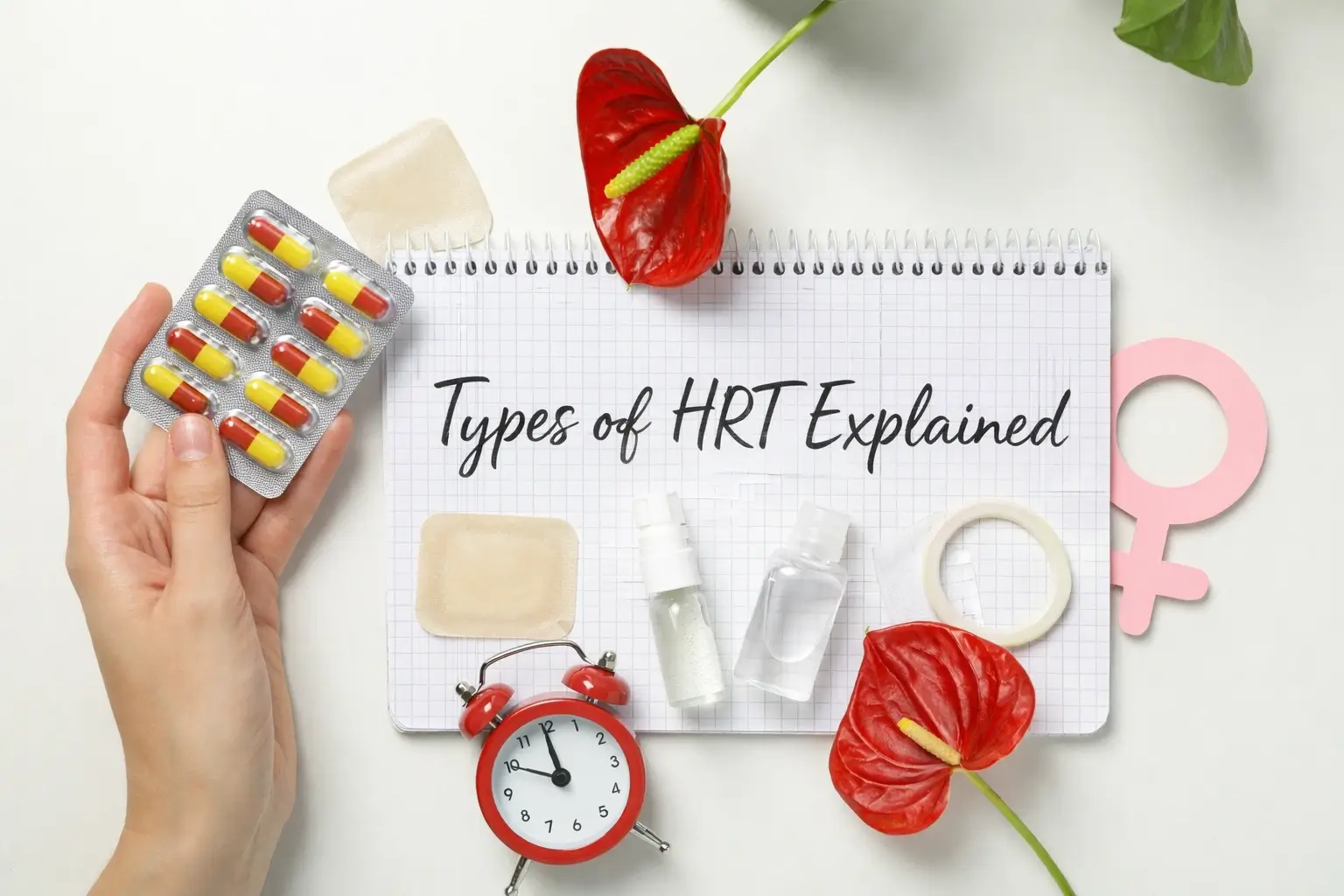

When women first hear about hormone therapy, the conversation often sounds deceptively simple.
“Take HRT.”
But what is rarely explained is that how you take HRT matters just as much as whether you take it.
The form, the delivery route, and how your body absorbs hormones can significantly influence effectiveness, safety, side effects, and long term outcomes.
Understanding the types of HRT is not about choosing between products. It is about choosing what aligns with your body, your risks, and your lifestyle.
Global menopause guidelines and FDA-backed evidence clearly show that the route of estrogen delivery changes how it behaves inside the body.
Oral HRT passes through the liver first. Transdermal estrogen bypasses the liver entirely.
This difference influences:
• clotting risk
• metabolic response
• hormone stability
• overall safety profile
This is why comparing hrt pill vs patch is not a superficial decision. It is a clinical one.
(Cleveland Clinic).
Understanding these five differences will help you choose the most effective and safest form of hormone therapy.
This is the most fundamental distinction across all types of HRT. Oral pills are absorbed through the digestive system and processed by the liver before entering circulation.
Transdermal options such as estrogen patch and gels deliver hormones directly through the skin into the bloodstream. Vaginal rings provide local estrogen therapy, targeting specific tissues rather than circulating systemically.
👉 This single factor determines how your body processes hormones from the very beginning.
When estrogen passes through the liver, it can influence clotting factors, triglycerides, and inflammatory markers.
This is known as first pass metabolism.
• Oral HRT → affects liver pathways
• Transdermal estrogen → bypasses liver
• Vaginal rings → minimal systemic involvement
👉 This is why transdermal routes are often considered safer for women with metabolic or cardiovascular risk.
Not all delivery methods provide the same hormonal rhythm.
Oral pills may create fluctuations due to digestion and metabolism cycles.
In contrast:
• Hormone patch menopause options provide steady release
• Gels offer smooth and adjustable absorption
• Rings maintain consistent localised dosing
👉 Stable hormone levels often translate into better symptom control, especially for hot flashes and mood changes.
Different types of HRT interact differently with your personal health profile.
For example:
• Oral HRT may not be ideal for women with clotting risk
• Transdermal estrogen is often preferred for cardiovascular safety
• Local therapies are best for vaginal symptoms without systemic exposure
👉 The safest form is not universal. It is personalised.
One of the most overlooked but critical factors.
Even the most effective treatment fails if it is not sustainable because:
• Pills require daily consistency
• Patches need periodic replacement
• Gels require disciplined application
• Rings offer longer duration but limited scope
👉 The best HRT is one you can realistically maintain over time.
| HRT Type | Route of Delivery | Liver Impact | Hormone Stability | Risk Consideration | Best Use Case |
|---|---|---|---|---|---|
| Pills | Oral | Passes through liver | Moderate fluctuations | Higher clot risk in some women | Convenience and familiarity |
| Patches | Skin (transdermal) | Bypasses liver | Very stable | Lower metabolic impact | Cardiometabolic safety and steady relief |
| Gels | Skin (transdermal estrogen) | Bypasses liver | Adjustable and smooth | Depends on consistency | Flexible dosing and control |
| Rings | Local vaginal | Minimal systemic absorption | Localised only | Very low systemic risk | Vaginal dryness and urinary symptoms |
There is no single best option. Only the best option for you.
The decision depends on:
• Symptom severity
• Lifestyle preferences
• Medical history
• Risk profile
• Treatment goals
For example:
A woman with severe hot flashes and higher clotting risk may benefit more from transdermal estrogen than oral pills. A woman experiencing only vaginal dryness may not require systemic HRT at all.
(Hers).
Large scale clinical data and regulatory bodies, including FDA evaluations, consistently highlight that:
• Transdermal routes may reduce clotting risk
• Stable hormone delivery improves symptom outcomes
• Individualised treatment leads to better adherence and results
Modern menopause care is no longer standardised. It is personalised.
As awareness around menopause care grows in India, access to personalised, medically guided hormone therapy is becoming increasingly important. Miror’s newly launched HRT Centre of Excellence is designed to bridge this gap by offering structured, expert-led support for women exploring different types of HRT.
By combining global clinical protocols with an India-specific understanding of lifestyle, metabolic health, and risk profiles, the centre helps women navigate decisions such as HRT pill vs patch, transdermal estrogen use, and personalised treatment pathways with clarity and confidence.
This marks an important shift from generic prescriptions toward thoughtful, individualised menopause care that is both scientifically grounded and deeply contextual.
While HRT can be highly effective, its impact is often enhanced when the body is supported holistically.
During perimenopause, when hormonal fluctuations are unpredictable, targeted support such as Miror Bliss may help stabilise emotional and physiological responses that amplify symptoms.
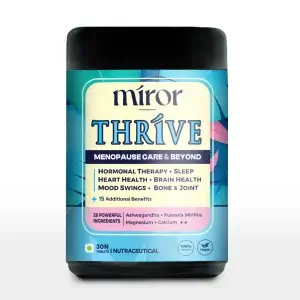
In postmenopause, deeper changes in metabolism, recovery, and tissue health emerge. Miror Thrive is designed to support hormonal balance, energy systems, and long term resilience, working alongside medical treatment rather than replacing it.
This integrated approach allows women to experience not just symptom relief, but sustained wellbeing.
You should seek medical guidance if:
• Symptoms are severe or persistent
• You are unsure which type of HRT is suitable
• You have history of blood clots, migraines, or metabolic conditions
Choosing between types of HRT is not something to guess. It is something to personalise.
(NIH).
HRT is not one treatment. It is a spectrum of choices. And within that spectrum lies the opportunity for precision, safety, and empowerment. The question is not simply whether to take hormone therapy. It is how to take it in a way that respects your body, your risks, and your life.
And while the science matters, so does support. Because navigating menopause is not just a medical journey, it is a deeply personal one.
Inside the Miror Community, thousands of women are learning, sharing, and receiving expert guidance through doctor sessions, conversations, and real, lived experiences. If you are exploring your options or simply trying to understand your body better, being part of a space that listens and guides can make all the difference.
Join here: https://tinyurl.com/mirorc3
The safest type of HRT depends on your individual risk profile. In many cases, transdermal estrogen such as patches and gels is preferred because it bypasses the liver and may carry a lower risk of blood clots compared to oral pills. However, the right choice should always be personalised with medical guidance.
The key difference between HRT pill vs patch lies in how the hormone is absorbed. Pills go through the liver before entering the bloodstream, which can affect metabolism and clotting factors. Patches deliver estrogen directly through the skin, providing more stable hormone levels and often fewer systemic risks.
Transdermal estrogen is often considered a safer option for many women, especially those with cardiovascular or metabolic risk factors. Because it bypasses first pass liver metabolism, it may reduce the impact on clotting pathways while providing steady hormone delivery. However, suitability varies based on individual health conditions.
Vaginal rings are typically recommended when symptoms are localised, such as vaginal dryness, irritation, or urinary discomfort. They provide low dose estrogen directly to the affected tissues with minimal systemic absorption, making them unsuitable for treating full body symptoms like hot flashes.
Choosing the right type of HRT depends on your symptoms, medical history, lifestyle, and risk factors. Factors such as clotting risk, metabolic health, and convenience all play a role. A personalised consultation with a menopause specialist can help determine whether pills, patches, gels, or rings are most appropriate.




 ×
×