

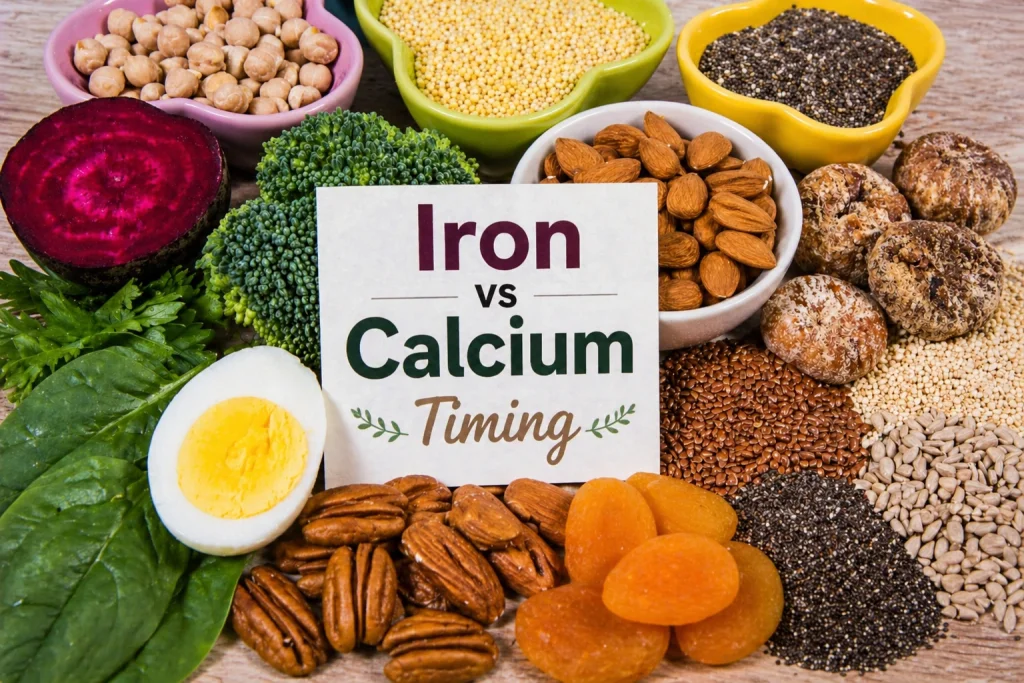
Iron vs calcium timing is one of the most common yet confusing questions I hear from women in their 40s.
“I’ve been told to take iron… and calcium too. But no one really explained how.”
It sounds simple. But the way these nutrients interact inside the body is where the confusion begins.
During midlife, your nutritional needs shift quietly. Iron becomes important due to fatigue, low stores, or ongoing cycles. Calcium steps in for bone health as hormonal changes begin.
And when both enter your routine together, understanding iron vs calcium timing becomes essential—not complicated, just intentional.
Why Iron and Calcium Timing Matters in Midlife?
In your 40s, your body doesn’t demand more complexity; it needs better timing.
Iron supports energy levels and oxygen transport
Calcium supports bone strength and long-term skeletal health
Hormonal fluctuations can influence how both are absorbed
The challenge? When taken together, iron and calcium compete for absorption.
(ScienceDirect).
What Happens When You Take Iron and Calcium Together?
Iron and calcium use similar pathways in the gut.
So when you take them at the same time:
👉 Iron absorption may decrease
👉 Calcium absorption remains relatively stable
Iron vs Calcium Absorption: Quick Overview
| Nutrient | Absorption Sensitivity | Best Practice |
|---|---|---|
| Iron | High | Take separately, with Vitamin C |
| Calcium | Moderate | Take with food |
(Health).
6 Smart Iron vs Calcium Timing Tips
1. Separate Iron and Calcium by 2–3 Hours:
This is the single most effective change.
👉 Avoid taking iron and calcium together
👉 A small gap improves iron absorption significantly
2. Take Iron With Vitamin C:
Vitamin C enhances iron absorption.
Simple options:
Lemon water
Citrus fruits
Amla
3. Avoid Tea and Coffee Around Iron:
Tea and coffee can reduce iron absorption. Keep a gap of at least 1 hour before or after iron supplements
4. Take Calcium With Meals:
Calcium is better absorbed with food. Lunch or dinner works well for most women
5. Choose a Routine You Can Stick To:
There’s no “perfect” time. Only sustainable one.
Example:
Iron mid-morning
Calcium in the evening
6. Adjust Based on Your Comfort:
Iron on an empty stomach improves absorption, but not everyone tolerates it. If needed, take it after a light meal. Consistency matters more than perfection.
What a Simple Daily Routine Looks Like
| Time | Supplement |
|---|---|
| Mid-morning | Iron (away from tea/coffee) |
| Evening | Calcium (with food) |
Even following this most days, even imperfectly, makes a huge difference.
Food Still Plays a Role in Nutrient Absorption
Even with supplements, food matters.
Iron-Rich Foods:
Lentils
Spinach
Dates and jaggery
Eggs
Calcium-Rich Foods:
Dairy
Ragi
Sesame seeds
Leafy greens
Remember, you don’t need to separate these foods strictly. The interaction matters more in supplement form.
Common Mistake: Taking More Than Needed
More is not always better.
Excess iron can cause discomfort
Excess calcium over time may not be beneficial
👉 The goal is balance, not excess
A Simpler Way to Understand Iron vs Calcium Timing
This doesn’t have to feel like a list of rules.
Iron and calcium don’t work against each other. They just need space.
Once you understand iron vs calcium timing, your routine becomes simpler and your body responds better.
(InStrength).
Where Practical Guidance Makes a Difference
At Miror, this is something we hear often.
Not confusion about what to take, but how to take it in a way that fits real life.
Inside the Miror community, the focus is always on:
Practical nutrition
Real routines
Sustainable changes
Because midlife health doesn’t need perfection. It needs clarity.
Final Thought
Iron and calcium are both essential. They don’t compete in a harmful way, only in timing.
And once you adjust that, your body is able to make the most of both.
FAQs
Iron vs calcium timing matters because both nutrients use similar absorption pathways in the gut. When taken together, calcium can reduce how much iron your body absorbs. Over time, this can affect energy levels and iron stores, especially in midlife women who may already be borderline deficient.
Yes, you can take both on the same day—but not at the same time. Keeping a gap of at least 2 to 3 hours allows your body to absorb iron more effectively without interference from calcium.
To improve iron absorption, take your iron supplement with a source of vitamin C, like lemon water or citrus fruits. At the same time, avoid tea or coffee around your iron dose, as they can significantly reduce absorption.
Calcium is best taken with meals, as food helps improve its absorption. Many women find it easiest to take calcium with lunch or dinner, especially if iron is being taken earlier in the day.
Not usually. The interaction between iron and calcium is more significant when they are taken as supplements in concentrated doses. With regular meals, your body generally manages absorption more efficiently.