

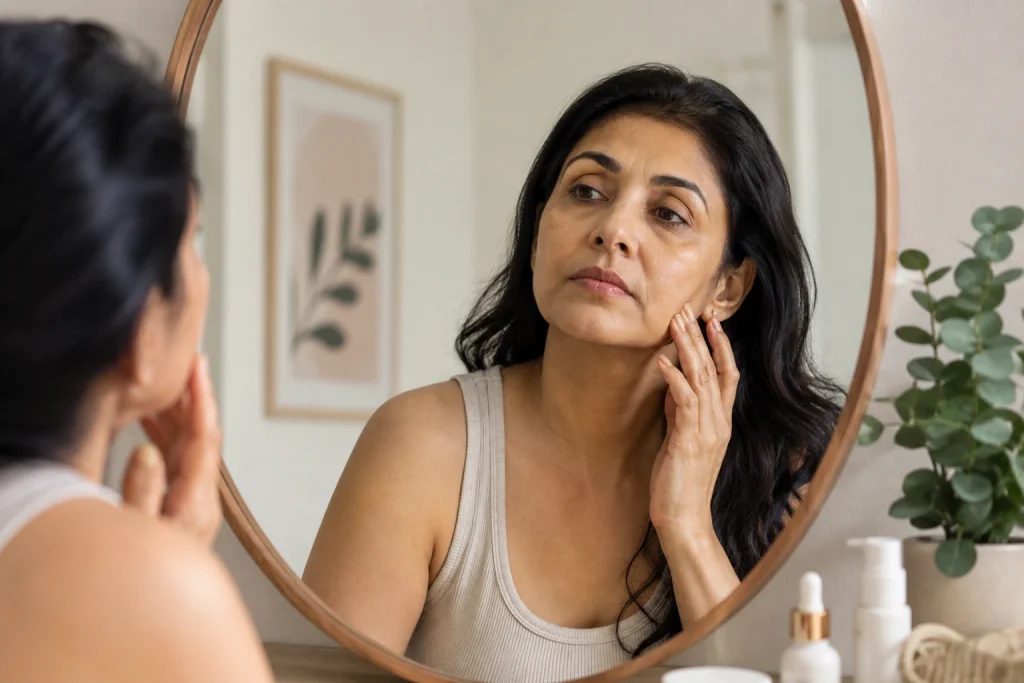
Many women are surprised by how dramatically their skin can change during perimenopause and menopause. Skin that once felt resilient and hydrated may suddenly become drier, more sensitive, less firm, or appear to age more rapidly, even when skincare routines remain unchanged.
These menopause skin changes are extremely common and are often linked to hormonal shifts occurring beneath the surface. While skincare products can certainly help, understanding the underlying relationship between hormones, nutrition, lifestyle, and skin health provides a much more complete picture.
As women move through menopause, changes in estrogen levels influence multiple systems throughout the body, including the skin. The good news is that while these changes are natural, there are practical and evidence-informed ways to support healthy skin during this transition.
What Are Menopause Skin Changes?
Menopause skin changes refer to the alterations in skin texture, hydration, elasticity, sensitivity, and appearance that commonly occur as hormone levels decline during perimenopause and menopause.
Common skin changes during menopause include:
1. Dryness
Many women notice that their skin feels tighter, rougher, or more dehydrated than before. This is one of the most frequently reported menopause skin concerns.
2. Fine Lines and Wrinkles
As collagen levels decline, the skin may become thinner and less resilient, making fine lines and wrinkles more noticeable.
3. Reduced Firmness
Skin may lose some of its natural elasticity, contributing to sagging or a less defined appearance around the face, jawline, and neck.
4. Increased Sensitivity
Products that were previously well tolerated may suddenly cause irritation. Some women experience increased redness, itching, or reactivity.
5. Dullness
Reduced cell turnover and changes in skin structure can leave the complexion looking less radiant and vibrant.
While these changes can feel sudden, they are often the visible result of deeper physiological shifts occurring during menopause.
The Estrogen-Skin Connection
When discussing menopause and skin health, estrogen plays a central role.
Estrogen influences multiple aspects of skin function and appearance, helping maintain strength, hydration, and elasticity throughout the reproductive years.
Estrogen and Collagen Production
Collagen is the primary structural protein that helps keep skin firm and resilient.
Research suggests that collagen loss accelerates during the menopausal transition, with significant reductions occurring in the years following menopause. As collagen levels decline, skin becomes thinner, less elastic, and more prone to wrinkles.
This relationship between estrogen and skin explains why many women notice visible skin ageing even when their skincare routine has remained consistent.
Estrogen and Hydration
Estrogen also supports the skin’s ability to retain moisture.
As hormone levels decline, the skin’s natural water content may decrease, contributing to dry skin during menopause. Reduced hydration can make skin feel rougher and may accentuate the appearance of fine lines.
Estrogen and Elasticity
Elastic fibers help skin stretch and bounce back.
Lower Estrogen levels can affect these structural components, contributing to reduced firmness and increased skin laxity over time.
Estrogen and Barrier Function
The skin barrier acts as a protective shield against environmental stressors while helping retain moisture.
Hormonal changes may compromise barrier function, making skin more vulnerable to irritation, sensitivity, and dryness.
While declining estrogen is a major contributor to menopause skin changes, it is only one part of the story.
Why Skin Health Is More Than Skin Deep
- Skin often reflects what is happening internally.
Although hormonal changes are important, skin ageing during menopause is also influenced by broader health and lifestyle factors.
- Inflammation and Oxidative Stress
Chronic low-grade inflammation and oxidative stress can accelerate visible signs of ageing. Factors such as poor diet quality, smoking, excess alcohol consumption, and chronic stress may contribute to these processes.
- Sleep Quality
Sleep is one of the body’s most important recovery mechanisms.
Poor sleep can affect skin repair, hydration, and overall appearance. Many women experience sleep disturbances during menopause, which may indirectly influence skin health.
- Stress
Stress affects hormonal balance, immune function, and inflammatory pathways.
Persistent stress can contribute to skin sensitivity, dullness, and premature ageing while also affecting overall wellbeing.
- Nutrition
Skin cells require a steady supply of nutrients to support repair, renewal, and structural integrity.
Dietary patterns that support overall health may also help support healthier skin throughout menopause.
Rather than viewing skin as an isolated organ, it is helpful to recognize that it often reflects the combined effects of hormones, lifestyle, and overall health status.
Supporting Skin Through Nutrition and Lifestyle
While no single food or product can prevent menopause skin changes, daily habits can have a meaningful impact on long-term skin health. Supporting menopause skin and overall wellbeing starts with the fundamentals. Adequate protein provides the building blocks needed for tissue maintenance and repair throughout the body, including the skin, yet many midlife women consume less than they realize. Healthy fats help support skin barrier function and cell membrane integrity, while a variety of colourful plant foods provide compounds that support the body’s natural defenses against oxidative stress. Hydration also remains important, supporting numerous physiological processes that contribute to skin health, even though simply drinking more water is not a cure for dry skin during menopause. Equally important are lifestyle factors such as sleep and stress management. Consistent, restorative sleep supports recovery, hormonal regulation, and healthy ageing, while sustainable stress-management practices such as movement, mindfulness, spending time outdoors, and meaningful social connection can positively influence both overall wellbeing and skin health. Many women I work with focus entirely on skincare products while overlooking the impact of nutrition, sleep, and stress on skin health. Often, meaningful improvements begin when these foundational areas are addressed alongside appropriate skincare.
Topical Skincare vs Internal Health: Which Matters More?
This is not an either-or situation.
Topical skincare can play an important role in supporting skin hydration, protecting the skin barrier, and improving comfort and appearance.
However, even the most sophisticated skincare products cannot fully compensate for poor sleep, chronic stress, inadequate nutrition, or broader health challenges.
A balanced approach recognizes that:
– Skincare supports the skin from the outside.
– Nutrition and lifestyle support the skin from the inside.
– Both work best together.
Rather than searching for a single miracle product, focusing on consistent daily habits often produces the most meaningful long-term results.
What I Commonly See in Practice
In clinical practice, several themes appear repeatedly among women experiencing menopause skin changes.
Many assume that rapid skin ageing is simply an unavoidable consequence of getting older and that nothing can be done to support skin health.
Others have spent years following restrictive diets that leave them undernourished, particularly when it comes to adequate protein intake.
High stress loads are also incredibly common. Women are often balancing careers, caregiving responsibilities, family demands, and personal health concerns simultaneously.
I also frequently see unrealistic expectations around skincare products. Marketing messages can create the impression that a single cream, serum, or supplement can reverse complex biological processes.
In reality, healthy skin is usually supported through a combination of good nutrition, restorative sleep, stress management, regular movement, and evidence-based skincare practices.
The goal is not perfection. The goal is supporting healthy ageing and helping women feel confident and well in their skin.
A More Empowering Approach to Menopause Skin Changes
Menopause skin changes are a normal part of the menopausal transition, but they can still be frustrating and unexpected.
Declining Estrogen affects collagen production, hydration, elasticity, and barrier function, helping explain many of the skin changes women experience during this stage of life.
At the same time, skin health is influenced by far more than hormones alone. Nutrition, sleep, stress management, hydration, and overall lifestyle all play important roles in how skin ages and functions.
Rather than pursuing unrealistic anti-ageing promises, a more empowering approach is to focus on healthy ageing, supporting the body as a whole, and creating sustainable habits that promote long-term wellbeing.
When women understand the connection between menopause, hormones, nutrition, and lifestyle, they are better equipped to make choices that support both their skin and their overall health.
Looking for more guidance? Download the MIROR app for expert-led education, practical wellness tools, and ongoing support designed to help women better understand and support their health.
FAQs
Yes. Many women experience anxiety for the first time during perimenopause or menopause. Fluctuating estrogen levels, disrupted sleep, increased stress sensitivity, and changes in brain chemistry can all contribute. Experiencing anxiety during this stage does not necessarily indicate an anxiety disorder—it is often linked to the hormonal and physiological changes occurring during the menopause transition.
Menopause anxiety can present in many different ways. Some women experience constant worrying, racing thoughts, irritability, or feeling overwhelmed by everyday situations. Others notice physical symptoms such as a racing heart, muscle tension, restlessness, or panic-like sensations. Symptoms vary from person to person and may fluctuate alongside hormonal changes.
It can be. Anxiety often feels more intense at night because there are fewer distractions, and symptoms such as hot flushes, night sweats, or insomnia may disrupt sleep. Poor sleep can increase emotional reactivity and make anxious thoughts feel more overwhelming the following day.
Nutrition plays an important role in supporting overall brain and nervous system health. Eating balanced meals that include adequate protein, healthy fats, fiber, and a variety of whole foods may help support stable energy levels, healthy blood sugar regulation, and emotional wellbeing. While food is not a cure for anxiety, it forms an important part of a comprehensive menopause wellness plan.
Several nutrients contribute to healthy nervous system function, including magnesium, omega-3 fatty acids, B vitamins, and zinc. These nutrients support neurotransmitter production, energy metabolism, and healthy stress responses. A food-first approach is generally recommended before considering supplements.