
“Why Am I Suddenly So Anxious?”
You may have handled stress all your life.
Deadlines. Children. Marriage. Parents. Work pressure. Family expectations. The emotional labour of being the woman who remembers everything.
And then, somewhere in your late 30s or 40s, anxiety begins to feel different.
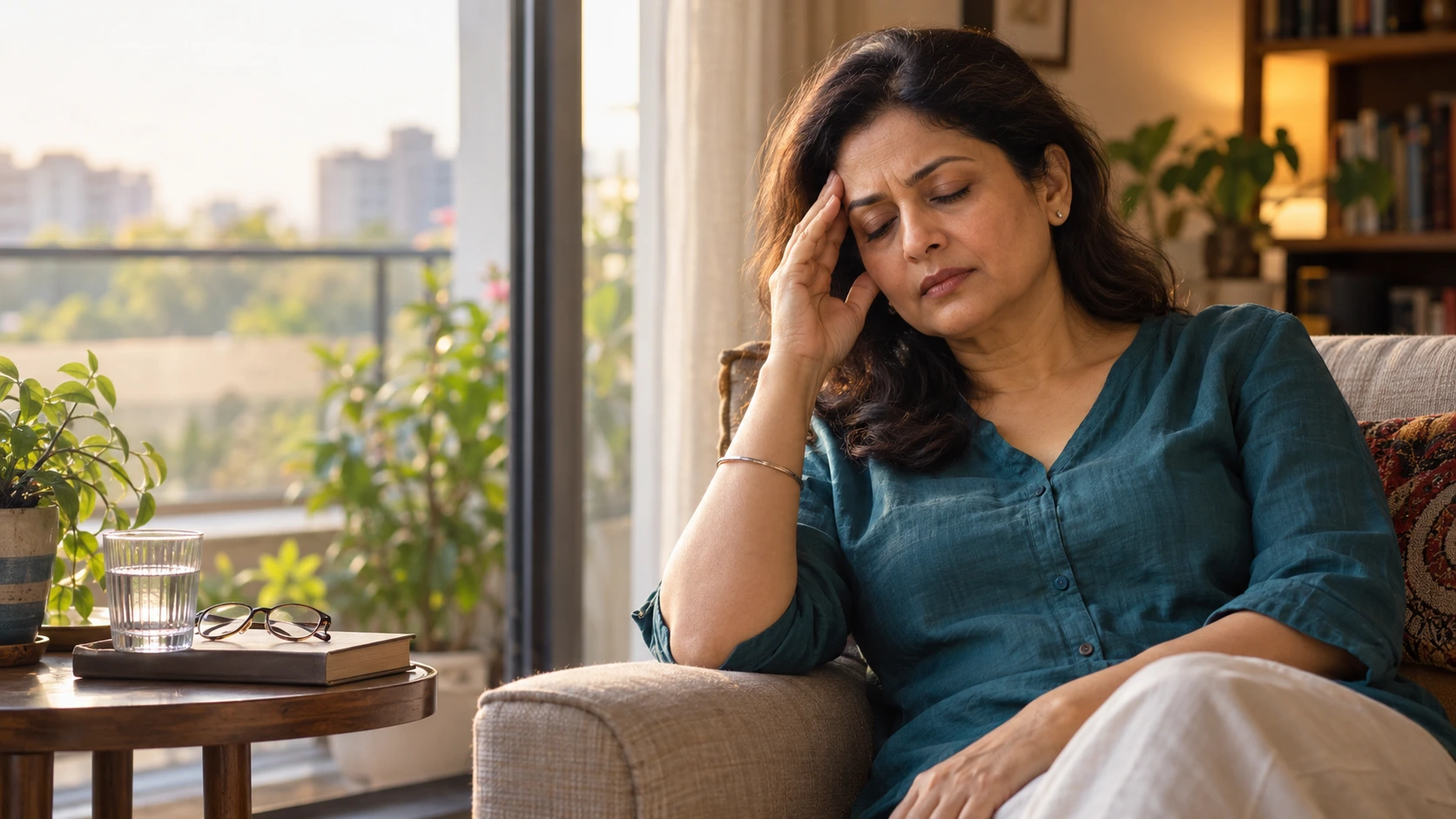
It may come as a racing heart at night. A sudden sense of dread. A tight chest. Restlessness. Irritability. A feeling that something is wrong, even when nothing obvious has happened.
This is where many women quietly wonder:
Is this anxiety, or is this perimenopause?
The answer may be both.
Menopause anxiety is not “just stress.” It can be shaped by hormonal changes, sleep disruption, nervous system sensitivity, midlife responsibilities and emotional history. The Menopause Society notes that mood symptoms can be related to estrogen swings during perimenopause, and that women may be vulnerable to mood concerns around this transition.
This blog explains why anxiety during menopause can feel so different, and when to seek support.
What Is Menopause Anxiety?
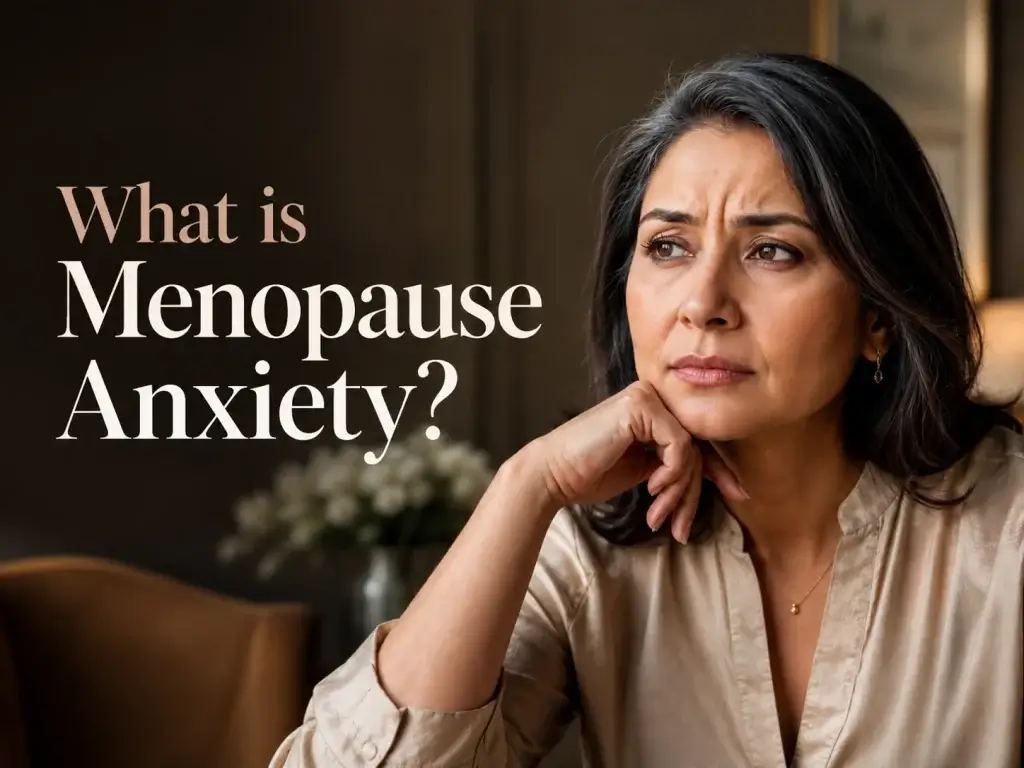
Menopause anxiety refers to anxiety that begins, worsens or feels different during perimenopause, menopause or postmenopause.
It may show up as:
Constant worry
Sudden panic-like feelings
Racing heart
Chest tightness
2 AM waking with dread
Irritability
Overthinking
Feeling unsafe without knowing why
Sensitivity to noise, people or pressure
Difficulty calming down
Anxiety disorders are among the most common mental disorders globally, and anxiety can involve psychological and physical symptoms such as fear, tension and nervous system overactivation.
But menopause anxiety has its own texture. It can feel more physical, more sudden and more confusing than earlier anxiety.
(Cleveland Clinic).
Menopause Anxiety vs Everyday Stress
| Everyday Stress | Menopause Anxiety |
|---|---|
| Often linked to a clear problem | May arrive without a clear trigger |
| Improves after rest or problem-solving | May persist even when nothing is “wrong” |
| Feels mental or emotional | Often feels physical too |
| Responds to usual coping tools | Usual tools may feel less effective |
| Comes and goes with situations | May follow sleep, cycle or hormonal patterns |
7 Powerful Reasons Menopause Anxiety Feels So Different
1. Your Brain Is Responding to Hormonal Fluctuations
Perimenopause is not just a period transition. It is also a brain transition.
Estrogen and progesterone interact with systems involved in mood, sleep, calm and emotional regulation. When these hormones fluctuate, the nervous system may feel less steady.
This is why some women say, “I do not feel like myself.”
They are not being dramatic. Their emotional regulation system may be working under new biological conditions.
2. Anxiety May Arrive Without a Clear Reason
Earlier anxiety often has a subject.
A deadline. A conflict. A health report. A financial worry.
But anxiety during menopause may arrive as free-floating dread. There may be no clear thought behind it.
This can be deeply unsettling because the mind tries to find a reason. An Indian woman may scan everything: children, work, marriage, parents, domestic help, finances, health, food, sleep. Still, nothing fully explains the feeling.
That does not make the anxiety imaginary.
It may mean the body is sending an alarm before the mind has found a story.
3. The Symptoms Can Feel Very Physical
Many menopause anxiety symptoms are body-first.
Women may feel:
Heart racing
Chest tightness
Breathlessness
Sweating
Trembling
Stomach discomfort
Heat surges
Restless legs
A sense of panic in the body
This can be frightening because it may feel cardiac or medical. Any new chest pain, breathlessness, fainting, severe palpitations or unusual physical symptom should be medically assessed.
But when serious causes are ruled out, some women discover that their “body panic” is part of anxiety during menopause.
4. 2 AM Anxiety Becomes a Pattern
This is one of the most relatable signs.
A woman may wake at 2 AM or 3 AM with a pounding heart and racing thoughts. Nothing happened. No one called. No emergency. But the body feels as though something is wrong.
This may be linked to sleep disruption, night sweats, cortisol rhythm, poor recovery and hormonal changes.
Once sleep is broken, anxiety can worsen the next day. Then the next night becomes more fragile.
A simple pattern often appears:
| Night | Next Day |
|---|---|
| Broken sleep | Lower patience |
| Night sweats or waking | More emotional reactivity |
| Racing thoughts | Poor concentration |
| Early morning dread | More health anxiety |
| Fatigue | Less capacity to cope |
5. Your Nervous System May Feel More Sensitive
Many women say, “I cannot tolerate noise anymore.”
Or crowds. Or constant questions. Or too many WhatsApp messages. Or everyone needing something at the same time.
This is not always irritation. Sometimes it is nervous system overload.
During perimenopause, the body may feel less buffered against stimulation. The same home, same family, same workday and same responsibilities may suddenly feel harder to absorb.
For Indian women, this is especially important because many are expected to remain available emotionally, domestically and professionally, even when their own inner capacity is changing. Even certain clothing items or jewellery and accessories/creams or lotions/make-up products may suddenly feel uncomfortable which were never an issue earlier.
6. Usual Coping Tools May Not Work the Same Way
A woman may say:
“I tried breathing.”
“I tried walking.”
“I tried talking to a friend.”
“I tried distracting myself.”
“Nothing is working like before.”
This can make her feel like she is failing.
She is not.
The tools are not useless. But the foundation has changed. If anxiety is being amplified by poor sleep, hormone shifts, chronic stress and nervous system sensitivity, one coping tool may not be enough.
She may need a layered plan.
(ScienceDirect)
7. Midlife Anxiety Is Also Asking Deeper Questions
Not all menopause anxiety is purely biological.
Some of it may be psychological.
Perimenopause often arrives when a woman is carrying many invisible questions:
Who am I now?
What do I want from the second half of my life?
Why am I so tired of being strong?
Why does my body feel unfamiliar?
Why do I feel unseen, even when everyone needs me?
These questions are not “overthinking.” They are part of midlife identity work.
This is where therapy can help. Not just to reduce anxiety, but to understand what the anxiety is trying to say.
(NHS Inform)
What Can Help Menopause Anxiety?
| Support Option | How It May Help |
|---|
| Psychological therapy | Helps with fear patterns, identity shifts, boundaries and emotional regulation |
| Sleep support | Reduces anxiety amplification from poor recovery |
| Medical assessment | Helps check hormones, thyroid, anaemia, vitamin deficiencies or cardiac concerns |
| Movement | Supports mood, stress regulation and body confidence |
| Breathing and grounding | Helps the nervous system downshift during activation |
| Community support | Reduces isolation and shame |
It is recommended to start considering HRT for depressive symptoms that do not meet the criteria for depression and start around the same time as other menopause symptoms, but HRT is not a replacement for mental health care when an anxiety disorder or depression is present.
(TBM)
When Should You Seek Help?
Please seek support if anxiety:
Lasts more than two weeks
Affects sleep, work or relationships
Causes panic attacks
Makes you avoid daily activities
Feels physically frightening
Comes with low mood or hopelessness
Makes you feel unlike yourself
Makes you feel unsafe
You do not need to wait until crisis. Early support is care, not weakness.
What to Ask at a Consultation?
| Ask This | Why It Helps |
|---|---|
| “Could this be perimenopause anxiety?” | Opens the hormonal conversation |
| “Could this be an anxiety disorder?” | Opens the mental health assessment |
| “Should we check thyroid, iron, B12 or vitamin D?” | Rules out overlapping causes |
| “Is sleep making this worse?” | Identifies a major anxiety amplifier |
| “Would therapy help?” | Supports emotional and nervous system care |
| “Do I need psychiatric support?” | Important for severe or persistent symptoms |
Where Miror Thrive Can Truly Help
At Miror, we understand that menopause anxiety is not separate from the body, the mind or the life a woman is living. Miror supports women through expert-led care, gynaecologists, psychologists, community support and guided wellness conversations.
Miror Thrive is designed to support women navigating post-menopause, including sleep, mood, hot flashes, menstrual discomfort and hormonal wellness.
It is not a treatment for anxiety disorders, panic disorder, clinical depression, trauma or suicidal thoughts. It does not replace therapy, psychiatric care, medical evaluation or prescribed treatment.
Thrive can be part of a broader wellness routine alongside sleep care, nutrition, movement, therapy, doctor guidance and community support.
Remember
Menopause anxiety is real.
It is not weakness.
It is not “too much thinking.”
It is not a failure to cope.
It may be your nervous system asking for support during a transition your body was never meant to navigate in silence.
You deserve care that sees the full picture.
Your hormones.
Your sleep.
Your stress.
Your story.
And you deserve to feel steady again.
Medical Disclaimer
This article is for educational purposes only. It does not provide a diagnosis, treatment plan or replacement for psychological, psychiatric or medical care. If anxiety is severe, persistent, affecting daily life or accompanied by panic attacks, depression, hopelessness or thoughts of self-harm, please seek professional help promptly.
FAQs
Menopause anxiety refers to anxiety that begins, worsens or feels different during perimenopause, menopause or postmenopause. It may feel like sudden dread, racing thoughts, irritability, panic-like symptoms, sleep disruption, emotional overwhelm or a nervous system that feels harder to calm.
Common menopause anxiety symptoms may include a racing heart, chest tightness, breathlessness, 2 AM waking, overthinking, restlessness, panic-like feelings, sensitivity to noise, irritability and feeling unsafe without a clear reason. Any new or severe physical symptom should be medically assessed.
Anxiety during menopause can feel different because hormonal shifts, poor sleep, stress, cortisol changes and nervous system sensitivity may overlap. Many women say their usual coping tools do not work as well as before because the body and brain are moving through a new hormonal transition.
Yes, some women experience anxiety for the first time during perimenopause. This does not mean they are weak or suddenly unable to cope. Hormonal fluctuations, sleep disruption, midlife responsibilities and emotional load can make the nervous system feel more reactive than before.
Seek help if menopause anxiety lasts for more than two weeks, affects sleep, work, relationships or daily functioning, causes panic attacks, feels physically frightening or comes with low mood or hopelessness. A psychologist, psychiatrist, gynaecologist or menopause-aware clinician can help assess both the mental health and hormonal picture.