

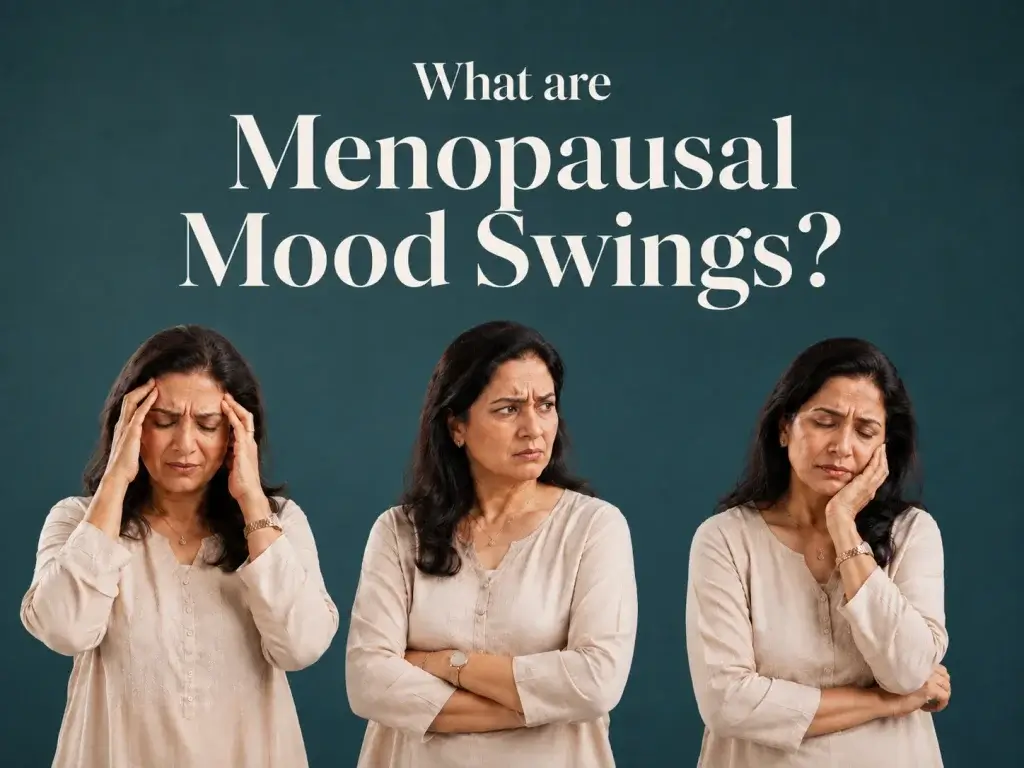
“Why Am I Reacting Like This?”
One moment, you are fine.
Calm. Capable. Present.
Then something small happens.
A tone of voice. A delayed reply. A child not listening. A partner asking one more question. A comment from a family member that should not matter so much.
And suddenly, the tears arrive before you decide to cry. The anger arrives before you can check whether it is proportionate. The hurt feels bigger than the moment. Then later, when the emotion passes, you wonder:
What happened to me?
This is why menopause mood swings can feel so frightening.
They do not only affect mood. They affect identity.
Many women say, “I was never like this.”
Or, “I feel like I am becoming someone else.”
Or, “I know I am overreacting, but I cannot stop it in the moment.”
As a psychologist, I want to begin here: mood swings during menopause are not a character flaw.
They are not weakness.
They are not drama.
They are not proof that you are “too much.”
They are often a sign that the brain, body and nervous system are moving through a major hormonal and emotional transition.
(MNT)
What Are Menopause Mood Swings?
Menopause mood swings are sudden, intense shifts in emotion that can happen during perimenopause, menopause or postmenopause.
They may include:
Sudden crying
Sudden anger
Irritability
Emotional sensitivity
Anxiety
Feeling easily hurt
Despair that passes quickly
Feeling calm one moment and overwhelmed the next
The key difference is intensity and speed.
A woman may know the trigger is small, but her emotional response feels much larger than expected. This gap between “what happened” and “how I reacted” can create shame.
But shame does not help regulation. Understanding does.
Why Do Mood Swings During Menopause Happen?
Mood swings during menopause are rarely caused by one thing.
They usually come from a combination of hormones, sleep, stress, nervous system sensitivity and life pressure.
Estrogen and progesterone interact with brain systems involved in mood stability, calm, sleep and emotional regulation. When these hormones fluctuate, emotional responses can feel less predictable.
At the same time, Indian women in midlife are often carrying a huge invisible load: children, ageing parents, work, marriage, household planning, personal as well as professional responsibilities, social expectations, health worries and the pressure to remain emotionally available to everyone.
So when mood swings appear, the question is not: “Why am I so emotional?”
The better question is: “What is my nervous system carrying, and why is it harder to regulate now?”
(Mirorpedia)
7 Powerful Ways to Understand and Regain Emotional Balance
1. Understand That Mood Swings Are Not “Overreacting”
The first step is removing the label of overreaction.
During menopause, emotional regulation can become more difficult because the brain’s usual calming systems may feel less steady. This means a woman may still be rational, self-aware and emotionally intelligent, but the emotional response arrives faster than her ability to regulate it.
That is why she may think, “I know this should not upset me so much,” while still feeling completely overwhelmed.
This is not irrationality. It is a nervous system under hormonal and emotional strain.
A more compassionate sentence is: “My response feels bigger than the moment because my system is already overloaded.”
2. Notice Your Mood Swing Pattern
Mood swings can feel random, but they often have patterns.
They may be worse:
Before a period
After poor sleep
During work stress
Around family conflict
When you are hungry
After alcohol or too much caffeine
During hot flashes or night sweats
When you feel unseen or unsupported
Tracking does not mean obsessing. It means gathering information.
| Track This | Why It Helps |
|---|---|
| Sleep quality | Poor sleep lowers emotional control. |
| Cycle timing | Mood may shift with hormonal changes. |
| Food and caffeine | Blood sugar and stimulants can affect irritability. |
| Hot flashes or night sweats | Physical symptoms can worsen emotional reactivity. |
| Stress triggers | Helps identify emotional overload. |
| Relationship patterns | Shows where old hurt may be surfacing. |
When women begin tracking, many realise: “I am not unpredictable. I am responding to patterns I had not seen before.”
3. Treat Sleep as Emotional Medicine
Sleep is not a luxury during menopause.
It is emotional regulation support.
When sleep is broken by night sweats, anxiety, early morning waking, pain or racing thoughts, the next day’s emotional threshold becomes much lower.
Small things feel bigger. Patience becomes thinner. Anger arrives faster. Tears sit closer to the surface.
This is why mood swings during menopause often improve when sleep is taken seriously.
Helpful first steps may include:
A consistent sleep and wake time
Reducing late caffeine
A cooler sleeping environment
Limiting alcohol close to bedtime
Reducing phone use before sleep
Seeking help for night sweats, anxiety or insomnia
If sleep disruption is persistent, it deserves clinical attention. It is not something women should simply “adjust to.”
4. Learn the Difference Between Mood Swings and Severe Mood Symptoms
Most menopause mood swings are distressing but manageable with the right support.
However, severe mood swings during menopause should never be dismissed.
| Mood Swings That May Be Menopause-Linked | Symptoms That Need Clinical Assessment |
|---|---|
| Sudden crying that passes | Low mood lasting most days for two weeks or more, severe enough to significantly affect daily life – deserves clinical assessment. |
| Irritability after poor sleep | Anger causing harm to relationships or safety. |
| Emotional sensitivity | Thoughts of self-harm or suicide. |
| Mood changes around cycle shifts | Racing thoughts, reduced need for sleep or impulsive behaviour. |
| Feeling overwhelmed but recovering | Symptoms affecting work, parenting or daily functioning. |
Please seek professional help if mood swings are severe, prolonged, frightening, or accompanied by hopelessness, self-harm thoughts, panic, reckless behaviour or complete emotional shutdown.
Menopause can explain some emotional changes, but it should not be used to ignore symptoms that need mental health care.
5. Use Pause Rituals Before Reacting
When emotions rise quickly, advice like “calm down” does not help.
The nervous system needs a bridge between impulse and response.
A pause ritual can help create that bridge.
Try this:
| Step | What to Do |
|---|---|
| Name it | “This is a mood wave.” |
| Ground it | Put both feet on the floor and drink some water. |
| Breathe out longer | Slow exhale signals safety to the body. |
| Delay response | Reverse count slowly from 10 to 1. |
| Return later | Leave the space, try one of the above options and come back after a while when calmed down. |
This is not about suppressing emotion.
It is about protecting yourself from reacting during the most intense part of the wave. A woman can still express anger, hurt or sadness. But she can do it from steadier ground.
6. Give the Emotion a Real Place to Go
Many women in midlife have spent decades managing their emotions for everyone else.
They stayed calm so the home stayed calm.
They softened their words so others would not feel bad.
They swallowed anger because there was too much to do.
They postponed sadness because someone else needed them.
For some women, this transition can also make emotions they have been managing for years harder to ignore.
This is where therapy can help deeply.
A psychologist can help a woman ask:
What am I actually angry about?
What hurt have I normalised for too long?
Where am I exhausted from being “the strong one”?
What boundary has my mood been trying to protect?
What part of me needs care, not control?
Sometimes emotional balance does not come from becoming calmer.
It comes from becoming more honest.
7. Build a Support Plan, Not Just Coping Tricks
Menopause mood swings need more than random tips. They need a support plan:
| Support Area | Why It Matters |
|---|---|
| Psychological therapy | Helps with emotional regulation, identity shifts, boundaries and self-understanding |
| Medical review | Helps assess perimenopause, sleep, thyroid, deficiencies, pain or other contributors |
| Movement | Supports mood, sleep and stress regulation |
| Nutrition and blood sugar care | Helps reduce irritability linked to energy dips |
| Community support | Reduces shame and isolation |
| Hormonal guidance where appropriate | May be relevant when symptoms clearly align with perimenopause |
| Rest and boundaries | Reduces the overload that amplifies mood swings |
No single solution works for every woman.
But the right combination can help her feel more like herself again.
What Can Help Menopause Mood Swings?
| What Helps | How It Supports Emotional Balance |
|---|---|
| Talk therapy focused on thoughts and emotions | Helps with thoughts, emotional patterns and acceptance of transition |
| Skills for managing intense emotions and relationships | Useful for intense emotion, distress tolerance and interpersonal conflict |
| Sleep support and rest routines | Raises emotional resilience |
| Breathing and grounding | Helps calm the body during emotional activation |
| Medical assessment | Rules out thyroid, anaemia, vitamin deficiencies or hormonal contributors |
| Supportive relationships | Helps the nervous system feel less alone |
| Reducing invisible load | Lowers chronic stress and emotional overwhelm |
(TMHC)
Where Miror Fits In Perfectly?
At Miror, we understand that menopause mood swings are not just “moodiness.” They can affect confidence, marriage, parenting, work, friendships and a woman’s sense of self.
Miror Thrive is designed to support women in post-menopause, focusing on long-term emotional wellbeing, sleep, metabolic balance and overall quality of life after the menopausal transition. Miror Bliss is designed to support women navigating perimenopause, including sleep, mood, hot flashes, menstrual discomfort and hormonal wellness.
NOTE: Neither Thrive nor Bliss is a treatment for clinical depression, bipolar disorder, anxiety disorders, trauma, severe mood dysregulation or suicidal thoughts. It does not replace therapy, psychiatric care, medical evaluation or prescribed treatment.
They can be part of a broader wellness routine alongside sleep care, nutrition, movement, therapy, doctor guidance, community support and clinical assessment where needed.
For personalised support, you can also consult Miror psychologists and mental health experts to understand whether your mood swings may be linked to perimenopause, burnout, anxiety, depression, sleep disruption, relationship stress or emotional overload.
A Final Word
You are not too much.
You are not weak.
You are not becoming someone unrecognisable.
You may be moving through a transition that is affecting your hormones, your sleep, your nervous system, your identity and your emotional capacity all at once.
The woman you know is still there.
She may simply need more support than she has been allowed to ask for. Menopause mood swings deserve understanding, not shame.
And emotional balance is not gone.
It may just need to be rebuilt differently.
Medical Disclaimer
This article is for educational purposes only. It does not provide a diagnosis, treatment plan or replacement for psychological, psychiatric, neurological or medical care. If mood swings are severe, persistent, affecting daily functioning, harming relationships or accompanied by thoughts of self-harm, please seek professional help promptly. If you feel unsafe or at immediate risk, contact emergency services or a crisis helpline in your location.
FAQs
Menopause mood swings are sudden and intense emotional changes that can happen during perimenopause, menopause or postmenopause. They may include crying easily, irritability, anger, anxiety, emotional sensitivity or feeling overwhelmed by small triggers.
Mood swings during menopause can happen because hormonal changes may affect sleep, mood regulation, nervous system sensitivity and emotional resilience. Stress, poor sleep, family pressure, work responsibilities and the invisible load many women carry can also make mood swings feel stronger.
Severe mood swings menopause symptoms should not be ignored. If mood changes last for days, affect work or relationships, cause intense anger, panic, hopelessness, impulsive behaviour or thoughts of self-harm, a psychologist, psychiatrist, gynaecologist or menopause-aware clinician should assess them.
Menopause mood swings may improve with better sleep support, regular movement, balanced meals, reduced caffeine or alcohol, breathing and grounding techniques, emotional tracking, therapy and stronger boundaries around stress. However, persistent or severe symptoms need professional support.
You should consult a psychologist if mood swings during menopause feel hard to control, create guilt or shame, affect relationships, interfere with work, make you feel unlike yourself or come with anxiety, burnout, depression or emotional shutdown. A Miror psychologist can help you understand whether your mood swings are linked to perimenopause, stress, sleep disruption or deeper emotional overload.