

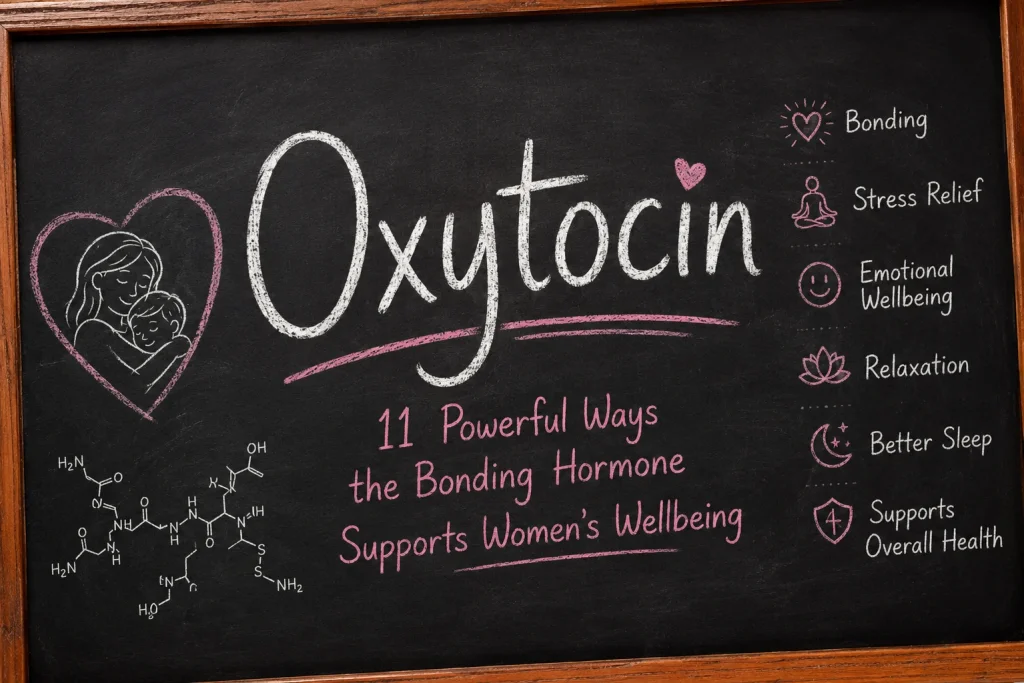
Oxytocin is often called the love hormone.
It is the hormone people associate with hugs, closeness, childbirth, breastfeeding, romance and the tender feeling of being connected to someone safe. But that nickname tells only part of the story.
Oxytocin is not just about love. It is also about trust, bonding, social safety, stress recovery, emotional warmth, maternal health and the body’s ability to feel calm in the presence of connection.
For women, this matters deeply. Across life stages such as motherhood, caregiving, perimenopause and menopause, oxytocin interacts with stress, sleep, hormones, relationships and emotional wellbeing. It does not work like a magic happiness button. It works more like a biological signal of safety.
When a woman feels connected, supported, touched with care, emotionally held and socially safe, oxytocin can become part of the body’s recovery language.
What Is Oxytocin?
Oxytocin is a hormone and neuropeptide made in the hypothalamus and released into the bloodstream by the posterior pituitary gland. It also acts within the brain, where it influences social behaviour, emotional processing, bonding and stress response.
Its most well known physical roles are:
| Oxytocin Role | What It Does |
|---|---|
| Labour and childbirth | Helps stimulate uterine contractions |
| Breastfeeding | Helps trigger milk letdown |
| Parent infant bonding | Supports closeness and caregiving behaviour |
| Social bonding | Plays a role in trust, attachment and connection |
| Stress response | May help the body calm through social safety signals |
Oxytocin is not a “female only” hormone. Men have it too. But women often experience oxytocin in close connection with reproductive life stages, caregiving, social bonds and estrogen related hormonal transitions.
11 Powerful Ways Oxytocin Supports Women’s Wellbeing
1. Oxytocin Helps the Body Bond
Oxytocin is deeply involved in bonding, especially during birth, breastfeeding, caregiving, physical affection and close relationships.
But bonding is not only romantic. It can happen between mother and baby, close friends, sisters, partners, caregivers, pets and trusted communities.
This is why oxytocin is better understood as a bonding hormone, not simply a love hormone.
2. Oxytocin Supports Childbirth and Breastfeeding
Oxytocin has a clear medical role in reproductive health.
During labour, it helps the uterus contract. During breastfeeding, it helps milk move through the breast tissue so the baby can feed.
This is one of the reasons oxytocin is so central to women’s health. It is involved not only in emotion, but also in some of the most physically powerful transitions in a woman’s body.
3. Oxytocin Helps Women Feel Safe in Connection
Oxytocin is strongly linked with social safety.
A warm hug, a trusted conversation, holding hands, sitting with someone who truly listens, or being comforted by a loved one can all send the nervous system a message: you are not alone.
This matters because the body does not recover well when it constantly feels unsafe. Emotional safety is not softness. It is biology.
4. Oxytocin May Help Buffer Stress
Stress is usually discussed through cortisol and adrenaline. But connection can also shape how the body responds to stress.
Oxytocin is part of the body’s social stress response. When women seek support, care for loved ones, or connect with safe people during stress, oxytocin may help regulate the nervous system and soften the intensity of the stress response.
This does not mean connection removes problems. It means connection can help the body carry them differently.
5. Oxytocin Is Context Sensitive
This is one of the most important scientific points.
Oxytocin does not make people trust everyone. It does not automatically make all relationships healthy. Its effects depend on context, memory, safety, attachment history and the quality of the relationship.
In a safe relationship, oxytocin may support closeness and trust. In an unsafe or unpredictable relationship, the nervous system may remain guarded.
So the goal is not just “more oxytocin.” The goal is safer, healthier connection.
6. Oxytocin and Estrogen Can Interact
Estrogen and oxytocin are connected in complex ways.
Estrogen may influence oxytocin receptors and sensitivity in certain brain and reproductive tissues. This is one reason hormonal transitions such as perimenopause and menopause may affect how women experience emotional warmth, intimacy, stress recovery and connection.
When estrogen fluctuates or declines, sleep, mood, anxiety, hot flashes and emotional regulation can also shift. Oxytocin is only one part of this picture, but it belongs in the conversation.
7. Oxytocin May Support Emotional Regulation
Women often describe feeling calmer after a meaningful conversation, a hug, a prayer circle, a group class, a walk with a friend or time with a pet.
That is not imagination. Social connection can influence the nervous system.
Oxytocin may be one of the signals that helps the body move from guardedness to softness, from isolation to connection, from threat to trust.
8. Oxytocin Is Linked With Touch
Touch is one of the most direct ways humans communicate safety.
Hugs, holding hands, cuddling, massage, affectionate touch and mother baby skin contact can all support oxytocin release in the right context.
But consent and comfort matter. Touch is only regulating when it feels safe and welcome.
For women who feel touch deprived, emotionally distant or overwhelmed, gentle forms of safe physical connection may be deeply nourishing.
9. Oxytocin May Influence Pain and Comfort
Oxytocin is being studied for its role in pain regulation and comfort.
Many women intuitively know that pain feels worse when they are scared and easier to bear when they feel supported. This is not just emotional. Pain, fear and social safety are linked inside the nervous system.
Support does not replace medical treatment for pain. But care, reassurance and connection can shape how pain is experienced.
10. Oxytocin Supports Social Health
Social health is health.
Loneliness, chronic conflict and emotional isolation can affect mood, sleep, stress and overall wellbeing. Oxytocin reminds us that humans are not built to recover in isolation.
For women, social health may include:
| Oxytocin Supportive Connection | What It May Look Like |
|---|---|
| Trusted friendship | Honest conversation without performance |
| Partner connection | Warmth, touch, respect and emotional safety |
| Community | Belonging and shared experience |
| Family care | Support that is mutual, not one sided |
| Pet bonding | Comfort, routine and affection |
| Group rhythm | Singing, dancing, prayer, movement or shared meals |
This is especially relevant in midlife, when friendships may thin, caregiving increases and women often carry more emotional labour than they receive.
11. Oxytocin Reminds Women That Connection Is Not a Luxury
Many women treat connection like something optional, something to fit in after work, family, chores and responsibility.
But connection is part of wellbeing.
Meaningful relationships, emotional safety, touch, community and feeling seen can help regulate stress, support mood and restore a woman’s sense of belonging.
This is not dependency. It is human design.
(PMC).
Signs Your Oxytocin System May Need Support
There is no routine clinical test women usually take to diagnose “low oxytocin.” So this section is not for self diagnosis.
Instead, think of these as signs that your social and emotional support systems may need attention:
| What You May Notice | What It May Suggest |
|---|---|
| Feeling emotionally distant | Need for safer connection |
| Difficulty trusting people | Past hurt, stress or lack of safety |
| Persistent loneliness | Need for meaningful social support |
| Feeling unsupported in stress | Weak stress buffering system |
| Touch deprivation | Need for safe, consensual affection |
| Poor sleep during emotional stress | Nervous system overload |
| Increased irritability | Emotional depletion or burnout |
| Feeling numb after socialising | Too much performance, not enough safety |
These patterns can also overlap with anxiety, depression, trauma, perimenopause, menopause, thyroid imbalance, low iron, sleep disorders and chronic stress. If symptoms are persistent or distressing, professional support matters.
How to Support Oxytocin Naturally?
1. Build One Safe Relationship Deeper
Oxytocin responds better to safety than to social volume.
One trusted friend, therapist, partner, sister, community member or support group can matter more than a packed social calendar.
2. Use Safe Touch Intentionally
Try a long hug, holding hands, massage, cuddling with a pet or gentle self massage. The key is safety and comfort.
3. Spend Time With People Who Regulate You
Notice who leaves you calmer, not smaller. The body knows the difference.
4. Join Shared Rhythm Activities
Singing, dancing, yoga, walking groups, prayer, shared meals and group movement can create bonding through rhythm and synchrony.
5. Reduce Chronic Conflict Where Possible
Emotionally unsafe relationships can keep the nervous system on alert. Boundaries are not emotional distance. They are nervous system protection.
6. Care for Sleep and Hormones
In perimenopause and menopause, sleep disruption, hot flashes, mood swings and anxiety can make connection feel harder. Medical support, sleep care and stress recovery can help.
(Healthline).
Where Miror Bliss Fits In
Miror Bliss is designed for women navigating perimenopause, when sleep, mood, hot flashes, menstrual discomfort, emotional steadiness and hormonal rhythm may begin to change.
Bliss does not “increase oxytocin” and should not be positioned as a treatment for loneliness, anxiety, depression or relationship stress. But for women whose emotional wellbeing is affected by perimenopause symptoms, Miror Bliss can support the broader wellness foundation.
Its 18 ingredient formulation includes magnesium glycinate, shatavari, lodhra bark and ashwagandha, created to support sleep, mood, hot flashes, menstrual discomfort and hormonal wellness during the transition.
The real support is whole system care: safe connection, medical guidance, sleep, nutrition, movement, emotional support and community.
The Miror Approach
Oxytocin is not just the love hormone.
It is a reminder that women are not designed to be endlessly strong in isolation.
A woman needs connection.
She needs safety.
She needs touch that feels welcome.
She needs friendships where she is not performing.
She needs care that comes back to her.
She needs community, not only responsibility.
At Miror, we believe women’s wellbeing is not just about lab reports and symptoms. It is also about emotional safety, social support, hormones, sleep, midlife transitions and the quiet need to feel held by something larger than oneself.
Miror is India’s largest 360 degree women’s wellness ecosystem, supporting over 95,000 women through expert guidance, community, doctors, OBGYNs, nutritionists, dietitians and women’s health events.
If perimenopause has made you feel more emotionally sensitive, disconnected, restless or alone, you do not have to decode it by yourself.
Explore Miror Bliss and join the Miror Community for expert led support across hormones, mood, sleep and women’s wellbeing.
FAQs
Oxytocin is a hormone and neuropeptide made in the hypothalamus and released by the posterior pituitary gland. It is often called the bonding hormone because it plays an important role in childbirth, breastfeeding, social connection, trust, emotional closeness and caregiving behaviour.
No. Oxytocin is often called the love hormone, but its role goes beyond romance. It supports bonding, social safety, emotional wellbeing, stress recovery, maternal health, touch, trust and connection. It is better understood as a hormone that helps the body feel safe in healthy relationships.
Oxytocin may help support the body’s stress response by encouraging connection, comfort and social support. For women, safe relationships, touch, community and emotional support can help the nervous system feel more regulated. However, oxytocin does not work like a magic stress cure. Its effects depend on safety, context and the quality of connection.
Oxytocin is connected with women’s hormonal health, and estrogen may influence oxytocin sensitivity in some tissues. During perimenopause and menopause, changes in estrogen, sleep, mood, stress and emotional regulation may affect how women experience closeness, comfort and connection. This is why emotional support and hormonal care both matter during midlife.
Women can support oxytocin naturally through safe physical touch, meaningful conversations, trusted friendships, time with pets, group activities, dancing, singing, shared meals, therapy, emotional safety and community. Miror Bliss can support women navigating perimenopause symptoms such as sleep changes, mood swings and hormonal discomfort, but it does not directly increase oxytocin or replace genuine connection.