
MENOPAUSE & MIDLIFE
Menopause in India: A Practical Guide to Symptoms, Treatment and Midlife Health
A Practical Guide to Symptoms, Treatment and Midlife Health
You do not need a hot flash to be in perimenopause.
Changing periods, poor sleep, brain fog or aching joints may show up first.
You do not have to wait until your periods stop to get help.
Recognising the pattern early can help you understand what is changing and what to do next.
Understanding the transition
Menopause at a Glance
Menopause is reached after 12 consecutive months without a period, when there is no other medical cause. The transition can begin years earlier, and symptoms may change over time.
Indian Menopause Society Clinical Practice Guidelines 2026
There is no single menopause timeline. Some symptoms settle quickly; others can continue for years.
If changes are affecting your sleep, work, mood, relationships or comfort, you do not need to wait until they become severe before asking for help.
Next, here is what is actually changing in the body.
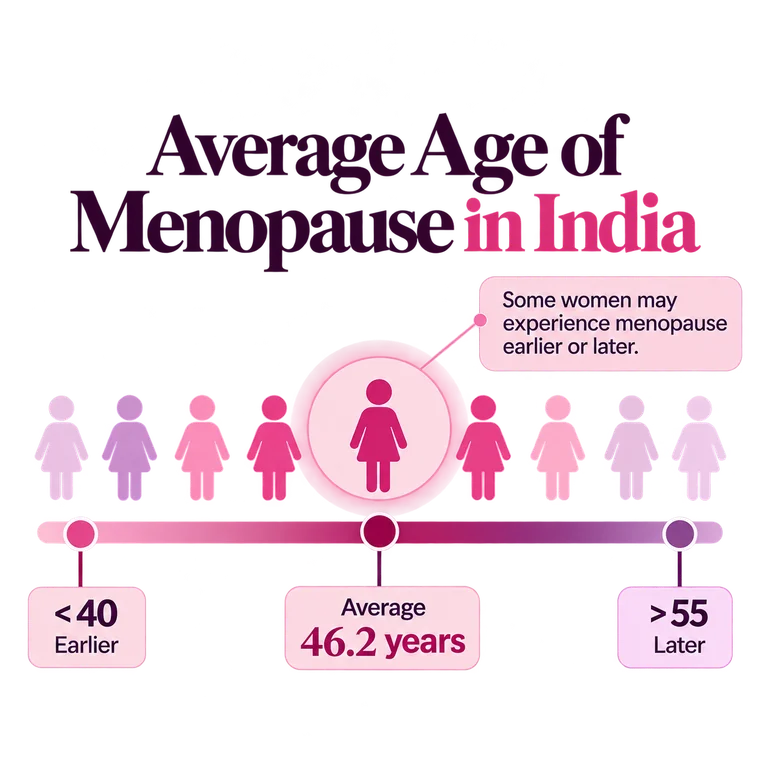
What Exactly Is Menopause?
Menopause is a natural life stage, not an illness. But symptoms that affect your life still deserve care.
During perimenopause, estrogen and progesterone fluctuate before settling at lower levels. That is why symptoms can feel unpredictable and affect more than periods, including sleep, mood, bones, muscles and vaginal or urinary health.
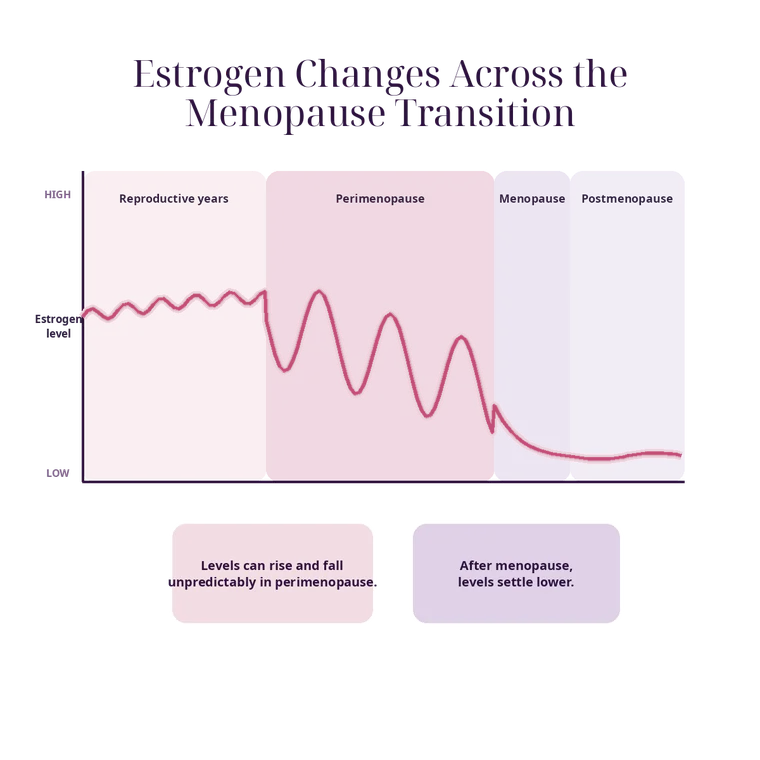
Stages of Menopause
Stage 01
Perimenopause
Hormones fluctuate, periods may change and symptoms can begin while you are still menstruating.
Stage 02
Menopause
Reached after 12 consecutive months without a period, with no other medical cause.
Stage 03
Postmenopause
The years after menopause. Some symptoms settle; others can continue.
Menopause between 40 and 45 is considered early menopause. Loss of normal ovarian function before 40 is called premature ovarian insufficiency (POI) and needs medical assessment. Menopause can also occur after removal of both ovaries, chemotherapy or pelvic radiotherapy.
Perimenopause often becomes noticeable in the 40s, although it can start earlier. A change in a previously predictable cycle may be one of the first signs.
Stress does not cause menopause, but it can affect periods, sleep, mood and energy, which can make the two difficult to separate.
What Can Perimenopause and Menopause Feel Like?
There is no medically agreed list of exactly “34 symptoms”. Menopause looks different from woman to woman, so a change from your usual pattern matters more than matching a checklist.
IMS 2026 Clinical Practice Guidelines
Symptoms can come and go, overlap and change over time. Some are easy to recognise as hormonal; others are not.
Indian Menopause Society guidance notes that joint and muscle complaints can be particularly prominent in Asian women.
And importantly, not every new symptom is menopause. Persistent or unusual changes still deserve assessment.
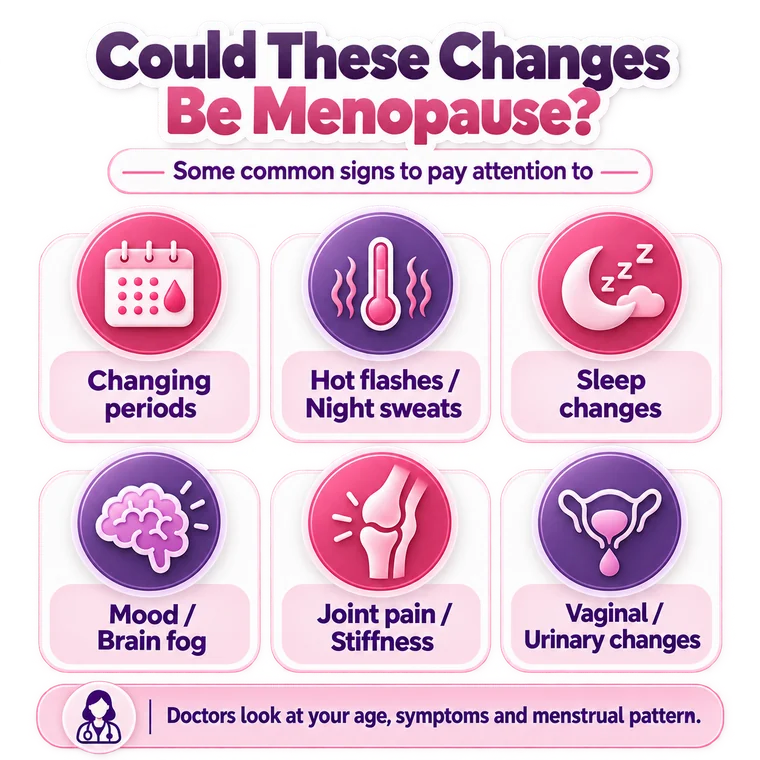
- Irregular or heavier periods
- Hot flashes and night sweats
- Disrupted sleep and fatigue
- Anxiety, low mood, brain fog
- Joint and muscle discomfort
- Vaginal, urinary and sexual-health changes
You do not have to wait until your periods stop before asking for help.
Is It Menopause, and How Is It Diagnosed?
Fatigue, irregular periods, mood changes, weight changes and joint pain can also occur with anaemia, thyroid disorders, vitamin deficiencies or PCOS. The aim is to recognise the pattern and rule out other causes when needed.
For most healthy women 45 or older with typical symptoms and changing periods, menopause is usually diagnosed from age, symptoms and menstrual history.
Routine FSH, estradiol or AMH testing is usually not needed because hormone levels can fluctuate during perimenopause. Testing may be useful when the diagnosis is unclear, POI is suspected, or another condition needs to be ruled out.
Before an appointment, note cycle changes, your most disruptive symptoms, sleep and what is affecting daily life. That context can be more useful than a single hormone result.
When Should You See a Doctor About Menopause?
- Consider seeing a doctor when symptoms affect sleep, mood, periods, vaginal or urinary health, pain or daily life.
- Seek earlier assessment if symptoms begin before 45, periods stop before 40, or you have heavy bleeding, bleeding between periods, or any bleeding after 12 months without a period.
- Seek urgent care for chest pain, sudden breathlessness, stroke-like symptoms, very heavy bleeding with fainting, severe unexplained pain or a mental-health crisis. A little preparation can make the appointment more useful.
How to Prepare for a Menopause Consultation
You do not need months of tracking. Bring:
- What changed and when
- Your 2–3 most disruptive symptoms
- Medicines and supplements
- Relevant medical and family history
- What you want help with
Useful questions include: Could this be perimenopause? Do I need tests? What treatments suit me? Could HRT be right for me?
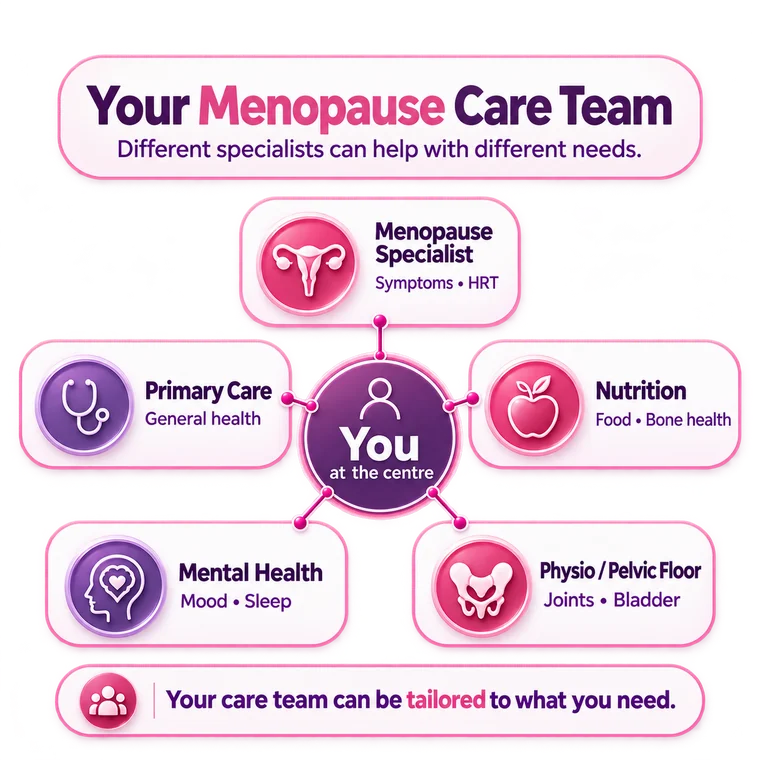
Menopause Treatment: Where Do You Start?
There is no single treatment plan for menopause. The right approach depends on your symptoms, how much they affect daily life, your medical history and your preferences.
Options may include lifestyle changes, selected supplements where appropriate, symptom-specific treatments, vaginal treatments or HRT. If symptoms are significantly affecting daily life, HRT may be one of the main treatments discussed.
HRT: The Essentials
HRT is not one standard prescription. The hormone, dose and route are tailored to the individual.
For eligible women, HRT is the most effective treatment for hot flashes and night sweats and can also help protect bone health. It can be discussed before periods stop completely.
If you have a uterus, systemic estrogen is usually paired with a progestogen to protect the uterine lining. After hysterectomy, estrogen alone may be suitable for some women.
The route matters. Tablets are taken orally; patches, gels and sprays deliver estrogen through the skin. Vaginal estrogen works mainly in vaginal and urinary tissues.
Systemic HRT
Tablets · Patches · Gels · Sprays
Treats hot flashes, night sweats and wider symptoms
Vaginal Estrogen
Cream · Pessary · Ring
Treats local dryness, irritation and urinary symptoms. Minimal systemic absorption.
Could HRT Suit You?
A clinician will consider your symptoms, menopause stage, bleeding history, medical history and individual risk factors before recommending HRT.
Certain conditions, including unexplained bleeding, some hormone-dependent cancers, blood clots, stroke, heart attack or severe liver disease, may require specialist assessment.
If you are considering HRT, MIROR’s HRT Assessment can help organise your symptoms and health history. You can then connect with MIROR’s HRT Centre of Excellence for specialist-led, personalised care and follow-up.
For eligible women, HRT can relieve symptoms and protect bone health. Risks, side effects and duration vary by individual and should be reviewed regularly.
Managing Menopause in Everyday Life
There is no lifestyle trick that will “balance all your hormones”, but everyday habits can support how you feel.
- Hot flashes: notice whether heat, alcohol, spicy food, stress or poor sleep make symptoms worse.
- Sleep: identify what is waking you, such as night sweats, anxiety, pain or urinary symptoms.
- Brain fog: use reminders, written priorities and fewer simultaneous tasks.
- Food: build meals around protein, vegetables, pulses, whole grains or millets, nuts, seeds and calcium-rich foods.
- Movement: walking plus resistance training helps preserve muscle, bone and metabolic health.
If heavy periods are contributing to fatigue, ask whether iron needs checking.
Sleep
Identify the cause — night sweats, anxiety or pain — before trying to “sleep better”.
Brain fog
Reminders, written priorities and fewer simultaneous tasks can help.
Nutrition
Protein, calcium, iron, vegetables, pulses and millets. No complicated diets needed.
Movement
Walking plus resistance training protects muscles, bones and metabolic health.
Why Menopause Needs a Different Conversation in India
A 2025 Indian study of 32,518 women from under-resourced communities found that 50% were unaware of menopause effects and 62% did not know treatment options existed.
That matters because symptoms are easily dismissed as “just ageing” when women do not know they may be connected.
Better awareness is not about medicalising menopause. It is about knowing what is changing, when to seek help and what options exist.
A Few Menopause Myths Worth Leaving Behind
Periods do not need to stop before symptoms begin. Not every woman gets hot flashes. Natural does not mean you have to suffer. HRT is not unsafe for everyone, and it is not contraception.
Good information makes better choices possible.
You Do Not Have to Work It Out Alone
Whether you are trying to understand symptoms, explore HRT or decide when to seek care, MIROR brings doctors, specialists and trusted information together in one place.
Use the MIROR app for expert guidance through perimenopause and menopause, or connect with the HRT Centre of Excellence if you want specialist-led HRT care.
FAQ
Some women notice palpitations during the menopause transition. However, new, persistent or concerning palpitations should be assessed because they can have causes unrelated to menopause.

Medically reviewed by,
Dr. Smitha A P, Medical Director, MIROR
Focused on evidence-based HRT, menopause care and preventive health through midlife.
This guide is for general education and is not a substitute for personalised medical advice. Please speak with a qualified healthcare professional about your symptoms and treatment options.
Research Sources for the Published Guide
Indian Menopause Society Clinical Practice Guidelines 2026
Primary clinical reference covering menopause definitions, diagnosis, symptoms, HRT, vaginal estrogen, POI, early menopause, preventive health, contraception and midlife care.
Read the guidelinesPan-India Indian Menopause Society menopause-age study
Reported an average menopause age of 46.2 years.
Read on PubMedAwareness of menopause and hormone therapy in India, 2025
Surveyed 32,518 women and identified substantial gaps in menopause and treatment awareness.
Read on PubMed