
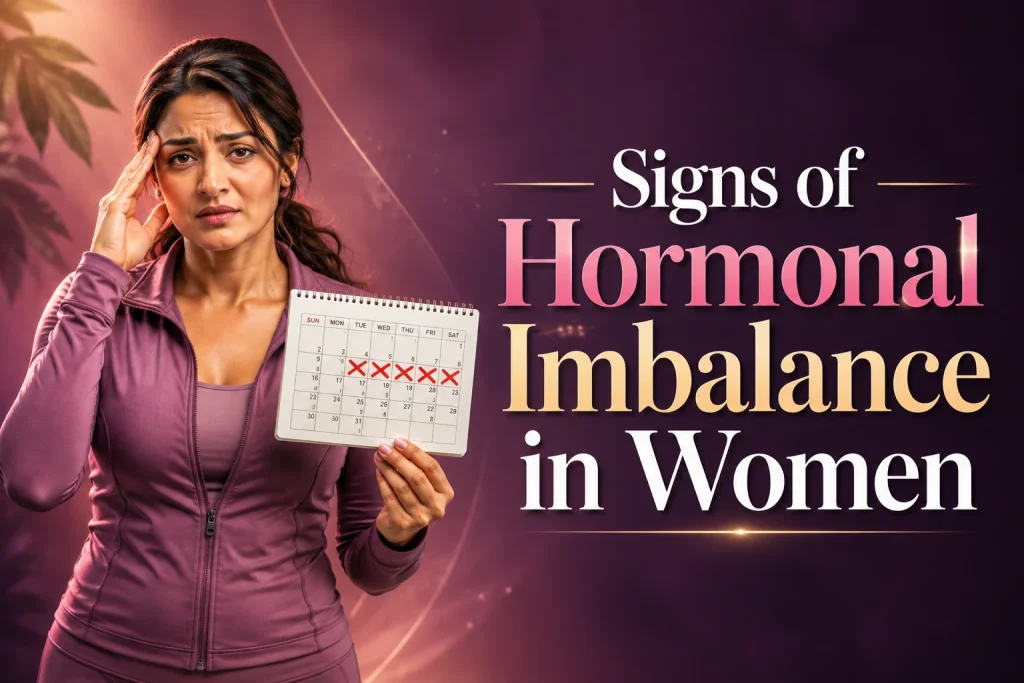
Signs of hormonal imbalance are often easy to dismiss at first.
A period that comes late.
Weight that appears around the belly.
Acne in your 30s.
Fatigue that does not lift.
Mood swings that feel unlike you.
Hair fall.
Brain fog.
Low libido.
Cravings.
Poor sleep.
Bloating.
A body that suddenly feels less predictable.
Many women are told these changes are just stress, ageing, motherhood, work pressure or “normal life.” Sometimes stress and life stage do play a role. But when symptoms appear in clusters, across your cycle, skin, mood, weight, sleep, gut and energy, your hormonal system may be asking for attention.
Hormones are chemical messengers. They help regulate reproduction, metabolism, appetite, sleep, mood, skin, hair, digestion, stress response, libido and energy. When one hormone shifts, others often respond too.
This is why hormonal imbalance in women rarely looks like one neat symptom. It often looks like a pattern.
This checklist is not for self diagnosis. It is a guide to help you understand your body better and have a more informed conversation with your doctor.
What Is Hormonal Imbalance?
Hormonal imbalance means that one or more hormones may be too high, too low or not working in the right rhythm for your body.
In women, hormones do not work in isolation. Estrogen, progesterone, testosterone, insulin, cortisol, thyroid hormones, prolactin, LH, FSH, leptin, serotonin and other messengers all communicate with each other.
That means symptoms can overlap. For example:
| Symptom | Possible Hormonal Links |
|---|---|
| Irregular periods | Estrogen, progesterone, LH, FSH, prolactin, thyroid |
| Belly weight gain | Insulin, cortisol, estrogen, leptin, thyroid |
| Acne or facial hair | Testosterone, DHEA, insulin |
| Fatigue | Thyroid, cortisol, insulin, iron, perimenopause |
| Mood swings | Estrogen, progesterone, cortisol, serotonin |
| Low libido | Estrogen, testosterone, prolactin, stress hormones |
| Poor sleep | Cortisol, progesterone, estrogen, melatonin |
A good clinical evaluation looks at the pattern, not just one number.
14 Warning Signs of Hormonal Imbalance in Women
1. Your Periods Have Become Irregular
One of the most common signs of hormonal imbalance is a change in menstrual rhythm.
You may notice cycles becoming shorter, longer, unpredictable or missing altogether. Some women bleed every few weeks. Others skip months. Some experience spotting before periods or bleeding between cycles.
Irregular periods may be linked with PCOS, thyroid imbalance, high prolactin, stress, perimenopause, medication effects or ovulation problems.
A cycle change is not always dangerous, but it should not be ignored when it is persistent, sudden or accompanied by pain, heavy bleeding, acne, facial hair or fertility concerns.
2. Your Flow Has Become Too Heavy or Too Light
A hormonal shift can affect how the uterine lining builds and sheds.
You may notice:
Heavier bleeding than usual
Clots
Bleeding for more days than normal
Very light or scanty periods
Spotting before the period begins
Bleeding after sex
Bleeding between periods
Heavy or irregular bleeding can be hormonal, but it can also be caused by fibroids, polyps, endometriosis, infection, pregnancy related concerns or other gynaecological conditions.
If your bleeding pattern has changed, it deserves proper medical evaluation.
3. PMS Feels More Intense Than Before
PMS can involve mood changes, breast tenderness, bloating, food cravings, cramps, headaches, irritability and fatigue before periods.
But if PMS suddenly becomes stronger, more emotional or harder to function through, it may suggest that your hormone rhythm needs attention.
Severe premenstrual mood symptoms may also point toward PMDD, which is more intense than typical PMS and should be discussed with a doctor or mental health professional.
4. You Are Gaining Weight Around the Belly
Hormonal weight gain often feels different from regular weight fluctuation.
The weight may collect around the abdomen. Clothes may feel tighter at the waist. Your usual diet and workout routine may not work the same way.
This can be linked with insulin resistance, cortisol dysregulation, perimenopause, low thyroid function, poor sleep, reduced muscle mass or PCOS.
Belly weight gain is not only about appearance. It can also be a sign that metabolic health needs support.
5. You Feel Hungry Soon After Eating
If you eat a full meal and feel hungry again within an hour or two, your blood sugar and appetite signals may need attention.
This can happen with insulin resistance, high stress, poor sleep, low protein intake, long gaps between meals or PCOS related metabolic changes.
You may also notice strong cravings for sugar, refined carbohydrates or salty snacks.
This is not always a willpower issue. Sometimes, hunger is a biological signal that your meals, blood sugar, sleep or stress rhythm need support.
6. Your Skin Has Changed Suddenly
Adult acne, especially around the chin, jawline and lower face, can be linked with androgen excess, insulin resistance or PCOS.
Other skin signs may include:
Oily skin
Acne before periods
Skin darkening around the neck, underarms or inner thighs
Dry, dull or thinning skin
Sudden sensitivity or flare ups
Skin darkening in folds, known as acanthosis nigricans, may be associated with insulin resistance and should be medically reviewed.
7. You Notice Hair Fall or Facial Hair Growth
Hormones can affect hair in two opposite ways.
Some women notice thinning hair on the scalp, especially around the parting or temples. Others notice excess hair growth on the upper lip, chin, jawline, chest or abdomen.
Scalp hair thinning may be linked with thyroid imbalance, low iron, stress, postpartum changes, perimenopause or androgen imbalance.
Facial hair growth may suggest androgen excess, commonly seen in PCOS, but it can also have other endocrine causes.
Hair changes are not “just cosmetic.” They can be important hormonal clues.
8. Your Mood Feels Unpredictable
Hormones influence brain chemistry, stress response and emotional regulation.
You may feel more anxious, tearful, irritable, flat or emotionally reactive than before. Some women describe feeling like their emotional skin has become thinner.
Mood changes can be linked with PMS, PMDD, perimenopause, thyroid imbalance, poor sleep, cortisol dysregulation, depression, anxiety, nutrient deficiencies or chronic stress.
If mood symptoms affect your work, relationships, sleep or sense of safety, please seek professional help.
9. You Feel Tired Even After Sleeping
Fatigue is one of the most common and most confusing signs of hormonal imbalance.
It may feel like:
Waking up tired
Afternoon crashes
Low stamina
Heavy limbs
Brain fog with fatigue
Needing caffeine to function
Feeling exhausted but wired at night
Possible causes include thyroid imbalance, iron deficiency, vitamin B12 or vitamin D deficiency, cortisol rhythm changes, insulin resistance, poor sleep, perimenopause, depression, anxiety or chronic stress.
Fatigue deserves investigation, not guilt.
10. Your Sleep Has Become Lighter or Broken
Women often notice sleep changes before they connect them to hormones.
You may struggle to fall asleep, wake at 2 AM or 3 AM, feel hot at night, experience night sweats, or wake feeling unrested.
Perimenopause and menopause can affect sleep through hot flashes, night sweats, anxiety and hormone fluctuations. Cortisol, progesterone, melatonin, thyroid and blood sugar rhythm can also play a role.
Sleep is not separate from hormonal health. It is one of the foundations of it.
11. You Have Brain Fog or Poor Focus
Brain fog can feel frightening.
You may forget words, reread the same sentence, miss details, forget appointments or feel slower than usual.
This can happen with perimenopause, thyroid imbalance, low iron, vitamin B12 deficiency, poor sleep, insulin resistance, chronic stress, depression or anxiety.
Brain fog does not mean you are losing yourself. But it does mean your body needs attention.
12. Your Digestion Feels More Sensitive
The gut and hormones communicate constantly.
You may notice bloating before periods, constipation before menstruation, loose stools during periods, nausea around cycle changes, or IBS like symptoms during stress.
Estrogen, progesterone and cortisol can influence gut motility, water retention, appetite, microbiome balance and digestive sensitivity.
If digestive symptoms are persistent, painful, associated with weight loss, blood in stool, severe constipation or frequent diarrhoea, speak to a doctor.
13. Your Libido Has Reduced or Disappeared
Low libido is one of the most under-discussed signs of hormonal imbalance in women.
You may still love your partner and still value intimacy, but desire may feel quieter, delayed or absent. Some women also notice vaginal dryness, discomfort during sex, reduced arousal or difficulty reaching orgasm.
Possible links include low estrogen, low or changing testosterone, high prolactin, perimenopause, menopause, stress, depression, medications, relationship strain, pain or poor sleep.
Libido is not only hormonal, but hormones can be part of the picture.
14. Your Body Feels Different in a Way You Cannot Explain
Sometimes the clearest sign is not one symptom, but the feeling that your body no longer responds the way it used to.
You may feel more inflamed, less strong, more sensitive to stress, less resilient after workouts, more achy, more aware of palpitations, more dry, more cold or simply unlike yourself.
This does not mean something is definitely wrong. But if the feeling persists, it is worth tracking.
Hormonal imbalance often appears first as a pattern that only you can sense.
Quick Hormonal Imbalance Checklist:
| Symptom Cluster | What to Track |
|---|---|
| Periods | Cycle length, flow, pain, spotting, missed periods |
| Weight | Belly gain, cravings, hunger, energy crashes |
| Skin and hair | Acne, facial hair, scalp thinning, pigmentation |
| Mood | Anxiety, irritability, low mood, emotional flatness |
| Energy | Fatigue, stamina, afternoon crashes |
| Sleep | Insomnia, night sweats, early waking |
| Brain | Memory, focus, word finding, headaches |
| Gut | Bloating, constipation, loose stools, nausea |
| Libido | Desire, dryness, discomfort, arousal |
| Body | Joint pain, palpitations, temperature sensitivity |
The more clusters you recognise, the more useful it becomes to seek a full clinical review.
(UCLA Health).
What Causes Hormonal Imbalance in Women?
Hormonal imbalance rarely has one cause.
In women, it is often a convergence of several factors:
| Cause | How It Can Affect Hormones |
|---|---|
| PCOS | Can involve irregular ovulation, androgen excess and insulin resistance |
| Perimenopause | Estrogen and progesterone fluctuate, affecting sleep, mood and periods |
| Thyroid imbalance | Can affect weight, energy, mood, periods and temperature sensitivity |
| Chronic stress | Can affect cortisol rhythm, sleep, appetite and menstrual cycles |
| Poor sleep | Disrupts appetite, insulin, cortisol and recovery |
| Nutrient deficiencies | Low iron, vitamin D or B12 can mimic hormone symptoms |
| Insulin resistance | Can drive cravings, belly weight, acne and PCOS symptoms |
| High prolactin | Can affect periods, ovulation, libido and fertility |
| Medication effects | Some medicines affect cycles, weight, mood or libido |
| Under eating or over exercising | Can suppress ovulation and cycle rhythm |
When Should You See a Doctor?
Please seek medical advice if you experience:
No period for 3 months outside pregnancy
Very heavy bleeding or bleeding between periods
Bleeding after sex
Sudden unexplained weight gain or weight loss
Severe acne or new facial hair growth
Milky nipple discharge when not pregnant or breastfeeding
Severe fatigue that affects daily life
Persistent low mood, anxiety or panic
Hot flashes or night sweats affecting sleep
Difficulty conceiving
Pelvic pain, severe cramps or pain during sex
Palpitations, dizziness or fainting
Symptoms that are worsening or spreading across multiple body systems
What Tests Can Help?
Your doctor may not order every test for every woman. Testing should depend on age, symptoms, cycle history, medication use, pregnancy possibility and clinical findings.
Common evaluations may include:
| Test or Review | Why It May Help |
|---|---|
| CBC and iron studies | Checks anaemia and low iron |
| Thyroid profile | Reviews thyroid related fatigue, weight and cycle issues |
| Fasting glucose and HbA1c | Screens blood sugar health |
| Fasting insulin or HOMA IR | Helps assess insulin resistance when appropriate |
| Vitamin D and B12 | Reviews common fatigue and mood contributors |
| Prolactin | Important for irregular periods, discharge or fertility concerns |
| LH, FSH and estradiol | Helps assess cycle, ovarian and menopause related patterns |
| Progesterone | May help confirm ovulation when timed correctly |
| Testosterone and DHEA-S | Useful when acne, facial hair or PCOS is suspected |
| Pelvic ultrasound | May help assess ovaries, uterus, fibroids or cysts |
| Lipid profile | Reviews metabolic and cardiovascular risk |
The goal is not to collect random tests. The goal is to match testing to the symptom pattern.
(Testing).
What You Can Do Next?
1. Track Your Symptoms for 2 to 3 Cycles
Write down your period dates, flow, pain, mood, cravings, sleep, skin changes, libido, fatigue and gut symptoms.
Patterns are powerful. They help your doctor understand timing.
2. Build Meals Around Blood Sugar Stability
Prioritise protein, fibre, healthy fats and slow carbohydrates. This can support energy, cravings, PCOS care and metabolic rhythm.
3. Protect Sleep Like Hormonal Medicine
Consistent sleep and wake times, reduced late caffeine, a cooler room and less night scrolling can support cortisol, appetite and emotional regulation.
4. Strength Train and Move Regularly
Strength training supports insulin sensitivity, muscle, bone health, metabolism and midlife body composition. Walking after meals can also support glucose rhythm.
5. Do Not Self Treat With Hormones
Hormone creams, pills or supplements should not be started without medical evaluation. The wrong treatment can worsen symptoms or hide the real cause.
6. Get Expert Guidance
Hormonal imbalance is rarely solved by one viral hack. It needs clarity, testing where needed, and support that matches your life stage.
(CC).
Where Miror Fits In
Miror is designed to support women across different stages of hormonal, metabolic, emotional and intimate wellness.
| Miror Product | Who It Supports | What It Is Designed For |
|---|---|---|
| Miror Revive | Women over 30 | Energy, mood, gut health, brain health, immunity and healthy ageing |
| Miror Bliss | Women in perimenopause | Sleep, mood, hot flashes, menstrual discomfort and hormonal wellness |
| Miror Thrive | Post menopause women | Sleep, mood, hot flashes, bones, joints, heart, brain and overall post menopause support |
| Miror PCOS | Women navigating PCOS or PMOS concerns | Cycle support, cravings, acne, hirsutism, insulin sensitivity and hormonal balance |
| Miror Sizzle | Women seeking libido and intimacy support | Desire, mood, stress, circulation and sexual wellbeing |
| Miror MILY | Women 65 plus | Memory, energy, immunity and joint health |
These products are not replacements for diagnosis, medical care or prescription treatment. They are daily wellness support within a broader care plan that may include nutrition, movement, sleep, testing, medical guidance and community.
The Miror Way™
Signs of hormonal imbalance are not signs that a woman is weak, dramatic or careless.
They are signals.
A changed period is a signal.
A tired body is a signal.
A restless mind is a signal.
A changing libido is a signal.
A body that no longer feels familiar is a signal.
At Miror, we believe women deserve care that sees the whole system, not just one symptom at a time.
Miror is India’s largest 360 degree women’s wellness ecosystem, supporting over 95,000 women through expert guidance, community, doctors, OBGYNs, nutritionists, dietitians and women’s health events.
Whether you are navigating PCOS, perimenopause, menopause, post menopause, low energy, libido changes, weight shifts, sleep struggles or mood changes, you do not have to decode your body alone.
Explore Miror supplements and join the Miror Community for expert led support across every phase of women’s hormonal health.
FAQs
Common signs of hormonal imbalance in women include irregular periods, heavy or missed periods, acne, hair fall, facial hair growth, unexplained weight gain, fatigue, mood swings, anxiety, poor sleep, brain fog, bloating, low libido and changes in appetite or cravings. These symptoms can appear alone, but they are more important when they show up in clusters across different body systems.
You may suspect hormonal imbalance if your symptoms follow a pattern with your menstrual cycle, appear suddenly, worsen during perimenopause, or affect several areas at once, such as periods, skin, weight, sleep, mood and energy. However, the same symptoms can also be linked to thyroid issues, PCOS, anaemia, vitamin deficiencies, stress, medication effects or other health conditions, so medical evaluation is important.
Hormonal imbalance in women can be caused by PCOS, perimenopause, menopause, thyroid imbalance, high prolactin, insulin resistance, chronic stress, poor sleep, under eating, over exercising, nutrient deficiencies, certain medications and lifestyle changes. In many women, there is not one single cause. Several hormonal, metabolic and emotional factors may overlap.
You should see a doctor if you have missed periods for 3 months, very heavy bleeding, bleeding between periods, severe acne, new facial hair growth, sudden weight changes, milky nipple discharge, difficulty conceiving, severe fatigue, hot flashes, night sweats, persistent mood changes, pelvic pain or symptoms that are worsening over time. Early evaluation can help identify the root cause and prevent symptoms from being dismissed.
Miror supplements are designed to support women across different hormonal health stages. Miror PCOS supports women with PCOS or PMOS concerns, Miror Bliss supports perimenopause, Miror Thrive supports post menopause, Miror Revive supports women over 30 with energy and healthy ageing needs, Miror Sizzle supports libido and intimacy, and Miror MILY supports women 65 plus. These products are not replacements for diagnosis or medical treatment, but they can be part of a broader wellness routine with expert guidance, nutrition, sleep, movement and community support.