

The report arrives and, frankly, it doesn’t make much sense.
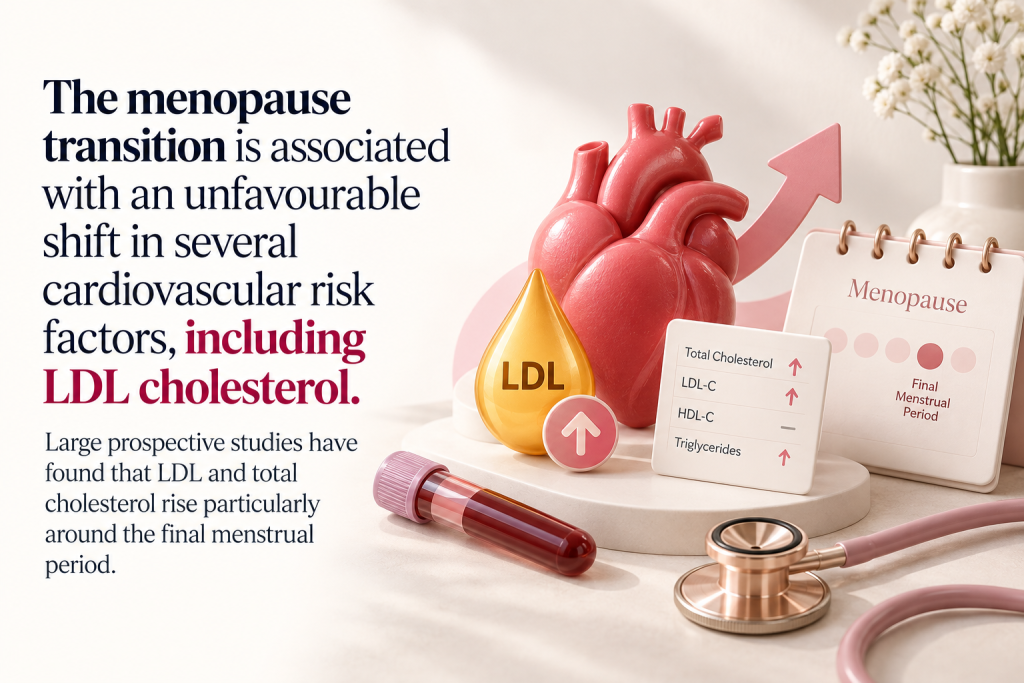
Your LDL cholesterol has gone up. Your total cholesterol is higher too. You haven’t suddenly started eating badly. You may actually be exercising more.
So what changed?
Sometimes, the answer really is menopause.
 (PubMed)
That doesn’t mean every raised cholesterol result is “just hormones”.
It means menopause deserves a place in the conversation.
1. LDL Can Rise Around the Menopause Transition
This is one of the better-established links between menopause and cholesterol.
In the Study of Women’s Health Across the Nation (SWAN), total cholesterol, LDL cholesterol and apolipoprotein B rose substantially during the period around the final menstrual period. The pattern was different from a simple, steady age-related rise.
(PubMed)
One way to think about it:
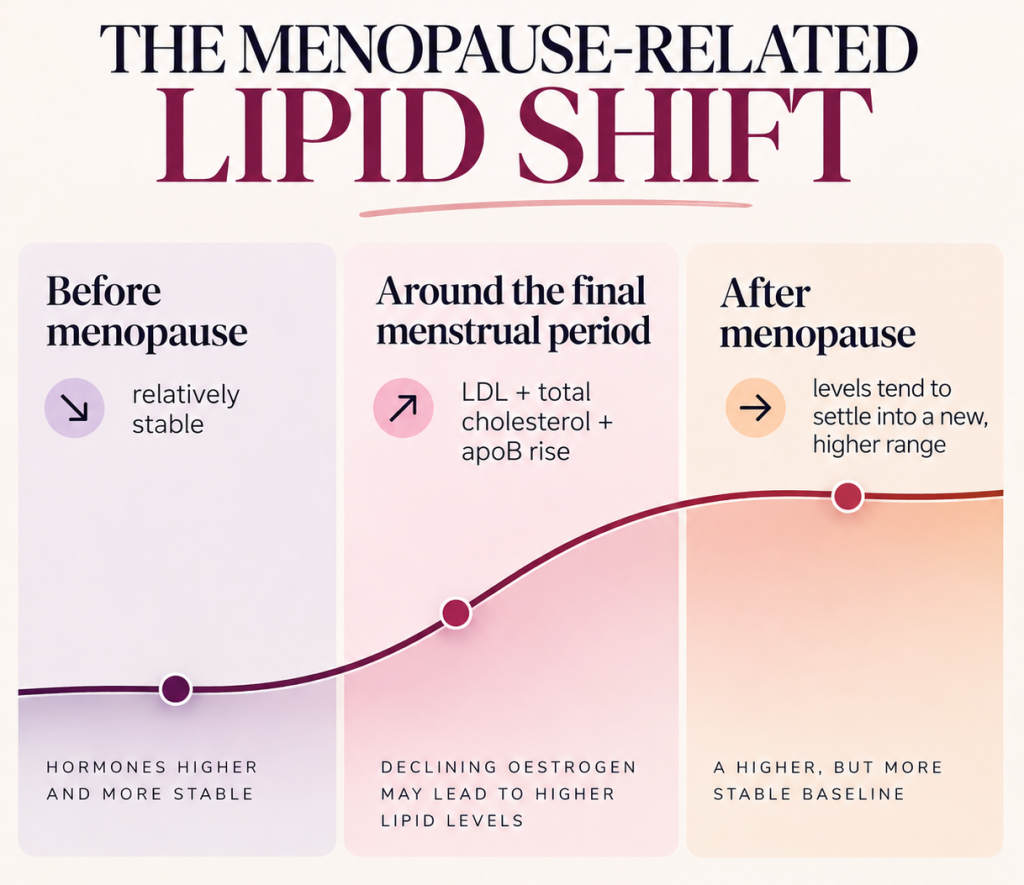
That is why a woman can see a noticeably different lipid report around menopause without having completely changed her diet or exercise routine.
2. Why Does Estrogen Matter?
Estrogen influences lipid metabolism in the liver, including the handling and clearance of LDL particles.
As ovarian estrogen production changes during the menopause transition, lipid metabolism changes with it. At the same time, body-fat distribution often shifts towards the abdomen and insulin resistance may become more prominent.
So menopause doesn’t create cholesterol out of nowhere.
It changes the metabolic environment in which your cholesterol is being handled.
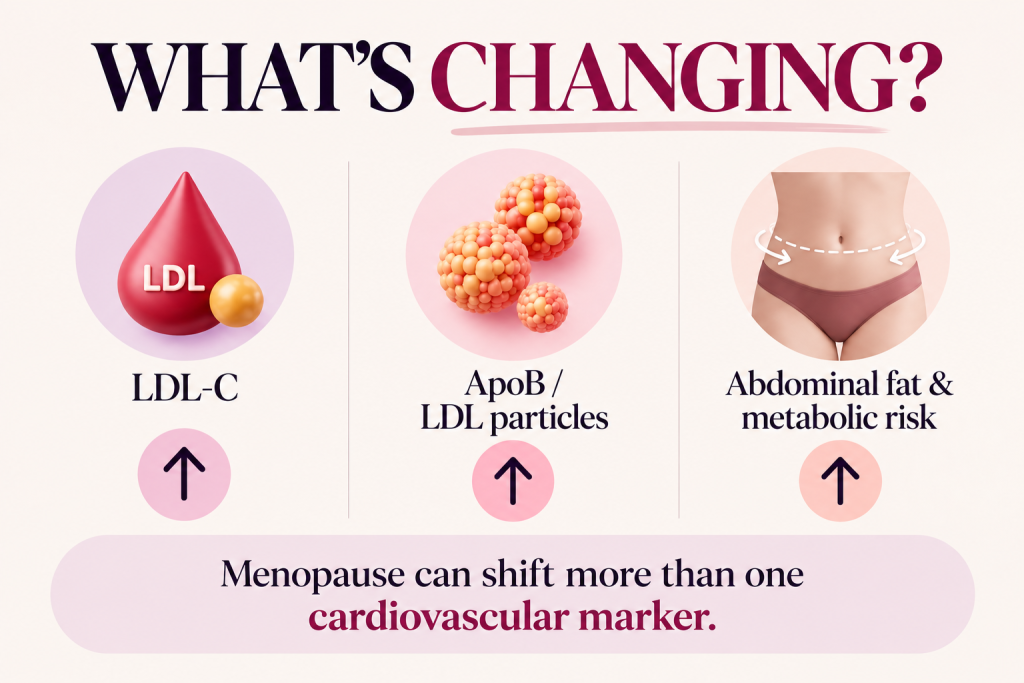
And it’s not only the LDL-C number that matters. Research from SWAN has found that LDL particle measures and apoB also increase during the transition, and higher LDL-C, LDL particles and apoB were associated with markers of subclinical atherosclerosis.
(PubMed)
3. A “Good” HDL Number Doesn’t Tell the Whole Story
HDL is often called the “good cholesterol”, which makes a reassuring HDL result tempting to focus on.
But cardiovascular risk isn’t determined by HDL alone.
The menopause transition can alter HDL quantity and function, and research has found that some aspects of HDL function may become less favourable even when HDL-C itself does not look dramatically worse.
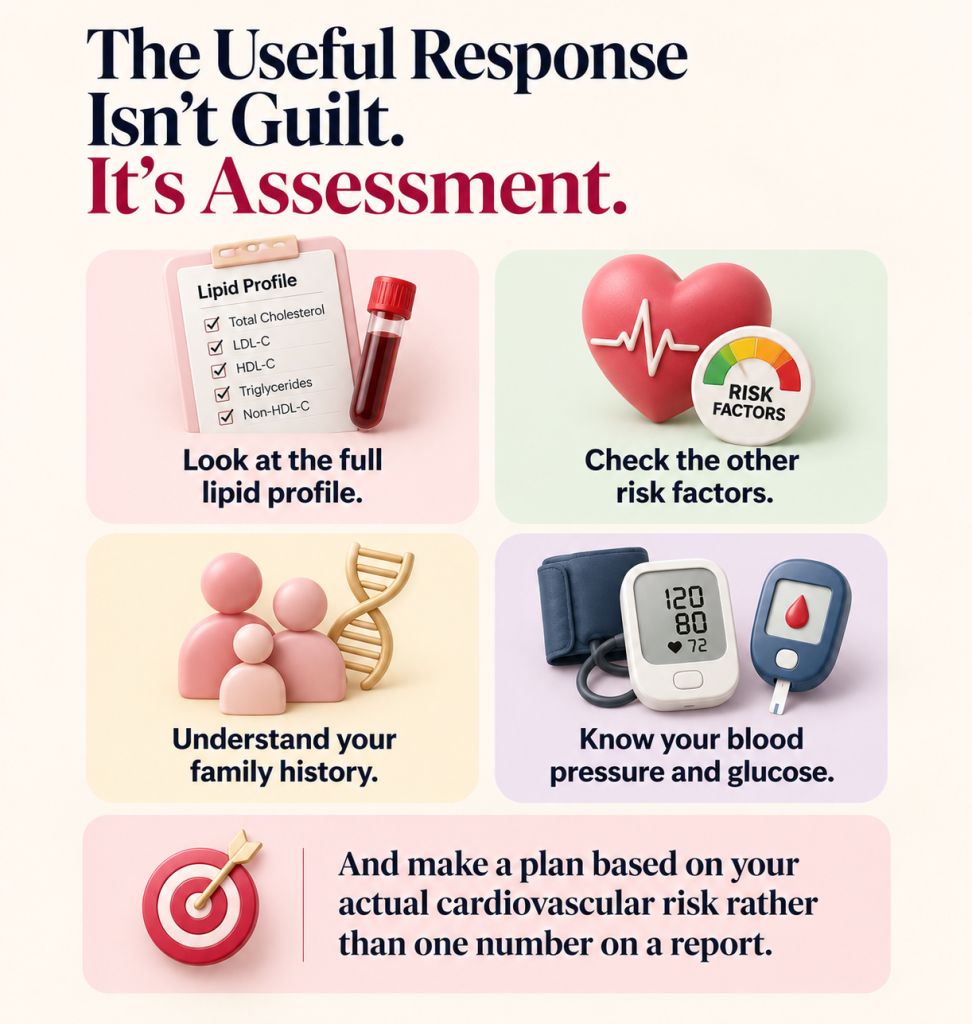
So don’t look at one number in isolation.
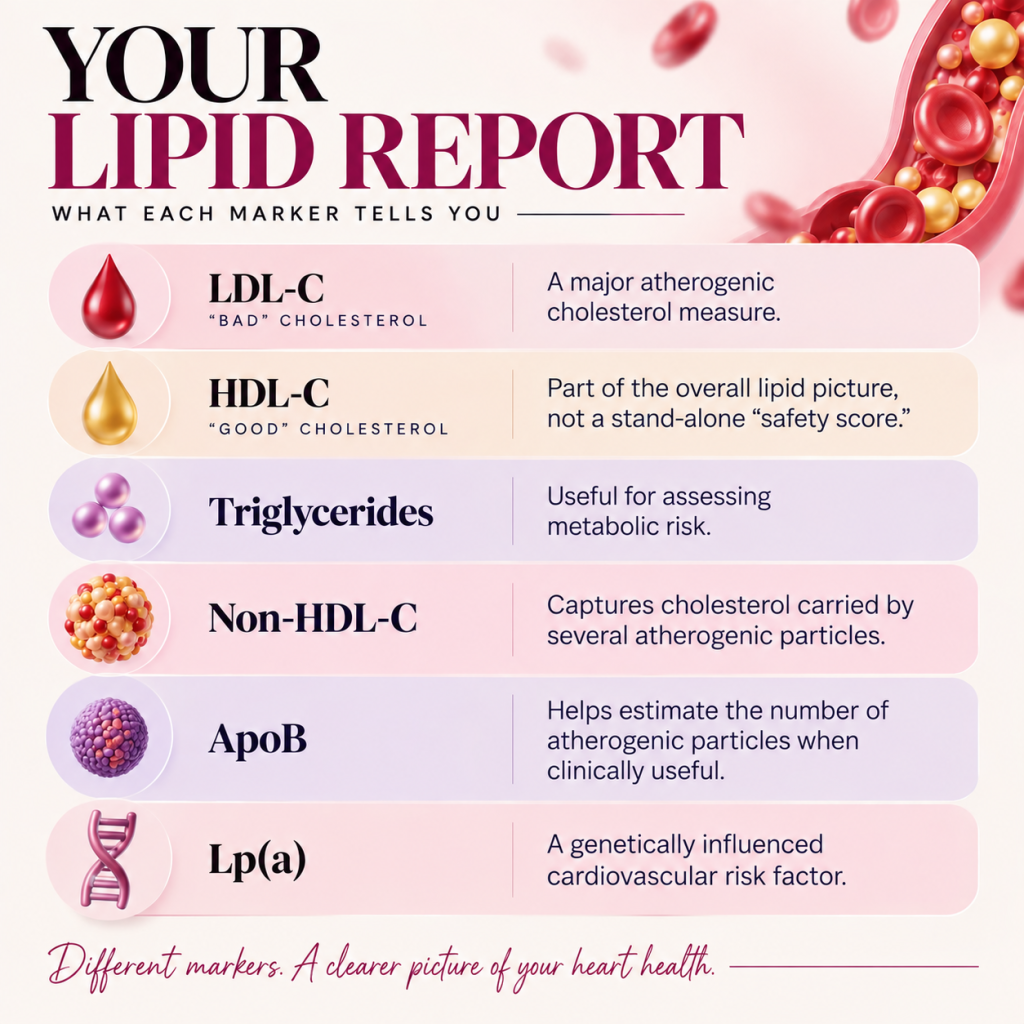
Current Indian lipid guidance gives an important role to LDL-C and non-HDL-C, with apoB used as an additional marker in appropriate situations.
(PubMed)
4. Why the India Context Matters
This is where international menopause articles often become less useful for Indian readers.
The Lipid Association of India notes that Indians tend to experience ASCVD at younger ages and with a substantial lifetime burden of risk, which is why its approach places greater emphasis on lifetime risk and earlier prevention.
(Science-Direct)
That doesn’t mean every Indian woman needs medication.
It means the answer to: “Is my cholesterol high enough to worry about?” shouldn’t come from LDL alone.
Family history, blood pressure, diabetes, smoking, kidney disease, waist circumference, existing atherosclerosis and other risk factors all matter.
And importantly, a normal-looking BMI doesn’t necessarily mean metabolic risk is low.
5. Don’t Blame Everything on Menopause
Menopause can contribute to a higher LDL, but a new abnormal lipid result still deserves a proper look.
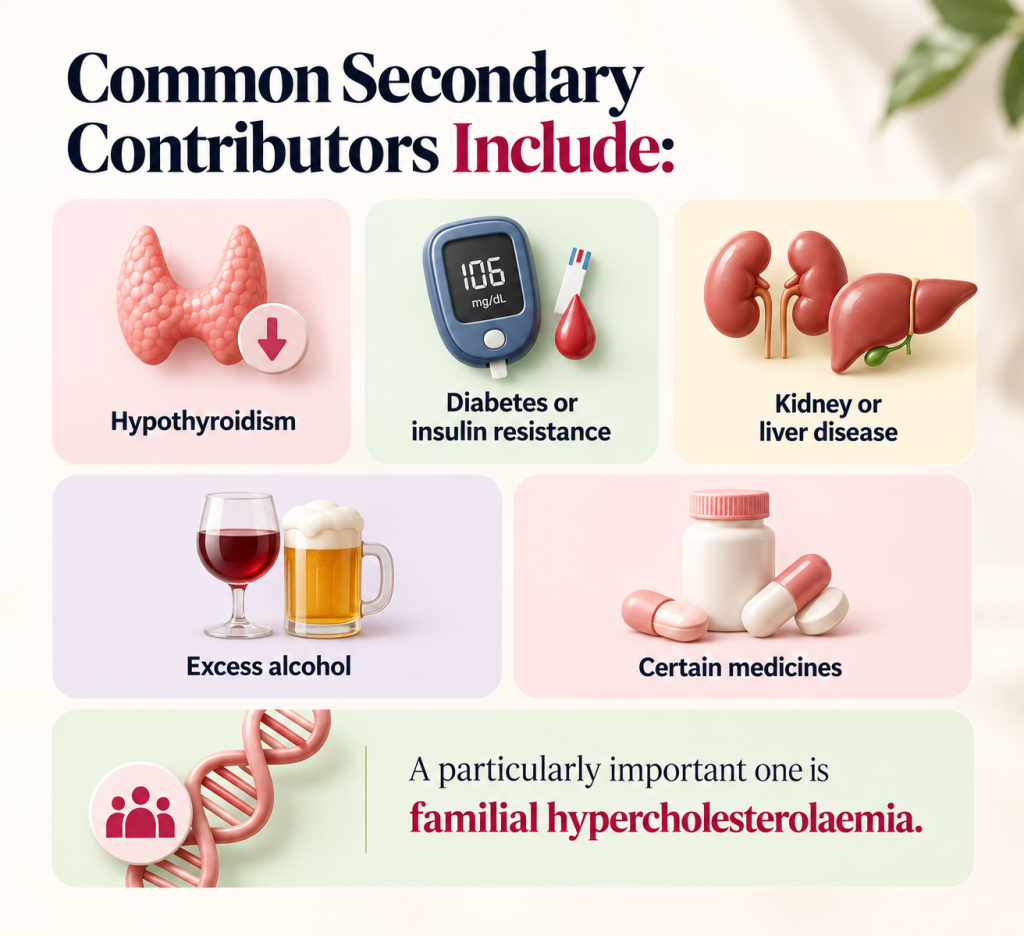
An LDL-C of around 190 mg/dL or higher in an adult is a level that should prompt evaluation for possible familial hypercholesterolaemia, especially when there is a family history of premature cardiovascular disease. Management is based on the full clinical picture rather than the number alone.
(PubMed)
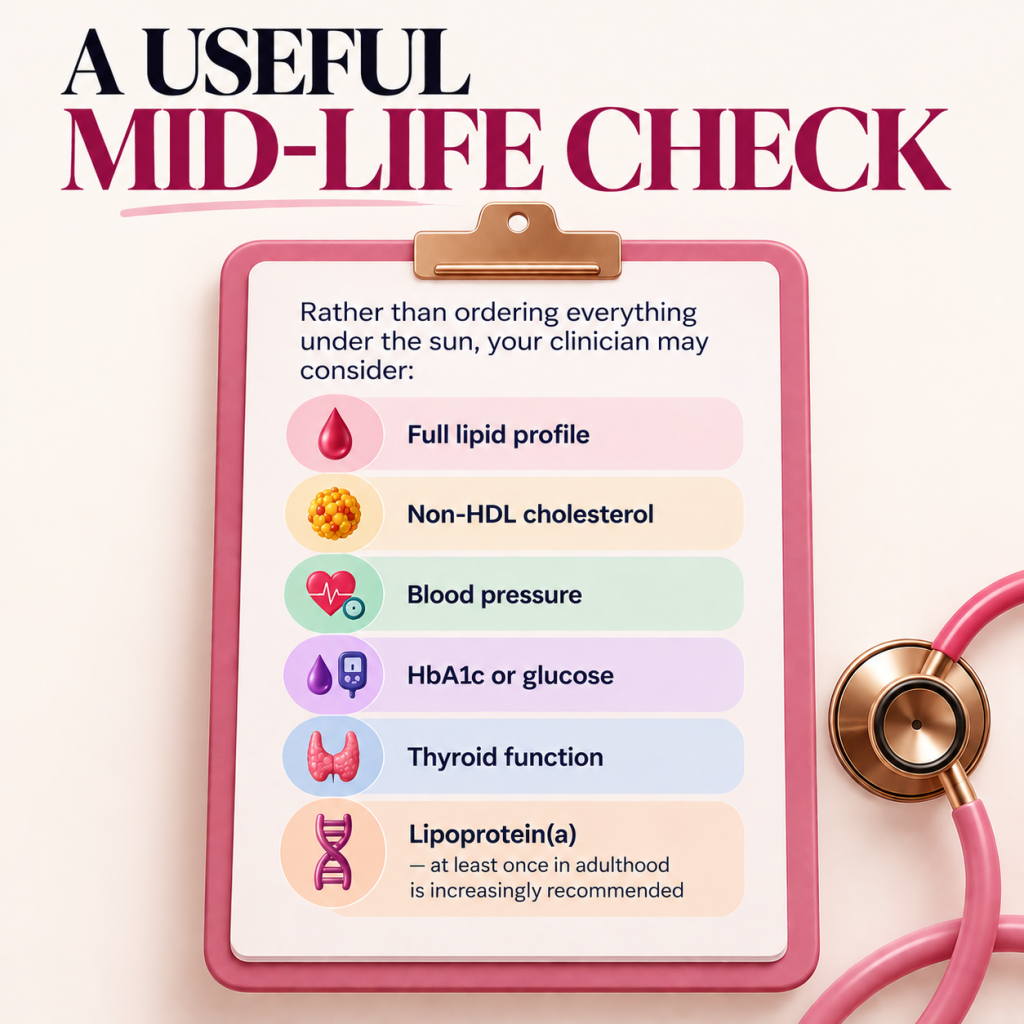
Current 2026 US dyslipidaemia guidance also recommends measuring Lp(a) at least once in a lifetime and using broader risk assessment rather than relying on LDL alone.
(professional.heart.org)
6. What Actually Helps?
First, don’t panic over one cholesterol result.
A. Look at the whole risk picture
Your treatment decision depends on much more than LDL. Current cardiovascular guidance recommends formal risk assessment followed by individualised discussion of lifestyle, lipid-lowering treatment and, where appropriate, additional testing such as coronary artery calcium.
B. Build muscle as well as doing cardio
Resistance training helps preserve muscle mass and supports metabolic health. Aim for regular activity that includes both aerobic exercise and strength training.
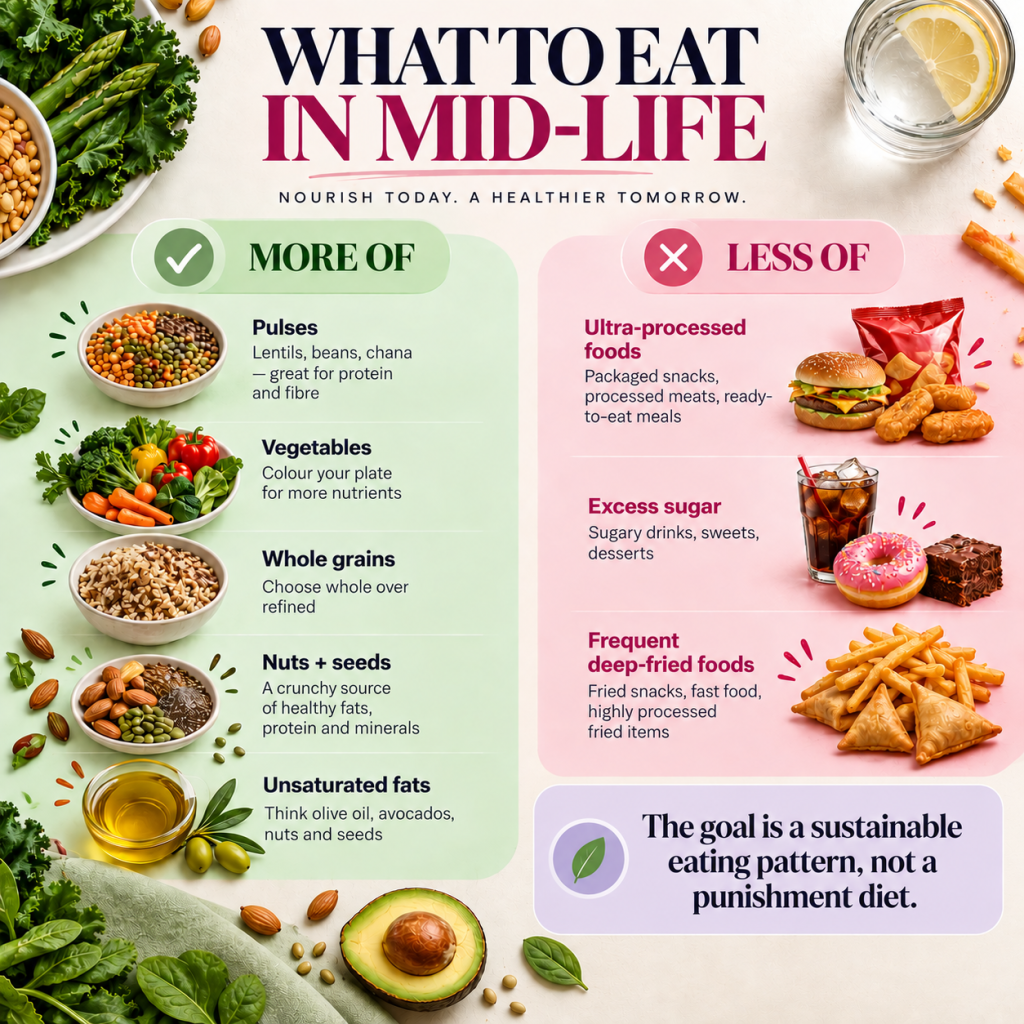
Rethink the plate, not the cuisine. You don’t need to abandon Indian food.
C. Measure your waist too
Midlife body-fat redistribution matters. Your waist can tell you something that the weighing scale cannot.
D. Treat sleep as part of heart health
Poor sleep often travels with menopause, and addressing sleep can make healthy habits much easier to maintain.
E. Don’t be afraid of statins when they’re indicated
Statins are not a “failure” or a sign that you didn’t exercise enough.
When cardiovascular risk is high enough to justify lipid-lowering therapy, treating that risk is evidence-based.
Does HRT Lower Cholesterol?
It can affect cholesterol but that is not the reason to prescribe it.
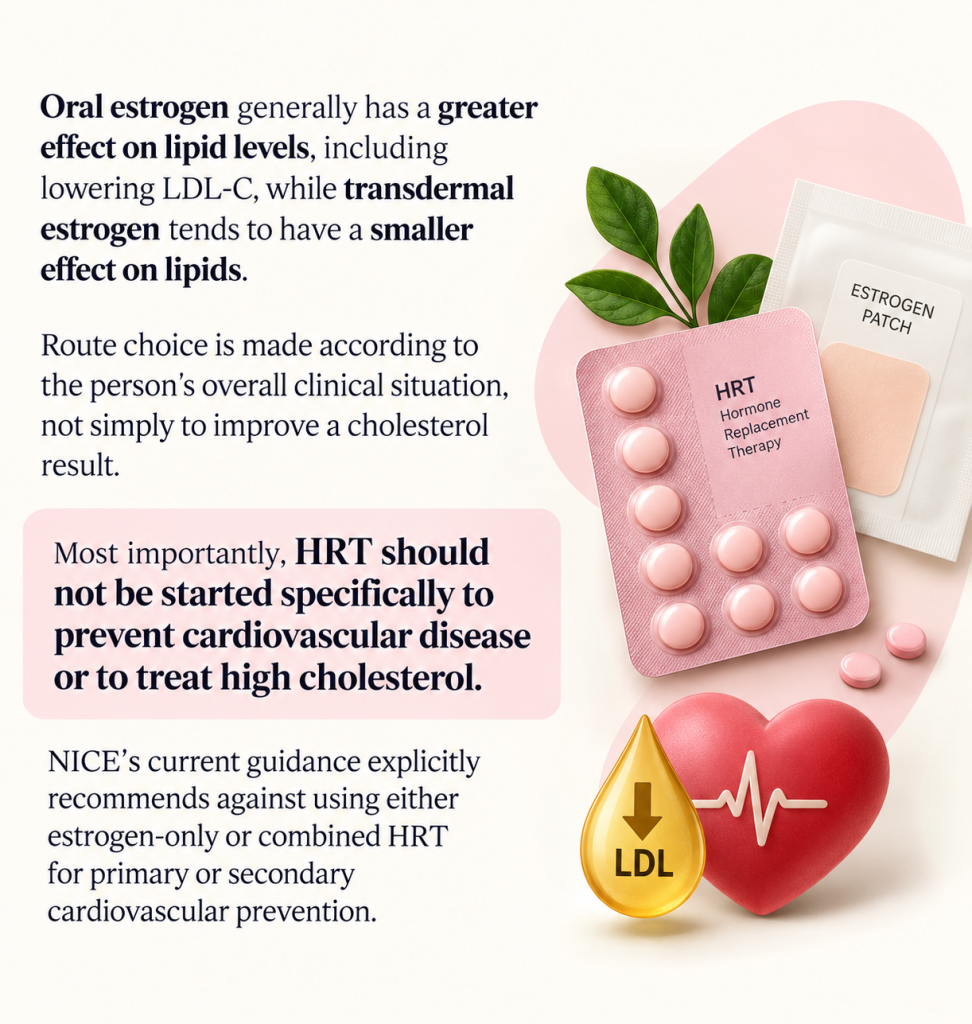
So if you need HRT for menopausal symptoms, any favourable lipid effect is a secondary effect; not its indication.
(PubMed)
The Number Is a Prompt, Not a Verdict
A higher LDL after menopause isn’t necessarily evidence that you’ve done something wrong.
It may reflect a genuine biological shift occurring around the menopause transition. Research has shown that lipid changes around the final menstrual period are associated with later markers of atherosclerosis, which is one reason this stage is worth paying attention to.
(PubMed)
Where Miror’s HRT Centre of Excellence Fits In Perfectly?
Cholesterol after menopause sits at the intersection of hormones, metabolism and cardiovascular health.
At Miror’s HRT Centre of Excellence, the broader menopausal picture can be reviewed alongside your medical history, symptoms and cardiovascular risk factors, with appropriate referral when lipid or cardiovascular management needs a physician or cardiologist.
The point isn’t to blame menopause for a high LDL. It’s to make sure the right things are being looked at.
A changed cholesterol report deserves context, not panic.
Understand your menopause symptoms and the wider health picture with appropriate clinical guidance.
Talk to Miror’s expert panel of doctors and health professionals today.
Medical Disclaimer: This article is for general educational purposes and does not replace personalised medical advice, diagnosis or treatment. Cholesterol targets and treatment decisions depend on your individual cardiovascular risk and should be made with a qualified clinician.