


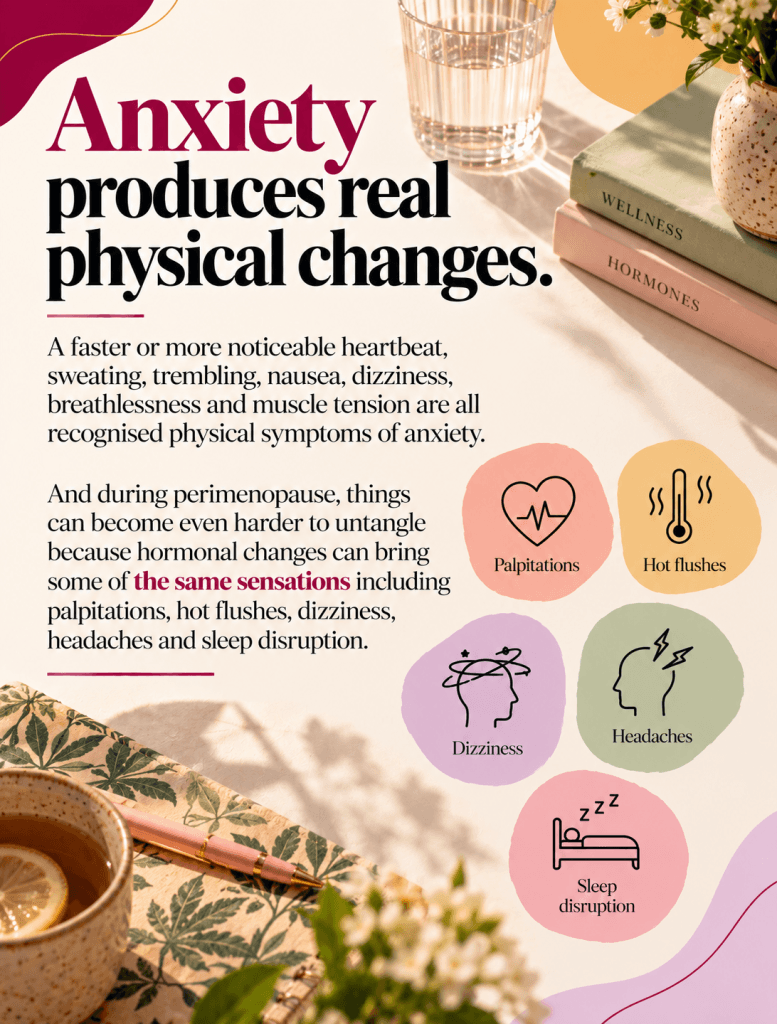
Physical symptoms of anxiety can be so convincing that the word anxiety feels almost insulting.
Your heart is racing.
Your hands are shaking.
Your stomach is turning.
You feel dizzy, breathless or strangely weak.
And your first thought may not be: “I’m anxious.”
It may be: “Something is wrong with my body.”
That reaction makes sense.
 (PubMed)
So let’s slow this down. Your symptoms are real.
And you don’t have to be frightened of every sensation simply because you don’t immediately understand it.
1. Your Heart May Suddenly Become Impossible to Ignore
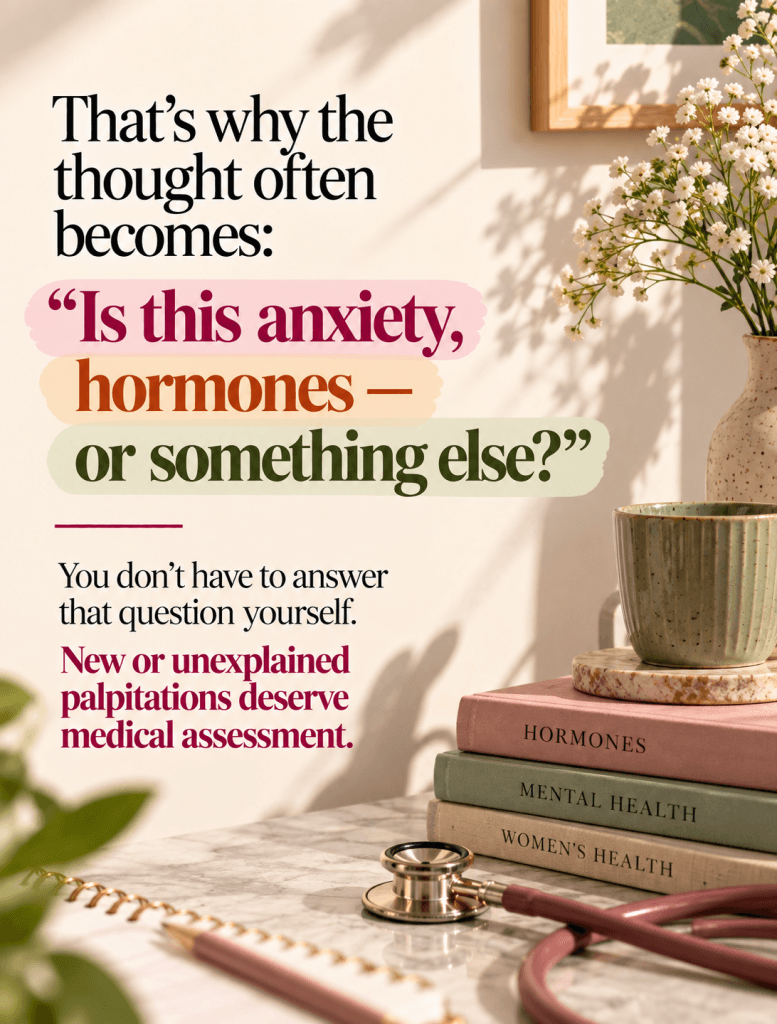
A racing, pounding or unusually noticeable heartbeat can be one of the most frightening physical symptoms of anxiety.
You may feel your heart in your chest, throat or even your ears.
Anxiety activates the body’s threat response, which can increase heart rate and make your heartbeat feel much more noticeable.
(nhs.uk)
But perimenopause can bring palpitations too.
2. Shaking Doesn’t Mean You’re Losing Control
You may notice trembling in your hands, legs or even your whole body.
It can be especially unnerving when you can’t see any obvious reason for it.
Shaking is a recognised physical response to anxiety and heightened arousal.
The important part is this: A physical sensation is not the same thing as a loss of control.
You can feel shaky and still be completely capable of getting through the moment.
3. Anxiety Can Turn Your Stomach Upside Down
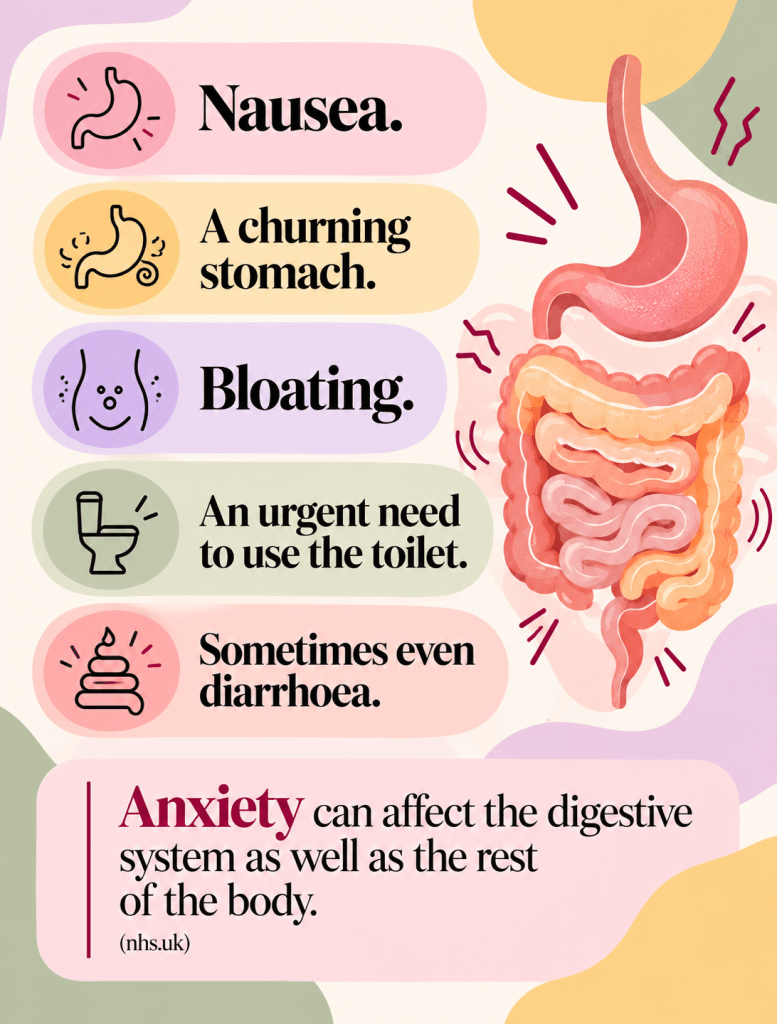 (nhs.uk)
And if you’ve already been dealing with perimenopausal digestive changes, the overlap can make it difficult to know what belongs to what.
You don’t need to solve that mystery every time your stomach acts up. Look at the pattern.
4. Breathlessness Can Be Frightening, Especially When You Don’t Expect It
You may suddenly feel as though you cannot get a satisfying breath.
That can create another layer of fear: “What if I can’t breathe properly?”
Changes in breathing can occur during anxiety, and breathlessness is a recognised symptom.
(nhs.uk)
But this is one symptom where reassurance should never replace proper assessment.
Do not use breathing exercises to decide whether a new episode is “just anxiety.”
If breathlessness is new, severe, persistent or accompanied by chest discomfort, fainting or other concerning symptoms, seek medical care.

5. Tingling and Dizziness Can Make You Think Something Terrible Is Happening
Pins and needles.
Tingling around your fingers or lips.
Feeling light-headed.
A strange sense that you’re not quite steady.
These can occur alongside changes in breathing during anxiety.
(nhs.uk)
And once you’ve been frightened by them, you may start watching for them.
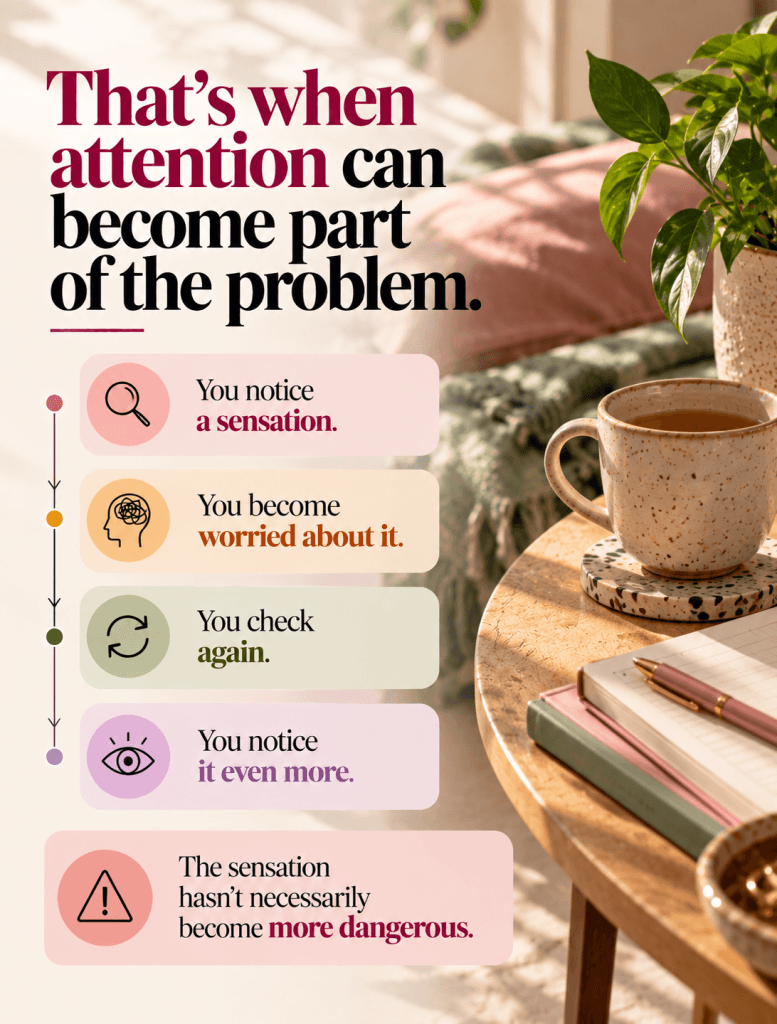
Your attention has simply become louder.
6. Chest Tightness Deserves Respect, Not Panic
Chest tightness can happen during anxiety.
It can also happen for many other reasons.
That’s why this is not something to diagnose yourself from an article.
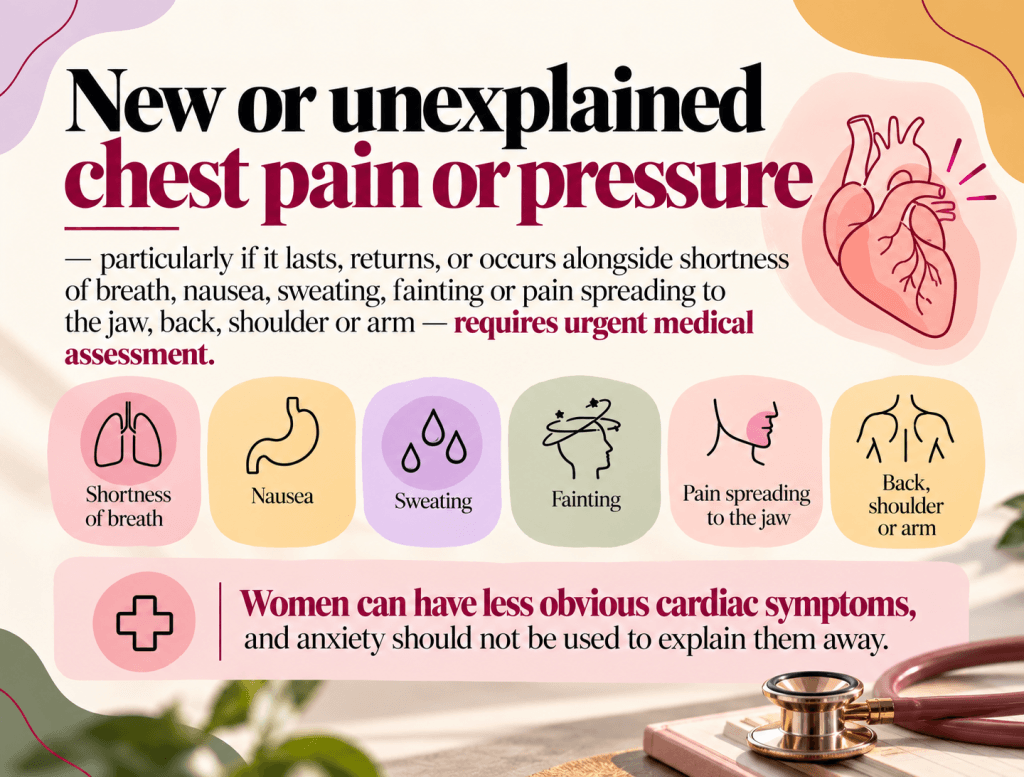 (
(Getting checked is not “feeding your anxiety.”
Sometimes getting the right medical answer is exactly what you need before psychological work can begin.
7. Menopause Can Add More Sensations to the Mix
This is where many women feel completely lost.
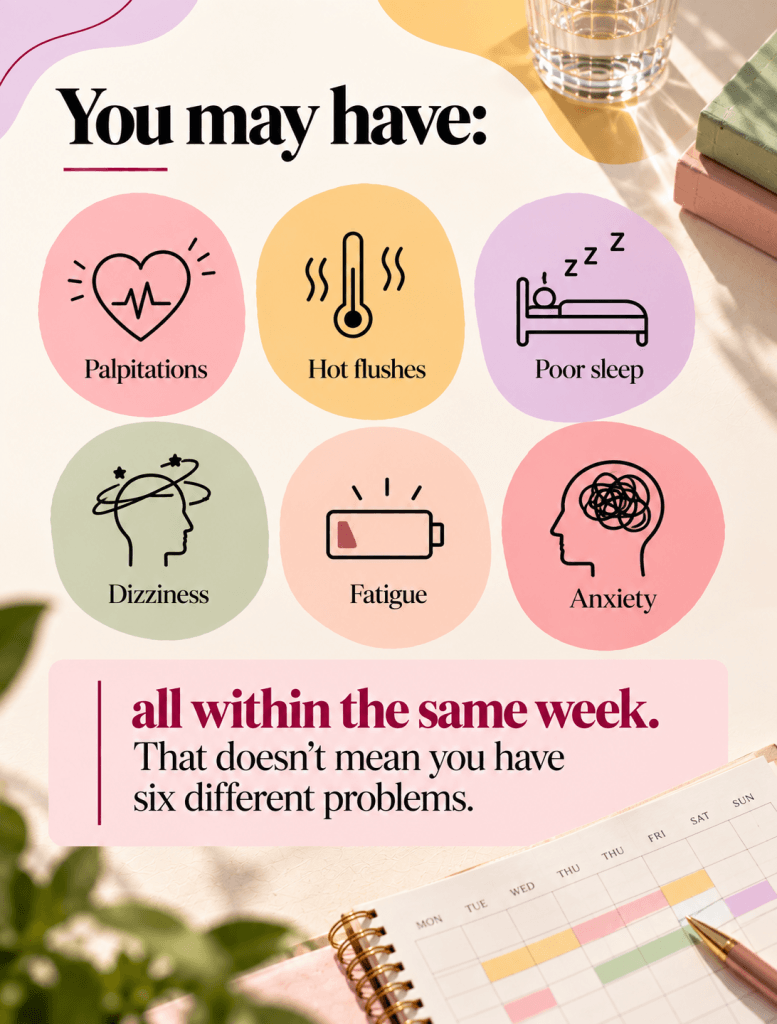
The menopausal transition itself can involve vasomotor symptoms such as hot flushes and night sweats, sometimes accompanied by palpitations, anxiety, dizziness and sleep disruption.
So instead of asking:
“Which symptom is the real one?”
It can be more useful to ask:
“What is happening in my body, and how am I responding to it?”
8. “It’s Just Anxiety” Isn’t a Helpful Answer

At the same time, not every physical symptom should automatically be attributed to anxiety.
Thyroid problems, anaemia, medication effects, blood-sugar changes, heart-rhythm problems and sleep disorders can all produce symptoms that overlap with anxiety.
So the order matters: Assess new symptoms appropriately. Then work on the anxiety around them.
That’s not overreacting.
That’s good care.
9. You Can Learn to Stop Being Afraid of Every Sensation
This may be the most important shift.
The goal isn’t to become someone who never notices her heartbeat, never feels dizzy and never gets a flutter in her stomach.
The goal is to stop every sensation from becoming a catastrophe.
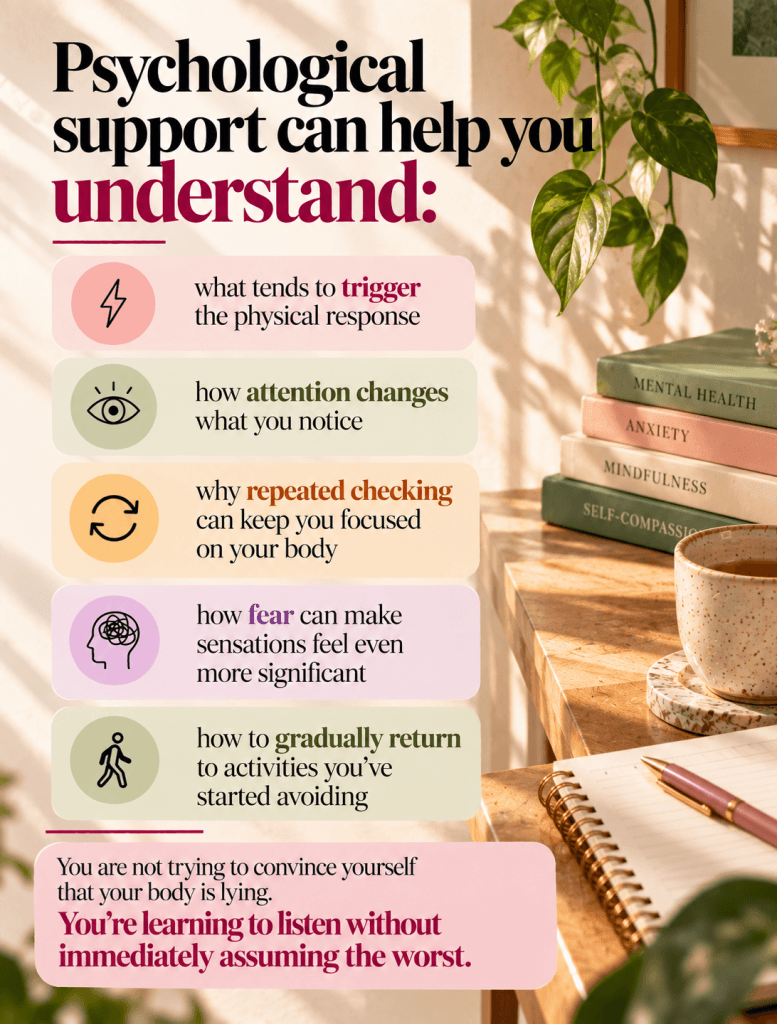
What Helps When Your Body Won’t Stop Sending Signals?
Start with curiosity rather than fear.
Ask:
What did I notice first?
Was I already stressed or exhausted?
Had I slept badly?
Was I having a hot flush or another familiar menopausal symptom?
What did I immediately tell myself the sensation meant?
And if this keeps happening, don’t carry the entire puzzle alone.
A doctor can assess the physical side.
A psychologist can help with the fear, attention, avoidance and emotional response that may grow around the symptoms.
You may need both.
What I’d Want You to Leave With
Your body is not betraying you.
And you are not imagining what you feel.
Sometimes anxiety creates very physical sensations. Sometimes menopause creates sensations that anxiety then notices more intensely. Sometimes there is a medical issue that needs attention.
You don’t have to decide which one it is by yourself.
You can get the body checked.
You can understand the pattern.
And you can slowly rebuild trust in your own sensations.
How Miror Can Help?
You Don’t Have to Figure Out Your Body Alone
Menopause doesn’t happen in isolation. Physical symptoms, sleep, anxiety, mood and everyday life can all overlap — and figuring out where to start can feel overwhelming.
Miror is India’s largest and only 360-degree integrative women’s wellness ecosystem and community, bringing expert guidance, trusted health information and support together across the different stages of a woman’s life.
Whether you’re worried about palpitations, trying to understand menopause anxiety, making sense of unfamiliar physical symptoms, or looking for emotional support, you can connect with Miror doctors, health experts and mental-health experts through the app.
Your symptoms deserve to be understood — not dismissed.
Consult Miror doctors. Talk to Miror experts and mental-health professionals today.