

Perimenopause anxiety can make you question your own body.
Your heart starts racing. You feel shaky or light-headed. You cannot sleep. You are exhausted and on edge. You may start worrying about your health.
And then comes the difficult question: “Is this anxiety or is something else going on?”
It is a reasonable question.
Anxiety can cause real physical symptoms, including a faster or more noticeable heartbeat, dizziness, nausea, sweating, trembling, breathlessness and chest discomfort. Perimenopause can bring some of those same sensations, alongside hot flushes, sleep disruption and mood changes.
(nhs.uk)
So the overlap is real. You do not need to become your own doctor to work it out.
Why the Answer Isn’t Always Obvious
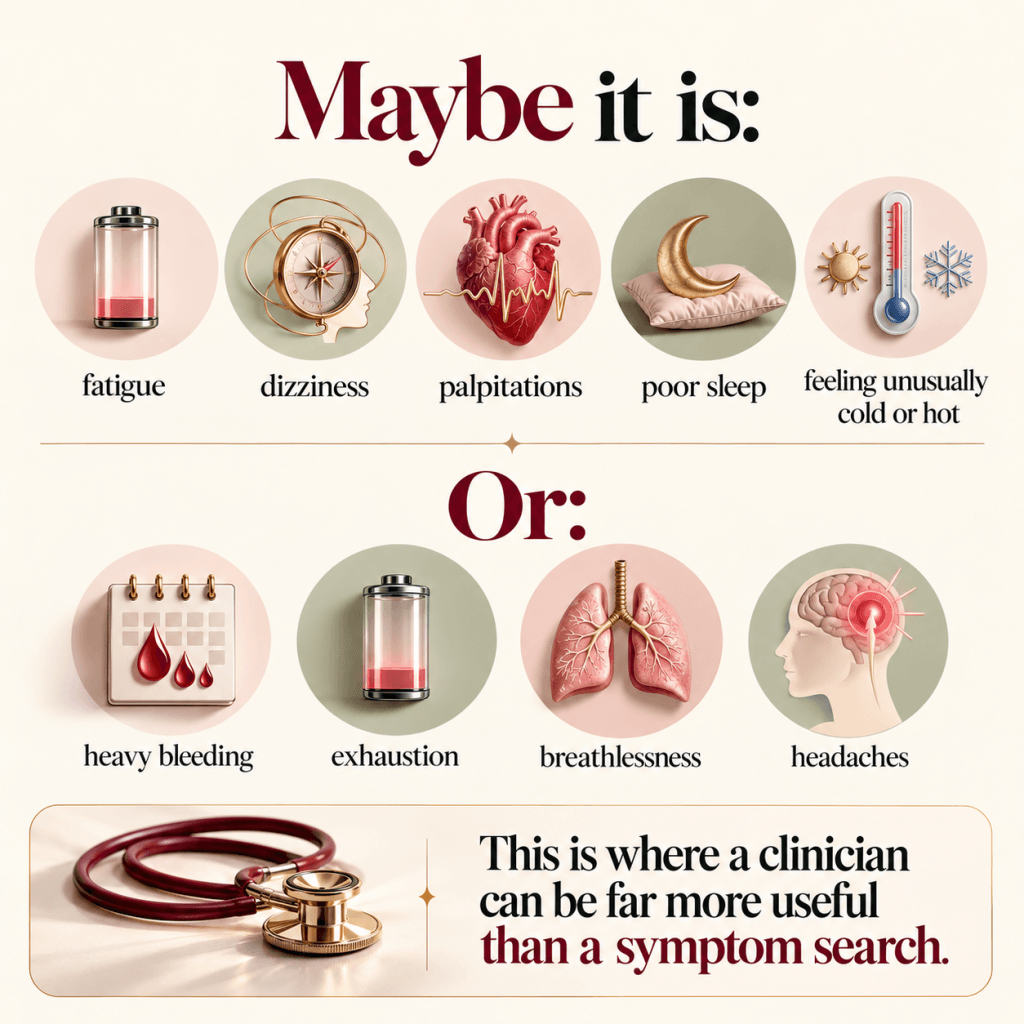
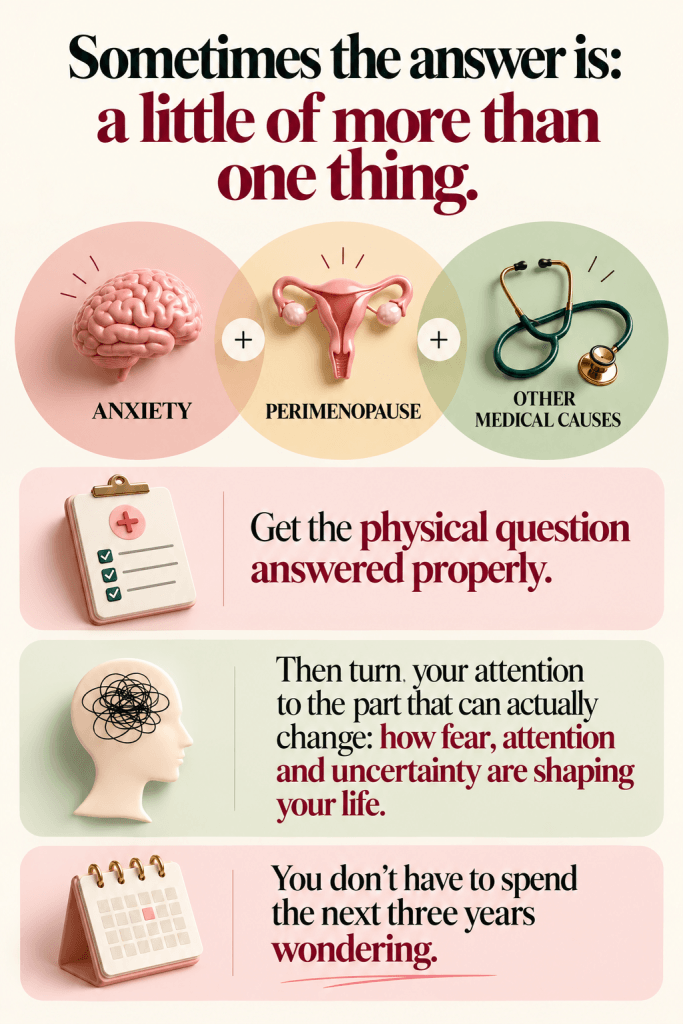
Think of three overlapping circles:
ANXIETY
worry, tension, physical arousal, checking and avoidance
PERIMENOPAUSE
hormonal changes, hot flushes, palpitations, sleep disruption, fatigue and emotional changes
OTHER MEDICAL CAUSES
thyroid problems, anaemia, heart-rhythm problems, blood-sugar changes, medication effects and other conditions
One woman can sit in two circles at once.
For example, a night sweat may wake you. Your heart may race. You become frightened by the sensation. Then anxiety takes over.
That doesn’t mean the anxiety wasn’t real.
It means the starting point and the maintaining factors may not be the same.
7 Signs You Shouldn’t Simply Assume It’s Anxiety
1. The symptoms are new, persistent or noticeably changing
Something that is unfamiliar deserves attention.
So does something that is becoming steadily more frequent, severe or disruptive.
You do not have to wait until a symptom becomes dramatic before mentioning it to your doctor.
The same applies to anxiety itself. New or worsening anxiety during the menopausal years is worth discussing with a clinician, particularly when it is affecting daily life.
(ACOG)
2. Your symptoms don’t fit the situation
Anxiety often changes with context.
You may feel worse before an important meeting and better when absorbed in something you enjoy.
But don’t use this as a home diagnostic test. Physical symptoms can fluctuate too.
The useful question is simply: “Does this happen in a recognisable pattern, or am I noticing something completely new?”
That distinction can help your doctor decide what needs further attention.
3. You’re losing weight without trying or feeling physically unwell
Unexplained weight loss shouldn’t simply be folded into an anxiety story.
The same is true of persistent fever or other new systemic symptoms.
You are not being dramatic by getting these checked.
You are doing exactly what you should do when your body is giving you information you don’t understand.
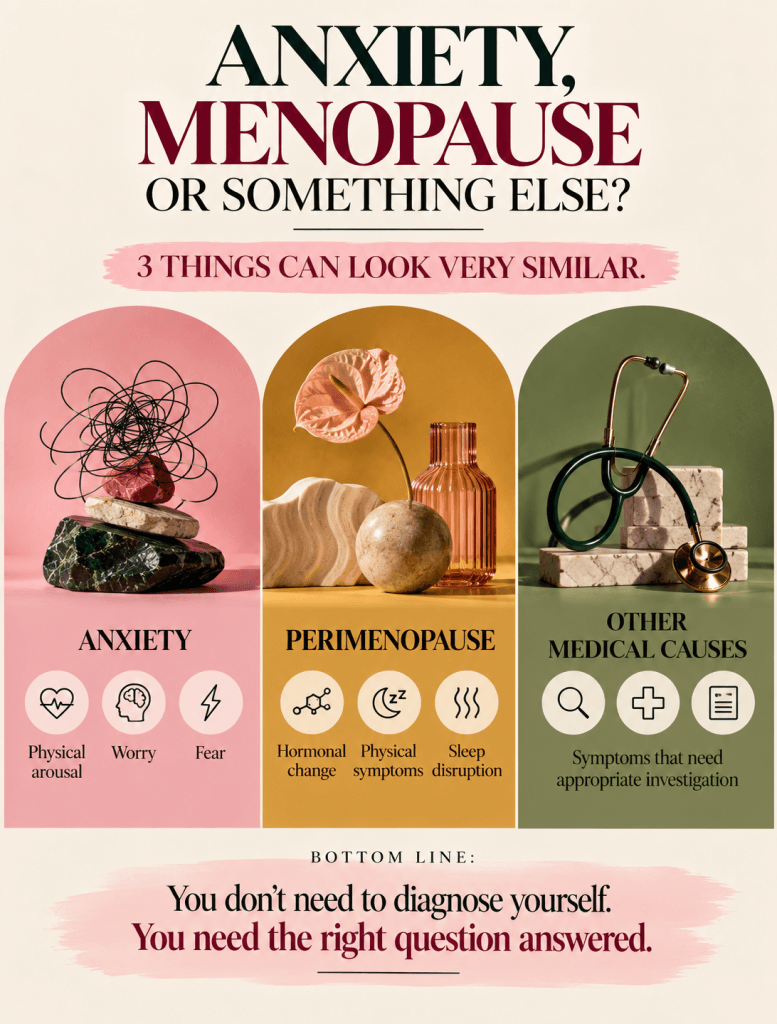
4. Palpitations come with fainting, exertion or other concerning symptoms
Palpitations can occur during anxiety and menopause.
But fainting or near-fainting, palpitations triggered by exertion, or a fast or irregular heartbeat that does not settle deserves medical assessment.
And chest pain should never automatically be labelled anxiety.
This is one place where reassurance is not enough.
5. Your symptoms are becoming progressively worse
Many anxiety symptoms fluctuate.
So do many menopausal symptoms.
But a symptom that is consistently progressing without meaningful periods of improvement deserves a medical look rather than endless self-reassurance.
That does not mean something serious is necessarily wrong.
It means the explanation is not yet clear.
And uncertainty is a good reason to get the right person involved, not a reason to panic.
6. You have several physical symptoms at once
Depending on your symptoms and history, your doctor may consider things such as thyroid problems, anaemia or iron deficiency, blood-sugar issues, medication effects or heart-rhythm problems.
There is no universal “perimenopause anxiety blood test.”
The assessment should be based on you.
7. The anxiety is now changing how you live
This is the point where psychology matters most.
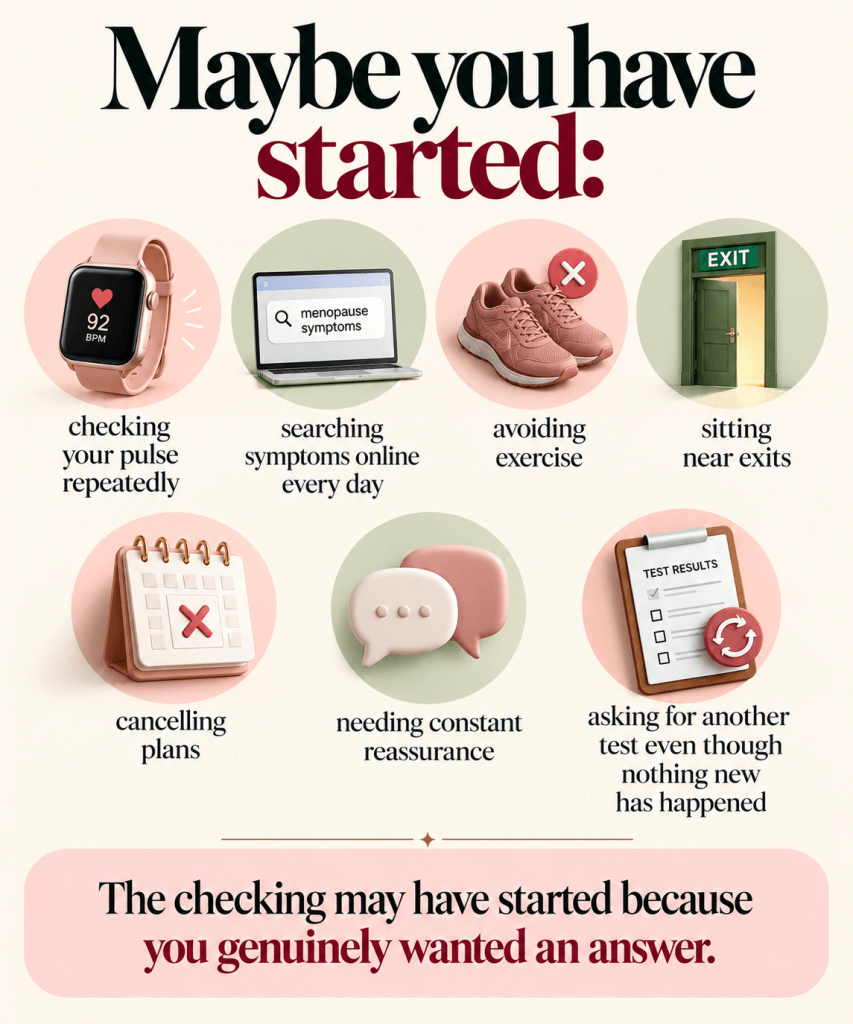
But eventually, the search for certainty can become its own source of distress.
A normal medical assessment should give you a plan, not a lifetime membership to Google.
When You’ve Been Properly Checked, You Can Stop Looking
This is an important part of psychological care.
Getting medical symptoms assessed is sensible.
Repeating the same reassurance indefinitely is different.
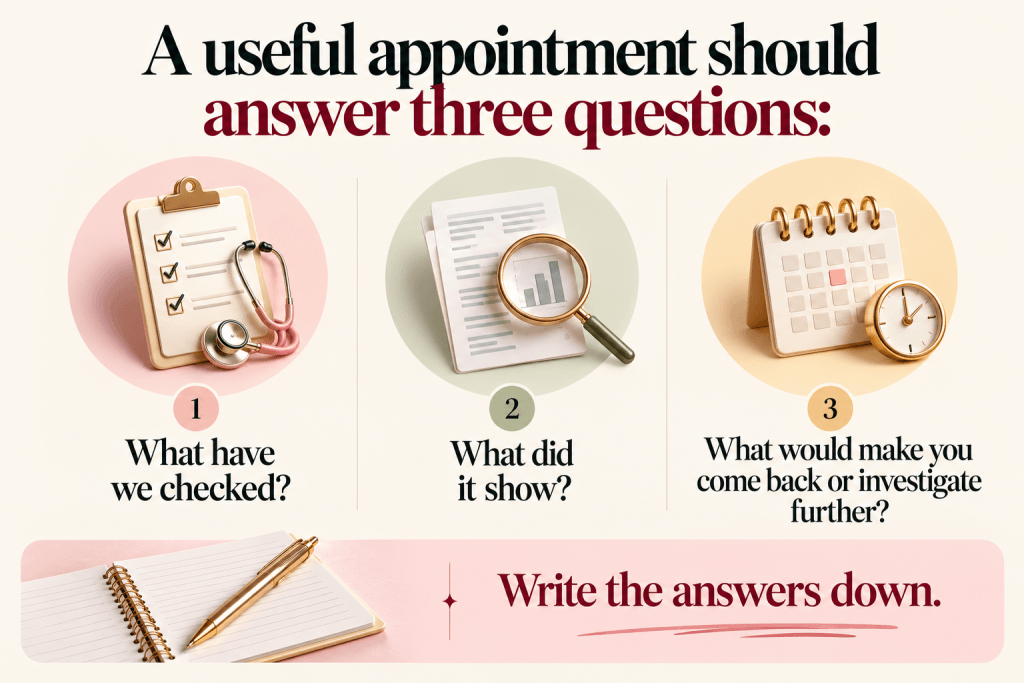
Having a clear plan can help turn:
“What if everyone has missed something?”
Into:
“I know what has been checked, and I know what would justify looking again.”
That small shift can be incredibly relieving.
What Happens After the Medical Question Has Been Answered?
This is where psychological support can help.
Not by telling you that every sensation is harmless.
Not by telling you to “think positive.”
But by helping you understand what happens after the sensation arrives.
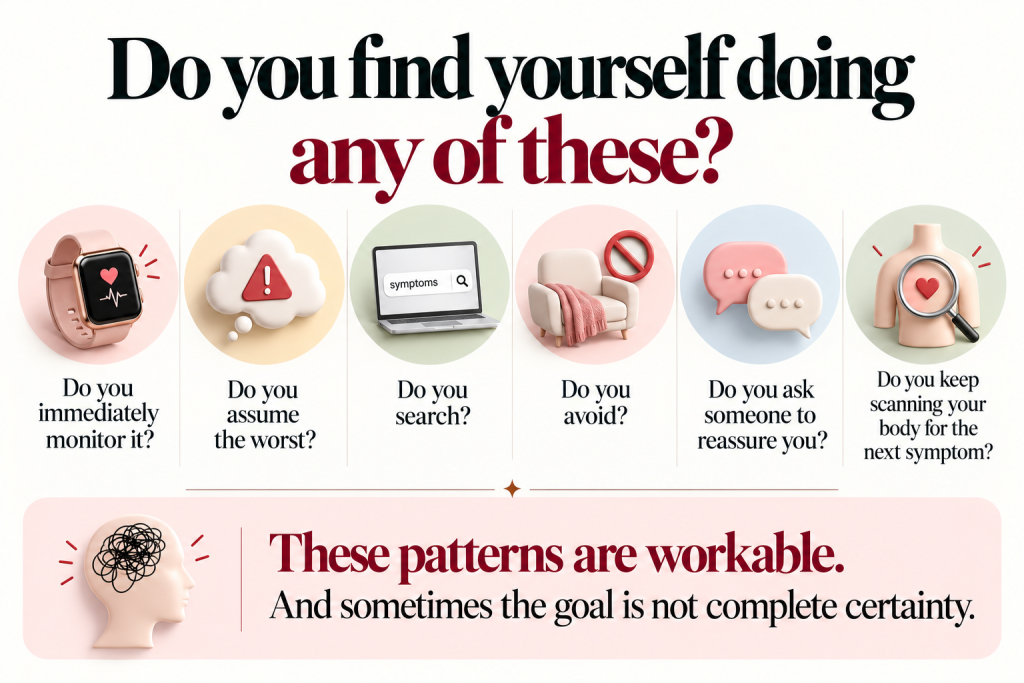
It is learning that you can live without checking every sensation for danger.
Don’t Dismiss New Symptoms. Don’t Be Frightened of Them Either!
There are two unhelpful extremes:
“It’s just menopause.”
And:
“Something must have been missed.”
You deserve something in between.
Get new or concerning symptoms assessed.
Then, when appropriate, give yourself permission to stop searching and start recovering.
That is where medical care and psychological care can work beautifully together.
What I’d Want You to Leave With
You are not “overthinking” simply because you noticed that something in your body feels different.
And you are not failing because you cannot immediately tell whether the cause is hormonal, physical or psychological.
How Miror Can Help You!
When you’re navigating perimenopause, it can be difficult to know whether to start with your symptoms, your hormones, your sleep, your anxiety or all of them at once.
Miror is India’s largest and only 360-degree integrative women’s wellness ecosystem and community, bringing expert guidance, trusted health information and support together across the different stages of a woman’s life.
With 95,000+ women, Miror has helped women access expert insights and support at the tip of a button.
Whether you’re trying to understand a new symptom, make sense of perimenopause anxiety, get medical guidance or talk through the emotional side of what you’re experiencing, you can connect with Miror doctors, health experts and mental-health experts through the app.
Know what’s happening.
Know who to ask.
Feel supported through it.
Consult Miror doctors.
Talk to Miror experts and mental-health professionals today.