
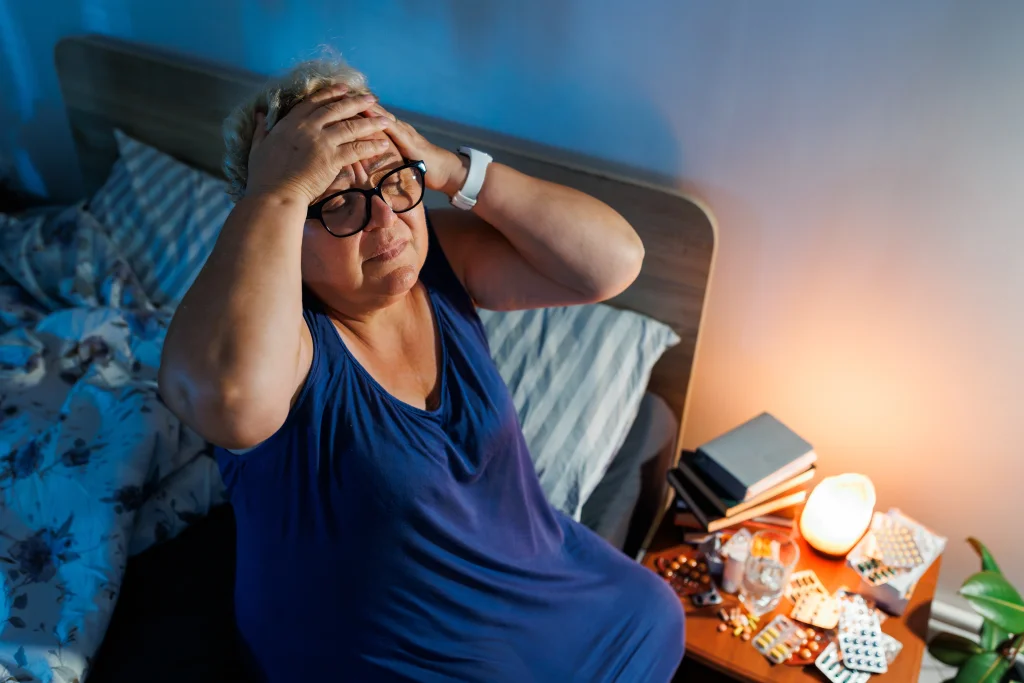
You finally fall asleep.
Then you wake at 2am.
You check the clock. You turn over. You calculate how many hours are left before work. At 4am, you’re still awake.
After enough nights like this, sleeping pills can sound like the obvious answer.
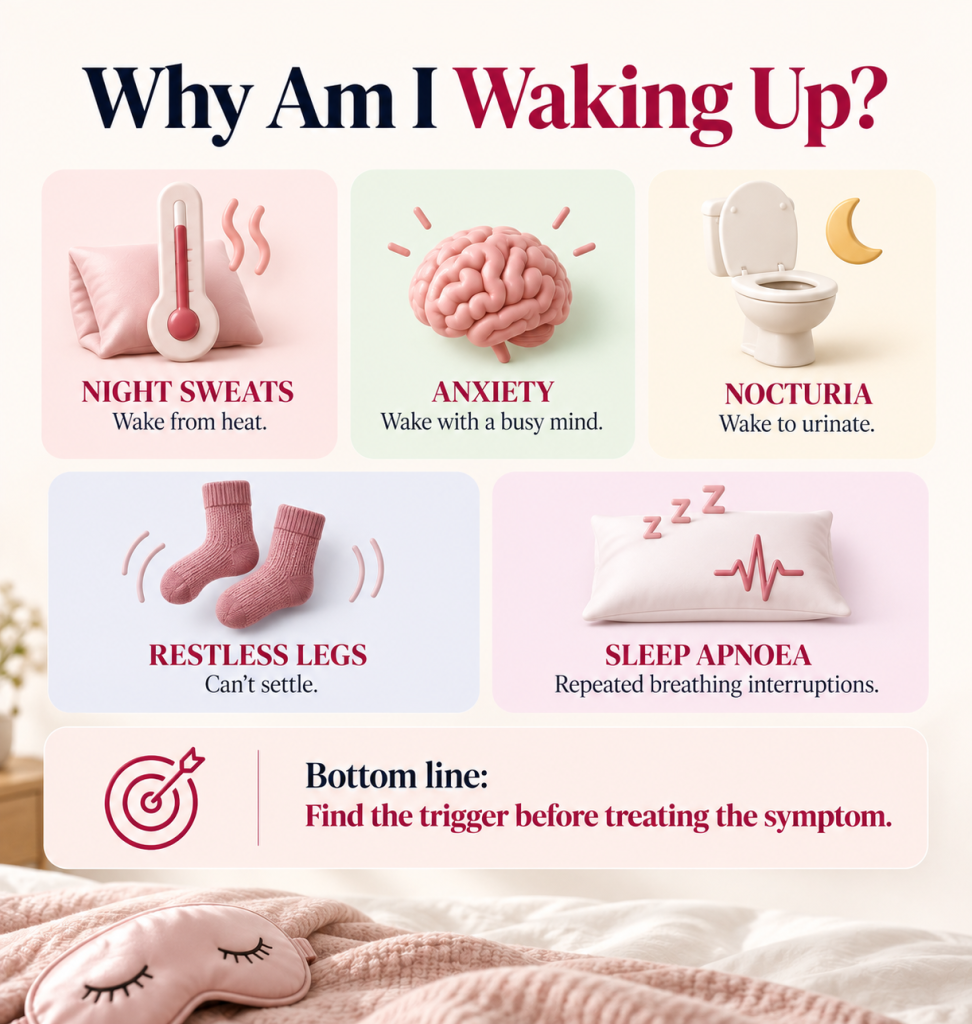
But menopause insomnia isn’t always a problem of simply being unable to sleep. For many women, the bigger problem is staying asleep and something may be waking you in the first place.
1. Menopause Insomnia Often Has a “Wake-Up” Problem
Sleep problems become more common around the menopause transition, and night-time awakenings are particularly common.
The trigger may be:
Night sweats or hot flushes
Anxiety or racing thoughts
Needing to urinate
Pain or restless legs
Hormonal changes affecting sleep
That distinction matters.
2. Don’t Miss Sleep Apnoea
This is the one I would especially want women to know about.
Obstructive sleep apnoea becomes more common after menopause, and women can present differently from the classic picture of loud snoring and obvious pauses in breathing.
Instead, they may complain of:
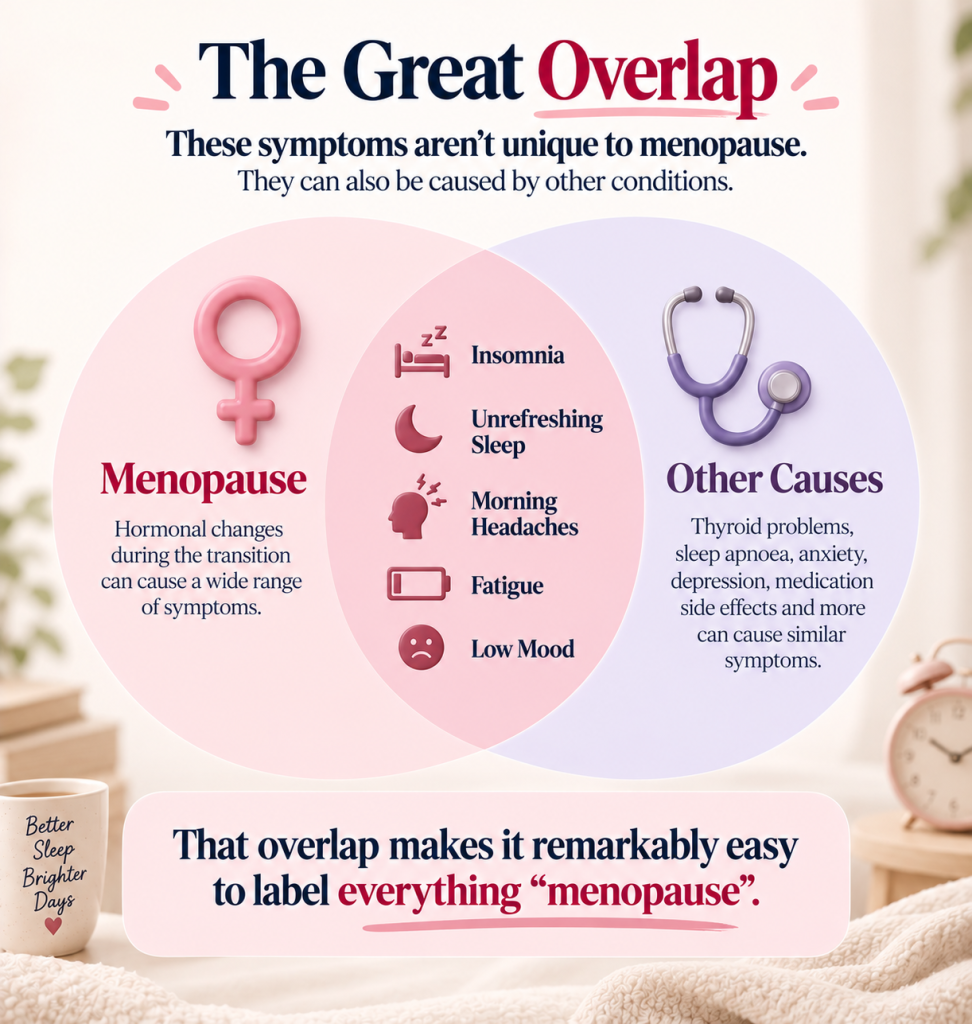
If you snore, wake gasping, feel exhausted despite spending enough time in bed, or someone has noticed pauses in your breathing, tell your doctor.
A sleep study may be much more useful than another sleeping tablet.
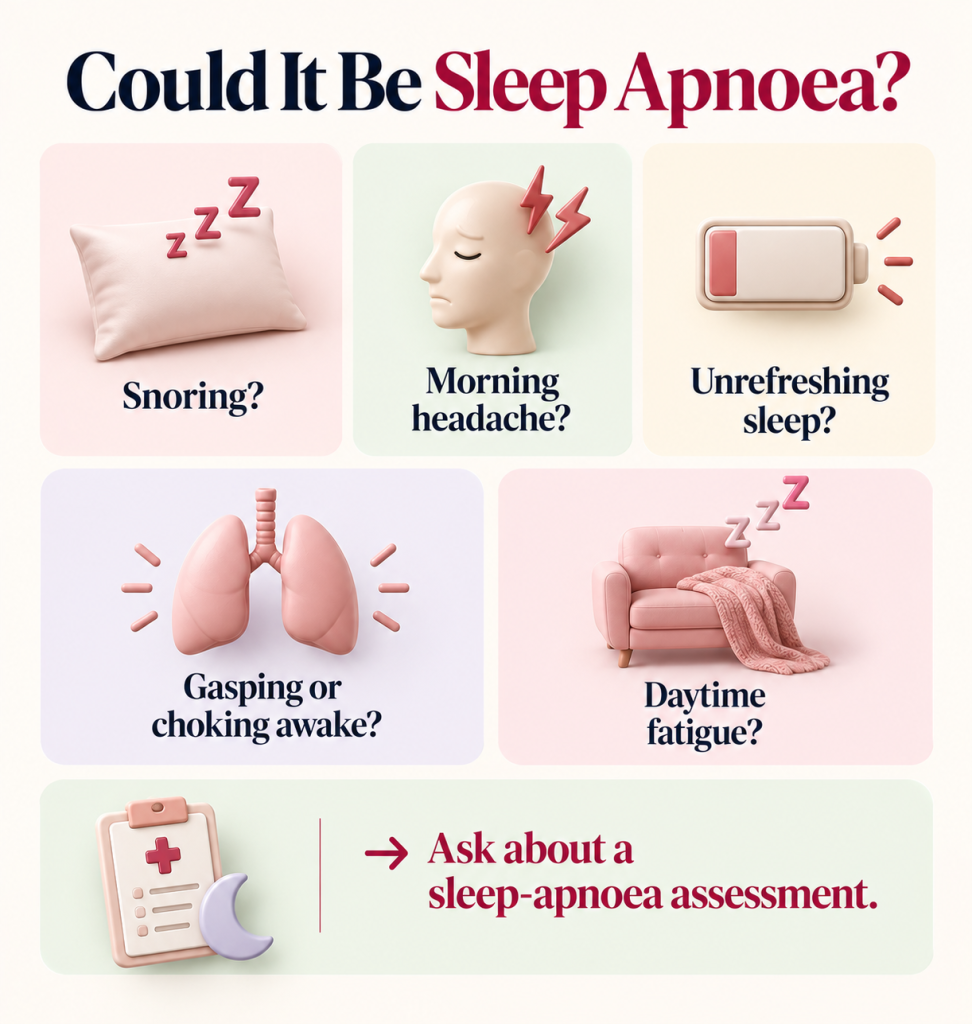
Untreated sleep apnoea deserves proper evaluation rather than being masked with sedating medicines.
3. Sleeping Pills Can Help, But They Have Limits
Sleeping tablets, including benzodiazepines and some newer hypnotics, can help people sleep in the short term.
The issue is what happens when they become the long-term strategy.
Depending on the medicine, concerns include:
| Potential problem | Why it matters |
|---|---|
| Tolerance | The same dose may become less effective |
| Dependence | Stopping suddenly may cause withdrawal or rebound insomnia |
| Next-day sedation | Can affect concentration and driving |
| Falls | Particularly important as bone health becomes a concern |
| Missed diagnosis | The underlying cause of poor sleep may remain untreated |
So the question isn’t “Do sleeping pills work?”
They can.
The better question is: “Why am I waking up, and do I still need the medicine once that is addressed?”
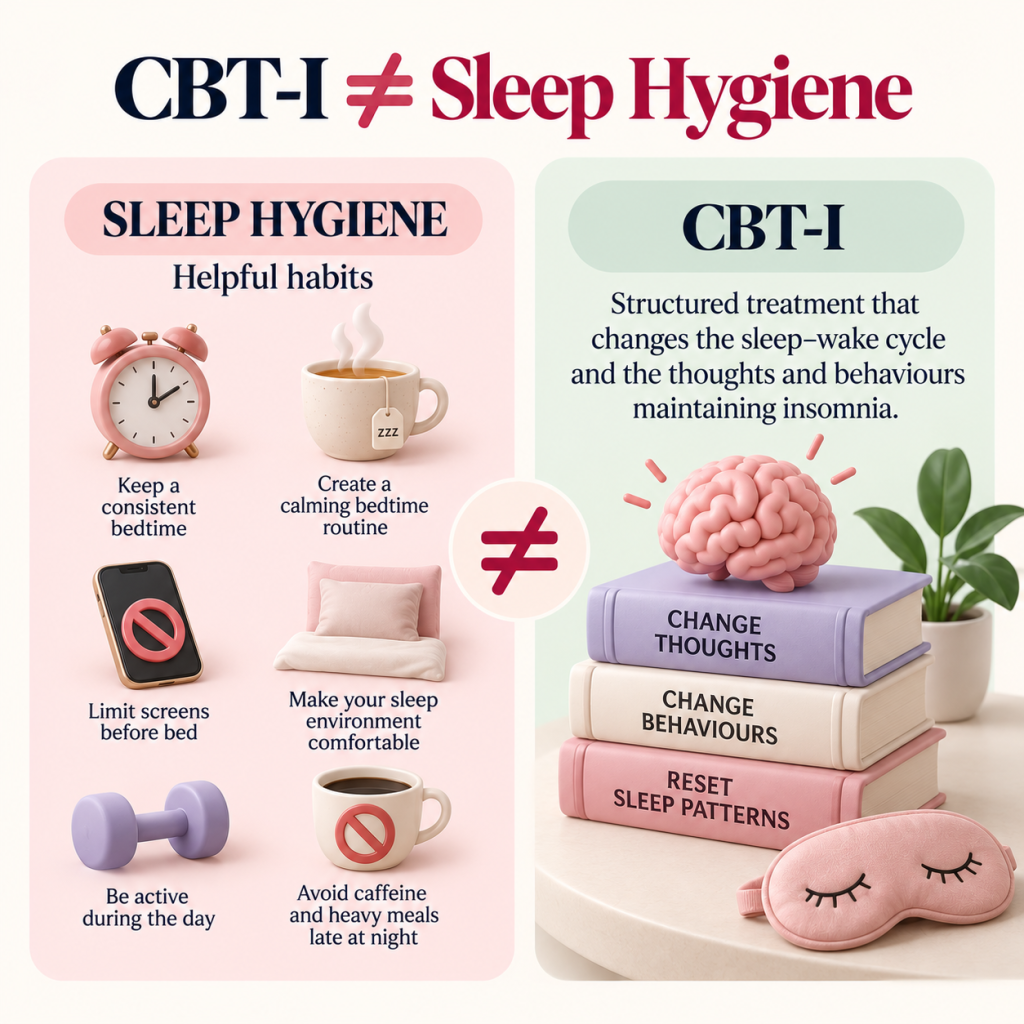
4. CBT-I Is Not Just “Improve Your Sleep Hygiene”
This distinction matters.
CBT-I — cognitive behavioural therapy for insomnia is a structured treatment, not a list telling you to stop using your phone before bed.
It can include:
Stimulus control
Breaking the association between bed and lying awake frustrated.
Sleep restriction therapy
Temporarily matching time in bed more closely to actual sleep time.
Cognitive work
Changing the anxious “I have four hours left!” thinking that keeps the brain switched on.
Relaxation techniques
In a randomised trial of 150 postmenopausal women with chronic insomnia, CBT-I produced significantly greater improvements than sleep-hygiene education, with benefits maintained at follow-up. (PubMed)
And current guidance recommends CBT-I rather than sleep hygiene alone for chronic insomnia.
(AASM)
5. Sometimes HRT Helps But for a Specific Reason
HRT can improve sleep for some women, particularly when night sweats and hot flushes are repeatedly waking them.
NICE now specifically recommends considering menopause-specific CBT for sleep problems associated with vasomotor symptoms, alongside options such as HRT.
(NIH)
So if your pattern is: hot flush → wake up → can’t get back to sleep
then treating the menopausal symptoms may improve the sleep problem.
That is different from saying: “HRT is a treatment for insomnia.”
It isn’t.
And if insomnia exists without significant menopausal symptoms, CBT-I is a much more direct treatment.
6. Check the Common Sleep Saboteurs
Before accepting menopause insomnia as the whole explanation, look for other contributors.
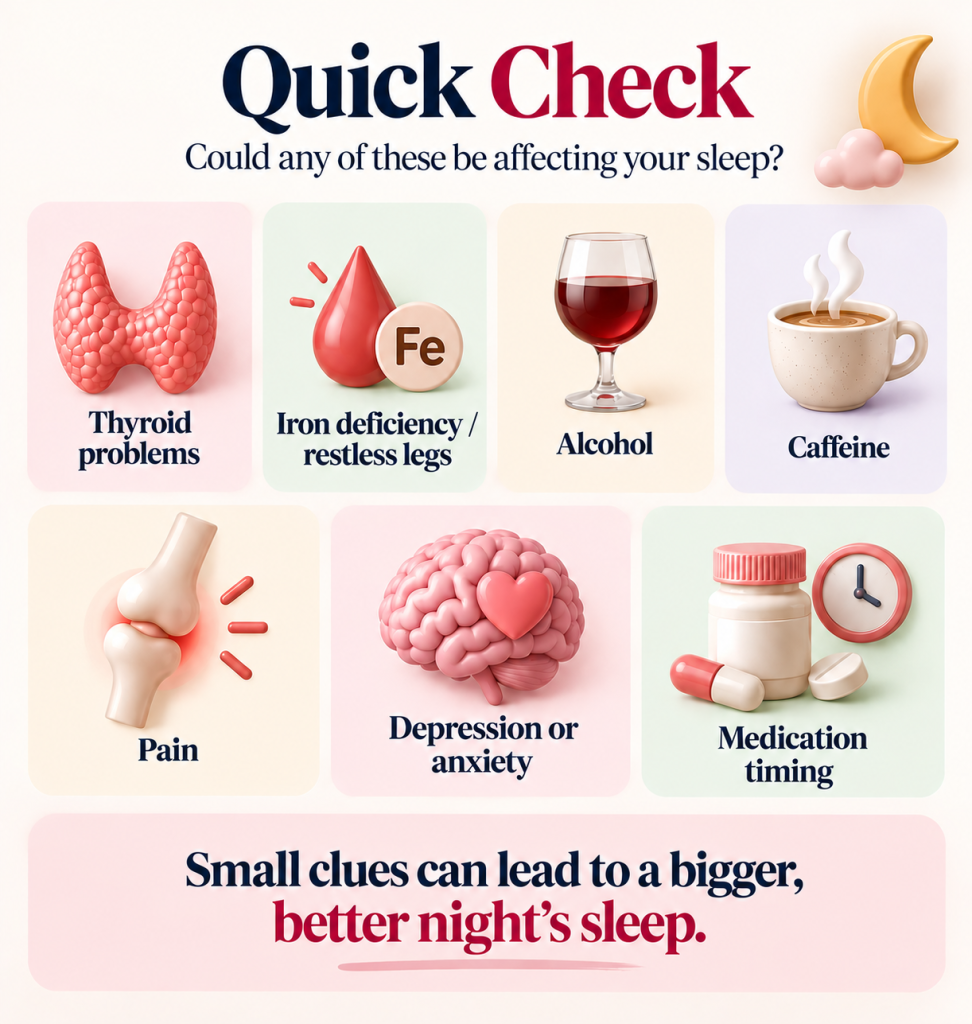
Heavy perimenopausal bleeding can also contribute to iron deficiency, which may worsen restless legs and disturb sleep.
The useful approach is targeted assessment rather than ordering every test available.
7. Don’t Stop a Sleeping Pill Abruptly
This deserves its own point because people often read one article, decide the medication is “bad”, and stop that night.
Please don’t.
Regular use of benzodiazepines in particular can lead to physical dependence, and abrupt discontinuation can cause withdrawal symptoms and rebound insomnia.
The safest approach is to discuss a gradual, clinician-guided reduction when stopping is appropriate.
The goal isn’t to swap one problem for another.
A Better Way to Think About Your Sleep
Instead of asking: “Which sleeping pill should I take?”
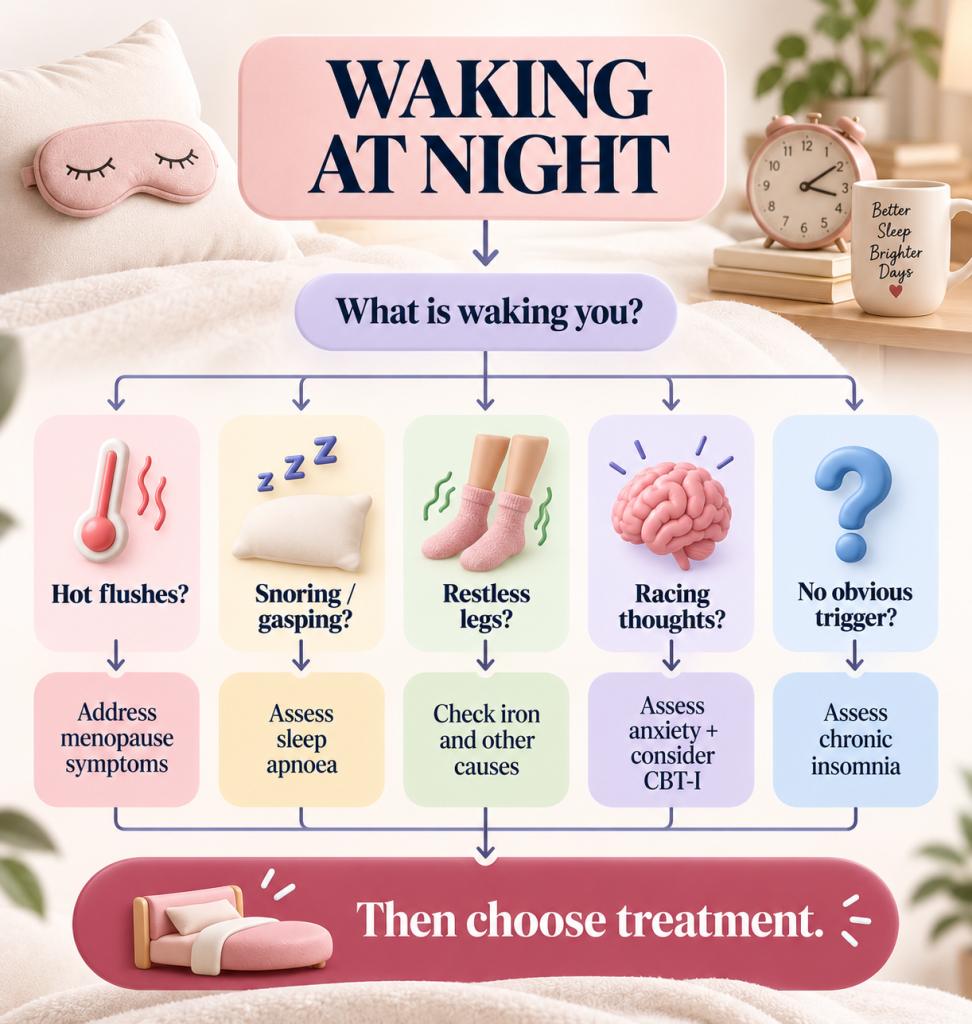
Start with: “What is waking me?”
Then build the treatment around that answer.
| What may be driving the problem | What may help |
|---|---|
| Night sweats / hot flushes | Menopause treatment, including HRT where appropriate |
| Chronic insomnia | CBT-I |
| Sleep apnoea | Sleep assessment and treatment |
| Restless legs / iron deficiency | Evaluate and correct the cause |
| Anxiety or depression | Appropriate psychological or medical treatment |
| Medication or alcohol effects | Review and modify with professional guidance |
Where Miror’s HRT Centre of Excellence Can Help You
Sleep in midlife is rarely just one problem.
At Miror’s HRT Centre of Excellence, your symptoms can be looked at together — night sweats, anxiety, sleep disruption, thyroid or iron-related concerns, while identifying when CBT-I, sleep assessment or another specialist referral makes more sense than HRT.
The aim is not simply to make you unconscious for eight hours. It’s to find out why you’re not sleeping in the first place.