

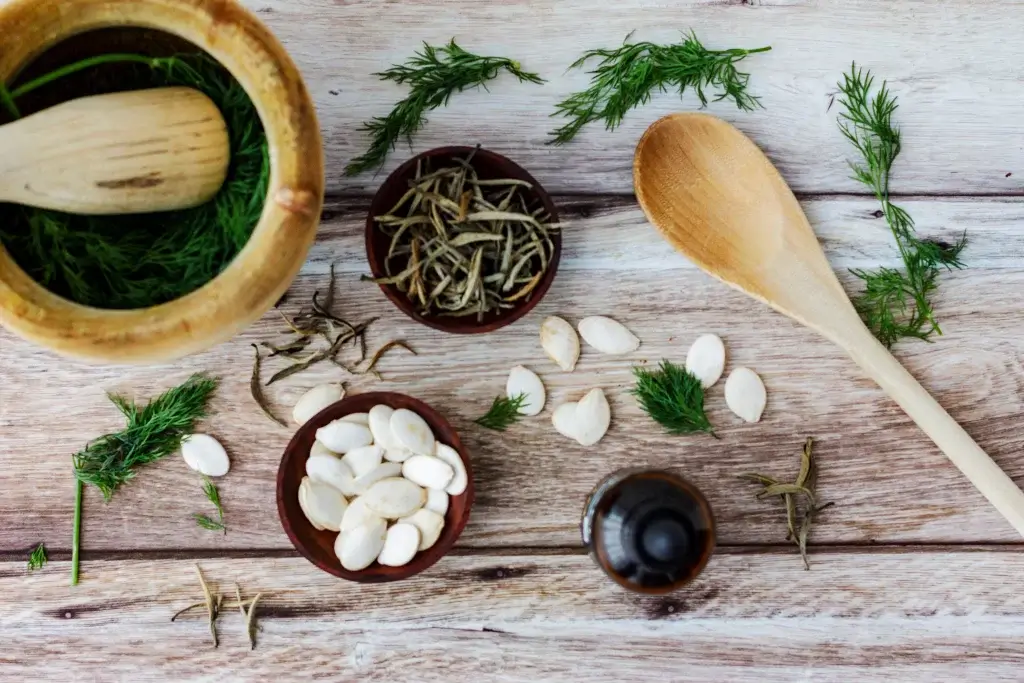
Some changes don’t arrive dramatically. They settle in quietly, almost in the background of your everyday life. You might notice that your sleep feels lighter than it used to, or that your energy doesn’t stretch as far through the day. It is often around this time that many women start looking for 7 natural menopause treatments that really work, trying to make sense of what their body is going through without jumping to extreme solutions.
There are moments when your mood feels slightly off without any clear reason, and you start to wonder if it’s just stress, work, or something else entirely. For many women, this is how perimenopause begins. It doesn’t come with a clear starting point. It builds gradually, through small shifts that eventually become hard to ignore.
As these changes become more noticeable, the instinct is often to look for support that feels gentle and sustainable. Something that does not feel extreme or overwhelming, but still makes a meaningful difference. This is where herbal remedies for menopause start to come into the conversation. The idea of supporting your body rather than forcing it into balance feels reassuring, especially during a phase that already feels uncertain.
At the same time, it is easy to feel overwhelmed by the number of options available. There is no shortage of herbal supplements for menopause being recommended everywhere, each promising relief in its own way. Some are genuinely helpful and backed by research or traditional use. Others sound convincing but do very little in practice. Understanding what actually works, what is safe, and what to avoid can make this phase feel far more manageable.
Why Herbal Remedies Can Help During Menopause
Menopause is often spoken about as a hormonal decline, but what most women experience first is fluctuation. During perimenopause, hormones like estrogen and progesterone do not decrease in a straight line. They move unpredictably, rising and falling in a way that can feel confusing to the body.
You may have days where everything feels completely normal, followed by stretches where your sleep is disrupted, your mood feels unfamiliar, or your energy dips without explanation. These shifts are not random. They are part of your body adjusting to a new internal rhythm.
Natural menopause remedies, including 7 natural menopause treatments that really work, can help during this phase because they support the body’s ability to adapt. Instead of forcing hormone levels to change, many herbs work by calming the nervous system, supporting endocrine function, or helping the body respond better to stress.
This kind of support is subtle but important. It allows your body to find its balance gradually, rather than pushing it in a direction it is not ready for.
7 Natural Menopause Treatments That Really Work
1. Black Cohosh — One of the Most Trusted Options
Black cohosh menopause support continues to be one of the most widely studied herbal approaches for managing symptoms, particularly hot flashes and night sweats. Some research suggests it may help ease these symptoms, although findings are still mixed and more consistent evidence is needed.
What makes it effective is that it does not directly act like estrogen. Instead, it appears to influence pathways in the brain that are connected to temperature regulation and emotional balance. This makes it a supportive option without aggressively altering hormone levels.
It works best when used for shorter periods or under guidance, rather than as a long-term, unsupervised solution.
2. Shatavari — A Foundation for Hormonal Balance
Shatavari has long been used in Ayurveda as a supportive herb for women’s health. During perimenopause, when hormones fluctuate rather than decline steadily, this kind of gentle support can be particularly valuable.
It helps the body maintain hormonal balance, supports reproductive health, and can ease some of the emotional fluctuations that come with this phase. Many women describe feeling more stable overall rather than noticing a dramatic change in a single symptom.
Its strength lies in consistency. Over time, it helps the body feel more grounded.
3. Ashwagandha — Managing Stress That Amplifies Symptoms
Stress plays a larger role in menopause than it is often given credit for. When cortisol levels are high, symptoms like poor sleep, anxiety, and fatigue tend to intensify.
Ashwagandha works as an adaptogen, helping the body regulate its stress response. This can lead to better sleep, improved emotional balance, and a greater sense of calm throughout the day.
For many women, addressing stress becomes the turning point. When the nervous system feels more supported, other symptoms often begin to ease as well.
4. Evening Primrose Oil — Supporting Skin and Subtle Symptoms
Evening primrose oil contains essential fatty acids that support skin health and may help with breast tenderness and mild hot flashes. Its effects are not immediate or dramatic, but they can be noticeable over time.
It works best as part of a broader approach, adding a layer of support rather than acting as the main solution.
5. Lodhra and Ashoka — Traditional Support for Hormonal Rhythm
Often overlooked in mainstream conversations, herbs like Lodhra and Ashoka have been used traditionally to support uterine health and regulate cycles. During perimenopause, when cycles can become irregular or uncomfortable, these herbs can offer steady support.
They are particularly helpful for women experiencing PMS-like symptoms, inflammation, or discomfort that feels similar to earlier hormonal phases. Instead of targeting menopause as an isolated phase, they support the broader reproductive system, which is still active during perimenopause.
6. Magnesium — The Quiet but Powerful Support
Magnesium plays a role in over 300 processes in the body, yet it is one of the most commonly overlooked nutrients. During menopause, it becomes especially important.
It supports better sleep, helps regulate mood, reduces muscle tension, and can ease feelings of anxiety. Many women find that even a small increase in magnesium intake leads to noticeable improvements in how they feel day to day.
It is simple, effective, and often underestimated.
7. Multi-Ingredient Support — When Symptoms Overlap
One of the realities of menopause is that symptoms rarely appear in isolation. You might be dealing with poor sleep, mood swings, fatigue, and hormonal imbalance all at the same time.
Menopause is often spoken about as a hormonal decline, but what most women experience first is fluctuation. During perimenopause, hormones like estrogen and progesterone do not decrease in a straight line. They move unpredictably, rising and falling in a way that can feel confusing to the body.
You may have days where everything feels completely normal, followed by stretches where your sleep is disrupted, your mood feels unfamiliar, or your energy dips without explanation. These shifts are not random. They are part of your body adjusting to a new internal rhythm.
Natural menopause remedies, including 7 natural menopause treatments that really work, can help during this phase because they support the body’s ability to adapt. Instead of forcing hormone levels to change, many herbs work by calming the nervous system, supporting endocrine function, or helping the body respond better to stress.
This is where a well-balanced, multi-ingredient approach can make more sense, especially when you come back to a smaller set of options that actually help, like 7 natural menopause treatments that really work.
Instead of layering multiple supplements, a thoughtfully designed formulation brings together ingredients that support different aspects of the body at once. For example, combining adaptogens for stress, herbs for hormonal balance, and nutrients for energy and bone health creates a more complete form of support.
This is also where something like Miror Bliss fits in naturally. It includes ingredients like ashwagandha for stress, shatavari for hormonal balance, magnesium for sleep, and black cohosh for hot flashes, among others. The idea is not to target just one symptom, but to support the body as a whole through a phase where everything feels interconnected .
What Works vs What to Be Careful With
Effectiveness and Safety of Common Remedies
Remedy | What It Helps With | How Well It Works | Safety Considerations |
Black Cohosh | Hot flashes, mood | Strong | Avoid prolonged unsupervised use |
Shatavari | Hormonal balance | Moderate | Generally safe |
Ashwagandha | Stress, sleep | Strong | Check for thyroid conditions |
Evening Primrose | Skin, mild symptoms | Moderate | Works gradually |
Lodhra & Ashoka | Cycle regulation, PMS | Moderate | Traditionally safe |
Magnesium | Sleep, anxiety | Strong | Very safe |
Multi-ingredient | Multiple symptoms | Strong | Depends on formulation quality |
What to Avoid, Even If It Sounds Natural
It is easy to assume that if something is natural, it is automatically safe. That is not always true.
Taking too many herbal supplements for menopause at the same time can overwhelm your system and make it difficult to understand what is actually helping. It can also increase the risk of unwanted interactions.
Products that claim to dramatically “boost estrogen” should also be approached with caution. These claims are often not well regulated and may not be supported by reliable evidence.
Even with natural menopause remedies, the most effective approach is usually the simplest one. Consistency matters more than quantity.
Choosing What Works for You
There is no single solution that works for everyone. Some women find that their main struggle is sleep, while others feel more affected by mood changes or physical symptoms like hot flashes.
If you’ve already tried a few things and nothing seems to stick, it might help to simplify instead of adding more. Coming back to a smaller set of 7 natural menopause treatments that really work can feel less overwhelming and easier to stay consistent with.
It is also important to remember that herbal support works best alongside everyday habits. Regular movement, balanced meals, and a steady routine can make a noticeable difference in how your body responds during this phase.
FAQs
Natural menopause remedies can be effective when chosen carefully and used consistently. They do not provide instant results, but they support the body gradually, which often leads to more stable and lasting improvements over time. The key is to match the remedy to your specific symptoms rather than trying everything at once.
Combining herbs can be helpful, but it should be done thoughtfully. Taking too many supplements at once can make it difficult to track progress and may lead to unwanted interactions. A well-formulated blend is often a more balanced and convenient option.
Yes, in fact, starting during perimenopause can be especially helpful. This is the phase where symptoms begin to appear, and early support can make the transition smoother and less disruptive over time.
Look for formulations that address multiple symptoms in a balanced way rather than focusing on just one issue. Quality of ingredients, appropriate dosages, and how well the supplement fits into your daily routine are all important factors to consider.
Yes, many herbal remedies for menopause are designed to support both physical and emotional changes at the same time. Ingredients like ashwagandha and magnesium can help ease stress, anxiety, and sleep disturbances, while others like black cohosh or shatavari support hormonal balance and reduce symptoms like hot flashes. Since these symptoms are often connected, addressing them together can lead to more noticeable and consistent relief over time.