

It can feel as though you’ve burnt your mouth on something.
Except you haven’t.
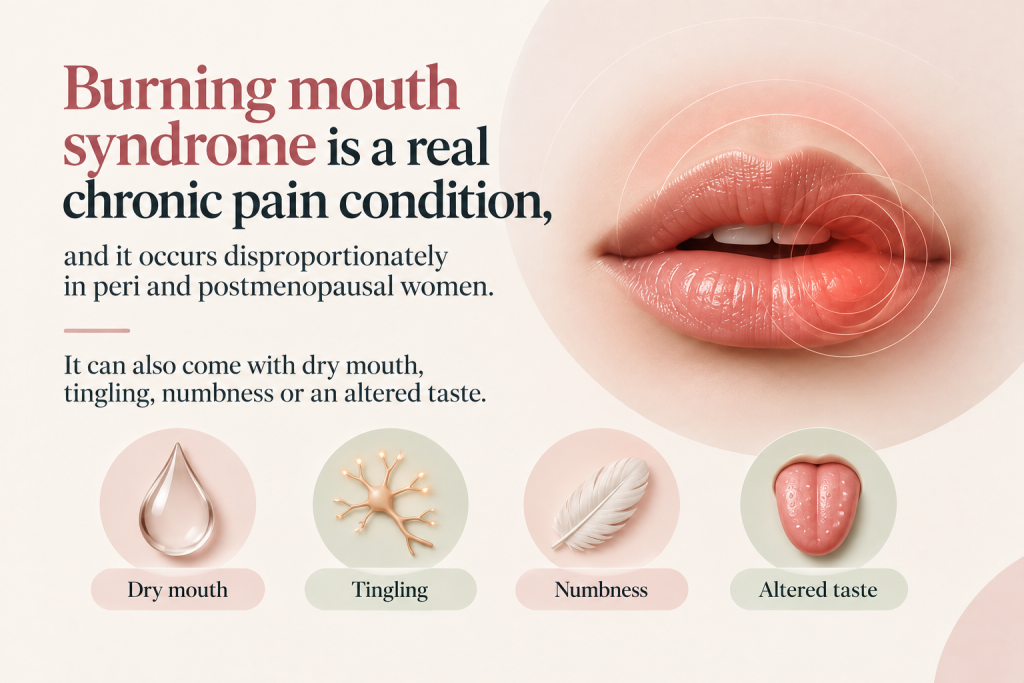
Your tongue stings. Your lips feel hot. Food suddenly tastes metallic or strangely bitter. Your mouth feels dry even when you’re drinking normally.
And because there’s often nothing obvious to see, women can spend months wondering whether they’re imagining it.
They’re not.
 (Cambridge University Hospitals)
But menopause is only one possible piece of the puzzle.
What Exactly Is Burning Mouth Syndrome (BMS)?
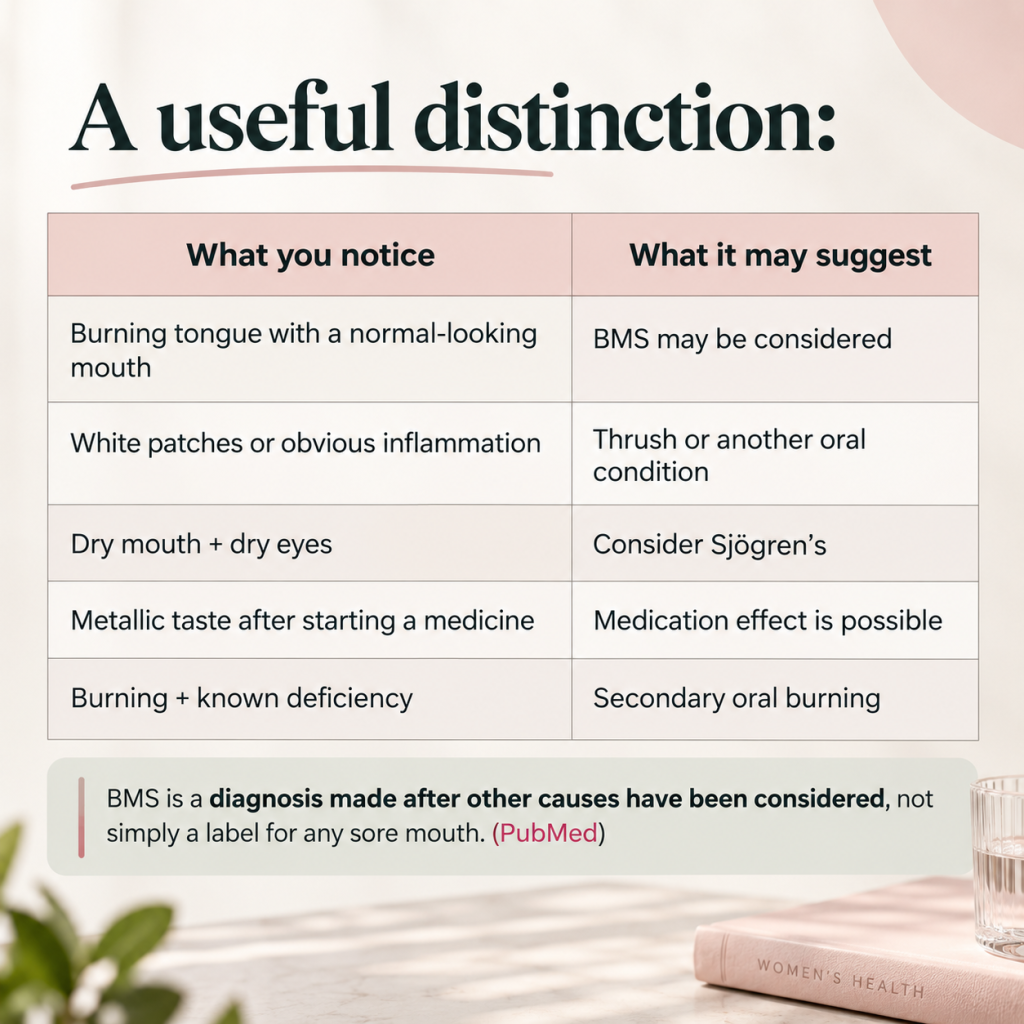
Burning mouth syndrome (BMS) describes persistent or recurring burning, scalding or painful sensations in the mouth, most commonly the tongue, lips or palate; when examination does not reveal another clear cause.
Taste changes are common too. Women may describe a metallic, bitter, salty or unpleasant taste, along with dryness or tingling. Symptoms can build through the day and may become more noticeable with spicy or acidic foods.
(PubMed)
Why Does It Happen Around Menopause?
This is where the science gets interesting and appropriately cautious.
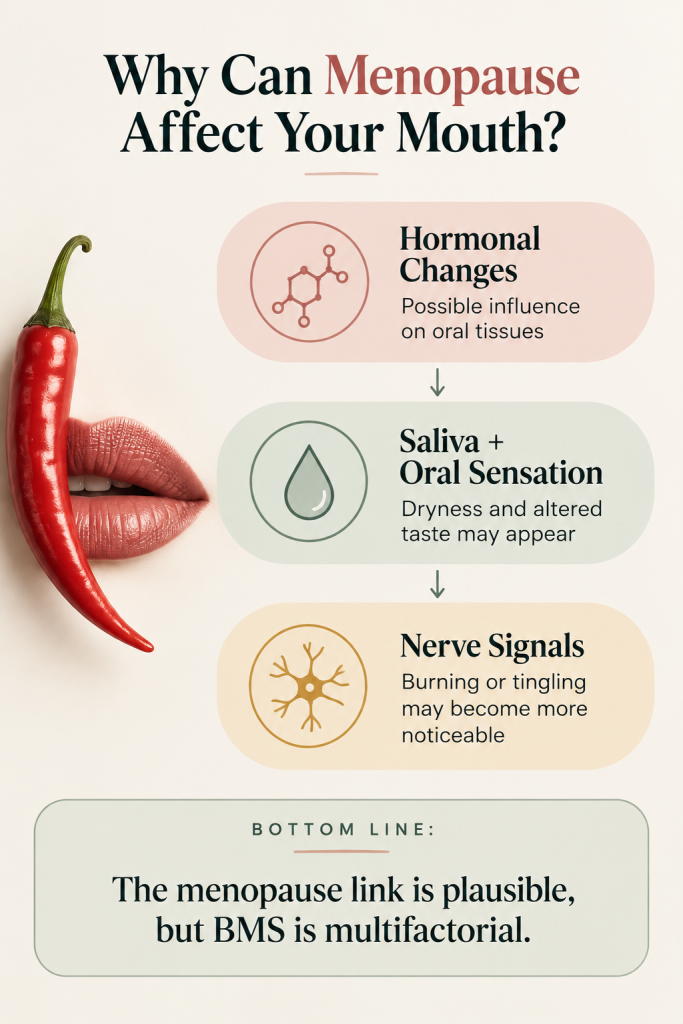
Burning mouth syndrome is much more common in women and often appears around or after menopause. Hormonal changes are therefore thought to play a role, and estrogen receptors are present in oral tissues and salivary glands. (PubMed)
But we cannot honestly say: “Your estrogen dropped, therefore you have burning mouth syndrome.”
“A 2024 systematic review found that estradiol findings were contradictory across the available studies, and hormone levels did not consistently correlate with how severe women’s symptoms felt.”
(PubMed)
There may also be changes in how sensory nerves in the mouth process pain, temperature and taste. This is one reason BMS is increasingly viewed as having a neuropathic component, rather than being simply an inflammation or hormone problem.
The Metallic Taste May Be Part of the Same Story
That strange metallic taste in your mouth can be surprisingly persistent.
In BMS, altered taste is a recognised accompanying symptom. But metallic taste has many other possible causes too, including medicines, gum disease, upper-respiratory infections, indigestion and changes in smell.
(nhs.uk)
So don’t assume every metallic taste is hormonal.
A simple medication review can sometimes be more useful than a complicated investigation.
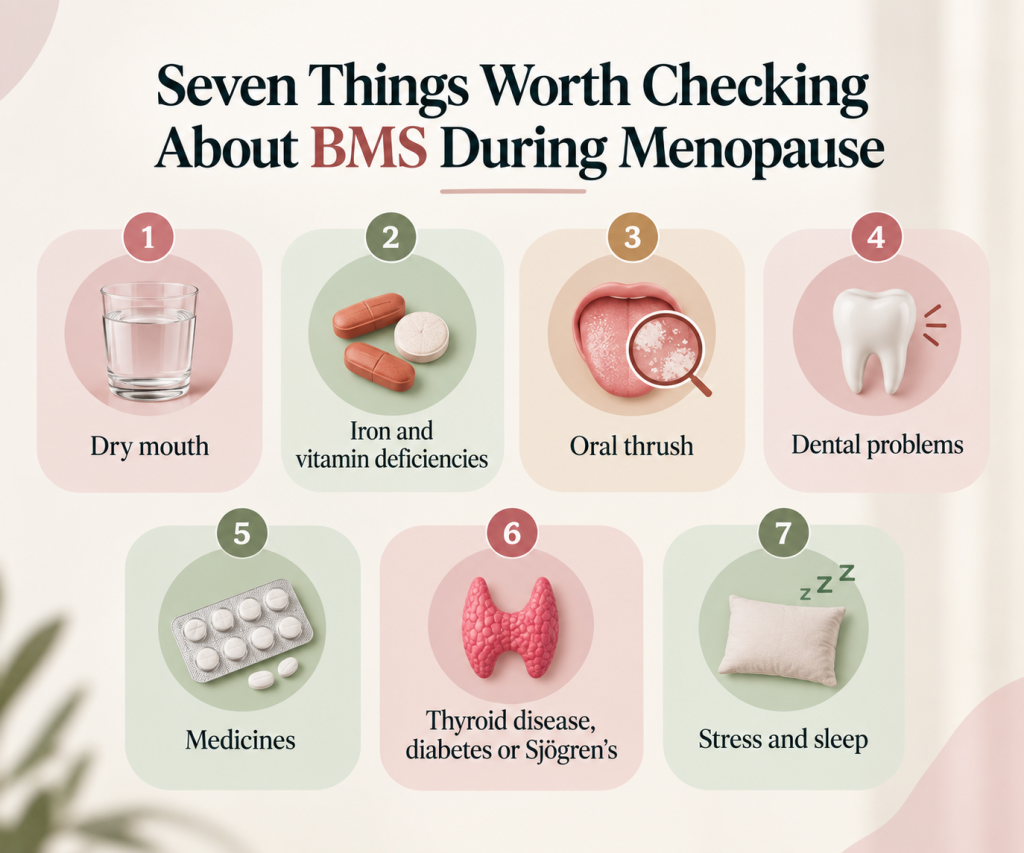
Seven Things Worth Checking About BMS During Menopause
1. Dry mouth
Reduced saliva can make the mouth feel sore and alter taste. Medicines, dehydration, anxiety, diabetes and Sjögren’s disease can all contribute. (nhs.uk)
2. Iron and vitamin deficiencies
Iron, vitamin B12 and other nutritional deficiencies can cause oral symptoms and should be considered when the history suggests them. (Cambridge University Hospitals)
3. Oral thrush
Thrush can cause soreness or burning but usually produces oral changes that can be seen on examination. It needs different treatment from primary BMS.
4. Dental problems
Ill-fitting dentures, dental procedures, gum disease and irritation from oral products can all produce burning or altered sensations.
(Hey NHS)
5. Medicines
Some medicines can contribute to dry mouth or taste disturbance. Don’t stop prescribed medication yourself; ask your doctor or pharmacist to review the list.
(nhs.uk)
6. Thyroid disease, diabetes or Sjögren’s
Systemic conditions can overlap with menopause symptoms and may need their own treatment. Sjögren’s is particularly worth considering when dry eyes and dry mouth occur together.
7. Stress and sleep
BMS symptoms can become more noticeable during periods of stress, anxiety or poor sleep. That doesn’t make the pain imaginary; it reflects how pain processing and attention interact.
(UCLH)
What Actually Helps?
The frustrating answer is that there isn’t one universal BMS treatment.
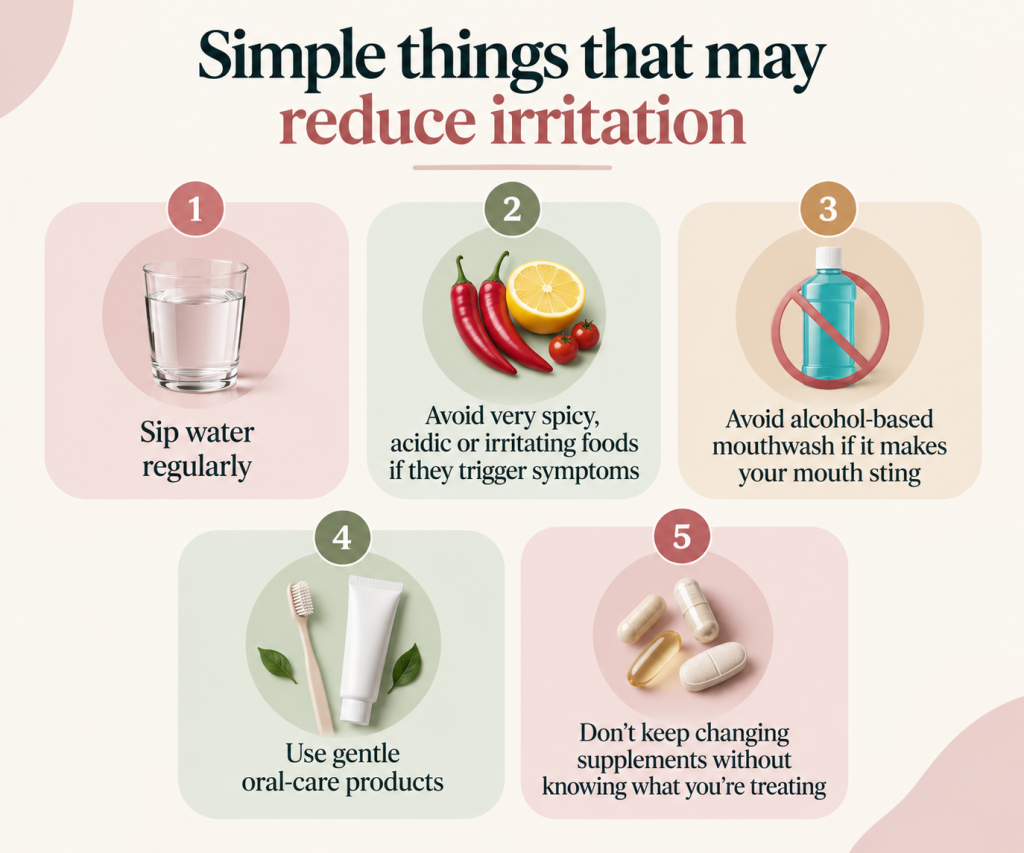
The first step is to find and correct an identifiable cause where one exists — for example, treating oral thrush, correcting a documented deficiency, managing dry mouth or addressing a dental problem.
(Hey NHS)
When no underlying cause is found, treatment focuses on reducing the burning and improving quality of life.
Depending on the diagnosis, an oral-medicine specialist may consider approaches such as topical clonazepam, other neuropathic-pain treatments or psychological therapies such as CBT. Evidence exists for several approaches, but overall treatment evidence remains modest and no single therapy works for everyone.
(PubMed)
Does HRT Treat Burning Mouth Syndrome?
This deserves a very clear answer.
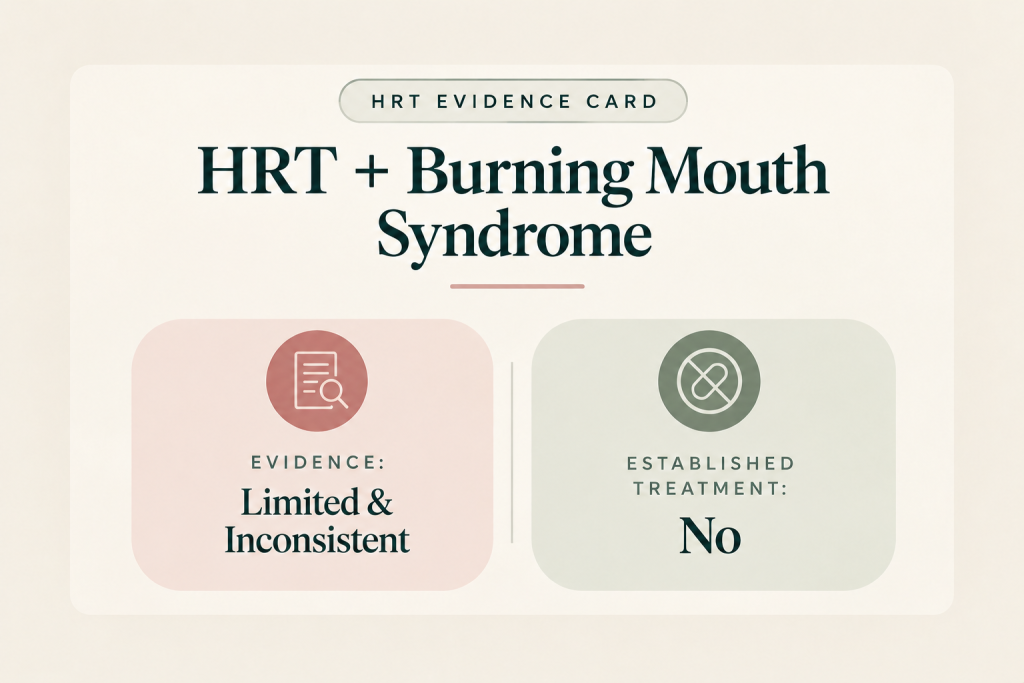
HRT is not an established treatment for burning mouth syndrome.
The reason people make the connection is understandable: the condition is more common around menopause, and older studies have suggested that some women with oral discomfort may improve with hormone therapy. But the evidence is limited and inconsistent. Reviews have not established HRT as a reliable treatment.
(PubMed)
So:
Don’t start HRT specifically for burning mouth syndrome.
But if you need HRT for significant menopausal symptoms, your mouth symptoms should be part of the conversation rather than ignored.
When Should You See a Doctor or Dentist?
Persistent burning or a metallic taste deserves assessment when it doesn’t settle.
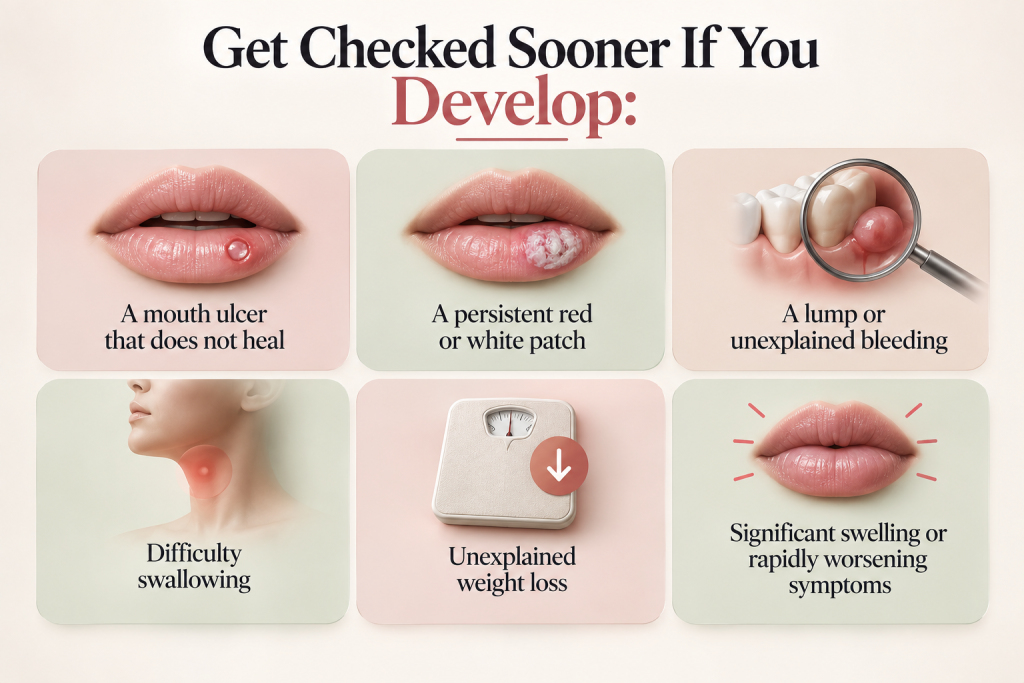
These symptoms do not automatically mean something serious, but they should not simply be labelled “menopause” without an examination.
Where Miror’s HRT Centre of Excellence Fits In
When burning mouth, altered taste and dry mouth appear alongside hot flushes, sleep problems or other menopausal symptoms, it’s useful to look at the whole picture.
At Miror’s HRT Centre of Excellence, clinicians can review your wider hormonal symptoms, medications and medical history, while directing you to dental or oral-medicine assessment when the mouth itself needs specialist evaluation.
The aim isn’t to blame menopause for every new sensation. It’s to work out what is actually causing it.
A burning mouth deserves an answer; not guesswork.
Discuss your wider menopause symptoms and find out when another specialist assessment may be needed.
Consult Miror’s expert panel of doctors and health professionals today.
Medical Disclaimer: This article is for general educational purposes and does not replace personalised medical advice, diagnosis or treatment. Persistent burning, unexplained mouth changes or ongoing taste disturbance should be assessed by a qualified healthcare professional or dental/oral-medicine specialist.