
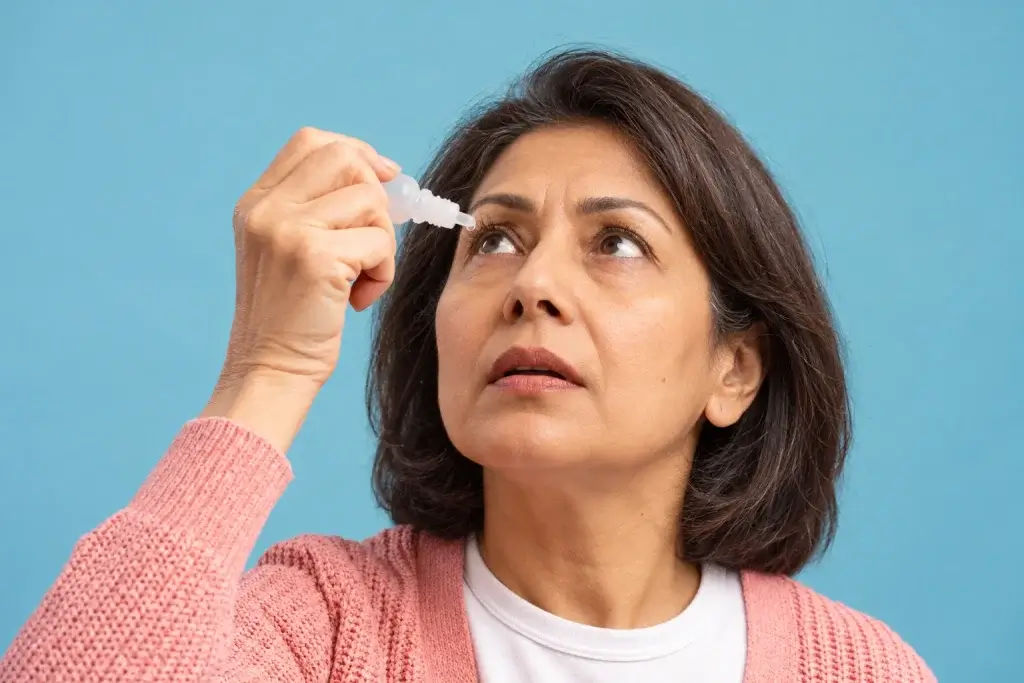
Dry eyes in perimenopause rarely feel like “dryness.”
It feels like grit under your eyelids by late afternoon.
Women often talk about sand in the eyes, or burning-eyes by late afternoon, contact lenses that have suddenly become intolerable, or blurred vision that improves briefly after blinking.
Some are even confused by constant watering. For several others, these symptoms begin or become more noticeable during their forties.
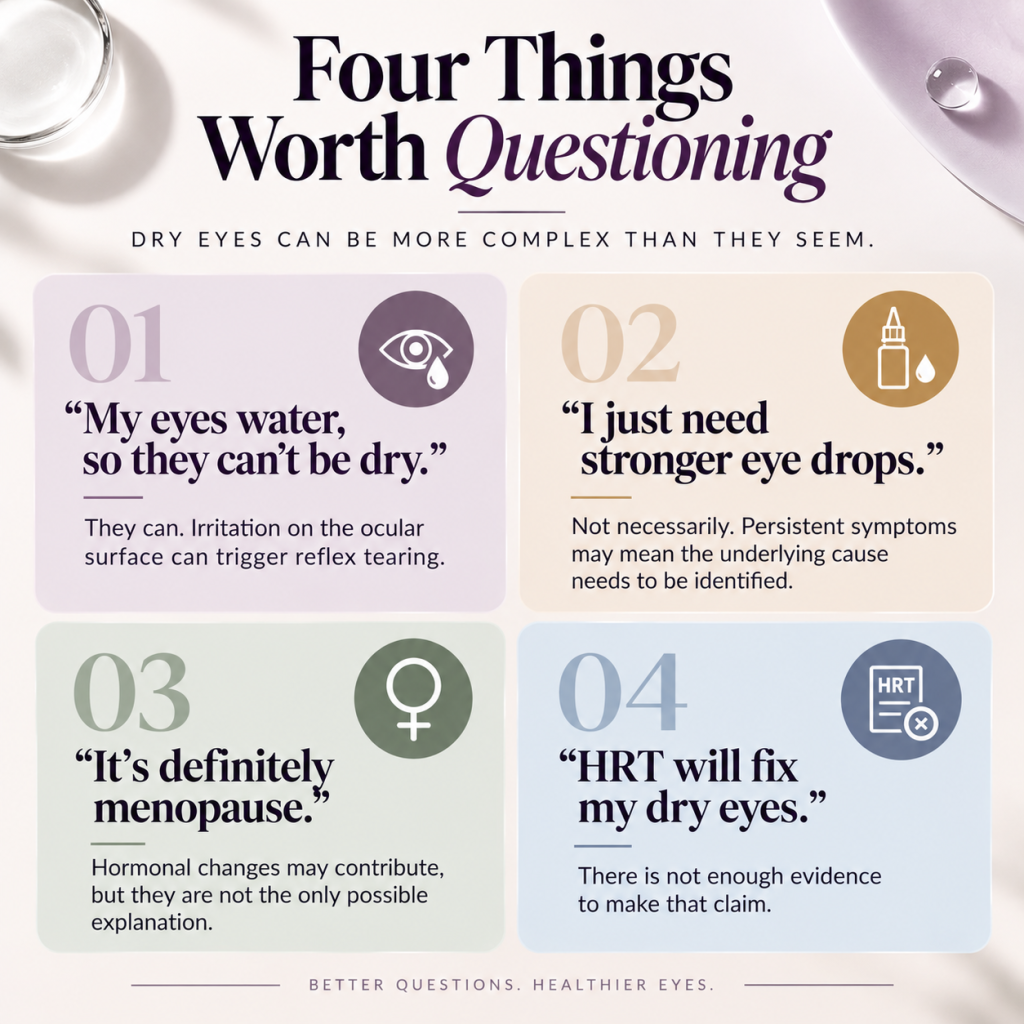
The tempting explanation is simple: menopause. The tempting solution is equally simple: buy eye drops.
Neither is necessarily the whole story.
Your Tear Film Has a Job to Do
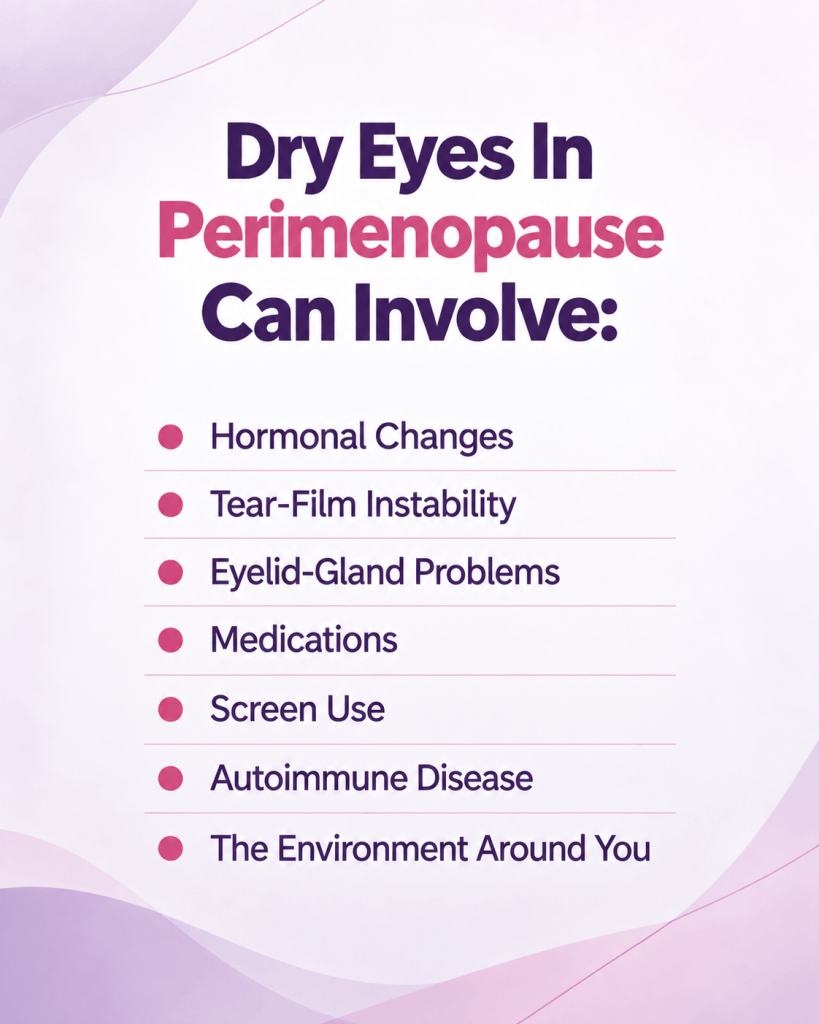
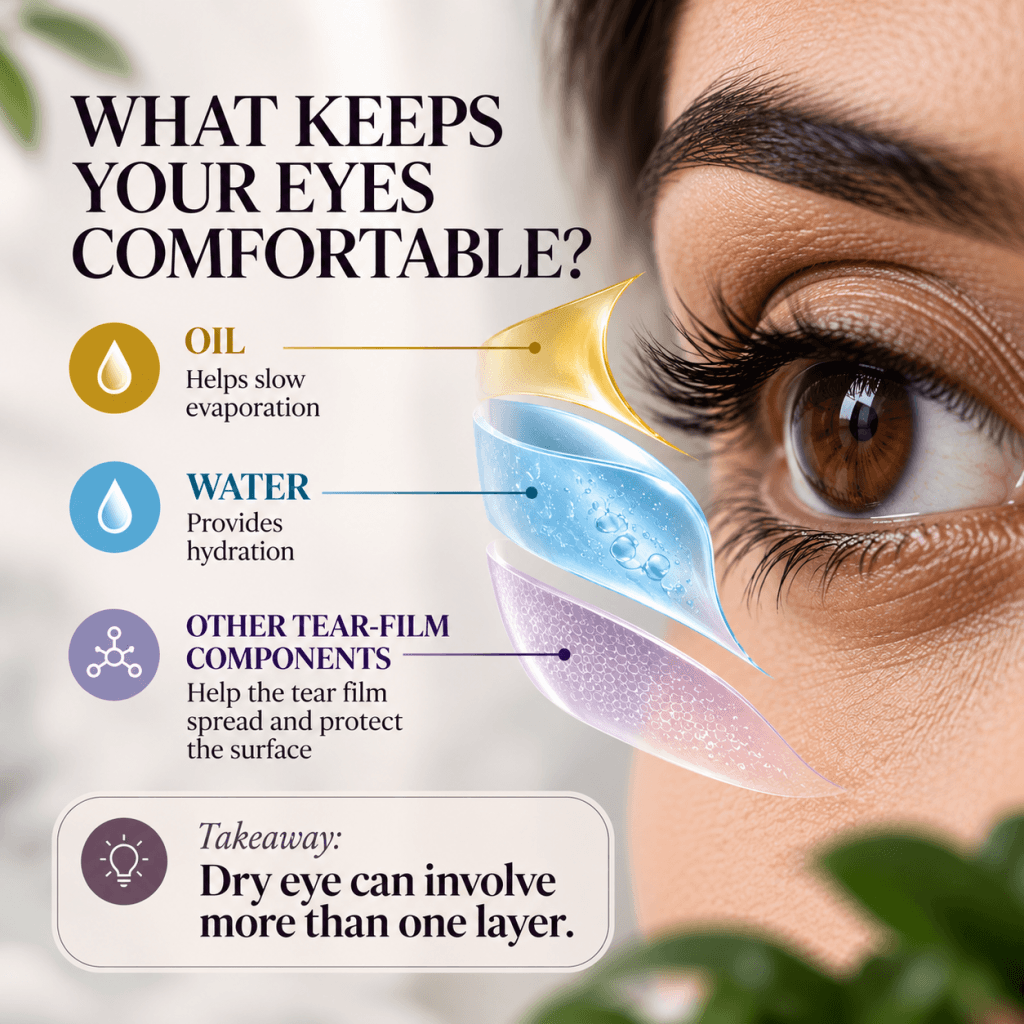
The surface of the eye is protected by a thin tear film containing water, lipids and other substances that help the tears spread evenly and remain stable.
The meibomian glands, which sit in the eyelids, produce the oily component. That lipid layer helps slow evaporation.
When these glands become blocked or dysfunctional, tears can evaporate too quickly. This is known as meibomian gland dysfunction (MGD) and is an important cause of evaporative dry eye.
But dry eye is not always an oil problem. Some people produce too few tears, some lose them too quickly, and many have both problems at once. That is why symptoms alone cannot tell you which mechanism is responsible.
(Cleveland Clinic)
Why Do Eyes Become More Sensitive in Midlife?
Hormones appear to be part of the picture, although the science is more complicated than “low estrogen equals dry eyes.”
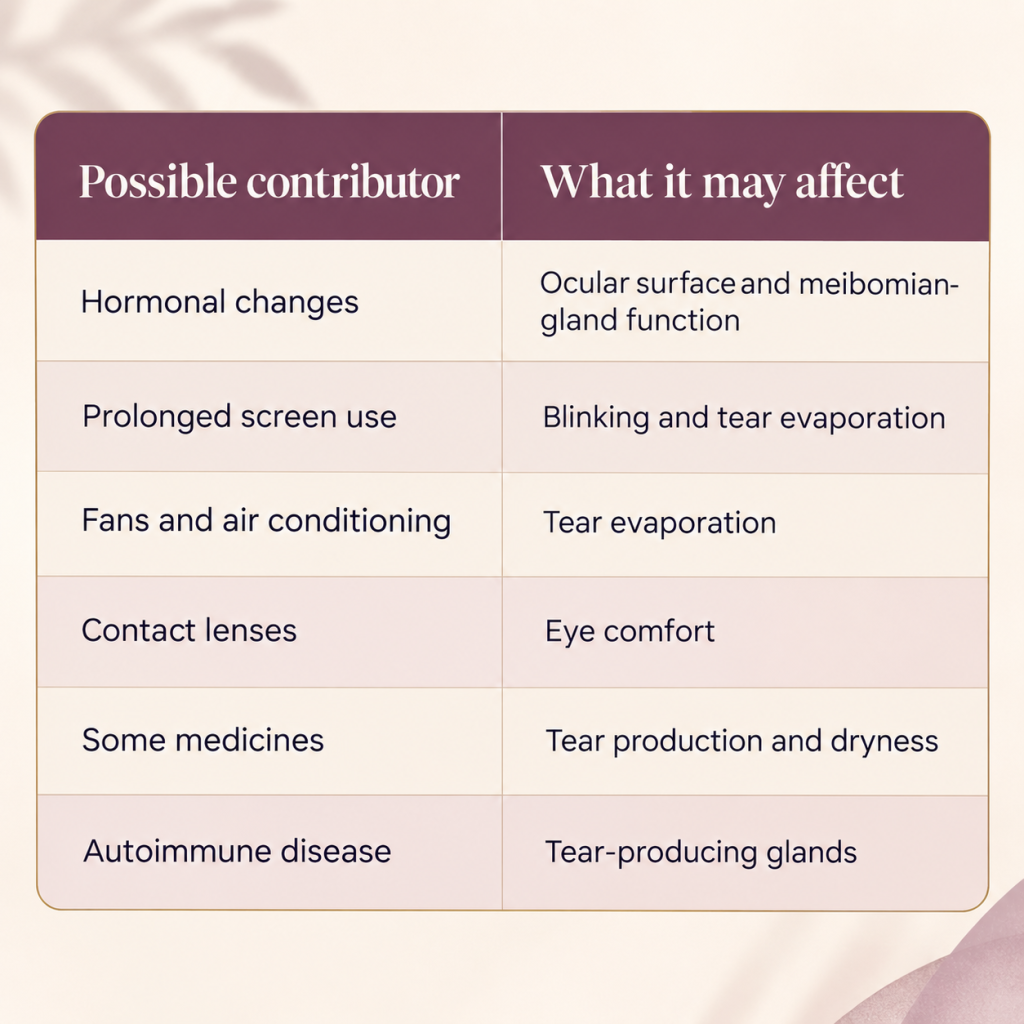
Sex hormones act on the ocular surface and on the glands involved in tear-film maintenance. Androgens are particularly important for meibomian gland function, and reduced androgen activity is associated with meibomian gland dysfunction. Menopause is one setting in which androgen levels can decline.
At the same time, a woman in her forties may have several other contributors: long hours looking at a screen, contact lenses, disrupted sleep, medications, air conditioning or fans and a dry or polluted environment.
(PubMed)
⚠️ A MID-LIFE DRY-EYE CHECK:
Why Artificial Tears May Only Be Part of the Answer
Artificial tears are useful and can make a real difference.
The problem is that they mainly provide lubrication. If meibomian gland dysfunction or ocular-surface inflammation is contributing to your symptoms, simply adding more drops may not address the underlying issue.
That distinction becomes particularly important when you’re reaching for eye drops repeatedly throughout the day.
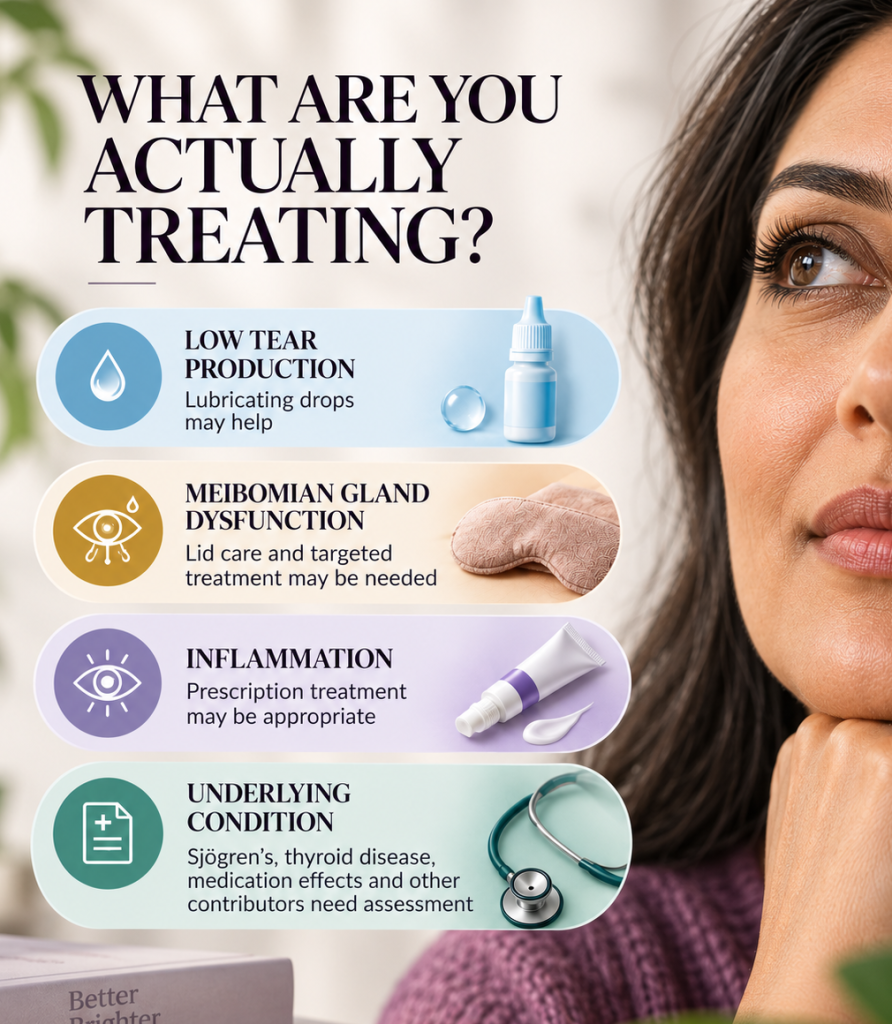
If you use lubricating drops frequently, ask your eye-care professional whether preservative-free drops are more appropriate. Frequent exposure to preservatives can irritate the ocular surface.
(Cleveland Clinic)
One Large Study Raised an Uncomfortable HRT Question
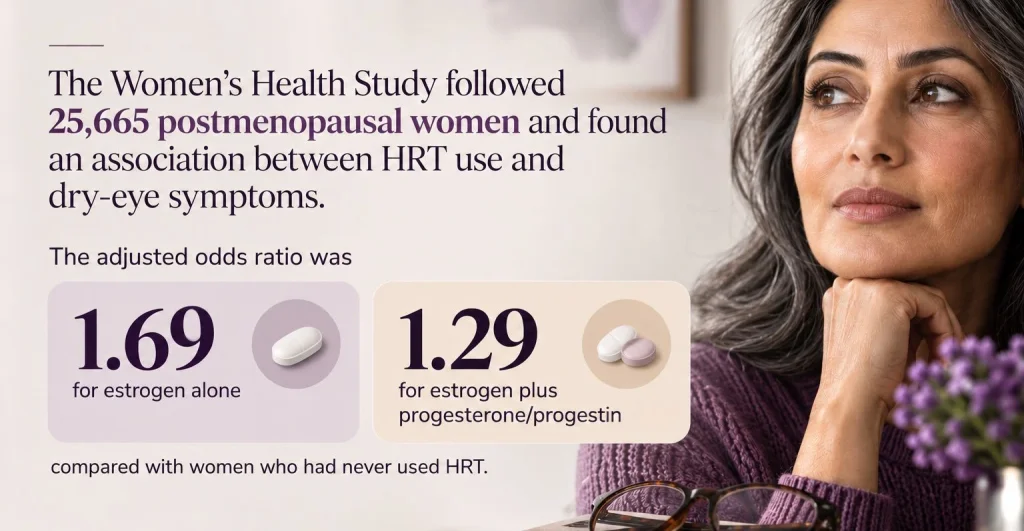
There is an important piece of evidence women on HRT should know about.
 (PubMed)
That sounds definitive. It isn’t.
The study was observational, relied on reported HRT use and symptoms, and reflects treatment patterns from the 1990s. It does not prove that modern transdermal estradiol causes dry eye.
Later research has not produced one consistent answer. A 2025 study of perimenopausal women reported improvement in severe dry-eye measures with estrogen replacement when combined with autologous serum therapy, while other work has reported different effects. (PubMed)
So the practical message is much simpler.
Do not start HRT to treat dry eye.
And:
Do not stop prescribed HRT because your eyes are dry without discussing it with your doctor.
If your eye symptoms started or became noticeably worse after beginning or changing HRT, tell your gynaecologist and ophthalmologist.
Sometimes Dry Eyes Are Telling You Something Else
This is the part I would take seriously, especially when symptoms are persistent.
Sjögren’s disease
If dry eyes occur with dry mouth, fatigue or joint pain, tell your doctor. Sjögren’s is an autoimmune disease in which the immune system attacks moisture-producing glands. It predominantly affects women and is commonly recognised in the 40s and 50s.
(NIAMS)
Thyroid disease
Thyroid disorders can affect the eyes and may sit alongside other symptoms that women naturally attribute to menopause.
Blepharitis and MGD
Inflamed eyelid margins and dysfunctional meibomian glands are common causes of ocular discomfort and may need treatment directed at the eyelids themselves.
(AAPOS)
Medicines
Some antihistamines, antidepressants and other medications can worsen dryness. Your complete medication list matters.
The environment
Long screen sessions, dust, pollution, fans and air conditioning can aggravate symptoms by reducing effective blinking or increasing evaporation. This is especially relevant to everyday life in India.
Your Treatment Depends On Why Your Eyes Are Dry
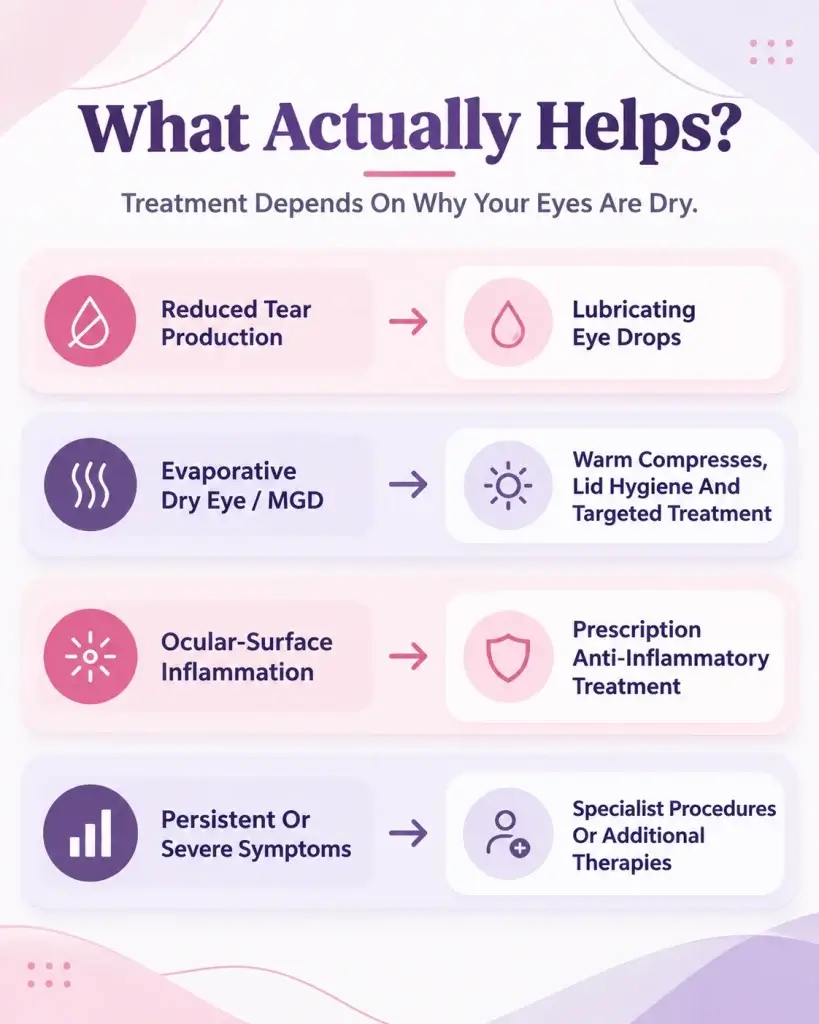
Some straightforward habits help too:
1. Blink properly. Concentrated screen work reduces blinking.
2. Take regular screen breaks.
3. Move fans and AC away from your face.
4. Use preservative-free lubricants when frequent use makes them appropriate.
Give your eyelids some attention. Warm compresses and lid hygiene may help when MGD is present; your eye specialist should show you the correct technique.
And what about Omega-3 Supplements? The marketing is much stronger than the evidence. In the large DREAM randomised trial, omega-3 supplementation did not significantly outperform placebo for dry-eye outcomes.
(New England Journal of Medicine)
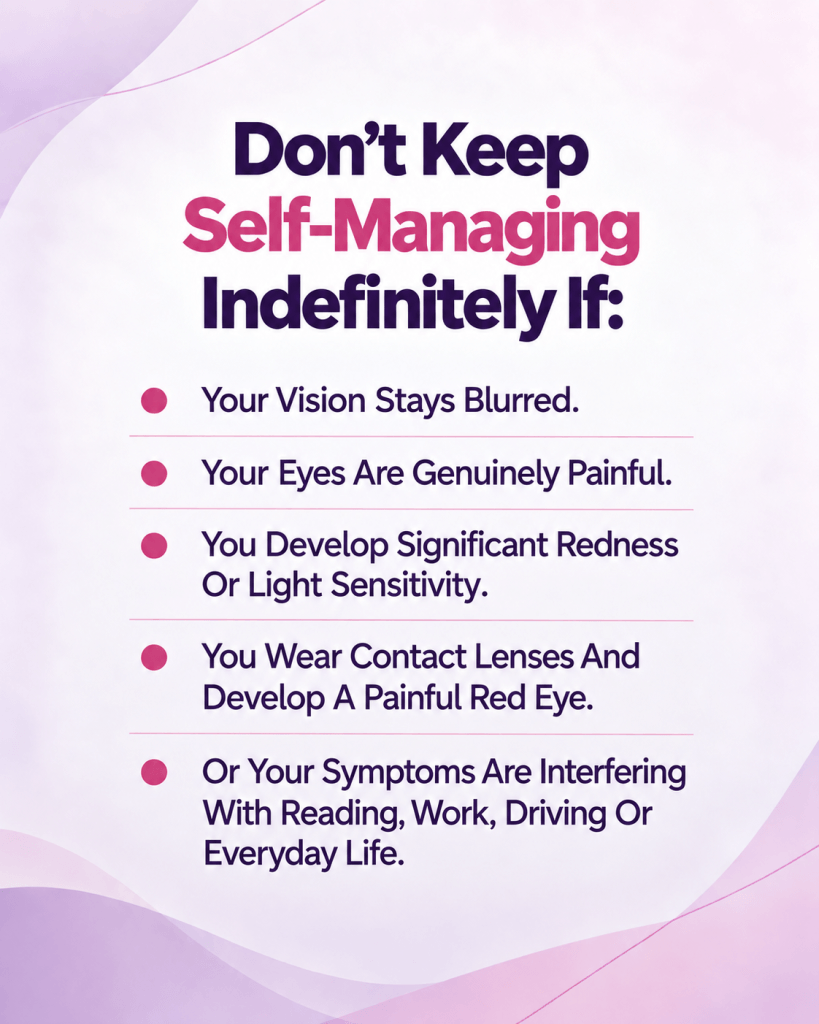
When Should You See an Ophthalmologist?
An eye examination can assess the tear film, eyelids and meibomian glands and help determine whether you need lubrication alone or something more targeted.
Where Miror’s HRT Centre of Excellence Fits In
Dry eyes during your forties may overlap with hormonal changes, medication effects, thyroid issues, autoimmune symptoms and environmental factors.
At Miror’s HRT Centre of Excellence, your wider menopausal picture can be reviewed alongside your medical history and symptoms, with ophthalmology referral when a detailed eye assessment is needed.
The aim isn’t to blame menopause for everything. It’s to understand what is actually contributing to your symptoms.
Your eyes deserve more than another bottle of drops.
Talk to a Miror expert about your broader menopause picture and whether your symptoms need further assessment.
Medical Disclaimer
This article is for general educational purposes and does not replace personalised medical advice, diagnosis or treatment. Persistent, painful or vision-affecting eye symptoms should be assessed by a qualified eye-care professional.