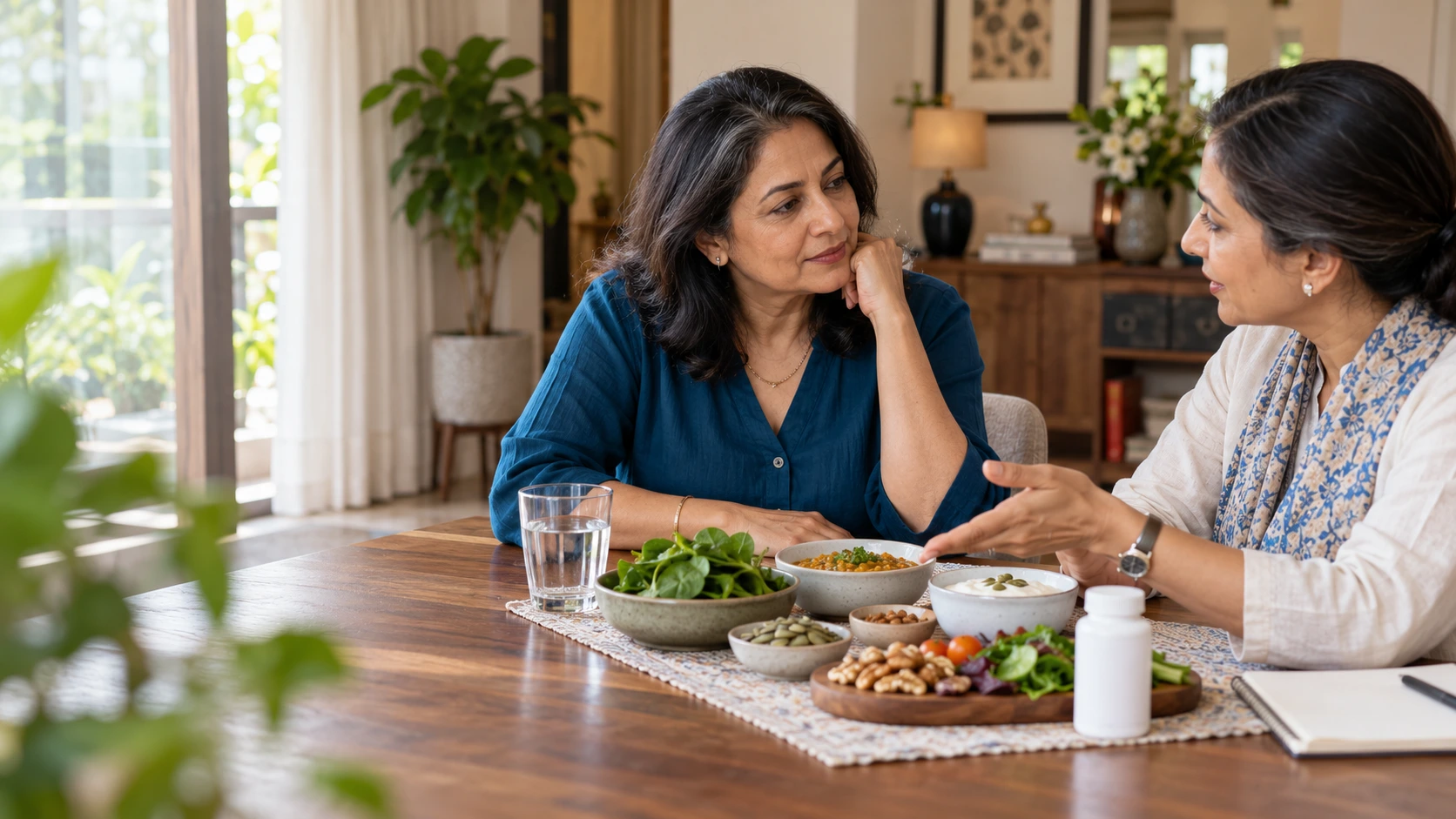


Has constipation become a new midlife problem?
Perhaps you are going less often than you used to. Maybe stools feel harder, you need to strain, or you do not quite feel fully emptied afterwards. And naturally, one of the first pieces of advice you hear is: eat more fibre.
That advice can help, but it is incomplete. When it comes to fibre for menopause, more is not automatically better, and menopause itself does not create a special fibre requirement.
For many women in midlife, aiming for roughly 25–30 g of fibre a day is a useful practical range. Individual needs can vary, and if your current intake is much lower, the way you increase fibre matters just as much as the final number.
Why Constipation Can Feel Different in Midlife
Constipation can occur during perimenopause and after menopause, but it is too simplistic to assume that changing hormones are always responsible.
Researchers are continuing to study how the menopause transition may influence digestive function, including changes in gut movement and the gut microbiome. At present, however, the evidence is still developing, and these changes do not explain constipation in every woman.
Several other factors can affect bowel habits in midlife, including:
- A low-fibre diet
- Not drinking enough fluids
- Long periods of sitting or reduced physical activity
- Stress
- Certain medicines or supplements
- Irritable bowel syndrome
- Thyroid conditions
- Pelvic-floor difficulties
Research following women through the menopause transition has also suggested that factors such as stress may be relevant to digestive symptoms.
So if your bowel habits change in your 40s or 50s, menopause may be one part of the picture, but it should not automatically get all the blame. This is also why advice around fibre for menopause needs to consider the bigger picture, not fibre intake alone.
How Much Fibre Do You Actually Need During Menopause?
There is no separate fibre recommendation specifically for menopause.
For healthy adult women, Indian nutrition guidance places fibre needs at around 25 g a day for women who are less active and around 30 g for those who are moderately active. International recommendations fall within a broadly similar range.
That makes 25–30 g a day a useful practical target for many women in midlife, although individual needs can differ depending on diet, activity, digestive health and medical conditions.
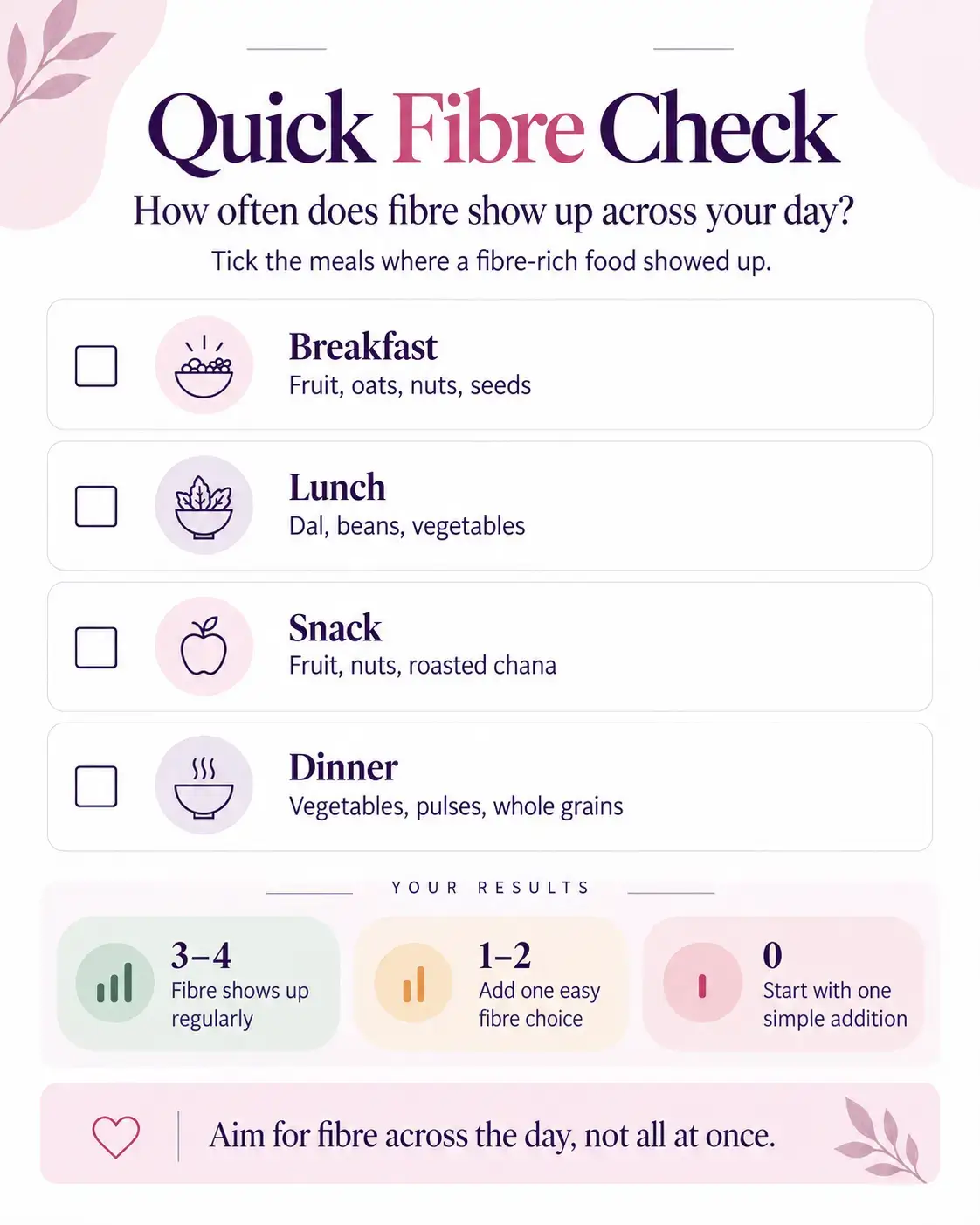
You also do not need to count every gram of fibre you eat.
A more useful approach is to look at how often fibre appears across your day.
How Fibre May Help With Constipation
Dietary fibre can support bowel regularity in a few different ways. Some types absorb water and help stools stay softer, while others add bulk, which can make them easier to pass.
Research in adults with chronic constipation suggests that increasing fibre can improve bowel movement frequency and stool consistency for some people. However, the response varies from person to person, and more fibre is not always the answer.
Whole foods are usually a sensible place to start because they provide fibre along with vitamins, minerals and other plant compounds. If constipation is linked to something else, such as certain medicines, irritable bowel syndrome, pelvic-floor problems or another health condition, simply adding more fibre may not be enough.
That is why advice around fibre for menopause should focus on the bigger picture, not just on increasing fibre intake.
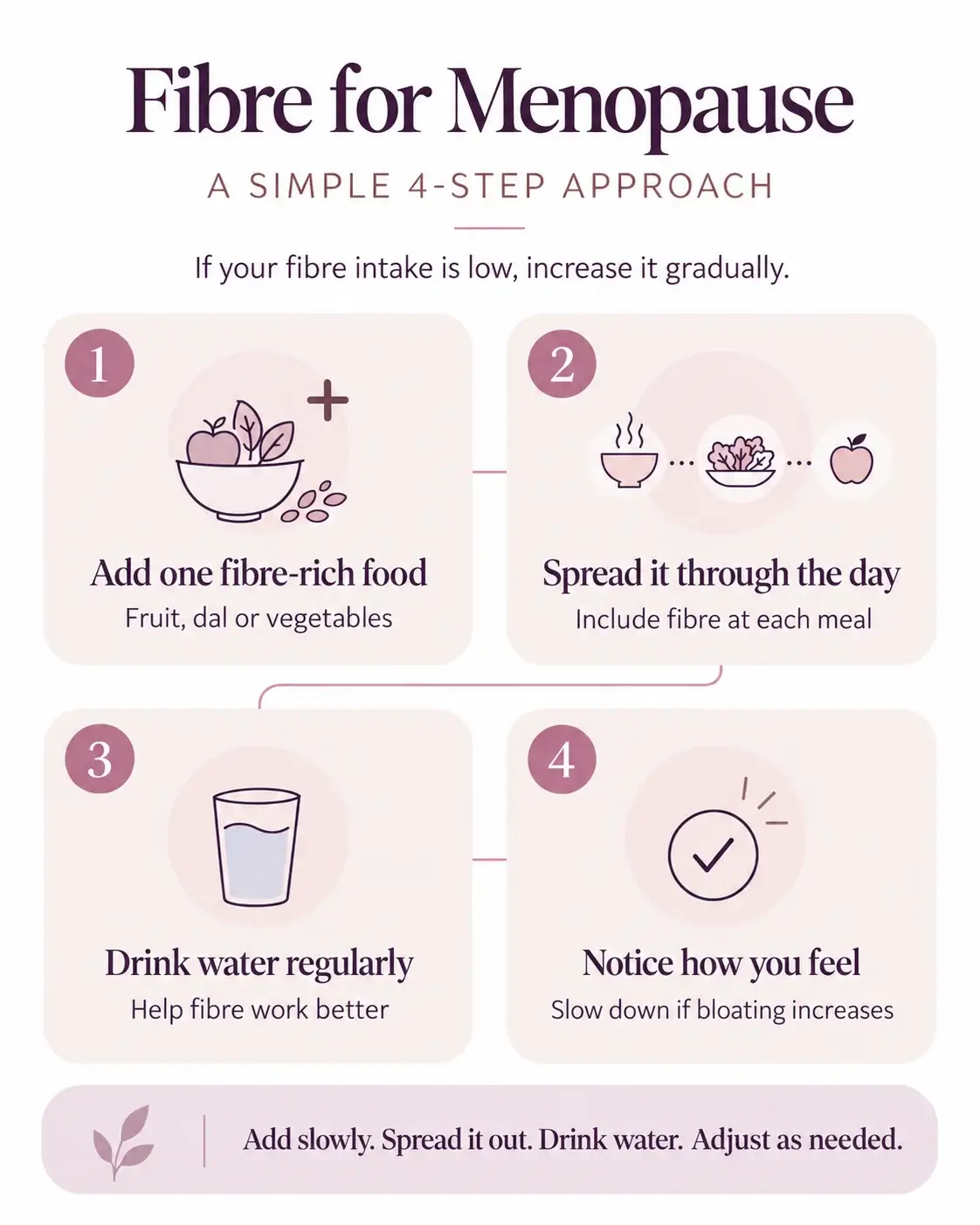
Fibre for Menopause: A Simple 4-Step Approach
If your current fibre intake is low, increasing it too quickly can leave you feeling more bloated or uncomfortable. A slower increase is often easier to tolerate.
What to Eat for Better Bowel Health
You do not need expensive “health foods” or an entirely new way of eating to get more fibre. Many familiar Indian foods already fit the bill.
Fibre-Rich Foods That Fit an Indian Diet
Good options include:
Pulses and legumes: dal, chana, rajma, lobia and well-cooked sprouts
Whole grains and millets: oats, whole wheat, barley, jowar and bajra
Vegetables: beans, carrots, peas, leafy vegetables, gourds and other seasonal vegetables
Whole fruits: guava, pear, apple with the skin, oranges and seasonal fruits
Nuts and seeds: almonds, peanuts, flaxseed, chia and sesame
The aim is not to make every meal unusually high in fibre. It is to let fibre-rich foods appear naturally across the day.
For example, idli or dosa can be paired with vegetable-rich sambar. Rice can stay on your plate alongside dal and sabzi. Roti and paneer can include a cooked vegetable side. Whole fruit can replace juice more often.
What Could a Fibre-Rich Day Look Like?
It does not have to be complicated.
Breakfast: Vegetable oats or idli with sambar and a whole fruit
Lunch: Rice or rotis with dal, sabzi and salad if tolerated
Snack: Guava or pear with a small handful of nuts
Dinner: Rotis with chana or rajma and a cooked vegetable
This is only an example, not a prescription. Portion sizes and food choices should suit your appetite, health needs and what you digest comfortably.
For a broader look at nutrition for menopause symptoms, read our complete guide.
What If Fibre Still Isn’t Helping?
More fibre is not always better. If increasing beans, pulses or raw vegetables leaves you bloated or uncomfortable, reduce the portion and build up more slowly.
Remember that constipation can also be influenced by fluids, movement, medicines, irritable bowel syndrome, thyroid conditions or pelvic-floor problems. Fibre for menopause is one part of bowel health, not the whole answer.
A useful combination to remember is:
Fibre + fluids + movement + regular bowel habits
When Should You Speak to a Doctor?
Speak to a healthcare professional if constipation is new, persistent or does not improve despite reasonable diet and lifestyle changes.
Seek medical advice promptly if you also have:
- Blood in your stool
- Persistent or severe abdominal pain
- Vomiting or fever
- Inability to pass gas
- Unintentional weight loss
Regular straining or repeatedly feeling unable to empty your bowel fully may also need assessment.
If you would like personalized guidance on your nutrition, gut health or other perimenopause concerns, you can book a consultation with me. Download the MIROR app from the Google Play Store or Apple App Store to schedule an appointment.